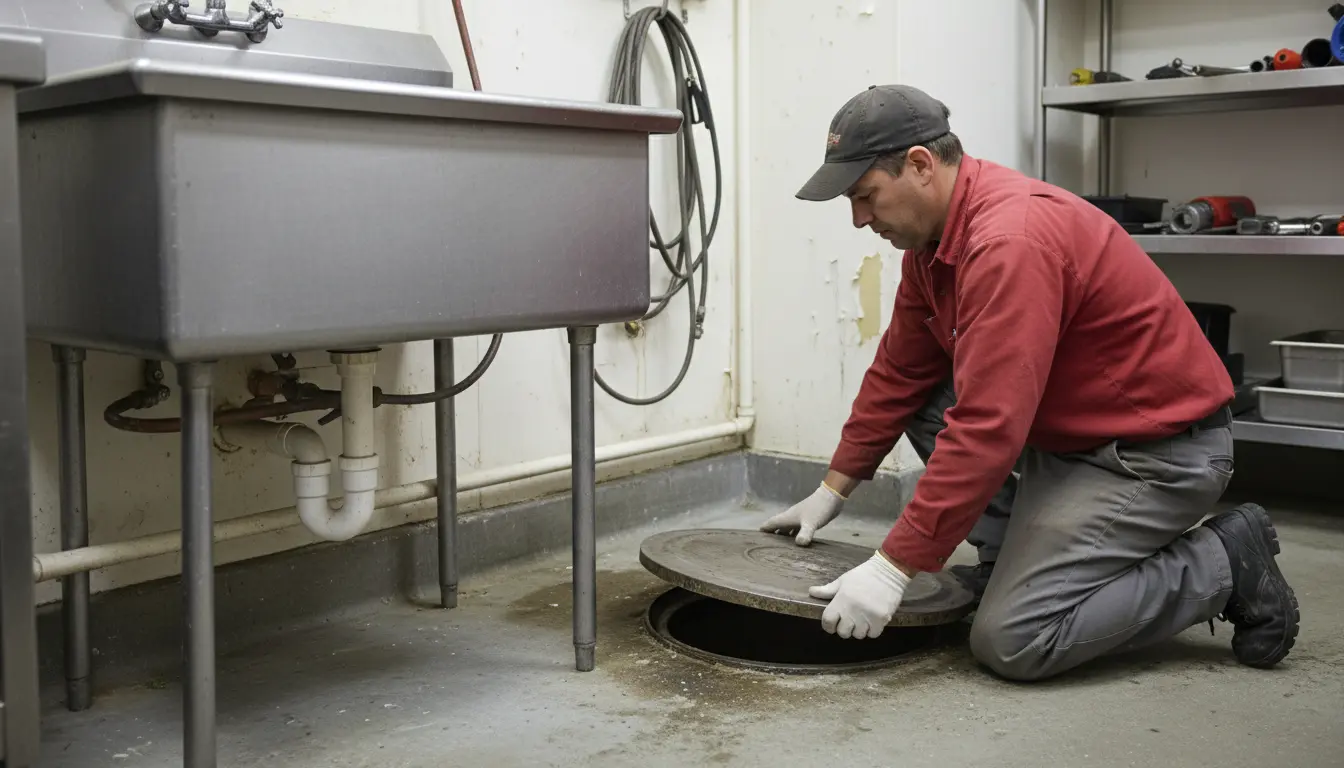
Find the Best Grease Trap Cleaning Companies for Your Business
No obligation • Fast responses • Nationwide coverage

Why you can trust Restaurant Waste Disposal
Restaurant Waste Disposal is a leading U.S. resource for comparing restaurant composting, food-waste recycling, grease trap cleaning, and used cooking oil collection services. Our editorial team researches providers, checks credentials, and organizes unbiased information so operators can make informed decisions. Companies cannot pay to change ratings or placement.
Search providers near you
Top Grease Trap Cleaning Companies in Eden Prairie, Minnesota Ranked
For restaurant owners and facility managers in Eden Prairie, maintaining a clean and compliant grease trap or interceptor is a critical, non-negotiable part of daily operations. Proper grease management is not just about following Minnesota state and local codes; it's about protecting your plumbing, avoiding costly emergency repairs, and ensuring the health of the local wastewater system. In Eden Prairie, this means adhering to specific inspection schedules, keeping meticulous records, and partnering with licensed professionals for pumping services. Proactive maintenance is always more cost-effective than reacting to a clog or a violation notice from a health inspector.
Roto-Rooter Plumbing & Water Cleanup
1821 University Ave W #317, St Paul, MN 55104
Roto-Rooter Plumbing & Water Cleanup provides comprehensive plumbing services in Minneapolis, MN, specializing in both residential and commercial plumbing needs. Their offerings include drain cleaning, grease trap pumping, sewer line repair and replacement, water heater services, and water softener and filtration system installation. The company uses advanced techniques such as hydro-jetting and video camera sewer inspection to address plumbing issues efficiently. Serving the Minneapolis and St. Paul metro areas, Roto-Rooter is available 24/7 for emergency plumbing services, ensuring support whenever urgent problems arise.
Roto-Rooter Plumbing & Water Cleanup
1629 Hennepin Ave #300G, Minneapolis, MN 55403
Roto-Rooter Plumbing & Water Cleanup is a licensed and insured plumbing company serving Minneapolis, MN. They provide 24/7 plumbing services including drain cleaning, grease trap pumping, sewer line repair, and water damage cleanup for both residential and commercial clients. Their capabilities include hydro-jetting and video camera inspections to diagnose and clear drain and sewer issues efficiently. Established with a long history in plumbing, Roto-Rooter is available around the clock to handle emergencies and routine maintenance throughout the Minneapolis metro area.
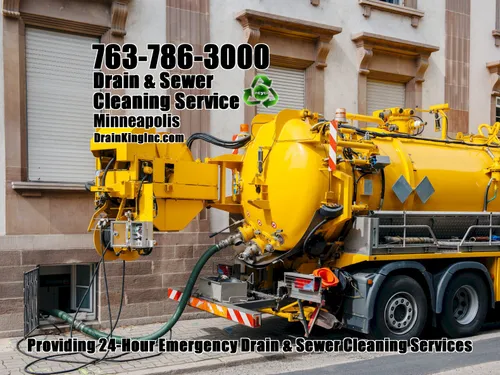
Drain King Inc.
7740 Beech St NE, Fridley, MN 55432
Drain King Inc. is a drain cleaning company serving Brooklyn Park, MN, and the surrounding metro areas including Maple Grove, Minneapolis, Bloomington, and St. Paul. They provide commercial and residential sewer and drain cleaning services, including grease trap pumping, septic pumping, frozen line thawing, jetting, rooter services, and sewer line locating. The company uses advanced diagnostic equipment and offers 24-hour emergency drain and sewer cleaning services. With decades of experience, Drain King also provides preventive maintenance plans to help avoid costly repairs.
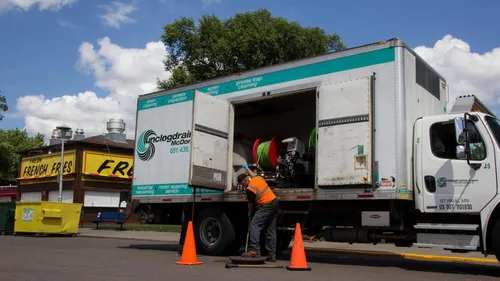
Unclogdrains.com
10075 Xylite St NE, Blaine, MN 55449
Unclogdrains.com is a grease trap cleaning company based in Blaine, MN, serving the Twin Cities area and greater Minnesota. They provide a full range of drain and sewer cleaning services including water jetting, grease trap cleaning, and vacuum truck operations. Their vacuum trucks can remove solid, liquid, or dry matter, including fine powders, from hard-to-reach areas. The company has been operating since 1992, using advanced equipment and skilled technicians to handle commercial, residential, and industrial projects.
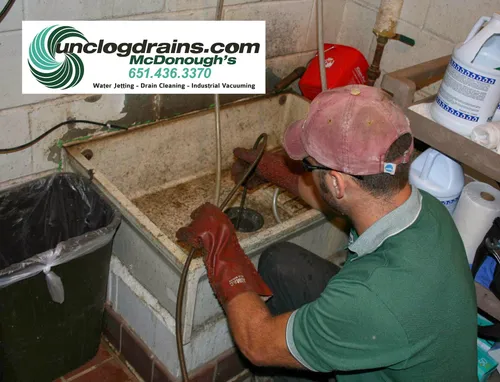
McDonough’s - MN Drain Cleaning Services
1307 Sylvan St #4605, St Paul, MN 55117
McDonough's - MN Drain Cleaning Services is a Minnesota-based company serving Minneapolis and the greater Twin Cities area. Since 1992, they have provided commercial, residential, and industrial drain and sewer cleaning services. Their offerings include grease trap cleaning, water jetting for efficient pipe cleaning, and the use of advanced vacuum trucks capable of removing solid, liquid, and fine powdery substances from hard-to-reach locations. The company emphasizes safety and efficiency with state-of-the-art equipment and skilled technicians.
Understanding Grease Trap Requirements in Minnesota
In Minnesota, the rules for grease interceptors are designed to prevent fats, oils, and grease (FOG) from entering municipal sewer lines, where they can cause significant blockages and environmental issues. The state's plumbing code, specifically referencing standards like ASME A112.14.3, provides the framework for installation and maintenance. For food service establishments, this translates into a legal obligation to ensure these devices are functioning correctly.
The key to compliance lies in a documented maintenance routine. Simply having a grease trap isn't enough; you must be able to prove it's being serviced. Health inspectors and municipal authorities can request these records during routine visits, and a lack of proper documentation is a fast track to violations and potential fines.
The Importance of Regular Inspection and Pumping
How often should your grease interceptor be serviced? The baseline requirement in Eden Prairie, as guided by state rules, is a minimum of quarterly inspections 1. However, this is just a starting point. The actual frequency needed for pumping and cleaning depends entirely on your operation's volume.
A high-volume restaurant or a facility with significant frying operations will generate FOG much faster than a small café. The goal is to prevent the accumulated grease and solids from exceeding 25% of the trap's capacity, as this is when efficiency drops and the risk of clogs increases. A licensed service provider can help you determine the optimal schedule-whether that's every month, every two months, or quarterly-based on a visual inspection of your unit's contents 2.
What does a standard service involve? A professional cleaning is more than just removing liquid. A thorough service includes:
- Pumping out all contents: wastewater, FOG, and solid food debris.
- High-pressure jetting or scraping of the interior walls and baffles to remove hardened grease.
- Inspecting the inlet and outlet tees, baffles, and the overall condition of the trap.
- Proper disposal of the waste at a licensed facility, as required by the Minnesota Pollution Control Agency (MPCA).
- Providing you with a detailed service report, which is your proof of compliance.
Cost of Grease Trap Cleaning Services
Investing in regular maintenance is far cheaper than dealing with the consequences of neglect. Service costs in Eden Prairie vary based on several factors:
- Size and Type of Trap: A small, indoor grease trap under a sink costs less to service than a large, in-ground concrete interceptor.
- Accessibility: Easily accessible traps are quicker and cheaper to service.
- Condition: A regularly maintained trap is a straightforward job. A severely neglected trap that is completely full or has solidified grease requires significantly more labor and equipment.
As a general guide:
- Basic, Scheduled Cleaning: For a standard, small-to-medium indoor unit on a regular maintenance plan, costs typically range from $175 to $475 per service visit 3 4.
- Large, One-Time, or Emergency Service: For large interceptors, first-time cleanouts of neglected systems, or emergency calls for backups, prices can range from $200 to $2,500 or more 5 6. Emergency fees and after-hours rates apply for services outside of normal business hours.
The most significant cost savings come from prevention. A scheduled quarterly cleaning at a predictable rate protects you from a $1,500 emergency pump-out, a $10,000 plumbing repair from a sewer line blockage, or fines from the city for non-compliance.
Find the perfect grease trap cleaning companies for your needs
Get personalized recommendations and expert advice
Record-Keeping: Your Best Defense During Inspections
Your service records are your primary evidence of compliance. Minnesota guidelines emphasize that records of all grease interceptor inspections, cleanings, repairs, and disposals must be kept on the premises for a minimum of three years 7. These logs should be readily available for review by health inspectors or other authorities.
A proper service ticket from a licensed pumper should include:
- Business name and address.
- Date and time of service.
- Name of the service company.
- Volume of waste removed (in gallons).
- Disposal location (the licensed facility where the waste was taken).
- Signature of the service operator.
Maintaining an organized file of these documents is a simple step that can prevent major headaches during an inspection.
Choosing a Licensed Service Provider in Eden Prairie
Not all waste haulers are qualified to handle grease trap waste. It is crucial to select a service provider licensed by the Minnesota Pollution Control Agency (MPCA) for septage and grease waste management 8. Using a licensed pumper ensures that the hazardous waste from your trap is transported and disposed of legally and safely, protecting you from potential liability.
When evaluating local Eden Prairie grease trap cleaning companies, ask for their MPCA license number and proof of insurance. A reputable provider will be transparent about their licensing, offer clear service agreements, and help you understand and meet your specific compliance requirements 9 10.
Best Practices for Reducing Grease Load
Beyond professional pumping, your kitchen staff plays a vital role in grease trap maintenance. Implementing simple best practices can extend the time between necessary pumpings, saving you money and reducing the risk of problems.
- Scrape, Don't Rinse: Train staff to scrape all food solids from plates, pots, and pans into the trash or compost before washing. Food particles accelerate grease trap filling.
- Use Strainers: Install and maintain sink strainers to catch solids.
- Never Pour Grease Down the Drain: Collect fryer oil and pan drippings in sealed containers for used cooking oil recycling.
- Avoid Garbage Disposals: If possible, avoid using garbage disposals, as they send a slurry of food particles and grease directly into your trap.
Consequences of Non-Compliance
Failing to maintain your grease trap has serious repercussions:
- Plumbing Emergencies: Grease buildup causes blockages in your own drains and sewer lines, leading to backups, foul odors, and expensive plumbing repairs.
- Municipal Sewer Blockages (SSOs): If grease escapes your trap, it can solidify in the city's sewer mains, causing Sanitary Sewer Overflows (SSOs). Your business can be held financially responsible for the cleanup costs.
- Fines and Violations: Health inspectors can issue citations and fines for lack of maintenance records or for a trap found to be in non-working order.
- Business Disruption: An emergency grease trap or sewer backup can force you to close your kitchen until the problem is resolved, resulting in lost revenue.
Proactive, scheduled grease interceptor maintenance is a smart business investment. It ensures smooth operations, keeps you in compliance with Eden Prairie and Minnesota regulations, and protects your bottom line from unexpected and severe expenses.
Frequently asked questions
Sources
Footnotes
-
4715.1105 GREASE INTERCEPTORS. Subpart 1. Uniform ... - https://www.revisor.mn.gov/rules/pdf/4715.1105/2014-01-18%2005:44:36+00:00 ↩
-
Restaurant Grease Trap Cleaning FAQs - Mahoney Environmental - https://www.mahoneyes.com/restaurant-grease-trap-cleaning-faqs/ ↩
-
The Cost To Clean A Grease Trap For Restaurants - https://thegreasecompany.com/blog/greasetrapcleaningcost/ ↩
-
Grease Trap Cleaning Prices | Guide on the Industry Average - https://grease-cycle.com/grease-trap-pumping-cost/ ↩
-
Ultimate Grease Trap Pumping Cost Guide: Essential Money-Saving ... - https://www.texwaywastewater.com/grease-trap-pumping-cost/ ↩
-
Restaurant Grease Trap & Interceptor Cleaning Cost - https://greasemanagement.org/pricing.html ↩
-
How to Clean a Grease Trap (and How Often You Should) - https://greaseconnections.com/how-to-clean-a-grease-trap-and-how-often-you-should/ ↩
-
Septage and Restaurant Grease Trap Waste Management Guidelines - https://www.pca.state.mn.us/sites/default/files/wq-wwists4-20.pdf ↩
-
Grease Trap Cleaning in Eden Prairie MN - https://greasetrapcleaningminnetonka.com/eden-prairie-mn.html ↩
-
Grease Trap Cleaning Eden Prairie - https://greasetrapcleaningedenprairie.com/grease-trap-cleaning.html ↩