Find the Best Grease Trap Cleaning Companies for Your Business
No obligation • Fast responses • Nationwide coverage

Why you can trust Restaurant Waste Disposal
Restaurant Waste Disposal is a leading U.S. resource for comparing restaurant composting, food-waste recycling, grease trap cleaning, and used cooking oil collection services. Our editorial team researches providers, checks credentials, and organizes unbiased information so operators can make informed decisions. Companies cannot pay to change ratings or placement.
Search providers near you
Top Grease Trap Cleaning Companies in Brooklyn Park, Minnesota Ranked
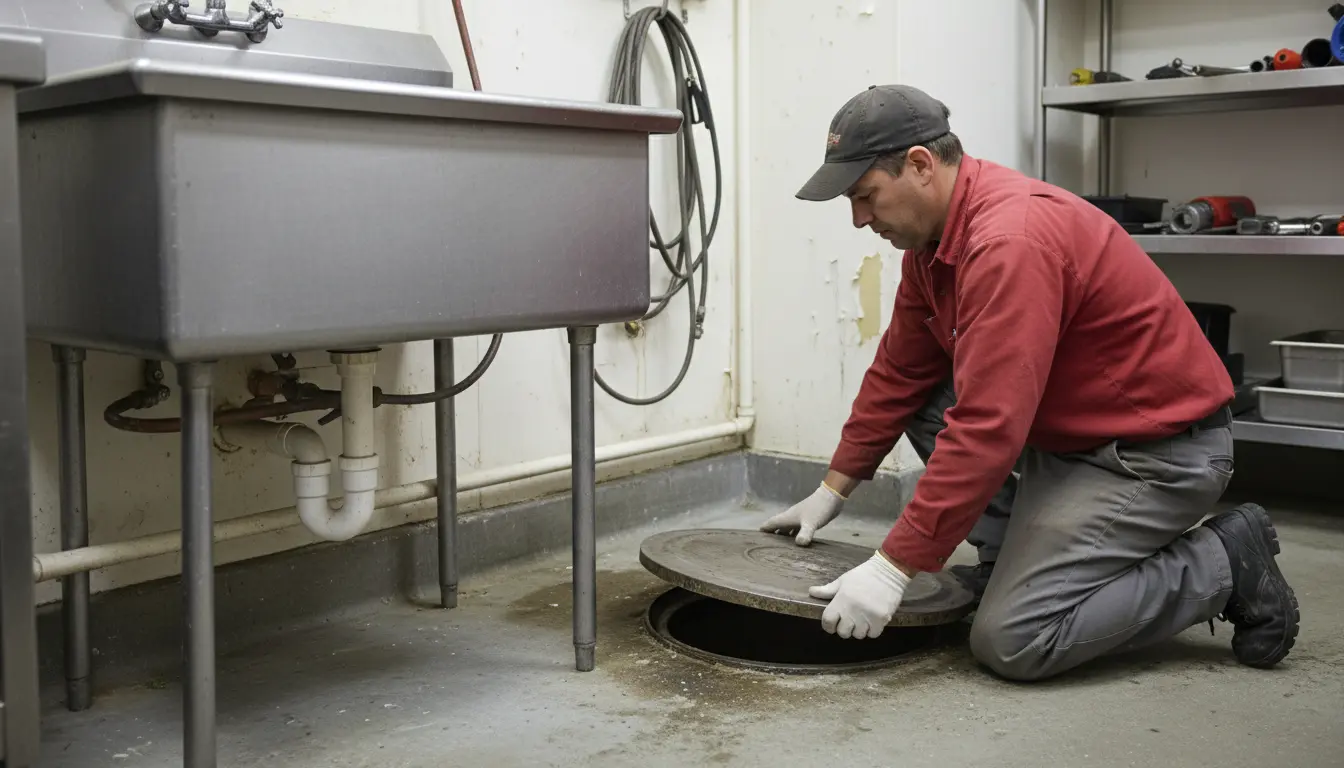
For restaurant owners and food service operators in Brooklyn Park, maintaining a clean and compliant grease interceptor is a critical, non-negotiable part of daily operations. Proper grease trap maintenance is not just about avoiding unpleasant odors or clogs; it's a legal requirement enforced by both state and local authorities to protect the city's sewer infrastructure and water quality. Failing to adhere to scheduled pumping and cleaning can lead to severe consequences, including significant fines and service interruptions. This guide outlines the essential information for Brooklyn Park establishments to understand local regulations, anticipate costs, and implement a reliable maintenance schedule for their grease management systems.
Roto-Rooter Plumbing & Water Cleanup
1821 University Ave W #317, St Paul, MN 55104
Roto-Rooter Plumbing & Water Cleanup provides comprehensive plumbing services in Minneapolis, MN, specializing in both residential and commercial plumbing needs. Their offerings include drain cleaning, grease trap pumping, sewer line repair and replacement, water heater services, and water softener and filtration system installation. The company uses advanced techniques such as hydro-jetting and video camera sewer inspection to address plumbing issues efficiently. Serving the Minneapolis and St. Paul metro areas, Roto-Rooter is available 24/7 for emergency plumbing services, ensuring support whenever urgent problems arise.
Roto-Rooter Plumbing & Water Cleanup
1629 Hennepin Ave #300G, Minneapolis, MN 55403
Roto-Rooter Plumbing & Water Cleanup is a licensed and insured plumbing company serving Minneapolis, MN. They provide 24/7 plumbing services including drain cleaning, grease trap pumping, sewer line repair, and water damage cleanup for both residential and commercial clients. Their capabilities include hydro-jetting and video camera inspections to diagnose and clear drain and sewer issues efficiently. Established with a long history in plumbing, Roto-Rooter is available around the clock to handle emergencies and routine maintenance throughout the Minneapolis metro area.
Drain King Inc.
7740 Beech St NE, Fridley, MN 55432
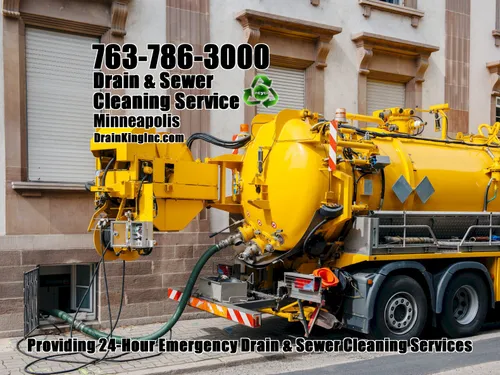
Drain King Inc. is a drain cleaning company serving Brooklyn Park, MN, and the surrounding metro areas including Maple Grove, Minneapolis, Bloomington, and St. Paul. They provide commercial and residential sewer and drain cleaning services, including grease trap pumping, septic pumping, frozen line thawing, jetting, rooter services, and sewer line locating. The company uses advanced diagnostic equipment and offers 24-hour emergency drain and sewer cleaning services. With decades of experience, Drain King also provides preventive maintenance plans to help avoid costly repairs.
Unclogdrains.com
10075 Xylite St NE, Blaine, MN 55449
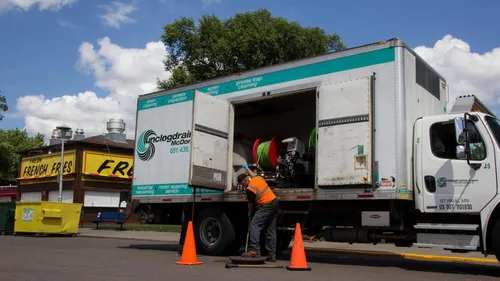
Unclogdrains.com is a grease trap cleaning company based in Blaine, MN, serving the Twin Cities area and greater Minnesota. They provide a full range of drain and sewer cleaning services including water jetting, grease trap cleaning, and vacuum truck operations. Their vacuum trucks can remove solid, liquid, or dry matter, including fine powders, from hard-to-reach areas. The company has been operating since 1992, using advanced equipment and skilled technicians to handle commercial, residential, and industrial projects.
McDonough’s - MN Drain Cleaning Services
1307 Sylvan St #4605, St Paul, MN 55117
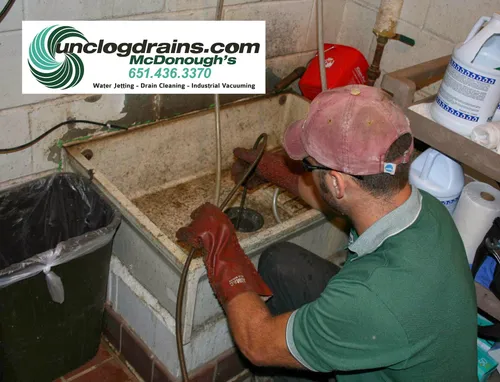
McDonough's - MN Drain Cleaning Services is a Minnesota-based company serving Minneapolis and the greater Twin Cities area. Since 1992, they have provided commercial, residential, and industrial drain and sewer cleaning services. Their offerings include grease trap cleaning, water jetting for efficient pipe cleaning, and the use of advanced vacuum trucks capable of removing solid, liquid, and fine powdery substances from hard-to-reach locations. The company emphasizes safety and efficiency with state-of-the-art equipment and skilled technicians.
Understanding Local Regulations and Authorities
In Brooklyn Park, grease trap compliance is a shared responsibility between the state and the city. The Minnesota Pollution Control Agency (MPCA) sets forth general state rules under Minn. Rules Chapter 4715, which require all food establishments to have accessible and properly functioning grease interceptors 1. These state standards are then enforced at the local level.
The City of Brooklyn Park's Environmental Health program is the primary local authority overseeing food establishments, including the inspection and licensing of grease traps. The city's codes explicitly prohibit the dumping of fats, oils, and grease (FOG) into the sanitary sewer system. During inspections-which occur for new construction, remodels, routine licensing, and in response to complaints-environmental health specialists will check your grease interceptor for compliance. Their approach typically begins with education and outreach, but persistent non-compliance after warnings can escalate to penalties, including fines or even water service shutoff.
Determining Your Grease Trap Pumping Schedule
One of the most common questions from restaurant managers is, "How often should I clean my grease trap?" The answer isn't universal; it depends heavily on your specific operation. However, Brooklyn Park regulations and industry best practices provide clear guidelines.
The key rule is to pump your trap when the combined FOG and solids accumulate to 25% of the unit's capacity 2. For a high-volume kitchen, such as a busy diner or pizza shop, this could mean monthly service. For establishments with lower grease output, a quarterly (every 3 months) schedule may be sufficient. It is never advisable to let a trap exceed the 25% threshold, as this drastically increases the risk of FOG escaping into the sewer lines and causing blockages. Establishing a regular, preventative pumping schedule based on a professional's assessment of your trap size and kitchen volume is the most effective way to stay compliant and avoid emergencies.
What Influences the Cost of Service?
Budgeting for grease interceptor maintenance is a necessary operational cost. Prices in Brooklyn Park can vary based on several factors, but understanding these can help you get accurate quotes and plan effectively.
Primary Cost Factors:
- Trap Size and Type: A small, indoor grease interceptor under a sink is less expensive to service than a large, outdoor in-ground grease trap.
- Accessibility: Is the trap easily reachable by a service truck, or does it require special equipment or labor to access?
- Level of Accumulation: A well-maintained trap cleaned on a regular schedule is quicker and cheaper to pump than one that is severely clogged or overdue for service.
- Service Type: Scheduled, preventative cleaning is always more affordable than an emergency call-out for a backup.
Estimated Cost Ranges: For a standard, preventative cleaning of a well-maintained trap, Brooklyn Park restaurants can expect costs in the range of $175 to $475 per service 3 4. Larger outdoor units may typically fall between $250 and $400 for routine pumping 5. It is crucial to note that emergency service for a clogged or overflowing trap can cost significantly more, often ranging from $800 to $1,200 or higher, due to after-hours fees and the increased labor involved 3 4.
Find the perfect grease trap cleaning companies for your needs
Get personalized recommendations and expert advice
The Inspection Process: What to Expect
Staying ahead of inspections is the best strategy for any food service business. In Brooklyn Park, inspections of grease interceptors are integrated into the broader environmental health inspection process for your establishment's license.
Inspections can be triggered by:
- Application for a new food establishment license.
- Remodeling or altering your kitchen plumbing.
- The city's routine licensing review cycle.
- Investigation of a complaint or a sewer line issue traced to your location.
During an inspection, the health officer will check for proper grease trap installation, accessibility, and evidence of regular maintenance (such as service logs from your cleaning provider). They will also look for any signs of grease being improperly disposed of down drains. The frequency of these inspections is at the discretion of the Health Authority but is designed to ensure ongoing compliance 6.
Consequences of Non-Compliance
Ignoring grease trap maintenance is a costly gamble. The City of Brooklyn Park emphasizes education first, but formal penalties are in place for establishments that fail to correct violations 7.
The progression of enforcement typically follows these steps:
- Educational Warning: An inspector identifies a violation (e.g., a full trap, no service records) and provides guidance on correction.
- Re-inspection and Fines: If the violation is not corrected by the follow-up inspection, the city may issue monetary fines. These fines can accumulate for each day the violation persists.
- Severe Penalties: In cases of severe, repeated, or willful non-compliance that threatens public infrastructure, the city has the authority to take more drastic action. This can include suspending your food license or, as noted in city guidance, shutting off your water service until the issue is resolved.
Beyond city penalties, grease blockages in the public sewer can lead to sanitary sewer overflows (SSOs), for which your business may be held financially responsible for cleanup and environmental damages.
Creating a Proactive Maintenance Plan
A proactive plan turns grease trap maintenance from a stressful chore into a simple, scheduled line item. Here is a step-by-step approach for Brooklyn Park restaurant operators:
- Identify Your System: Know the size, location (indoor/outdoor), and capacity of your grease interceptor. Your building plans or a professional service can help.
- Consult a Professional: Contact a licensed grease trap service company to perform an initial assessment. They can recommend a pumping frequency based on your trap size and kitchen volume.
- Schedule Preventative Service: Based on the assessment, set up a regular pumping schedule (e.g., monthly, bi-monthly, quarterly). Stick to this schedule even if the trap doesn't look full, as FOG accumulates below the surface.
- Keep Impeccable Records: Maintain a log on-site that includes every service date, the company name, the amount of waste removed, and the signature of the service technician. This log is your first line of defense during an inspection.
- Train Your Staff: Educate kitchen staff on best practices for minimizing grease down the drain, such as using sink strainers and scraping plates into the trash before washing.
- Communicate with the City: For specific questions about your establishment's requirements, reach out to Brooklyn Park's Environmental Health division directly 8. They can provide clarity on local code interpretations.
Frequently asked questions
Sources
Footnotes
-
4715.1105 grease interceptors. - MN Revisor's Office - https://www.revisor.mn.gov/rules/4715.1105/version/2014-01-18T05:44:36-06:00 ↩
-
How to Clean a Grease Trap (and How Often You Should) - https://greaseconnections.com/how-to-clean-a-grease-trap-and-how-often-you-should/ ↩
-
Ultimate Grease Trap Pumping Cost Guide: Essential Money ... - https://www.texwaywastewater.com/grease-trap-pumping-cost/ ↩ ↩2
-
How Much Does a Proper Grease Trap Cleaning Cost? - https://hulseyenvironmental.com/how-much-does-a-proper-grease-trap-cleaning-partner-cost/ ↩ ↩2
-
The Cost To Clean A Grease Trap For Restaurants - https://thegreasecompany.com/blog/greasetrapcleaningcost/ ↩
-
§ 114.06 INSPECTIONS. - https://codelibrary.amlegal.com/codes/brooklynpark/latest/brooklynpark_mn/0-0-0-45240 ↩
-
New Grease Trap Cleaning Rules in Minnesota Restaurants - https://replaceyourgarbagedisposal.com/grease-trap-cleaning/new-grease-trap-cleaning-rules-in-minnesota-restaurants/ ↩
-
Environmental Health - Brooklyn Park - https://www.brooklynpark.org/public-health/ ↩