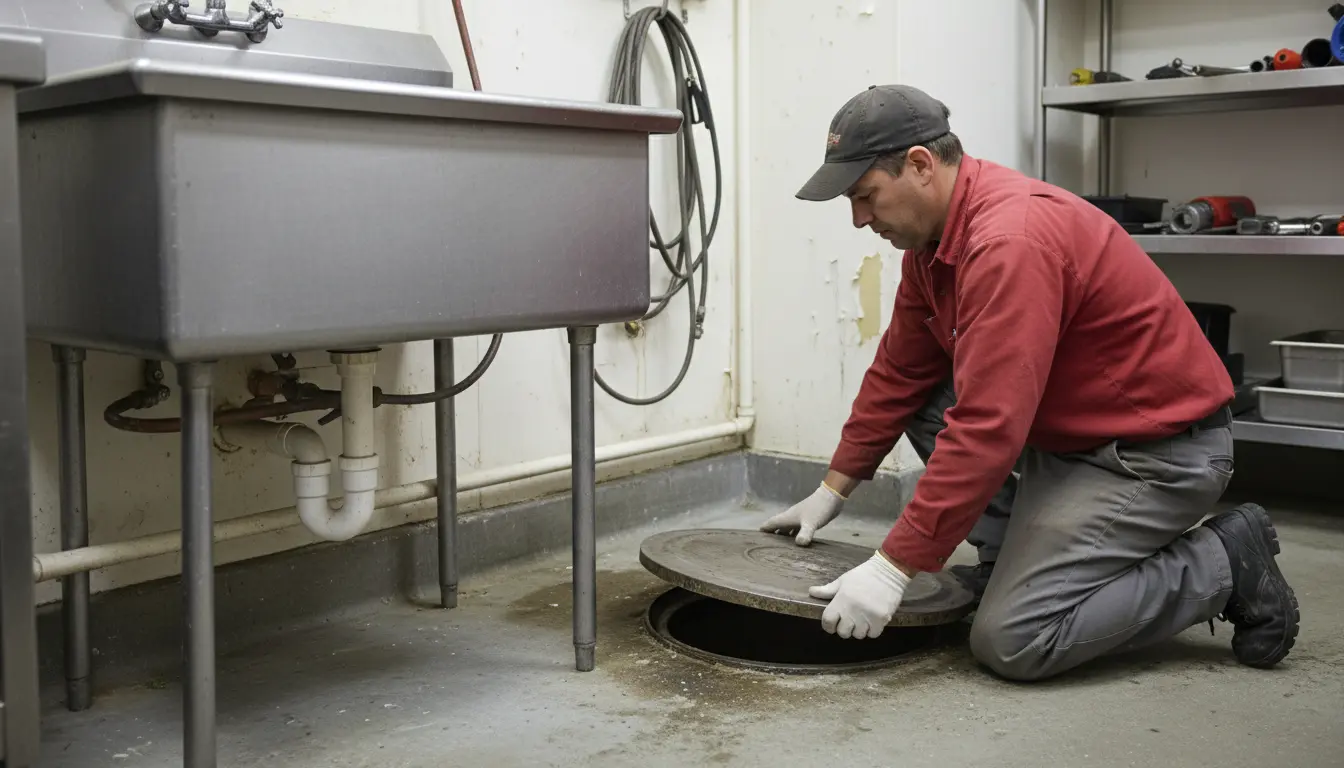
Find the Best Grease Trap Cleaning Companies for Your Business
No obligation • Fast responses • Nationwide coverage

Why you can trust Restaurant Waste Disposal
Restaurant Waste Disposal is a leading U.S. resource for comparing restaurant composting, food-waste recycling, grease trap cleaning, and used cooking oil collection services. Our editorial team researches providers, checks credentials, and organizes unbiased information so operators can make informed decisions. Companies cannot pay to change ratings or placement.
Search providers near you
Top Grease Trap Cleaning Companies in Baton Rouge, Louisiana Ranked
For restaurant owners and food service establishment (FSE) managers in Baton Rouge, maintaining a clean and compliant grease trap or interceptor is a critical operational and legal responsibility. The City of Baton Rouge enforces specific regulations under its Pretreatment Program to prevent fats, oils, and grease (FOG) from entering the municipal sewer system, where they can cause costly blockages and environmental damage. Proactive grease trap maintenance is not just about avoiding fines; it's a key component of a smoothly running kitchen, helping to prevent backups, odors, and emergency service calls. This guide outlines the local requirements, best practices, and practical steps for managing this essential task in Louisiana's capital city.
Understanding Baton Rouge Grease Interceptor Regulations
Compliance starts with knowing the rules. Baton Rouge mandates that all food service establishments install and maintain grease traps or interceptors. The core maintenance standard is twofold: you must clean your trap when the combined volume of floating FOG and settled solids reaches 25% of the unit's liquid capacity, and you must clean it at a minimum of every 90 days (quarterly), whichever comes first 1. This "25% rule" is a common benchmark designed to ensure the trap remains effective at capturing grease before wastewater leaves your property.
A critical part of compliance is documentation. The city requires you to maintain a detailed log of every grease trap cleaning service for a minimum of three years. This log should include the date, the name of the servicing company, the volume of grease and solids removed, and the disposal method. Furthermore, you are required to use only waste haulers permitted by the City of Baton Rouge for pumping and disposal services. Using an unpermitted provider can itself lead to violations.
The Inspection and Enforcement Process
City inspections are a reality of operating a food service business. Inspections can be scheduled or triggered by sewer line issues or complaints. When an inspector arrives, they will typically ask to review your maintenance logs and may perform a physical inspection of the grease interceptor 2. Their goal is to verify that you are adhering to the 25%/90-day rule and using approved haulers.
Non-compliance carries tangible penalties. Violations can result in fines, which often start around $500 and increase for repeat offenses 3. In severe cases, the city can take legal action or even restrict your sewer service. Adhering to a preventative maintenance schedule is the most reliable way to pass inspections and avoid these costly penalties.
Determining Your Grease Trap Cleaning Frequency
While the city sets a 90-day minimum, the ideal cleaning schedule for your specific operation may be more frequent. The required frequency depends heavily on your trap's size (which can range from a small 5-gallon unit under a sink to a massive 4,000+ gallon in-ground interceptor) and your kitchen's volume of grease-producing activity.
- High-Volume Kitchens: Restaurants with extensive frying, roasting, or meat preparation may find their traps reach the 25% threshold in as little as 30-45 days, necessitating monthly service.
- Moderate-Volume Establishments: Many full-service restaurants find a bi-monthly (every 60 days) or quarterly schedule aligns with their output and the legal minimum.
- Low-Volume Operations: Some cafes or bakeries with minimal grease production might be able to adhere strictly to the quarterly schedule.
The best practice is to have your trap inspected by a professional during your first few service visits. They can assess how quickly FOG and solids accumulate and help you establish a cost-effective, compliant routine. Relying solely on the quarterly minimum without monitoring your trap's condition can lead to undetected over-accumulation and potential problems 4.
Costs of Grease Trap Maintenance in Baton Rouge
Budgeting for grease trap cleaning is a predictable operational cost when done preventatively. For a standard preventative pumping and cleaning service in the Baton Rouge area, restaurant owners can expect costs to range from approximately $175 to $475 per service 5 6. This wide range is primarily driven by the size and accessibility of your grease interceptor.
- Small Indoor Traps (5-50 gallons): These are typically the least expensive to service, often on the lower end of the cost scale.
- Large In-Ground Interceptors (500-4,000+ gallons): These require more labor, equipment, and disposal capacity, placing them at the higher end of the price range.
It is crucial to understand the stark cost difference between preventative maintenance and emergency service. A reactive call for a completely clogged trap or a sewer backup can easily cost $800 or more, not including potential fines from the city or lost revenue from operational downtime 7 8. Investing in regular cleaning is ultimately a significant money-saving strategy.
Find the perfect grease trap cleaning companies for your needs
Get personalized recommendations and expert advice
Best Management Practices for FOG Control
Beyond scheduled cleanings, adopting Front-of-House and Back-of-House Best Management Practices (BMPs) can extend the time between service visits, improve efficiency, and demonstrate good faith compliance to inspectors.
Kitchen (Back-of-House) BMPs:
- Train Staff: Educate all kitchen employees on the importance of keeping FOG out of drains. This is your first line of defense.
- Use Pre-Scraping and Dry Wiping: Scrape food scraps into trash bins and use paper towels to wipe grease from pots, pans, and dishes before washing.
- Install and Maintain Basket Strainers: Use strainers in all sink drains to catch solid food waste.
- Collect Cooking Oil Separately: Never pour used fryer oil down the drain. Store it in dedicated containers for collection by a licensed rendering company.
Administrative BMPs:
- Maintain Impeccable Records: Keep your cleaning log binder accessible and up-to-date. Digital logs are also acceptable if they contain all required information.
- Post Guidelines: Place simple "No Grease" reminder signs near sinks and dishwashing areas.
- Schedule Regular Kitchen Drain Line Jetting: Have the lines between your sinks and the grease trap professionally jetted periodically to prevent internal buildup.
Creating Your Compliance Action Plan
Taking a systematic approach ensures you never miss a critical maintenance task. Here is a simple action plan for Baton Rouge restaurant operators:
- Verify Your Setup: Confirm you have a properly sized and installed grease interceptor. If you're unsure, a permitted hauler can assess it.
- Find a Permitted Hauler: Contract with a City of Baton Rouge-permitted grease waste hauler for your pumping and cleaning services 9. You can verify a company's permit status by checking with the city.
- Establish a Baseline Schedule: Based on your trap size and kitchen volume, work with your service provider to set an initial cleaning frequency (e.g., monthly, bi-monthly, quarterly).
- Implement Documentation: Create a log sheet or system and designate a manager to be responsible for filling it out after every service.
- Conduct Internal Audits: Periodically check your grease trap visually (if safe and accessible) and review your logs to ensure your schedule is effective.
- Stay Informed: Periodically check the official City of Baton Rouge website for any updates to the Pretreatment Program or BMP guidelines.
By viewing grease trap maintenance as an integral part of your restaurant's operational health, you protect your business from unexpected costs, maintain good standing with the city, and contribute to the proper functioning of Baton Rouge's public infrastructure.
Frequently asked questions
Sources
Footnotes
-
Grease Trap Regulations in Louisiana - Rebirth Biofuels - https://rebirthbiofuels.com/blog/grease-trap-regulations-louisiana/ ↩
-
Ultimate Baton Rouge Grease Trap Maintenance Guide For ... - https://www.myshyft.com/blog/grease-trap-cleaning-baton-rouge-louisiana/ ↩
-
BMPs for Food Service Establishments (FSE) - BRLA.gov - https://www.brla.gov/DocumentCenter/View/618/BMPs-for-Food-Service-Establishments-PDF ↩
-
How to Clean a Grease Trap (and How Often You Should) - https://greaseconnections.com/how-to-clean-a-grease-trap-and-how-often-you-should/ ↩
-
How Much Does a Proper Grease Trap Cleaning Cost? - https://hulseyenvironmental.com/how-much-does-a-proper-grease-trap-cleaning-partner-cost/ ↩
-
Our Price - Baton Rouge Grease Trap Cleaning and Cooking ... - https://batonrougegreasetrapcleaning.com/our-prices/ ↩
-
Grease Trap Cleaning Guide for Restaurant Owners - https://neworleansgreasetrapcleaning.com/grease-trap-cleaning-guide-for-restaurant-owners/ ↩
-
The Cost To Clean A Grease Trap For Restaurants - https://thegreasecompany.com/blog/greasetrapcleaningcost/ ↩
-
Grease Trap Cleaning - New Orleans to Baton Rouge - https://rebirthbiofuels.com/grease-trap-cleaning/ ↩