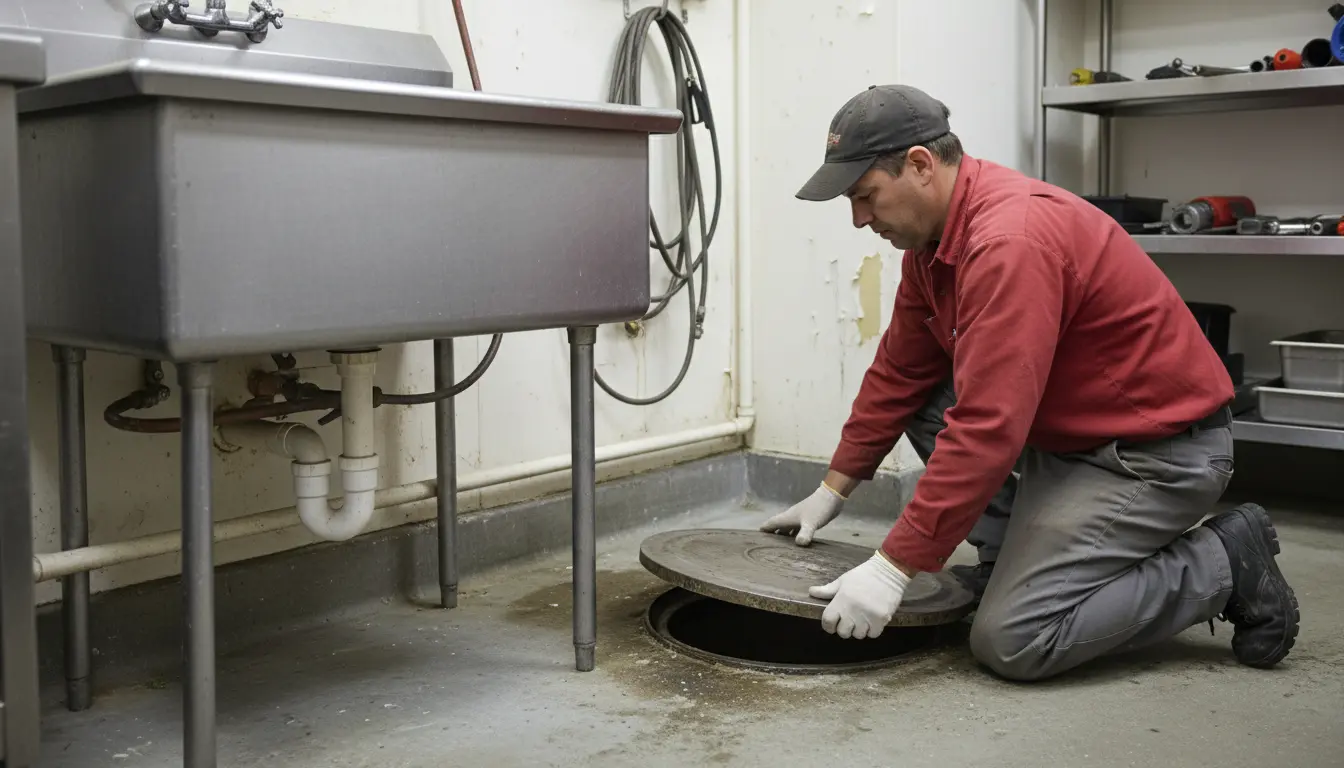
Find the Best Grease Trap Cleaning Companies for Your Business
No obligation • Fast responses • Nationwide coverage

Why you can trust Restaurant Waste Disposal
Restaurant Waste Disposal is a leading U.S. resource for comparing restaurant composting, food-waste recycling, grease trap cleaning, and used cooking oil collection services. Our editorial team researches providers, checks credentials, and organizes unbiased information so operators can make informed decisions. Companies cannot pay to change ratings or placement.
Search providers near you
Top Grease Trap Cleaning Companies in Normal, Illinois Ranked
For any food service establishment in Normal, Illinois, maintaining a clean and compliant grease interceptor is not just a best practice-it's a legal requirement. The Town of Normal enforces the Illinois State Plumbing Code, which mandates regular cleaning, detailed record-keeping, and proper installation of these essential systems to protect the local sewer infrastructure from blockages and costly overflows. Proactive maintenance of your grease trap or interceptor is the most effective way to ensure smooth kitchen operations, avoid unpleasant odors and pests, and prevent significant fines from the city. This guide outlines everything restaurant owners and managers need to know about grease trap cleaning regulations, schedules, and costs specific to Normal.
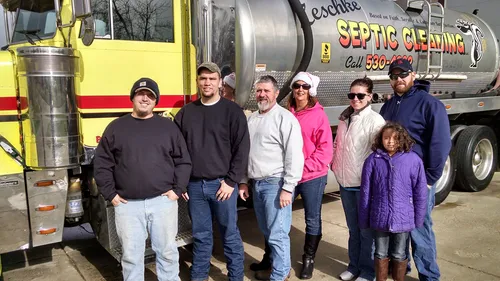
Zeschke Septic Cleaning
2408 Greyhound Rd, Bloomington, IL 61704
Zeschke Septic Cleaning provides septic system and grease trap cleaning services in Bloomington, IL. With over 20 years of experience since 2002, they offer sewer cleaning and grease trap maintenance, including sludge and kitchen waste removal. The company also provides 24/7 emergency services for urgent needs.
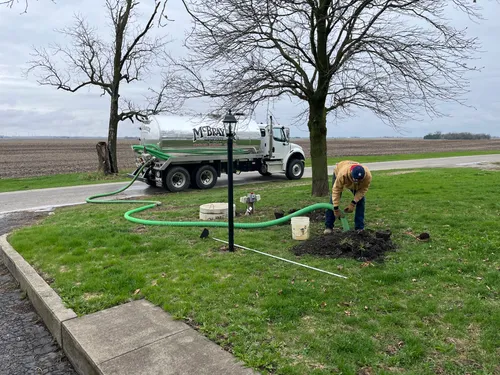
Mcbrayer Sanitary Services
29336 E 1300 North Rd, Ellsworth, IL 61737
Mcbrayer Sanitary Services provides grease trap cleaning and septic system services in Bloomington, IL, and the surrounding Mclean County area. With over 25 years of experience, they focus on maintaining proper septic system function for homes and businesses. Their team is equipped to handle grease removal and septic maintenance with a commitment to quality work.
Understanding Normal's Grease Interceptor Regulations
Compliance in Normal begins with understanding the local adoption of the Illinois Plumbing Code. The code provides specific requirements for the installation, use, and maintenance of grease interceptors and traps. First, the installation must be performed by a licensed professional according to code specifications, which include proper sizing and watertight covers 1 2. There are also strict prohibitions: dishwashers and food waste disposals cannot be connected to a grease trap, and water exceeding 140°F must be pre-cooled before entering the system to prevent grease from re-liquefying and bypassing the trap 1 3.
The city reserves the right of entry for inspectors to check for compliance at any reasonable time 4. Failure to provide maintenance records upon request is itself a violation. Penalties for non-compliance can include substantial fines and, in severe cases, restrictions on your facility's ability to discharge wastewater into the municipal system 4.
Determining Your Cleaning Frequency
How often should you schedule grease interceptor service? There is no one-size-fits-all answer, as frequency depends entirely on your establishment's volume of grease production. A common benchmark is cleaning every 1 to 3 months, but high-volume restaurants may require monthly or even more frequent pump-outs.
A critical rule of thumb is to clean the trap immediately if the accumulated grease and solids reach 25% of the unit's total liquid capacity 5 6. Allowing grease to build beyond this point significantly increases the risk of blockages, sewer backups, and regulatory violations. The best practice is to work with your service provider to establish a customized schedule based on regular inspections of your specific interceptor's condition.
The Critical Importance of Maintenance Records
In Normal, meticulous documentation is just as important as the physical cleaning. You are required to maintain detailed logs of every grease trap service for a minimum of three years, and these records must be readily available for city inspection 7. Each log entry should include:
- The date of service
- The volume of grease and solids removed (in gallons)
- The disposal method or location
- The name of the servicing company
Maintaining these records demonstrates due diligence and is your first line of defense during a compliance inspection. Failure to provide this documentation can result in penalties, regardless of whether the trap itself has been serviced 8.
What to Expect: Service Costs in Normal
Understanding the cost structure for grease interceptor maintenance helps in budgeting and highlights the value of regular service. For a routine, scheduled pump-out of a properly maintained trap, restaurants in the Normal area can generally expect costs to range from $200 to $400 or more per service 9.
However, costs can escalate quickly under two scenarios:
- Poorly Maintained Traps: If a trap has been neglected, the cleaning process becomes far more labor-intensive. Costs for cleaning a heavily soiled interceptor can triple or more compared to a regularly serviced one.
- Emergency Service: A blockage or compliance emergency requiring immediate, off-schedule service will incur a premium. Emergency calls can cost significantly more, potentially ranging from $800 to $1,200 or higher depending on the severity and time required 10 11.
Find the perfect grease trap cleaning companies for your needs
Get personalized recommendations and expert advice
The Proactive Approach: Benefits of Scheduled Cleaning
Adhering to a proactive, scheduled cleaning program is the most cost-effective and responsible strategy for Normal restaurant owners. The benefits extend far beyond simple compliance:
- Cost Savings: Regular service prevents the massive cost spikes associated with emergency clean-outs or restoring a severely neglected system.
- Regulatory Safety: It ensures you avoid fines and penalties from the Town of Normal for non-compliance 12.
- Operational Efficiency: A clean grease interceptor prevents slow drains, kitchen backups, and unpleasant odors that can disrupt service and deter customers 13.
- Infrastructure Protection: It does your part to prevent sewer line blockages that can affect the entire community, protecting Normal's public wastewater system.
Choosing a reliable, licensed service provider who understands local codes is essential. They can help you establish the right schedule, provide proper documentation, and ensure your grease management system operates efficiently for years to come.
Frequently asked questions
Sources
Footnotes
-
9-4E-5: GREASE TRAP REQUIREMENTS: - https://codelibrary.amlegal.com/codes/mchenryil/latest/mchenry_il/0-0-0-16810 ↩ ↩2
-
Ill. Admin. Code tit. 77, § 890.510 - Grease Interceptor Requirements - https://www.law.cornell.edu/regulations/illinois/Ill-Admin-Code-tit-77-SS-890.510 ↩
-
Ultimate Grease Trap Maintenance Guide For Ogden Facilities - myshyft.com - https://www.myshyft.com/blog/grease-trap-cleaning-ogden-utah/ ↩
-
§ 51.016 GREASE INTERCEPTOR OR TRAP REQUIREMENTS. - https://codelibrary.amlegal.com/codes/mountvernonil/latest/mtvernon_il/0-0-0-2192 ↩ ↩2
-
How to Clean a Grease Trap (and How Often You Should) - https://greaseconnections.com/how-to-clean-a-grease-trap-and-how-often-you-should/ ↩
-
Grease Trap Regulations and Compliance: What You Need to Know - https://www.texwaywastewater.com/grease-trap-regulations-and-compliance/ ↩
-
Grease Trap Pumping | Chicagoland - https://www.apgreasetrappers.com/grease-trap-pumping ↩
-
Chicago's Complete Grease Trap Cleaning & Maintenance ... - https://www.myshyft.com/blog/grease-trap-cleaning-chicago-illinois/ ↩
-
Ultimate Grease Trap Pumping Cost Guide: Essential Money-Saving ... - https://www.texwaywastewater.com/grease-trap-pumping-cost/ ↩
-
How Much Does a Proper Grease Trap Cleaning Cost? - https://hulseyenvironmental.com/how-much-does-a-proper-grease-trap-cleaning-partner-cost/ ↩
-
How Much Does it Cost to Clean a Grease Trap Professionally? - https://www.jsewerandplumbing.com/how-much-does-it-cost-to-clean-a-grease-trap-professionally/ ↩
-
§ 51.020 GREASE INTERCEPTOR AND GREASE TRAP ... - https://codelibrary.amlegal.com/codes/mountvernonil/latest/mtvernon_il/0-0-0-2244 ↩
-
Restaurant Grease Trap Cleaning: Step-by-Step Guide for ... - Boh - https://boh.ai/blog-article/maintaining-a-spotless-kitchen-a-guide-to-optimal-restaurant-grease-trap-cleaning-frequency-for-busy-restaurant-owners ↩