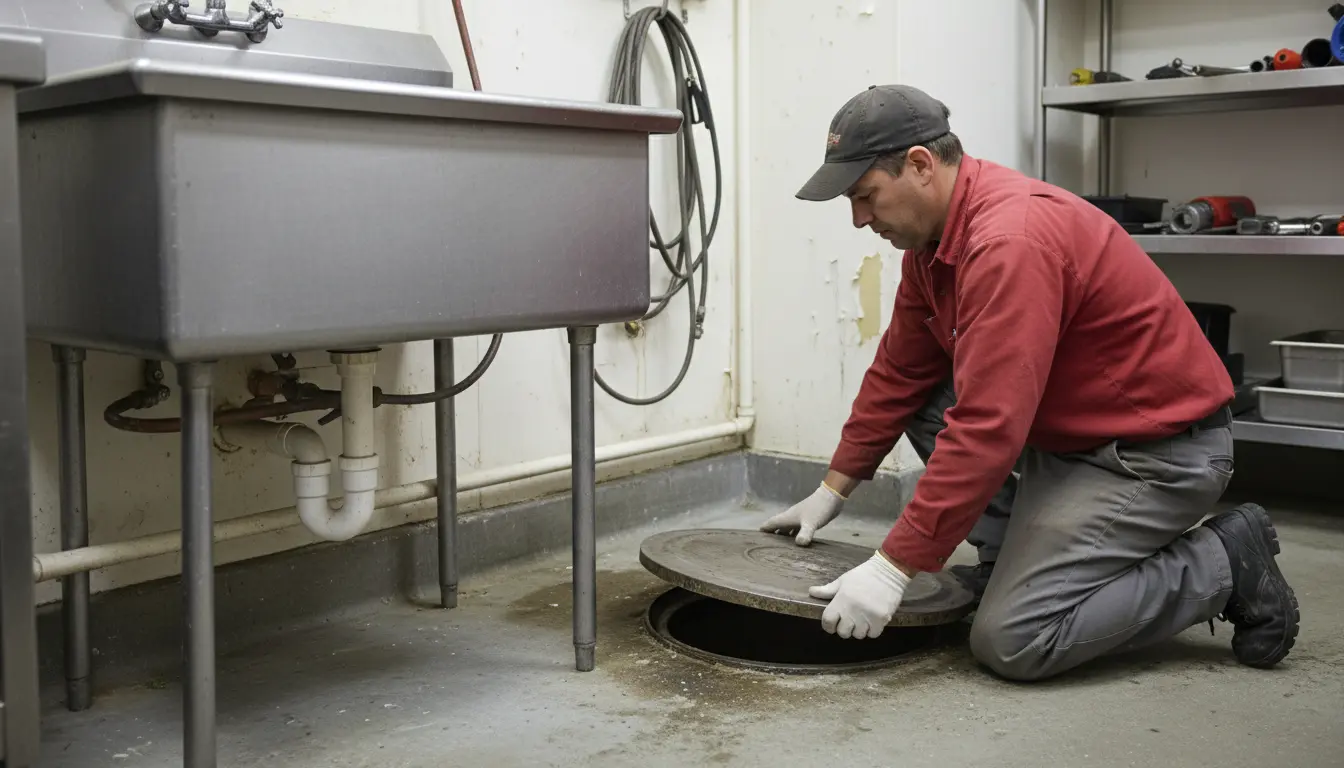
Find the Best Grease Trap Cleaning Companies for Your Business
No obligation • Fast responses • Nationwide coverage

Why you can trust Restaurant Waste Disposal
Restaurant Waste Disposal is a leading U.S. resource for comparing restaurant composting, food-waste recycling, grease trap cleaning, and used cooking oil collection services. Our editorial team researches providers, checks credentials, and organizes unbiased information so operators can make informed decisions. Companies cannot pay to change ratings or placement.
Search providers near you
Top Grease Trap Cleaning Companies in Decatur, Illinois Ranked
For any restaurant or food service facility in Decatur, managing fats, oils, and grease (FOG) is not just a matter of kitchen maintenance-it's a legal requirement with significant operational implications. The City of Decatur mandates the installation and rigorous upkeep of grease interceptors to protect the public sewer system from blockages and to ensure the city's wastewater treatment processes function efficiently. Proper grease trap cleaning and maintenance are critical to avoiding costly fines, emergency service calls, and potential disruptions to your business. This guide outlines the local regulations, best practices, and cost considerations for keeping your establishment compliant and running smoothly.
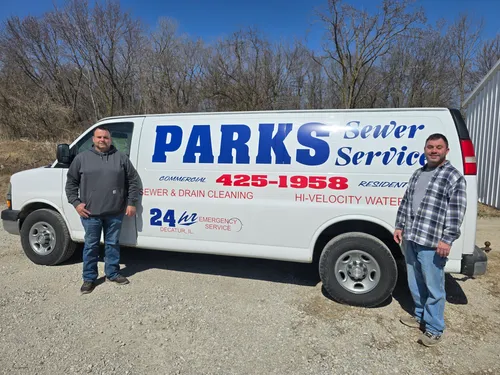
Parks Sewer Services Inc.
965 S Wyckles Rd, Decatur, IL 62522
Parks Sewer Services Inc. is a family-owned business based in Decatur, IL, specializing in sewer, septic, and drain cleaning services. Founded in 2004 by brothers Chris and Cody Parks, the company serves residential and commercial customers in Decatur and the surrounding areas. Their services include grease trap cleaning, septic tank pumping, drain cleaning for kitchens and bathrooms, as well as sewer line repair and installation. Parks Sewer Services is known for addressing urgent issues promptly, including after-hours calls, and focuses on honest assessments to avoid unnecessary repairs.
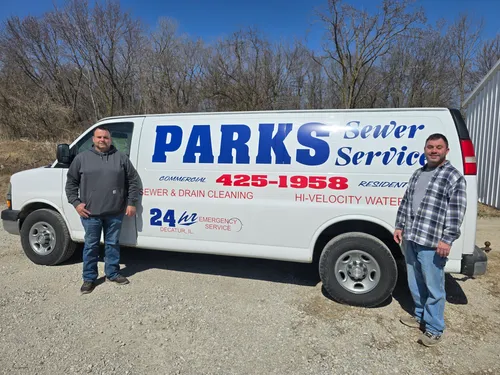
Septic Specialist
4460 W Main St, Decatur, IL 62522
Septic Specialist is a grease trap cleaning company based in Decatur, IL, serving customers throughout Central Illinois. They provide a range of services including septic tank installation, repair, cleaning, and maintenance, as well as sewer line repair and cleaning. Their capabilities include video sewer inspections and high-pressure water jetting to clear clogs and maintain system efficiency. The company also offers line and grease trap cleaning services for commercial clients and septic system inspections by experienced technicians to detect hidden issues. Septic Specialist is Macon County's only full-service company with two licensed installers, servicing all brands of aerobic septic systems.
Decatur's Grease Interceptor Requirements
Decatur Utilities (DU) enforces specific codes for grease management at all food service establishments. Understanding these rules is the first step toward compliance.
- Mandatory Installation: All facilities that introduce FOG into the wastewater system are required to have a grease interceptor, often referred to as a grease trap or grease recovery device.
- Size and Location: Typically, interceptors must be installed in-ground and outside the building, with a minimum capacity of 1,000 gallons. Plans for these systems must be submitted and approved by Decatur Utilities before installation.
- Design Specifications: Approved interceptors must meet current plumbing codes, provide adequate detention time (often 30 minutes or more), and include features like a sampling well for compliance testing.
- Plumbing Configuration: Waste lines carrying grease-laden water from kitchens must be plumbed separately from sanitary waste lines (e.g., restrooms) until after they pass through the interceptor.
Effluent Limits and Compliance Inspections
The primary goal of these regulations is to limit the amount of FOG entering the sewer. Decatur sets a strict effluent limit for wastewater leaving your grease interceptor.
- The 100 mg/L Rule: The concentration of oil and grease in the water discharged from your interceptor into the public sewer must not exceed 100 milligrams per liter (mg/L). Regular, professional cleaning is essential to maintain this standard.
- Enforcement and Inspections: DU is responsible for monitoring compliance. Inspections can be triggered by new facility setups, routine checks, or reports of potential issues. Inspectors will examine the interceptor's condition, maintenance records, and may take effluent samples.
- Penalties for Non-Compliance: Violations can result in formal notices, mandatory system upgrades, significant fines, and in severe cases, an order to cease operations until the issue is resolved1. Proactive maintenance is far less expensive than reacting to an enforcement action.
Understanding Grease Trap Cleaning Costs in Decatur
The cost of grease interceptor service in Decatur varies based on the type of trap, its condition, and the service frequency. Investing in routine maintenance is the most cost-effective strategy.
- Routine Indoor Trap Cleaning: For smaller, indoor grease traps that are cleaned on a regular schedule (e.g., monthly), costs can range from approximately $175 to $475 per service. The final price depends on the trap's size and the volume of FOG removed.
- Large, In-Ground Interceptor Pumping: The mandatory 1,000+ gallon outdoor interceptors common in Decatur require specialized pumping. Routine pumping for these large units might cost between $250 and $400 per service when performed on a consistent quarterly or bi-annual schedule 2.
- The High Cost of Neglect: If an interceptor is poorly maintained, costs can escalate dramatically. A severely clogged or overflowing trap often requires emergency service, which can cost between $800 and $1,200 or more per call3 4. Intensive cleaning of a neglected system can easily triple the cost of a standard service5.
Find the perfect grease trap cleaning companies for your needs
Get personalized recommendations and expert advice
Best Practices for Effective Grease Management
Beyond scheduling regular pump-outs, restaurant operators can take several steps to improve interceptor efficiency and reduce costs.
- Implement Staff Training: Educate every kitchen employee on proper waste disposal. Emphasize that only water should go down sinks equipped with grease traps-no food scraps, coffee grounds, or cleaning chemicals.
- Maintain a Consistent Pumping Schedule: Work with your service provider to establish a pumping frequency based on your volume of business and interceptor size. For many Decatur restaurants, this will be every 1 to 3 months. Keep detailed logs of all service for inspection purposes.
- Ensure Proper Waste Disposal: Verify that your service provider hauls all collected grease and solids to an approved disposal or recycling facility. Proper documentation of this disposal is a key part of regulatory compliance 6.
- Design for Accessibility: For new installations or renovations, ensure the interceptor and its lids are easily accessible for service trucks and technicians. Difficult access can increase service time and cost.
The Consequences of Inadequate Maintenance
Failing to properly maintain your grease interceptor has ripple effects that extend beyond a single fine.
- Sewer Blockages and SSOs: FOG that escapes your trap cools and solidifies inside sewer pipes, creating massive blockages. This can lead to sewer backups in your establishment or sanitary sewer overflows (SSOs) in the community, which carry severe environmental penalties7 8.
- Damage to Wastewater Infrastructure: Chronic FOG discharge contributes to long-term damage to the city's pumps and treatment facilities, costs that are ultimately borne by the utility and its customers.
- Operational Disruption: An emergency grease trap failure can force a restaurant to close temporarily for cleanup and repairs, resulting in lost revenue and reputational damage.
Adhering to Decatur's grease interceptor regulations through a partnership with a qualified service provider is a fundamental aspect of responsible restaurant ownership. It protects your business from unexpected expenses and enforcement actions while contributing to the health of the city's essential wastewater services.
Frequently asked questions
Sources
Footnotes
-
Requirements for Grease Interceptors Food Service Facilities - https://www.cityofdecatural.com/wp-content/uploads/2017/01/GreaseInterceptorInformationforFSFs.pdf ↩
-
The Ultimate Guide to Restaurant Grease Trap Cleaning - https://mokherplumbing.com/ultimate-guide-restaurant-grease-trap-cleaning/ ↩
-
Ultimate Grease Trap Pumping Cost Guide: Essential Money ... - https://www.texwaywastewater.com/grease-trap-pumping-cost/ ↩
-
Restaurant Grease Trap & Interceptor Cleaning Cost - https://greasemanagement.org/pricing.html ↩
-
How Much Does a Proper Grease Trap Cleaning Cost? - https://hulseyenvironmental.com/how-much-does-a-proper-grease-trap-cleaning-partner-cost/ ↩
-
Ala. Admin. Code r. 420-3-1-.22 - Use Of A Grease Trap - https://www.law.cornell.edu/regulations/alabama/Ala-Admin-Code-r-420-3-1-.22 ↩
-
ORDINANCE NO. 2.019''"'.Dl - Alabama Department of Revenue - https://www.revenue.alabama.gov/wp-content/uploads/2022/03/Alexander_City_Grease_Trap_Ord_2018_01.pdf ↩
-
Grease Trap Regulations and Compliance: What You Need to ... - https://www.texwaywastewater.com/grease-trap-regulations-and-compliance/ ↩