Find the Best Composting & Food Waste Companies for Your Business
No obligation • Fast responses • Nationwide coverage

Why you can trust Restaurant Waste Disposal
Restaurant Waste Disposal is a leading U.S. resource for comparing restaurant composting, food-waste recycling, grease trap cleaning, and used cooking oil collection services. Our editorial team researches providers, checks credentials, and organizes unbiased information so operators can make informed decisions. Companies cannot pay to change ratings or placement.
Search providers near you
Top Composting & Food Waste Companies in Rockwall, Texas Ranked
For restaurant owners and food service operators in Rockwall, managing organic waste is both an environmental responsibility and a practical business consideration. While the city does not currently offer a municipal food waste collection program for commercial entities, effective private solutions are readily available to help your establishment divert food scraps from the landfill. Partnering with a dedicated commercial hauler can streamline your back-of-house operations, potentially reduce your overall waste disposal costs, and demonstrate your commitment to sustainability to the community. This guide outlines the key options and considerations for implementing a successful food waste recycling program in your Rockwall restaurant.
Understanding Your Commercial Composting Options
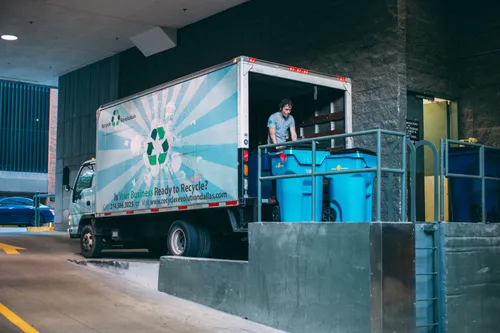
The cornerstone of food waste diversion in Rockwall is the network of private waste haulers. These companies specialize in commercial organics recycling and provide tailored services to fit the needs of restaurants, from small cafes to large banquet facilities. The most prominent national provider active in many Texas markets is Recycle Track Systems (RTS), which offers comprehensive commercial composting programs. Additionally, major regional and local haulers like Waste Management and Republic Services may offer specific commercial organics programs in the Rockwall area; it is essential to contact their local offices directly to confirm service availability and details.
Choosing a private hauler means you can select a service plan that matches your establishment's specific waste output. These providers understand the unique challenges of the food service industry and design their programs accordingly, offering the flexibility that a one-size-fits-all municipal program might not.
What Can Your Restaurant Compost?
A significant advantage of commercial composting services is their broad acceptance criteria. Most haulers will accept virtually all food scraps, including items that are problematic for home compost piles. This typically includes:
- Fruit and vegetable trimmings
- Meat, poultry, and bones
- Fish and seafood shells
- Dairy products
- Eggshells
- Bread, pasta, and grains
- Coffee grounds and filters
- Paper towels, napkins, and uncoated paper products (used in food service)
A critical rule for success is avoiding contamination. Plastic bags, Styrofoam containers, glass, metals, and liquids must be kept out of the compost stream. Many providers require or supply certified compostable liner bags for your collection bins to keep them clean and simplify the process for your staff. Always confirm the exact list of accepted and prohibited materials with your chosen hauler, as specifications can vary slightly between companies.
Designing an Efficient Kitchen Workflow
Implementing a composting system requires thoughtful integration into your daily kitchen operations. The goal is to make diversion as easy and intuitive as throwing something away.
Start with Container Selection: Private haulers offer a range of container sizes to suit different spaces and volumes. You might use:
- Small 5-gallon pails at prep stations and dish pits for easy scrap collection.
- 32-gallon to 64-gallon wheeled bins for consolidating waste from smaller containers before pickup.
- Large dumpsters or carts (96-gallon) for high-volume establishments, placed in the loading dock or waste corral.
Establish Clear Stations: Place clearly labeled collection bins next to every trash can and sink in prep and dishwashing areas. Using color-coding (e.g., green for compost) and simple signage with pictures of accepted items drastically reduces confusion and improves participation from your team.
Train Your Staff: Comprehensive training is non-negotiable. Hold brief sessions to explain the why and the how. Emphasize the importance of avoiding contamination. Many haulers offer training materials or can provide an on-site consultation to help set up an effective system.
Find the perfect composting & food waste companies for your needs
Get personalized recommendations and expert advice
Navigating Costs and Service Schedules
The cost for commercial food waste pickup in Rockwall is not fixed and depends entirely on your service agreement with a private hauler. Pricing is typically based on a combination of factors:
- Container Size: The volume of the bin or dumpster you require.
- Pickup Frequency: How often the hauler empties your container (e.g., daily, three times a week, weekly).
- Local Market Rates: Prevailing service charges in the North Texas region.
As a general estimate, restaurants can expect monthly costs to range from $50 to over $150, with larger establishments or those requiring very frequent pickups likely paying more 1. It's important to view this cost in context: by diverting heavy, wet organic material from your standard trash dumpster, you may be able to reduce the size of your garbage container or the frequency of its pickup, potentially offsetting some of the cost of the composting service.
Service schedules are highly flexible. A busy restaurant generating several hundred pounds of food waste daily might need pickup five to seven times a week, while a smaller cafe might manage with a once-weekly collection. Your hauler will work with you to determine the optimal schedule to prevent overflow and odor issues.
Legal and Environmental Context in Texas
Texas has shown growing interest in waste diversion and organics recycling. State legislation, such as Senate Bill 2078 from the 89th Legislature, has explored frameworks for encouraging organics recovery, reflecting a broader regulatory trend that businesses should be aware of 2. Proactively establishing a composting program positions your restaurant favorably within this evolving landscape.
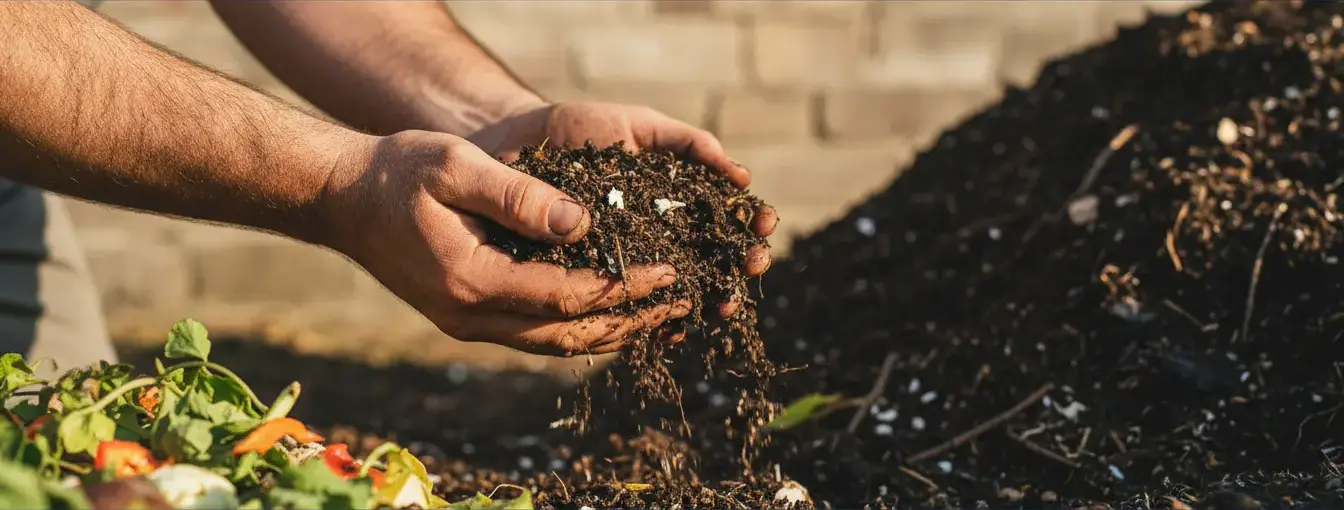
From an environmental standpoint, diverting food waste is one of the most impactful actions a restaurant can take. Food scraps in landfills decompose anaerobically, producing methane, a potent greenhouse gas. Commercial composting processes this material into a valuable soil amendment, closing the nutrient loop and contributing to a circular economy 3.
Getting Started with a Hauler in Rockwall
Taking the first step is straightforward. We recommend contacting several providers to compare services and quotes.
- Research Local Providers: Identify haulers like RTS, Waste Management, and Republic Services that service commercial clients in Rockwall County.
- Request Quotes and Proposals: Reach out for detailed quotes. Be prepared to provide an estimate of your weekly food waste volume (e.g., number of gallons or pounds).
- Ask Specific Questions: Confirm container types, liner requirements, pickup schedules, exact pricing, and their specific list of accepted materials. Inquire about any start-up assistance or staff training they provide.
- Pilot the Program: Consider starting with a trial period in one area of your kitchen or during specific shifts to work out any kinks before a full-scale rollout.
By investing in a commercial composting program, your Rockwall restaurant not only manages waste more responsibly but also aligns with the values of a community that appreciates both local business and environmental stewardship.
Frequently asked questions
Sources
Footnotes
-
Food Waste in America in 2025: Statistics & Facts | RTS - https://www.rts.com/resources/guides/food-waste-america/ ↩
-
89(R) SB 2078 - Texas Legislature Online - https://capitol.texas.gov/tlodocs/89R/billtext/pdf/SB02078F.pdf ↩
-
Composting At Home | US EPA - https://www.epa.gov/recycle/composting-home ↩