Find the Best Composting & Food Waste Companies for Your Business
No obligation • Fast responses • Nationwide coverage

Why you can trust Restaurant Waste Disposal
Restaurant Waste Disposal is a leading U.S. resource for comparing restaurant composting, food-waste recycling, grease trap cleaning, and used cooking oil collection services. Our editorial team researches providers, checks credentials, and organizes unbiased information so operators can make informed decisions. Companies cannot pay to change ratings or placement.
Search providers near you
Top Composting & Food Waste Companies in Pearland, Texas Ranked
For restaurants and food service businesses in Pearland, managing organic waste is a critical operational and environmental consideration. While the City of Pearland's municipal services focus primarily on residential trash and recycling, commercial establishments must navigate a landscape of private haulers to implement effective food scrap diversion and composting programs. Successfully integrating organics recycling not only supports sustainability goals but can also align with Texas Commission on Environmental Quality (TCEQ) guidelines for waste management, potentially leading to cost savings on overall waste disposal. This guide outlines the pathways, best practices, and local considerations for Pearland businesses looking to tackle food waste.
Understanding Your Commercial Organics Recycling Options
In Pearland, the responsibility for commercial food waste collection falls to private service providers. The city itself does not list specific municipal programs for restaurant organics recycling, meaning business owners must proactively seek out and contract with a third-party hauler. This model is common in the greater Houston metropolitan area, where several national and regional companies offer tailored services for diverting organic material from landfills.
The primary players in this space include large national waste management firms like Republic Services and Waste Management, which have established commercial organics collection routes in the region. Additionally, local and specialized "green" haulers, such as Green Star Recycling or Goodr, may provide services focused specifically on food scrap collection and composting. These providers handle everything from prep scraps and plate waste to coffee grounds and approved, soiled paper products, transforming what was once trash into valuable compost.
What Materials Can Be Composted?
A successful program hinges on knowing what goes in the green bin. Most commercial food waste recycling programs accept a wide range of organic materials to ensure a high diversion rate. Commonly accepted items include:
- Fruit and Vegetable Scraps: Cores, peels, rinds, and spoiled produce.
- Prepared Foods: Leftovers, plate waste, baked goods, and dairy products.
- Protein Waste: Meat, bones, fish, and shellfish.
- Other Organics: Coffee grounds with filters, tea bags, eggshells, and nutshells.
- Soiled Paper Products: Uncoated paper napkins, paper towels, pizza boxes (grease-stained portions), and compostable paper serviceware that meets specific certifications.
The golden rule is contamination control. Keeping non-compostable materials out of the organics stream is essential. This includes:
- Plastic bags, wrap, and utensils.
- Styrofoam (polystyrene) containers.
- Glass, metal, or rubber.
- Any form of liquid or cooking oil/grease (these require separate handling).
- "Compostable" plastics that are not certified for industrial facilities.
Contamination can lead to entire loads being rejected, resulting in higher fees and undermining environmental efforts. Clear staff training and proper bin labeling are your first line of defense 1 2.
Containers, Collection Schedules, and Logistics
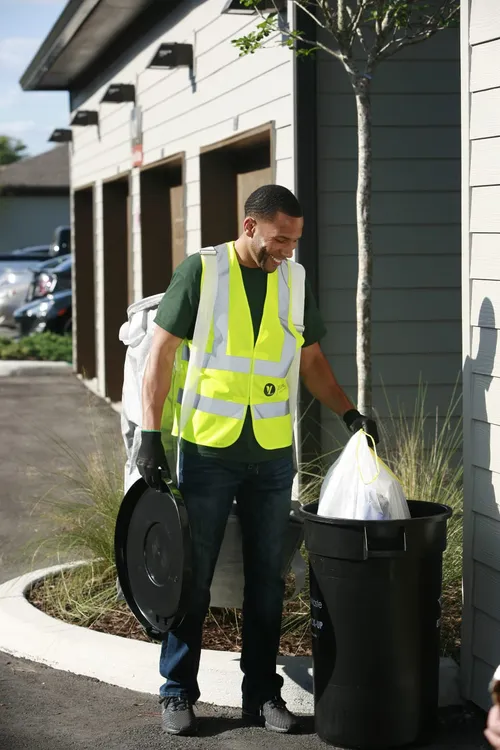
Once you select a hauler, they will typically provide the necessary collection containers. For restaurants, these are often large, wheeled carts (like 96-gallon models) or dedicated dumpsters, frequently distinguished by green lids or prominent composting labels. The size and number of containers are determined during the signup process based on your estimated weekly volume of food scraps.
Collection frequency is highly flexible and tailored to your business needs. A high-volume restaurant may require daily pickups, while a smaller cafe might opt for service two or three times a week. Your hauler will work with you to establish a schedule that prevents odor issues and bin overflow. Proper on-site storage-often in a kitchen collection pail that is regularly emptied into the larger outdoor container-is key to maintaining cleanliness and staff buy-in.
Find the perfect composting & food waste companies for your needs
Get personalized recommendations and expert advice
Navigating Costs and Potential Savings
Investing in organics recycling involves a new line item in your operational budget, but it can also lead to offsetting savings. Costs are not fixed and vary based on several factors:
- Container Size and Type: A 96-gallon cart will cost less per month than a 2-cubic-yard dumpster.
- Pickup Frequency: Daily service commands a higher fee than weekly collection.
- Volume and Hauler: Rates differ between providers, and local specialists may offer competitive pricing versus national chains.
The financial upside comes from potentially reducing your standard trash disposal costs. By diverting heavy, wet food waste-which is often a significant portion of a restaurant's trash volume-into a separate stream, you may be able to downsize your garbage dumpster or reduce its pickup frequency. The monthly fee for composting service can sometimes be lower than the savings realized on trash hauling, especially for establishments with high food waste output 3. Always request detailed, itemized quotes that compare your current waste management costs with a proposed two-stream (trash + organics) system.
Compliance and Best Practices for Pearland Businesses
While Texas does not have a statewide mandate for commercial food waste composting, adhering to best practices ensures program success and regulatory alignment. The TCEQ provides guidelines for managing organic waste streams, emphasizing proper handling to avoid creating nuisance conditions or environmental hazards. Furthermore, demonstrating a commitment to sustainability through organics diversion can enhance your restaurant's reputation within the Pearland community.
Implementing a staff training program is non-negotiable. Use clear signage (often available from your hauler) in both English and Spanish, conduct brief training sessions, and designate a sustainability champion on your team. Regularly audit your bins to check for contamination and provide feedback. Finally, communicate your efforts to customers; many diners appreciate supporting businesses with verifiable green practices.
Your Next Steps: Getting Started in Pearland
Taking the first step toward commercial composting is straightforward:
- Contact the City: While they don't provide the service, the City of Pearland's Disposal Services department may have updated resources or a list of recommended providers serving commercial clients in the area. A quick call or visit to their business disposal services webpage is a prudent starting point.
- Solicit Multiple Quotes: Reach out to at least three haulers, including both large national providers (Waste Management, Republic Services) and any local green waste specialists you can identify 4 5. Provide each with a realistic estimate of your weekly food waste volume.
- Ask Detailed Questions: Inquire about container provisions, pickup schedules, contamination policies, where the compost ends up, and of course, the complete fee structure. Choose the partner that offers the clearest communication and a plan that fits your operational flow.
Frequently asked questions
Sources
Footnotes
-
Frequently Asked Questions: Reducing Food Waste in the EU - https://food.ec.europa.eu/food-safety/food-waste/frequently-asked-questions-reducing-food-waste-eu_en ↩
-
NYC compost rules go in effect Tuesday: What gets composted, fines - https://www.youtube.com/watch?v=oMKN4AnO0mg ↩
-
Managing Hazardous Waste as Universal Waste - https://www.tceq.texas.gov/assistance/waste/universal.html ↩
-
Food Waste Recycling | Los Angeles County Sanitation Districts - https://www.lacsd.org/services/solid-waste-programs/food-waste-recycling ↩
-
Disposal Services | City of Pearland, TX - https://www.pearlandtx.gov/departments/disposal-services ↩