Find the Best Composting & Food Waste Companies for Your Business
No obligation • Fast responses • Nationwide coverage

Why you can trust Restaurant Waste Disposal
Restaurant Waste Disposal is a leading U.S. resource for comparing restaurant composting, food-waste recycling, grease trap cleaning, and used cooking oil collection services. Our editorial team researches providers, checks credentials, and organizes unbiased information so operators can make informed decisions. Companies cannot pay to change ratings or placement.
Search providers near you
Top Composting & Food Waste Companies in Garland, Texas Ranked
For restaurants and food service businesses in Garland, managing organic waste is a critical operational and environmental consideration. While the city provides robust commercial sanitation services for general solid waste and recycling, dedicated commercial food scrap composting and organic waste recycling often require partnering with specialized private haulers. Navigating the options for diverting food waste from landfills can reduce disposal costs, support sustainability goals, and contribute to local soil health initiatives. This guide outlines the pathways available for Garland businesses to implement effective food waste diversion and composting programs.
Understanding Your Commercial Waste Services in Garland
The City of Garland's Sanitation Department offers commercial services to all businesses, including restaurants, warehouses, and retail establishments 1. These services are contracted and typically involve the city providing large-capacity containers for solid waste and single-stream recycling 1. It's important to note that while the city handles general waste, its municipal composting programs are primarily designed for residential yard waste and public drop-off 2. For a restaurant's daily stream of food scraps, pre-consumer waste, and soiled paper products, the standard commercial service may not include a dedicated organics collection stream.
Businesses must adhere to local ordinances outlined in the city's sanitation codes (Chapter 52). Key regulations include prohibitions on placing liquid waste in containers, rules against setting materials outside of provided bins, and restrictions on moving city-owned containers without approval 3. Contamination is also a major focus for recycling streams; food and liquids are not permitted in the blue recycling carts, as they can ruin entire batches of recyclable materials 4. These same principles of avoiding contamination are paramount when setting up a separate food waste composting stream.
Partnering with Private Food Waste Haulers
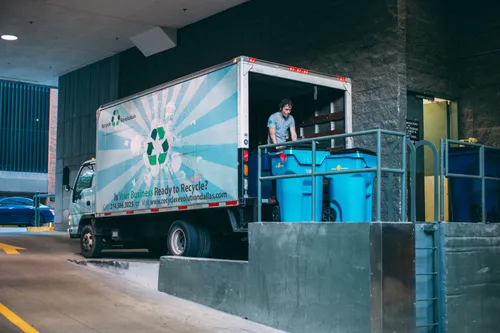
For a dedicated organics recycling program, Garland restaurants will likely need to engage a private service provider. These specialized haulers focus on collecting commercial food waste and transporting it to industrial composting facilities. Companies like Recycle Revolution, which serves the Dallas-Fort Worth area, offer tailored services for businesses looking to divert food waste from landfills.
These private services provide several advantages:
- Customized Solutions: They work with businesses to determine the appropriate container sizes (such as bins or carts) and collection frequency-whether weekly, multiple times per week, or as needed-to match the volume of food waste generated.
- Clear Acceptable Materials: They typically accept fruit and vegetable scraps, coffee grounds and filters, eggshells, and uncoated paper products, while providing clear guidelines on contamination.
- Streamlined Process: The hauler manages the logistics of collection, transportation, and delivery to a permitted composting facility.
Establishing a relationship with a private hauler is often the most direct route for a restaurant to start a comprehensive food waste diversion program.
Implementing a Successful Food Waste Program
Starting an organics recycling program requires planning and staff engagement. The first step is to conduct a waste audit to understand the volume and type of food waste your operation produces. This will inform the size and number of containers needed and help you get an accurate quote from service providers.
Next, focus on contamination prevention. A successful program depends on keeping non-compostable materials out of the organics stream. Common contaminants include:
- Plastics (including so-called "compostable" bags unless specifically approved by your hauler)
- Glass and metals
- Styrofoam
- Liquids and fats/oils/grease
Staff training is essential. Clear, multilingual signage placed above collection bins can help ensure kitchen staff, servers, and busers properly separate food scraps from trash and recycling. Consistent education reduces contamination and improves the efficiency of the program.
Find the perfect composting & food waste companies for your needs
Get personalized recommendations and expert advice
Costs and Considerations for Commercial Organics Recycling
The cost for commercial food waste collection varies based on several factors, including the volume of waste, the frequency of pickup, and your location within Garland 5. Private haulers typically require businesses to contact them directly for a customized quote 5. While there is an added cost for this specialized service, many businesses find it offsets their traditional waste disposal costs by reducing the volume of trash sent to the landfill, potentially leading to lower garbage collection fees or allowing for smaller trash dumpsters.
It's also worth exploring the city's broader resources. Garland promotes composting education through programs like "Composting with Class" and provides information on backyard composting for residents 6. While these are not direct commercial solutions, they reflect a community interest in sustainability that can align with your business's public-facing environmental efforts.
Grease Trap and Cooking Oil Management
While distinct from food scrap composting, managing fats, oils, and grease (FOG) is a crucial part of a restaurant's overall waste strategy. Improper disposal of FOG can lead to severe sewer line blockages and environmental violations. Garland's sanitation codes implicitly address this by prohibiting the discharge of materials that obstruct sewers 7. Most restaurants contract with specialized service providers for regular grease trap cleaning and used cooking oil collection. This oil is often recycled into biofuels, creating another valuable stream of waste diversion. Ensuring these services are performed consistently is key to maintaining compliance and operational efficiency.
Benefits Beyond Waste Disposal
Diverting food waste from the landfill offers tangible benefits for Garland restaurants. Environmentally, it reduces methane emissions from landfills and creates compost that can enrich local soils. Economically, it can stabilize waste management costs and demonstrate a commitment to sustainability that resonates with customers and the community. By taking a proactive approach to organics recycling-whether through a private hauler or by advocating for expanded municipal services-restaurants can play a significant role in Garland's sustainable future.
Frequently asked questions
Sources
Footnotes
-
Commercial Services - Garland, TX - https://www.garlandtx.gov/498/Commercial-Services ↩ ↩2
-
Municipal & Commercial Composting - https://www.fmmetrocog.org/application/files/1115/3547/3754/BlueprintMunicipalComposting_FINAL.pdf ↩
-
City of Garland, TX IN GENERAL - eCode360 - https://ecode360.com/40079898 ↩
-
Recycling - Garland, TX - https://www.garlandtx.gov/429/Recycling ↩
-
Commercial Food Waste Collection - Dallas - Recycle Revolution - https://recyclerevolutiondallas.com/food-waste-collection ↩ ↩2
-
Composting with Class Reg. - Garland, TX - https://www.garlandtx.gov/3819/Composting ↩
-
SANITATION SERVICES - City of Garland, TX - eCode360 - https://ecode360.com/40079926 ↩