Find the Best Used Cooking Oil Collection Companies for Your Business
No obligation • Fast responses • Nationwide coverage

Why you can trust Restaurant Waste Disposal
Restaurant Waste Disposal is a leading U.S. resource for comparing restaurant composting, food-waste recycling, grease trap cleaning, and used cooking oil collection services. Our editorial team researches providers, checks credentials, and organizes unbiased information so operators can make informed decisions. Companies cannot pay to change ratings or placement.
Search providers near you
Top Used Cooking Oil Collection Companies in Renton, Washington Ranked
For restaurants and food service businesses in Renton, managing used cooking oil (UCO) is a critical operational task that intersects with environmental responsibility, regulatory compliance, and potential revenue. Proper disposal of this waste stream is not just about cleanliness; it's a regulated process that protects local sewer systems and contributes to a circular economy by transforming waste into valuable resources like biodiesel. In Renton, this means partnering with licensed grease haulers who provide collection tanks, scheduled pickups, and ensure the oil is recycled according to Washington State Department of Ecology regulations. Navigating this process correctly helps your business avoid fines, reduce its environmental footprint, and can even turn a cost center into a small income stream.
Understanding the local rules for grease and oil management is the first step toward compliance and efficient operations.
Restaurant Technologies
19437 66th Ave S, Kent, WA 98032
Restaurant Technologies is a used cooking oil collection company based in Kent, WA. They provide an end-to-end cooking oil management system that includes bulk oil delivery, filtration, and recycling. Their automatic system installs tanks and controls in commercial kitchens to safely deliver fresh oil and remove used oil without manual handling. This service helps reduce hazards and improve safety in back-of-house operations while supporting sustainability initiatives.
Seattle Grease Trap Services
107 Cherry St #310, Seattle, WA 98104
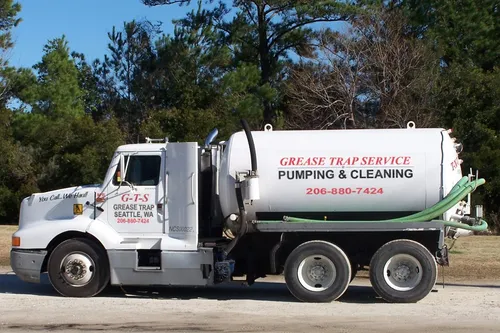
Seattle Grease Trap Services provides comprehensive grease trap and interceptor cleaning, pumping, installation, and repair services in Seattle, WA. Serving commercial kitchens, restaurants, schools, and industrial facilities, they cover Seattle and surrounding areas including King and Pierce Counties. With over 15 years of experience, the company offers licensed and environmentally responsible grease trap maintenance, ensuring compliance with local regulations. Their fleet of pump trucks and trained technicians handle grease trap measurement, pumping, cleaning, and record keeping to support smooth kitchen operations and prevent blockages or fines.

West Coast Renewables
2211 W Valley Hwy E, Sumner, WA 98390
West Coast Renewables is a grease trap cleaning and used cooking oil collection company based in Puyallup, WA. They serve a wide area across Western Washington, including cities like Seattle, Bellevue, Tacoma, and Olympia. Their services include grease trap pumping, maintenance, repair, and hydro-jetting, which uses high-pressure water to clear clogs and improve system performance. The company emphasizes proactive FOG (fats, oils, and grease) management to help commercial kitchens maintain hygiene and comply with local regulations. West Coast Renewables offers 24/7 emergency services to minimize disruptions for food service businesses.
Baker Commodities Inc
5795 S 130th Pl, Seattle, WA 98178
Baker Commodities Inc is a grease removal and used cooking oil collection company based in Seattle, WA. They serve the Pacific Northwest region, providing restaurant grease pickup, grease trap cleaning, and animal by-product recycling services. Their capabilities include using vacuum pumps and hydrojetters to clean grease traps efficiently, helping to prevent sewer clogs and promote environmental sustainability. The company offers 24-hour emergency rendering and grease collection services to support local food service businesses and protect the community's natural surroundings.
DAR PRO Solutions
2041 Marc Ave, Tacoma, WA 98421
DAR PRO Solutions is a used cooking oil collection company based in Tacoma, WA. They provide collection services for used cooking oil, helping businesses manage their waste oil efficiently. DAR PRO Solutions is known for professional and prompt service in the Tacoma area.
Local Regulations for Grease and Oil Disposal
Renton businesses must adhere to both King County and Washington State regulations regarding fats, oils, and grease (FOG). The most critical rule is to never pour used cooking oil down the drain. Doing so contributes to sewer blockages, which can lead to costly backups and environmental pollution, and violates local ordinances 1. Washington State classifies used cooking oil as a "dangerous waste" if it is destined for disposal, but it is exempt from these rules if it is recycled 2. This distinction makes using a licensed recycling service not just a good practice, but a key compliance strategy.
All used oil must be collected by a transporter registered with the Washington State Department of Ecology. These licensed haulers are equipped to handle, transport, and recycle the material properly, providing you with documentation that proves compliance. Storing oil on-site also has requirements: containers and tanks must be in good condition, clearly labeled, and kept secure to prevent spills, theft, or pest issues. For outdoor storage, locked, spill-proof containers are essential.
Best Practices for On-Site Oil Handling and Storage
Proper handling begins in the kitchen. Always allow oil to cool below 120°F (approximately 50°C) before transferring it to a storage container. This prevents burns to staff and damage to plastic storage drums 3. Implementing a daily filtering practice to remove food particles can extend the useful life of your frying oil and improve the quality-and value-of the UCO you eventually recycle.
Your grease collection service will typically provide a dedicated storage tank or container. It is crucial to keep this container clean, sealed, and dedicated solely to used cooking oil. Do not mix in other liquids, garbage, or detergents, as contamination can render the oil unrecyclable and may result in disposal fees instead of revenue. The storage area, whether indoors or outdoors, should be accessible for the hauler's truck and designed with spill containment in mind, such as a secondary containment dike for outdoor tanks.
How Professional Collection and Recycling Works
The process for used fryer oil recycling is a well-established chain that turns your waste into fuel. Here's how it typically works for a Renton business:
- Service Setup: You contract with a licensed collection service (like Mahoney Environmental, which operates in the Seattle area). They will deliver and install a collection tank or barrel at your location, often at no upfront cost 4.
- Regular Pickups: The service establishes a pickup schedule-weekly, bi-weekly, or as needed-based on your volume. A truck equipped with a vacuum system will arrive to pump out the contents of your storage tank.
- Transportation & Processing: The collected oil is transported to a processing or rendering facility. There, it undergoes purification to remove water and solids.
- Transformation: The cleaned oil is then sold as a feedstock to be converted into products like biodiesel, renewable diesel, or sustainable aviation fuel, completing the recycling loop 5.
- Reporting: Reputable haulers provide service tickets or reports detailing the amount collected, which aids in your record-keeping for compliance and revenue tracking.
Find the perfect used cooking oil collection companies for your needs
Get personalized recommendations and expert advice
Understanding Costs and Potential Revenue
The financial model for used cooking oil collection can vary. Some services charge a hauling fee, while others offer the service for free-or even pay you-based on the market value of the recycled commodity.
- Potential Revenue: If your oil is kept clean and free of contaminants, it holds higher value. Current market rates can generate $2.40 to $3.60 per gallon for quality used cooking oil 6 7. This revenue is typically calculated based on the volume picked up and the market price at the time.
- Fee-Based Services: Some providers may charge a collection fee, particularly if the volume is low or the oil is contaminated. It's important to clarify the pricing structure when obtaining quotes.
- Equipment: Most professional collectors provide the storage tank and maintenance as part of their service, removing a capital expense for your business.
The key to maximizing revenue is maintaining oil quality through good kitchen practices like regular filtering and preventing contamination.
Sustainable Benefits for Renton Businesses
Participating in a used cooking oil recycling program aligns with broader sustainability goals for Renton. The City of Renton encourages businesses to adopt practices that reduce waste and environmental impact through initiatives like its Shift Green program 8. By recycling your UCO, you directly contribute to:
- Reducing Fossil Fuel Demand: Biodiesel made from UCO is a renewable, cleaner-burning alternative to petroleum diesel.
- Diverting Waste from Landfills: Used oil that isn't recycled must be disposed of as hazardous waste, taking up space and requiring special handling.
- Protecting Local Waterways: Proper collection prevents FOG from entering the sewer system, which helps protect the Cedar River and Lake Washington watersheds from pollution.
Finding and Choosing a Collection Service in Renton
Your next step is to identify a reliable partner. Start by searching for licensed used cooking oil collectors serving the Seattle and South King County area. The City of Renton's sustainability and solid waste pages for businesses can be a helpful starting point for local resources 9.
When evaluating providers, consider asking:
- Are you licensed with the WA Department of Ecology for used oil transportation?
- What is your pricing model (fee, revenue share, or free service)?
- Do you provide, install, and maintain the collection tank?
- What is your typical pickup schedule and reliability?
- Can you provide references from other local restaurants?
- Where does my oil go for recycling, and what end products are made?
Getting quotes from multiple services allows you to compare terms and find the best fit for your operation's size and needs.
Frequently asked questions
Sources
Footnotes
-
Fats, Oil and Grease - Options & restrictions - King County - https://info.kingcounty.gov/services/recycling-garbage/solid-waste/what-do-i-do-with/Restrictions?m=50 ↩
-
Used oil - Washington State Department of Ecology - https://ecology.wa.gov/regulations-permits/guidance-technical-assistance/dangerous-waste-guidance/common-dangerous-waste/used-oil ↩
-
Used Cooking Oil Disposal: Complete Guide to Grease Pickups - https://greaseconnections.com/used-cooking-oil-disposal-guide-grease-pickups/ ↩
-
Used Cooking Oil Pick Up & Recycling Service in Seattle WA - https://www.mahoneyes.com/waste-oil-pickup-recycling-seattle-wa/ ↩
-
What happens with the used oil from restaurants and fast-food ... - https://www.quora.com/What-happens-with-the-used-oil-from-restaurants-and-fast-food-chains-Is-there-any-sort-of-recycling ↩
-
Restaurant Used Cooking Oil Recycling & Disposal Guide - https://greaseconnections.com/restaurant-used-cooking-oil-disposal-recycling-revenue-guide/ ↩
-
Used Cooking Oil Pricing & Business Guide - Grease Connections - https://greaseconnections.com/used-cooking-oil-pricing-guide/ ↩
-
Shift Green - City of Renton - https://www.rentonwa.gov/City-Services/Sustainability-and-Solid-Waste/Sustainability/Shift-Green ↩
-
Businesses - City of Renton - https://www.rentonwa.gov/City-Services/Sustainability-and-Solid-Waste/Businesses ↩