Find the Best Grease Trap Cleaning Companies for Your Business
No obligation • Fast responses • Nationwide coverage

Why you can trust Restaurant Waste Disposal
Restaurant Waste Disposal is a leading U.S. resource for comparing restaurant composting, food-waste recycling, grease trap cleaning, and used cooking oil collection services. Our editorial team researches providers, checks credentials, and organizes unbiased information so operators can make informed decisions. Companies cannot pay to change ratings or placement.
Search providers near you
Top Grease Trap Cleaning Companies in Milwaukee, Wisconsin Ranked
For any restaurant, food truck, or commercial kitchen in Milwaukee, managing fats, oils, and grease (FOG) is a critical operational and legal responsibility. Proper grease interceptor maintenance is not just about preventing clogs and foul odors; it's a mandatory requirement enforced by local and state authorities to protect the city's sewer infrastructure. Milwaukee's specific regulations, governed by the Milwaukee Metropolitan Sewerage District (MMSD) and Wisconsin's plumbing code (SPS 382), set clear standards for installation, sizing, and, most importantly, a rigorous cleaning schedule. Non-compliance can lead to severe penalties, including hefty fines and potential business interruption. This guide outlines the essential knowledge for Milwaukee food service operators to maintain compliance, avoid costly emergencies, and ensure their kitchen runs smoothly.

AJacks Sewer & Drain Cleaning
15225 W Rogers Dr, New Berlin, WI 53151
AJacks Sewer & Drain Cleaning is a drain cleaning company based in Waukesha, WI, serving South-Eastern Wisconsin including Milwaukee, Waukesha, Jefferson, Ozaukee, Washington, Racine, Kenosha, and Walworth counties. Established in 1958, they provide commercial and residential drain cleaning services such as grease trap cleaning, video sewer inspections, and clearing of main lines, laterals, floor drains, and storm sewers. AJacks specializes in sewer and drain cleaning rather than general plumbing, offering expertise in water 'out' systems. Their team uses specialized cameras for inspections and handles tough blockages efficiently.
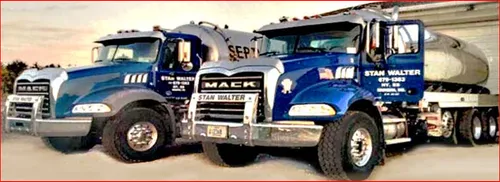
Stanley Walter Septic Tank Cleaning LLC.
S65W22175 National Ave, Waukesha, WI 53189
Stanley Walter Septic Tank Cleaning LLC is a family-owned and locally operated company based near Milwaukee, WI, serving Southeast Wisconsin. They provide a range of septic services including septic tank and mound system pumping, holding tank pumping, and grease trap cleaning for commercial kitchens. The company uses high-pressure water jetting to clear clogged drain lines and sewers, effectively removing solids and roots from septic systems. Established in 1953, Stanley Walter Septic Tank Cleaning LLC has built a reputation for personalized and comprehensive septic maintenance and repair services.

Giddings Hawkins Maintenance Service LLC
2112 S 56th St, West Allis, WI 53219
Giddings Hawkins Maintenance Service LLC is a non-hazardous liquid waste management and industrial maintenance company based in West Allis, Wisconsin. Founded in 1987, it serves customers throughout Milwaukee, Madison, and southeast Wisconsin. The company specializes in grease trap pumping, catch basin pumping, and other non-hazardous liquid waste pumping services. They also provide kitchen hood, duct, and fan maintenance along with industrial maintenance for various industries including restaurants, manufacturing, hospitals, and commercial properties. Giddings Hawkins is licensed by the Wisconsin Department of Natural Resources and fully insured.
Understanding Milwaukee's Grease Interceptor Regulations
In Milwaukee, grease trap maintenance is a matter of law. All food service establishments (excluding residential dwellings) are required to have properly sized and functioning grease interceptors. These rules are designed to prevent FOG from entering the public sewer system, where it can cool, solidify, and cause major blockages leading to sanitary sewer overflows.
The primary regulatory framework comes from two key sources: the Wisconsin Department of Safety and Professional Services (DSPS) Plumbing Code, specifically SPS 382, and the enforcement inspections conducted by the Milwaukee Metropolitan Sewerage District (MMSD). SPS 382 dictates the technical requirements for interceptor installation, including sizing based on flow rate and fixture capacity, mandating easy access for service, and prohibiting certain designs like water-cooled interceptors 1. MMSD, however, is the agency that performs unannounced inspections to verify that these devices are being maintained correctly.
Key Compliance Requirements
- Mandatory Installation: If you operate a commercial kitchen, you must have a grease interceptor.
- Proper Sizing: Interceptors must be sized according to the Wisconsin plumbing code, which considers the flow rate and the total fixture discharge capacity. For many establishments, this means a minimum capacity of 750 to 1,000 gallons 2.
- Accessibility: The interceptor must be easily accessible for cleaning and inspection at all times.
- Record Keeping: You are legally required to maintain detailed service records for a minimum of three years. These records must include the date of service, the volume of waste removed, and the disposal method 3. This documentation is your first line of defense during an MMSD inspection.
The "25% Rule": When to Clean Your Grease Trap
The cornerstone of Milwaukee's maintenance standard is the "25% Rule." This is not a suggestion-it's the official trigger for mandatory cleaning 4. According to regulations, a grease interceptor must be pumped and cleaned when the combined FOG and settled solids accumulate to a level that equals 25% of the liquid depth of the trap 4.
In practical terms, this means you or your service provider should regularly measure the grease and sludge layer. Allowing accumulation to exceed 25% is a direct violation and significantly increases the risk of grease passing into the sewer line. For most Milwaukee restaurants, adhering to this rule typically translates to a cleaning frequency of approximately every 90 days. However, high-volume establishments, those with heavy frying operations, or those with smaller traps may need service monthly or even more frequently 5.
Find the perfect grease trap cleaning companies for your needs
Get personalized recommendations and expert advice
Consequences of Non-Compliance: Fines and Inspections
The MMSD takes sewer system protection seriously. Their inspectors have the authority to conduct unannounced inspections of your grease interceptor and your maintenance records. If they find your trap in violation of the 25% rule or discover you have incomplete service logs, your business faces significant consequences.
Penalties can include:
- Substantial Fines: Violations can result in fines ranging from $500 to over $2,000 per incident 6 7.
- Operational Disruption: In severe cases, the health department or MMSD can mandate immediate closure until the violation is corrected.
- Liability for Damages: If a blockage from your establishment causes sewer backup or damage to the public system, your business may be held financially liable for the cleanup and repair costs 8.
Proactive, documented maintenance is the only reliable way to avoid these costly and disruptive scenarios.
Understanding Grease Trap Cleaning Costs in Milwaukee
The cost for grease interceptor service in Milwaukee varies based on the size of your trap, your location, and the nature of the service. Investing in routine maintenance is always far less expensive than emergency remediation.
- Routine Pumping (Preventative): For a standard smaller to mid-size grease trap (e.g., 500-1000 gallons), you can expect routine cleaning to cost between $250 and $400 per service. Many providers offer contract pricing for regular quarterly service, which can provide cost predictability.
- Larger Traps & Contracts: For larger interceptors (1000-1500 gallons), contract or extended service pricing may range from $225 to $315 or more per scheduled cleaning.
- Emergency Pumping: This is where costs escalate dramatically. If you neglect maintenance and experience a backup or clog that requires immediate, off-schedule service, emergency pump-out calls can easily cost $800 to $1,200 or more 9. This does not include potential fines or plumbing repair costs to clear blocked lines.
Best Practices for Effective Grease Management
Beyond simply scheduling pump-outs, a comprehensive approach minimizes risk and extends the time between necessary services.
- Establish a Preventative Schedule: Work with a reputable service provider to set a cleaning schedule based on your specific kitchen's output, well within the 90-day/25% rule guideline. Never wait for an odor or slow drain to signal it's time for service 10 11.
- Implement Staff Training: Educate every kitchen staff member on best practices. This includes scraping plates into trash bins before washing, using sink strainers, and never pouring grease down any drain. Simple daily habits have a massive cumulative impact.
- Conduct Daily Visual Checks: Assign a staff member to quickly check the interceptor's inlet and outlet for obvious grease buildup or slow drainage. Early detection of issues can prevent a full-scale emergency.
- Meticulous Record Keeping: Maintain a dedicated logbook or digital file for every service receipt. Note the date, company, volume pumped, and any observations. This organized record is your proof of compliance.
Frequently asked questions
Sources
Footnotes
-
SPS 382.34(5)(c)2.b. - Wisconsin Legislative Documents - https://docs.legis.wisconsin.gov/document/administrativecode/SPS%20382.34(5)(c)2.b. ↩
-
SPS 382.34(6)(b) - Wisconsin Legislative Documents - https://docs.legis.wisconsin.gov/document/administrativecode/SPS%20382.34(6)(b) ↩
-
Wis. Admin. Code Department of Agriculture, Trade and Consumer ... - https://www.law.cornell.edu/regulations/wisconsin/Wis-Admin-Code-SS-ATCP-5-402-12 ↩
-
How to Clean a Grease Trap (and How Often You Should) - https://greaseconnections.com/how-to-clean-a-grease-trap-and-how-often-you-should/ ↩ ↩2
-
Establishing a Grease Trap Cleaning and Servicing Schedule for Your Commercial Kitchen - https://jpgreasetrap.com/establishing-a-grease-trap-cleaning-and-servicing-schedule-for-your-commercial-kitchen/ ↩
-
Essential Grease Trap Maintenance Guide For Milwaukee ... - https://www.myshyft.com/blog/grease-trap-cleaning-milwaukee-wisconsin/ ↩
-
Ultimate Milwaukee Health & Safety Inspection Checklist - Shyft - https://www.myshyft.com/blog/health-inspection-checklist-milwaukee-wisconsin/ ↩
-
Grease Interceptors - DSPS - Wisconsin.gov - https://dsps.wi.gov/Documents/Programs/Plumbing/FAQGreaseInterceptors.pdf ↩
-
Grease Trap Cleaning Prices | Guide on the Industry Average - https://grease-cycle.com/grease-trap-pumping-cost/ ↩
-
Ultimate Grease Trap Pumping Cost Guide: Essential Money-Saving ... - https://www.texwaywastewater.com/grease-trap-pumping-cost/ ↩
-
The Ultimate Guide to Restaurant Grease Trap Cleaning - https://mokherplumbing.com/ultimate-guide-restaurant-grease-trap-cleaning/ ↩