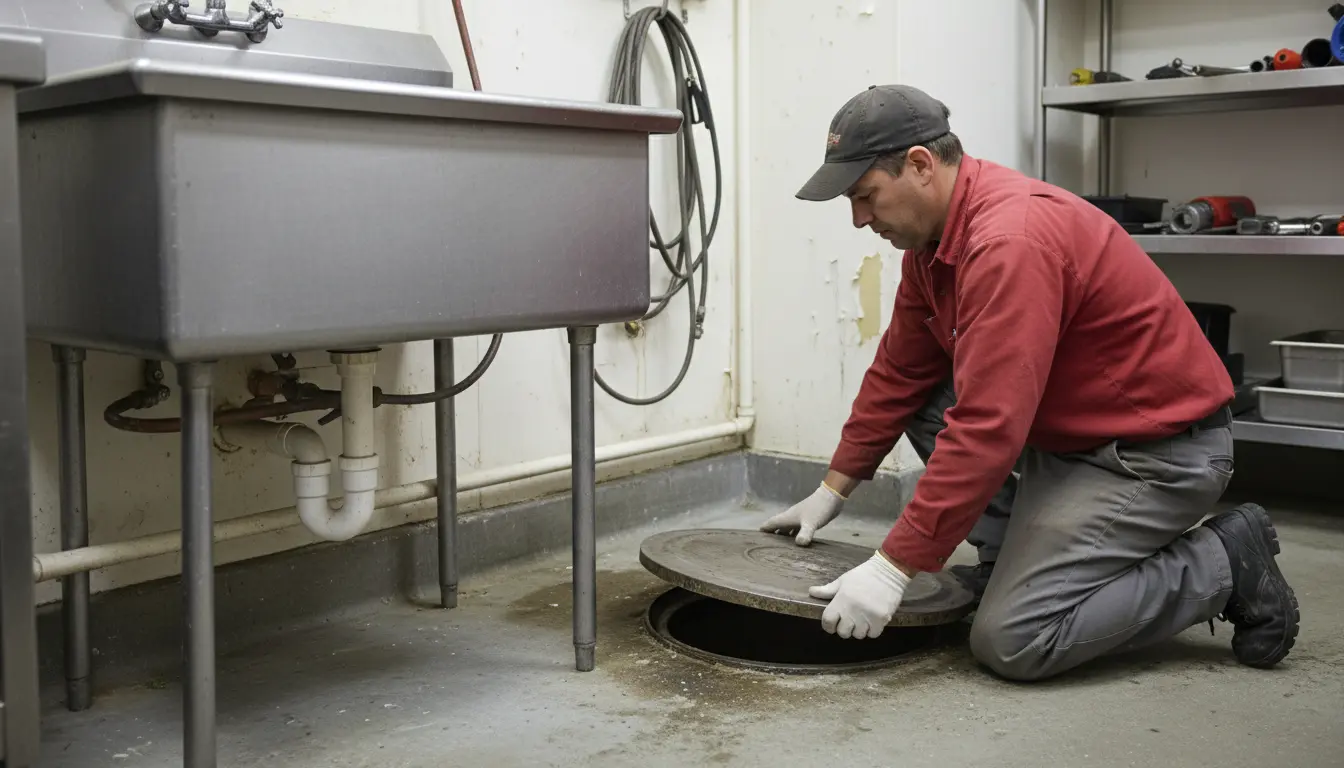
Find the Best Grease Trap Cleaning Companies for Your Business
No obligation • Fast responses • Nationwide coverage

Why you can trust Restaurant Waste Disposal
Restaurant Waste Disposal is a leading U.S. resource for comparing restaurant composting, food-waste recycling, grease trap cleaning, and used cooking oil collection services. Our editorial team researches providers, checks credentials, and organizes unbiased information so operators can make informed decisions. Companies cannot pay to change ratings or placement.
Search providers near you
Top Grease Trap Cleaning Companies in Leesburg, Virginia Ranked
For any restaurant or food service establishment in Leesburg, maintaining a clean and compliant grease trap or interceptor is a critical part of daily operations. Proper grease management is not just a best practice; it's a requirement enforced by local and state health codes to protect the public sewer system and ensure a safe, hygienic environment. Neglecting this essential maintenance can lead to costly backups, unpleasant odors, severe fines, and even operational shutdowns. This guide provides a detailed overview of everything you need to know about grease interceptor cleaning, maintenance, and compliance specific to Leesburg, helping you avoid common pitfalls and keep your business running smoothly.
Roto-Rooter Plumbing & Water Cleanup
2219 N Columbus St #204, Arlington, VA 22207
Roto-Rooter Plumbing & Water Cleanup provides comprehensive plumbing services in Arlington, VA, and the surrounding metro area. They offer a wide range of residential and commercial plumbing solutions including drain cleaning, sewer line repair, water heater installation and repair, grease trap cleaning, and floodwater cleanup. The company is equipped with advanced tools like hydro-jetting and video camera sewer inspections to address plumbing issues efficiently. Roto-Rooter also offers 24/7 emergency plumbing services to handle urgent problems such as burst pipes and sewer backups, minimizing property damage and disruption.
Countywide Septic Service
8478 Devon Ln, Walkersville, MD 21793
Countywide Septic Service is a family-owned business serving Frederick, MD, and surrounding counties including Montgomery and Carroll. They provide septic system cleaning and maintenance for both residential and commercial customers. Their certified technicians use advanced equipment to ensure septic systems operate efficiently. Services include septic tank cleaning, grease trap cleaning, pumping, baffle inspections, and septic tank locating. The company has been operating for over 30 years and offers emergency service as well.
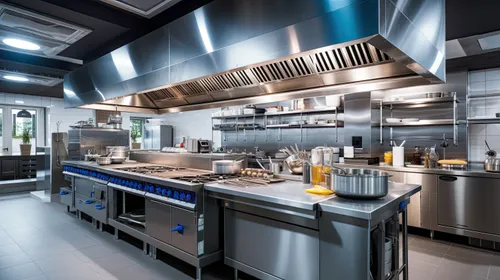
Shine Tech
Washington, DC
Shine Tech is a grease trap cleaning company based in Washington, DC. They provide grease trap cleaning and kitchen hood cleaning services for local businesses. Shine Tech is known for handling filter replacements and maintaining kitchen ventilation systems.
Leigh & Sons Liquid Waste Removal
15619 Norman Dr, North Potomac, MD 20878
Leigh & Sons Liquid Waste Removal is a liquid waste removal company serving Washington, DC, and the surrounding Maryland counties including Montgomery, Frederick, Howard, and Prince George's. Founded in 1985, the company specializes in septic tank maintenance, grease trap cleaning, and holding tank services. They use state-of-the-art equipment to ensure safe and efficient waste disposal with minimal disruption. The owner personally oversees each project to maintain quality and integrity.
Understanding Local Grease Trap Regulations
In Leesburg, grease trap maintenance is governed by regulations from the Virginia Department of Health (VDH) and local municipal codes. The primary rule is that accumulated grease and solids should never exceed 50% of the interceptor's capacity 1. This isn't just a suggestion-it's a enforceable standard. Inspectors from the VDH focus on overall food safety during their visits, and a key component of that is verifying proper grease management 2. They will check for the cleanliness of the trap itself and, crucially, review your service records.
Key Compliance Requirements
- Capacity Limit: Fats, oils, and grease (FOG) must not fill more than half of your trap's volume.
- Documentation: You are required to keep detailed service records for a minimum of three years. These logs should include dates of service, the company performing the work, and the amount of waste removed.
- Facility Standards: The area surrounding your grease interceptor must have grease-resistant, easily cleanable floors and walls with coved junctures (curved corners where the wall meets the floor) to prevent grime buildup and facilitate cleaning.
- Waste Disposal: Removed FOG and solids must be disposed of properly as solid waste, not poured down a drain or into the sewer.
Determining Your Cleaning Frequency
There is no one-size-fits-all schedule for grease interceptor servicing. The frequency depends entirely on the volume of grease your kitchen produces and the size of your trap. A high-volume restaurant with a small under-sink grease trap may need to have it cleaned daily or every other day 3. Conversely, a larger establishment with a properly sized outdoor interceptor might operate on a monthly, quarterly, or semi-annual pumping schedule.
The 50% rule is your best guide. Regular monitoring is essential. Many professional services recommend a routine inspection to gauge buildup and help you establish a predictable, cost-effective maintenance plan. Consistent servicing prevents the caking-on of FOG and solids, which makes cleaning more difficult and expensive over time 4.
The Inspection Process: What to Expect
Health inspections in Leesburg are conducted by VDH officials5. While their mandate covers all aspects of food safety-from employee hygiene to food temperatures-grease trap compliance is a significant part of the evaluation. An inspector will typically:
- Ask to see your grease trap maintenance records.
- Visually inspect the trap or interceptor for overall cleanliness and proper installation.
- Check the surrounding facility for compliance with surface and construction standards.
Enforcement actions, including fines or conditional operation permits, can result from neglected traps, missing records, or improper waste handling. Having your documentation in order is the simplest way to demonstrate compliance and avoid violations.
Cost Factors for Grease Interceptor Service
The cost for professional grease trap pumping in Leesburg varies based on several factors. For a basic pumping service, prices typically range from $125 to $250 or more per visit. Key elements that influence the price include:
- Trap Size and Location: A large, underground outdoor interceptor costs more to service than a small, accessible indoor unit.
- Service Frequency: Regularly scheduled maintenance is almost always less expensive than an emergency call for a clogged or overflowing trap.
- Condition: A severely neglected trap with caked-on grease requires more labor and time to clean thoroughly.
Investing in preventative maintenance is a proven way to control costs. A predictable schedule allows service providers to plan efficiently, and keeping your trap from reaching a critical state prevents expensive emergency fees and potential damage to your plumbing.
Find the perfect grease trap cleaning companies for your needs
Get personalized recommendations and expert advice
Building an Effective Maintenance Plan
A proactive approach to grease management saves money, stress, and ensures continuous compliance. Here is a step-by-step plan for Leesburg restaurant operators:
- Know Your System: Identify the type, size, and location (indoor vs. outdoor) of all grease interceptors in your facility. This information is vital for obtaining accurate service quotes and understanding your specific needs.
- Schedule Professional Service: Partner with a licensed and insured grease trap cleaning service in Leesburg. Based on an initial assessment, they can recommend a servicing frequency (e.g., monthly, quarterly) that keeps you well within the 50% capacity limit6 7.
- Implement Staff Training: One of the most effective ways to reduce grease load is to train kitchen staff to scrape all food waste into the trash before washing dishes. Minimizing the amount of grease and solids entering the drain directly extends the time between professional cleanings 8.
- Maintain Impeccable Records: Create a dedicated log for all grease-related maintenance. File every service receipt and report from your provider. This portfolio is your first line of defense during a health inspection 9.
- Conduct Visual Checks: Assign a manager to visually check the trap condition between professional services. Look for signs of slow drainage or odor, which can indicate it's time for a cleaning before the next scheduled appointment.
By following these steps, you transform grease trap maintenance from a reactive headache into a streamlined part of your operational excellence.
The Risks of Non-Compliance
Failing to properly maintain your grease interceptor carries significant risks beyond a simple fine. The most immediate problem is a sanitary sewer overflow (SSO) on your property, leading to unpleasant odors, potential health hazards, and costly cleanup bills. For the community, FOG that escapes into the public sewer system cools and hardens, creating massive blockages in city lines that can cause backups into homes and businesses and result in expensive municipal repairs.
From a business perspective, repeated violations can lead to escalating penalties and, in severe cases, the suspension of your operating permit until the issue is resolved10. This means being forced to close your doors, resulting in lost revenue and reputational damage. Consistent, documented maintenance is a small investment that protects your business from these far greater costs.
Frequently asked questions
Sources
Footnotes
-
APPENDIX A Grease Trap and Interceptor Requirements Definitions - https://fcwsd.org/documents/728/Appendix_A_Grease_Trap_Requirements.pdf ↩
-
Restaurant Inspections and Food Safety - Virginia Department of Health - https://www.vdh.virginia.gov/southside/environmental-health-services/restaurant-inspections-and-food-safety/ ↩
-
Food Service Requirements - Virginia Department of Health - https://www.vdh.virginia.gov/content/uploads/sites/81/2022/05/2019-FOOD-SERVICE-REQUIREMENTS-1.docx ↩
-
Grease Trap Maintenance Impacts Facility Health & Safety | Southern Green - https://www.southerngreen.com/blog/how-grease-trap-maintenance-impacts-your-facilitys-health-and-safety-standards ↩
-
Restaurant & Retail Food Inspections in Los Angeles County - http://ph.lacounty.gov/eh/inspection/restaurant-retail-food-inspection.htm ↩
-
How to Clean a Grease Trap (and How Often You Should) - https://greaseconnections.com/how-to-clean-a-grease-trap-and-how-often-you-should/ ↩
-
Grease Trap Cleaning Prices | Guide on the Industry Average - https://grease-cycle.com/grease-trap-pumping-cost/ ↩
-
Grease Trap Cleaning in Leesburg VA | Grease Interceptor ... - https://greasetrapcleaningleesburg.com/ ↩
-
The Town of Leesburg in Virginia - enCodePlus - https://online.encodeplus.com/regs/leesburg-va-dcsm/doclibrary.aspx?id=19b738c8-9508-4fec-9fde-4cb71614f35c ↩
-
The Cost To Clean A Grease Trap For Restaurants - https://thegreasecompany.com/blog/greasetrapcleaningcost/ ↩