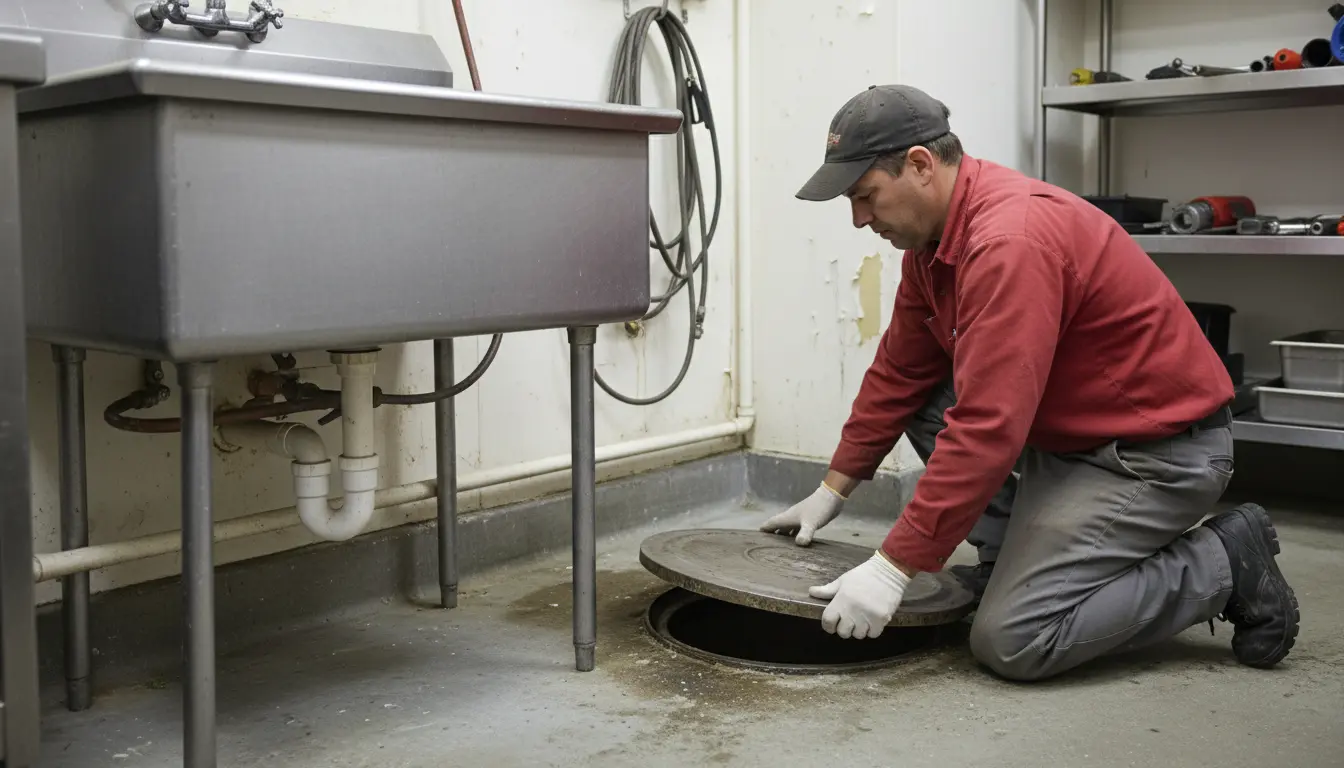
Find the Best Grease Trap Cleaning Companies for Your Business
No obligation • Fast responses • Nationwide coverage

Why you can trust Restaurant Waste Disposal
Restaurant Waste Disposal is a leading U.S. resource for comparing restaurant composting, food-waste recycling, grease trap cleaning, and used cooking oil collection services. Our editorial team researches providers, checks credentials, and organizes unbiased information so operators can make informed decisions. Companies cannot pay to change ratings or placement.
Search providers near you
Top Grease Trap Cleaning Companies in Salem, Oregon Ranked
For restaurant owners and food service operators in Salem, maintaining a clean and compliant grease trap is a critical, non-negotiable part of daily operations. Local regulations, enforced by the City of Salem and aligned with the Oregon Plumbing Specialty Code, mandate strict adherence to fats, oils, and grease (FOG) management to protect the public sewer system from costly blockages and environmental damage. Proper, scheduled maintenance of your grease interceptor is not just about avoiding fines-it's a smart business practice that prevents disruptive and expensive emergency cleanouts, ensuring your kitchen runs smoothly and sustainably.
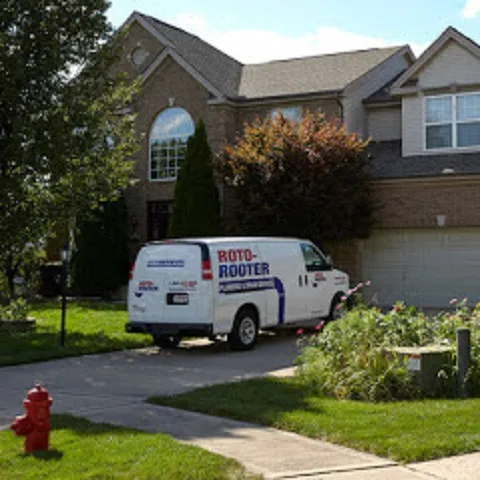
Roto-Rooter Plumbing & Water Cleanup
388 State St Ste 605, Salem, OR 97301
Roto-Rooter Plumbing & Water Cleanup provides comprehensive plumbing services in Salem, OR, serving both residential and commercial clients. Their offerings include floodwater cleanup, sewer and drain cleaning, water heater repairs and installations, grease trap maintenance, and mold remediation. The company is equipped with advanced tools such as hydro-jetting for drain cleaning and offers trenchless sewer line repair and replacement. Roto-Rooter has a 24/7 emergency plumbing service to address urgent issues like burst pipes and sewer backups, ensuring prompt assistance any time of day. They serve Salem and surrounding communities in Oregon and Washington, including Keizer, Silverton, and Stayton.
NW Sewer & drain
1223 24th St NE, Salem, OR 97301
NW Sewer & Drain is a licensed, bonded, and insured company based in Salem, OR, specializing in grease trap cleaning and comprehensive drain services. They offer a range of solutions including cabling and rooter service for clogged drains, hydro jetting for sewer and grease traps, camera inspection with detailed video reports, and drain repair or replacement. Their capabilities include jetting drain lines up to 300 feet and locating sewer and rain drain lines with camera technology. NW Sewer & Drain provides detailed invoices with photos and video inspections to support their work.
Understanding Salem's FOG Regulations
Salem's sewer use code, specifically Salem Code 74.050, explicitly prohibits the discharge of fats, oils, and grease into the sanitary sewer system 1. To comply, every food service establishment is required to install and maintain an approved grease interceptor. These devices are your first line of defense, capturing FOG before wastewater leaves your facility. The city has the authority to inspect these systems and enforce compliance, which can include citations, mandated repairs, and significant fines for violations.
The rules extend beyond just having a trap. The design and installation must meet specific standards, typically those set by the Plumbing and Drainage Institute (PDI), and the unit must be easily accessible for both inspection and cleaning. A common point of confusion involves additives; using chemical or biological agents to dissolve grease is generally prohibited by local codes, as they can simply push the problem further down the line instead of providing the proper physical removal required.
Types of Grease Interceptors and Cleaning Frequencies
Not all grease traps are created equal, and the type you have dictates your legal cleaning schedule. It's essential to know which one services your kitchen.
- Hydromechanical Grease Interceptors (HGI): These are typically the smaller, under-sink units found in individual kitchens. Due to their smaller capacity, Oregon regulations require they be cleaned no less than every 30 days.
- Gravity Grease Interceptors (GGI): These are larger, in-ground tanks usually located outside. They have a greater capacity and are required to be pumped no less than every 90 days.
These are minimum requirements. The actual frequency for your establishment should be based on a simple rule: clean the interceptor when the combined FOG and solids accumulate to 25% of the unit's liquid depth. For some high-efficiency models, this threshold may be as high as 75% 2 3. High-volume kitchens, like those in busy restaurants or institutional cafeterias, will almost certainly need service more often than the minimum mandate.
The Real Cost of Compliance vs. Non-Compliance
Viewing grease trap maintenance as a predictable operating cost is far wiser than treating it as an unexpected emergency expense. The financial equation is clear:
- Scheduled Maintenance: A routine pump-out and cleaning service in Salem typically costs between $250 and $400 per service visit. Scheduling these during off-hours, like early morning or late night, minimizes kitchen disruption.
- Emergency & Non-Compliance Costs: Neglecting your trap leads to backups, overflows, and sewer line clogs. An emergency service call can easily cost $800 to $1,200 or more 4. Furthermore, city enforcement for violations can result in steep fines and, in severe cases, a mandated shutdown of your business until the issue is resolved 5. The cost of a shutdown in lost revenue and reputation far outweighs any savings from skipped maintenance.
Find the perfect grease trap cleaning companies for your needs
Get personalized recommendations and expert advice
Best Practices for Proactive Grease Management
Compliance starts with a good partnership with a licensed service provider, but daily habits in your kitchen are just as important. Implementing these practices can extend time between pump-outs and prevent problems.
- Keep Detailed Records: Maintain a service log with dates, company names, and volumes of waste removed. This documentation is your first proof of compliance during a city inspection 6.
- Train Your Staff: Ensure every team member knows what should and should not go down the drain. Scrape all food scraps into trash or compost bins before washing. Never pour hot grease or oil down sinks-it liquefies only to solidify later in your pipes.
- Perform Daily Visual Checks: Assign a staff member to quickly check under-sink interceptors for any signs of slow drainage, odor, or visible grease buildup. Catching a small issue early prevents a major cleanup.
- Understand Your Connections: Be aware that commercial dishwashers and garbage disposals typically cannot be connected to a grease interceptor system unless specifically permitted by local code, as they introduce solids and detergents that hinder the trap's operation 7 8.
Navigating Inspections and Finding Professional Help
The City of Salem's Public Works Department is responsible for enforcing FOG regulations. If you are opening a new establishment or have questions about your specific compliance requirements, your first step should be to contact the city directly for guidance 9.
When hiring a service company, look for licensed, insured professionals experienced with Salem and Oregon state codes. A reputable provider will not only pump the trap but also inspect it for damage, ensure it is functioning correctly, and provide you with the detailed documentation you need for your records. They are a partner in your business's operational and regulatory health 10 11.
Frequently asked questions
Sources
Footnotes
-
Authority of City to establish regulation of sewer use, MGLA c. 40 - https://www.salemma.gov/DocumentCenter/View/272 ↩
-
Oregon Regulations on Grease Interceptors and Grease Traps - https://speedyseptic.com/septic-services/commercial/grease-interceptor/portland-fog-regulations/ ↩
-
Grease Trap Regulations and Compliance: What You Need to Know - https://www.texwaywastewater.com/grease-trap-regulations-and-compliance/ ↩
-
Ultimate Grease Trap Pumping Cost Guide: Essential Money-Saving ... - https://www.texwaywastewater.com/grease-trap-pumping-cost/ ↩
-
Grease Trap Compliance: What Washington & Oregon Businesses Need to Know - Drain-Pro Inc. - https://drain-proinc.com/grease-trap-compliance-what-washington-oregon-businesses-need-to-know/ ↩
-
Grease Interceptors and How to Maintain Them - Portland.gov - https://www.portland.gov/bes/preventing-pollution/fats-oil-and-grease/grease-interceptors ↩
-
Code Amendment 12/20/12 2011 Oregon Plumbing Specialty ... - https://www.oregon.gov/bcd/codes-stand/Documents/pl-11opsc-amendments.pdf ↩
-
Fats, Oils, and Grease Removal Program Administrative Rules - https://www.portland.gov/sites/default/files/2020-06/enb-4-26-fog-7-19-380679.pdf ↩
-
Restaurant Grease Trap Cleaning Services - NW Biofuel - https://nwbiofuel.com/blog/restaurant-grease-trap-services-in-salem-oregon/ ↩
-
The Ultimate Guide to Restaurant Grease Trap Cleaning - https://mokherplumbing.com/ultimate-guide-restaurant-grease-trap-cleaning/ ↩
-
Grease Traps for Restaurants: The Essential Guide - https://therestaurantwarehouse.com/blogs/restaurant-equipment/grease-trap-for-restaurant-guide ↩