Find the Best Grease Trap Cleaning Companies for Your Business
No obligation • Fast responses • Nationwide coverage

Why you can trust Restaurant Waste Disposal
Restaurant Waste Disposal is a leading U.S. resource for comparing restaurant composting, food-waste recycling, grease trap cleaning, and used cooking oil collection services. Our editorial team researches providers, checks credentials, and organizes unbiased information so operators can make informed decisions. Companies cannot pay to change ratings or placement.
Search providers near you
Top Grease Trap Cleaning Companies in Medford, Oregon Ranked
For any restaurant, food truck, or commercial kitchen in Medford, proper grease trap and interceptor maintenance is not just a best practice-it's a legal requirement essential for protecting our local sewer system. The City of Medford's Municipal Code and Oregon state plumbing regulations establish strict protocols for the installation, accessibility, cleaning, and record-keeping of these vital pretreatment devices. Failure to comply can lead to severe consequences, including substantial fines, operational shutdowns, and liability for costly damage to public wastewater infrastructure. This guide outlines what Medford food service establishment (FSE) owners need to know about staying compliant, determining service frequency, and managing the costs of professional grease interceptor cleaning.
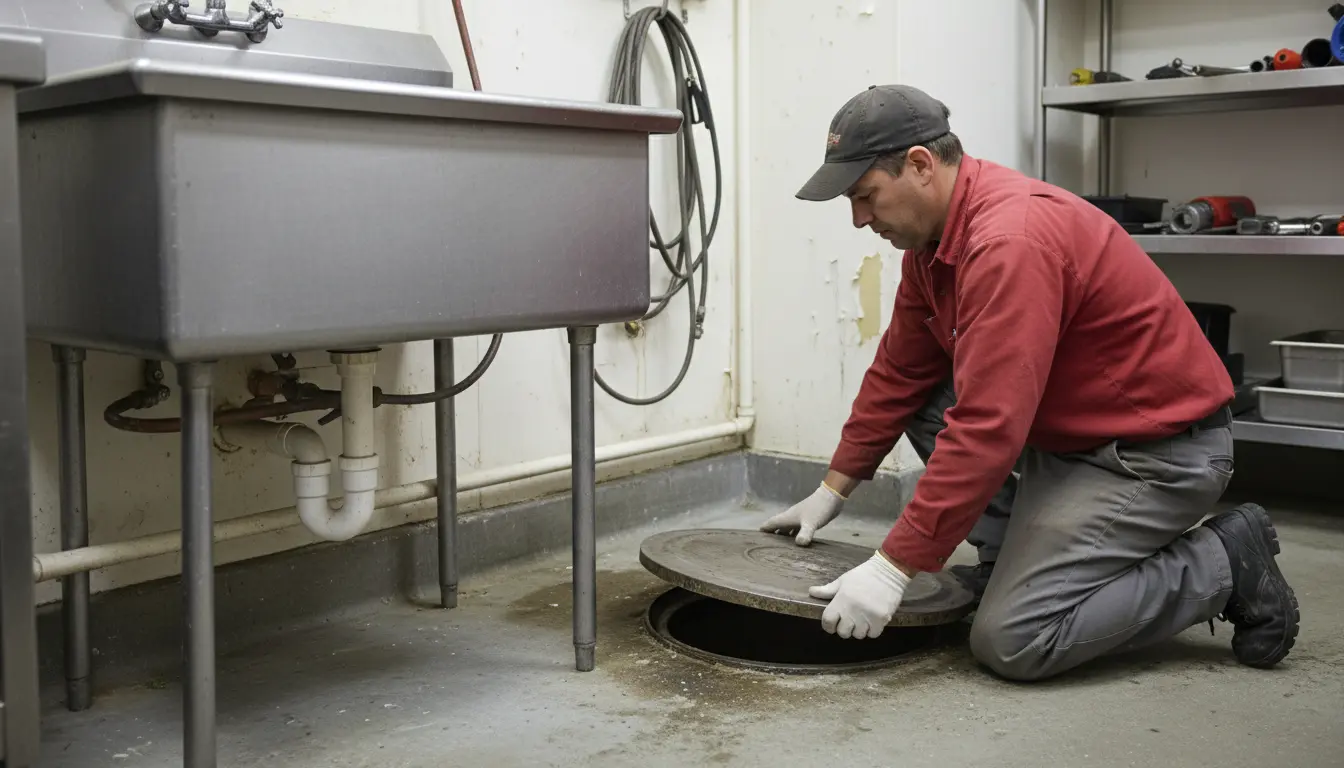
Regular, professional cleaning of your grease removal device is the cornerstone of compliance. This involves a licensed service provider completely removing all fats, oils, and grease (FOG) and accumulated solids, followed by a thorough pressure washing of the trap's interior walls and baffles 1. The removed waste must be transported and disposed of at an approved facility; it is illegal to wash grease trap contents down any drain 2. Crucially, the use of emulsifying agents or biological additives does not replace the requirement for physical cleaning and can even worsen problems downstream. Keeping detailed service logs is mandatory, and these records must be available for inspection by the City's Wastewater Reclamation Division (WRD) upon request.
Understanding Medford's FOG Regulations
Medford's grease control regulations are designed to prevent sewer blockages and overflows, which can cause environmental harm and expensive public works repairs. The primary governing rules are found in Medford Municipal Code Section 11.505 and the Oregon Plumbing Specialty Code (OPS). These codes classify establishments that introduce FOG into the wastewater system and mandate the use of properly sized and permitted grease interceptors or traps.
Key compliance points for Medford businesses include:
- Accessibility: Grease interceptors must be easily accessible for cleaning, servicing, and inspection at all times. Obstructions can lead to violations.
- Proper Maintenance: Devices must operate at peak efficiency. This means cleaning before FOG and solids accumulate to a level that reduces the unit's effectiveness, typically when contents reach 25% of the grease storage capacity.
- Record Keeping: Maintain a detailed log of every cleaning service. Entries should include the date, name of the service company, volume of waste removed, and the disposal location. These logs are your first line of defense during an inspection 3.
- Decommissioning: If a grease trap is taken out of service, it must be properly cleaned, disconnected, and the plumbing must be re-routed according to code. Abandoned traps are a compliance issue.
Determining Your Cleaning Schedule
There is no universal schedule that fits every kitchen. The required frequency for pumping your grease interceptor depends on its type, size, and your establishment's volume of cooking. The City's WRD has the authority to set and enforce specific cleaning frequencies based on inspections.
As a general guideline:
- Hydromechanical Grease Interceptors (HGI): These are typically smaller, under-sink units. They require more frequent service, often every 30 days, or when FOG and solids reach 75% of the unit's capacity 4.
- Gravity Grease Interceptors (GGI): These are larger, in-ground or outdoor concrete tanks. They are generally cleaned every 90 days, or when accumulation reaches 25% of capacity 5.
- High-Volume Kitchens: Establishments with significant frying operations or high meal output may need service more frequently than the standard intervals. An inspection or a consultation with a professional service provider can help determine your optimal schedule.
Inspections by the WRD often occur if a downstream blockage or issue is traced back to your area, or as part of routine compliance monitoring. Being proactive with a documented maintenance schedule is the best way to pass an inspection seamlessly.
Find the perfect grease trap cleaning companies for your needs
Get personalized recommendations and expert advice
The Cost of Compliance vs. Non-Compliance
Investing in regular grease trap maintenance is far more economical than facing the penalties and repair costs associated with neglect.
Service Cost Estimates
Professional cleaning costs in Medford vary based on the size of your trap, its location, and how much waste needs to be removed.
- Basic/Routine Pumping: For small to medium-sized traps on a scheduled plan, costs typically range from $125 to $300 per service.
- Scheduled Maintenance for Larger Interceptors: Regular quarterly or monthly service for a standard commercial kitchen often falls in the $250 to $400 per service range 6 7.
- Emergency or Large-Scale Jobs: Cleaning a severely neglected, oversized, or hard-to-access interceptor can cost $800 to $1,200 or more 8 9.
Scheduled maintenance contracts not only provide predictable budgeting but also often secure a lower per-service rate compared to one-time emergency calls.
Consequences of Non-Compliance
Failing to maintain your grease trap can trigger a cascade of expensive problems:
- Fines and Penalties: The city can levy significant fines for violations of municipal code.
- Operational Shutdown: In severe cases, a health or wastewater inspector can order your business to cease operations until the grease interceptor is brought into compliance 10.
- Sewer Damage Liability: If a blockage from your establishment causes a sewer backup or damage to public lines, your business can be held financially responsible for the repair costs 11.
- Emergency Service Premiums: A panic call for an overflowing or clogged trap incurs premium pricing, adding to the financial pain.
Best Practices for Grease Trap Management
Beyond hiring a professional, kitchen staff play a vital role in extending time between services and ensuring system health.
- Scrape, Don't Rinse: Scrape all food scraps and grease from plates, pots, and pans into the trash before washing.
- Use Strainers: Install and maintain basket strainers in all sink drains to catch solids.
- Avoid Additives: Do not pour chemical degreasers, soaps, or "grease-digesting" additives down the drain. These can bypass the trap and cause problems later in the sewer system 12 13.
- Train Your Team: Ensure all employees understand what should and should not go down the drain. Proper kitchen practices are your first line of defense.
Frequently asked questions
Sources
Footnotes
-
APPENDIX A Grease Trap and Interceptor Requirements Definitions - https://fcwsd.org/documents/728/Appendix_A_Grease_Trap_Requirements.pdf ↩
-
ATTENTION FOOD/BEVERAGE SERVICE ESTABLISHMENTS AND ... - https://cleanwaterservices.org/wp-content/uploads/2022/06/fog-protection-requirements.pdf ↩
-
11.505 Grease Interceptors and Other Pretreatment - https://medford.municipal.codes/Code/11.505 ↩
-
The Ultimate Guide to Restaurant Grease Trap Cleaning - https://mokherplumbing.com/ultimate-guide-restaurant-grease-trap-cleaning/ ↩
-
Grease Trap Restaurant: The Essential Guide - https://therestaurantwarehouse.com/blogs/restaurant-equipment/grease-trap-restaurant-guide ↩
-
Oregon Regulations on Grease Interceptors and Grease Traps - https://speedyseptic.com/septic-services/commercial/grease-interceptor/portland-fog-regulations/ ↩
-
How To Clean Restaurant Grease Traps: A Money-Saving Guide For ... - https://westernrooter.com/how-to-clean-restaurant-grease-traps-a-money-saving-guide-for-owners/ ↩
-
Ultimate Grease Trap Pumping Cost Guide: Essential Money-Saving ... - https://www.texwaywastewater.com/grease-trap-pumping-cost/ ↩
-
Grease Trap Cleaning Prices | Guide on the Industry Average - https://grease-cycle.com/grease-trap-pumping-cost/ ↩
-
Orlando Grease Trap Maintenance Guide: Essential Compliance Protocols - myshyft.com - https://www.myshyft.com/blog/grease-trap-cleaning-orlando-florida/ ↩
-
Grease Trap Compliance: What Washington & Oregon Businesses Need to Know - Drain-Pro Inc. - https://drain-proinc.com/grease-trap-compliance-what-washington-oregon-businesses-need-to-know/ ↩
-
Grease Trap Regulations and Compliance: What You Need to Know - https://www.texwaywastewater.com/grease-trap-regulations-and-compliance/ ↩
-
Code Amendment 12/20/12 2011 Oregon Plumbing Specialty Code ... - https://www.oregon.gov/bcd/codes-stand/Documents/pl-11opsc-amendments.pdf ↩