
Find the Best Grease Trap Cleaning Companies for Your Business
No obligation • Fast responses • Nationwide coverage

Why you can trust Restaurant Waste Disposal
Restaurant Waste Disposal is a leading U.S. resource for comparing restaurant composting, food-waste recycling, grease trap cleaning, and used cooking oil collection services. Our editorial team researches providers, checks credentials, and organizes unbiased information so operators can make informed decisions. Companies cannot pay to change ratings or placement.
Search providers near you
Top Grease Trap Cleaning Companies in Schenectady, New York Ranked
For any restaurant or food service establishment in Schenectady, maintaining a clean and functional grease interceptor is not just a matter of kitchen hygiene-it's a critical legal requirement. Proper grease trap maintenance protects your business from severe fines, prevents disruptive and costly sewer backups, and ensures you remain in compliance with New York State and local Schenectady regulations. This guide outlines everything you need to know about managing fats, oils, and grease (FOG) effectively, from understanding the specific codes that govern your operation to implementing a reliable service schedule that keeps your kitchen running smoothly and your costs predictable.
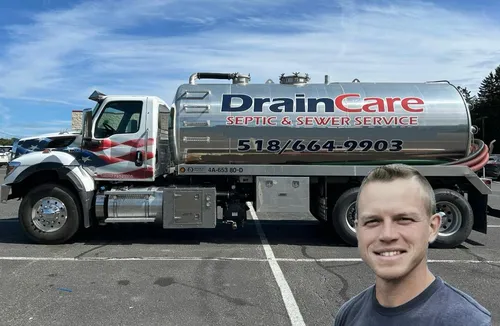
Drain Care Septic & Sewer Service LLC
2087 NY-7, Troy, NY 12180
Drain Care Septic & Sewer Service LLC provides septic and sewer system services in Troy, NY, and the Greater Capital District. The company offers a range of services including septic and grease trap cleaning, drain cleaning with high-pressure water jetting, septic installations and repairs, camera inspections, and real estate septic inspections. With over 20 years of experience, this locally and family-owned business uses advanced technology to diagnose and resolve issues efficiently. They also provide emergency same-day services to address urgent septic and sewer problems.

J Ellrott Excavating Inc
3987 Albany St, Schenectady, NY 12304
J Ellrott Excavating Inc is a family-owned company based in Albany, NY, offering water, sewer, septic, and drain services for over 50 years. They provide residential and commercial drain cleaning, grease trap cleaning, sewer and septic inspections, and excavation services. Their capabilities include high-pressure jetting and trenchless repair and installation, helping customers maintain efficient plumbing and drainage systems.
Understanding Local and State Grease Interceptor Regulations
Operating a food service business in Schenectady means adhering to a clear set of rules designed to protect the municipal sewer system. The New York State Plumbing Code and related regulations mandate that all establishments generating FOG must install and maintain approved grease interceptors1. These rules are enforced locally, often by the Schenectady Public Works or Sewer Department, and are taken seriously to prevent blockages that can lead to sanitary sewer overflows.
The core of the regulation is simple: prevent grease from entering the public sewers. New York State often references a cleaning frequency of at least every 30 days, but the actual requirement for your business is based on your specific FOG output 2. A common industry benchmark is the "one-quarter rule," which states that a trap should be serviced when the grease and solids accumulate to 25% of the unit's capacity. Furthermore, all waste removed from your interceptor must be handled by a licensed hauler and disposed of at a proper facility-illegal dumping carries significant penalties.
The Real Cost of Non-Compliance: Fines and Enforcement
Ignoring grease trap maintenance is a high-risk gamble for any Schenectady restaurant. Enforcement actions can be swift and severe. State fines for violations can range from $1,000 to over $15,000, not including additional charges for environmental cleanup 3. In serious cases, the local health or sewer authority has the power to mandate the closure of your establishment until compliance is achieved and all issues are remediated.
Inspections are a key tool for enforcement. While they may be conducted on a routine schedule, they are often triggered by specific events such as customer complaints, detected spikes in FOG levels at the municipal level, or a history of non-compliance. When an inspector arrives, they will typically ask to see your maintenance records. A detailed logbook showing consistent, professional cleanings by a licensed provider is your best defense and demonstrates responsible operation.
What to Expect: Service Frequency and Pricing
Establishing a regular cleaning schedule is the most cost-effective approach to grease management. For many Schenectady restaurants, this means monthly or quarterly service, though high-volume kitchens like pizzerias or diners may require even more frequent attention. The cost for this essential service is an investment in your business's continuity.
Pricing for routine grease interceptor pumping in the Schenectady area typically starts between $175 and $475 per service visit for a standard, well-maintained, and easily accessible unit4 5. Several factors influence the final cost:
- Trap Size and Location: Larger traps and those in difficult-to-access locations (like underground vaults) cost more to service.
- Service Frequency: More frequent service on a regular schedule is often less expensive per visit than infrequent, emergency cleanings.
- Condition of the Trap: A severely neglected trap that requires extra labor or has damage will increase the price.
Emergency cleanings, often needed after a backup or failed inspection, carry a premium price tag and come with the added cost of potential business interruption6 7.
Find the perfect grease trap cleaning companies for your needs
Get personalized recommendations and expert advice
Choosing a Licensed Grease Trap Service Provider in Schenectady
Not all service companies are equal. It is imperative to hire a licensed hauler permitted to operate in Schenectady. A reputable provider will not only pump your trap but will also offer valuable guidance. They can help you determine the optimal service frequency for your specific operation, advise on best practices for kitchen staff to minimize FOG discharge, and provide the detailed documentation you need for inspections.
When evaluating providers, ask for proof of licensing and insurance. Inquire about their disposal practices to ensure they are environmentally compliant. A trustworthy company will be transparent about their pricing structure and willing to provide references from other local food service establishments. Maintaining a partnership with a reliable service provider turns grease trap management from a recurring headache into a seamless part of your operational routine.
Proactive Steps for Schenectady Restaurant Owners
Taking a proactive stance is the best way to manage this regulatory requirement. Here is a simple action plan:
- Confirm Local Protocols: Contact the City of Schenectady's Public Works or Sewer Department to confirm any city-specific ordinances or inspection schedules8.
- Schedule an Assessment: Have a licensed professional assess your current grease interceptor to establish a baseline and recommend a service schedule.
- Implement a Service Contract: Secure a regular service contract with a licensed hauler. This ensures consistent maintenance and often locks in a predictable rate.
- Maintain Meticulous Records: Keep a dedicated logbook or digital file for every service receipt, noting the date, volume pumped, the hauler's name, and the waste manifest number. This log should be readily available for inspectors.
- Train Your Staff: Educate kitchen staff on proper FOG disposal practices, such as scraping plates into trash bins before washing and using sink baskets to catch solids.
By following these steps, you safeguard your business against compliance risks, contribute to the health of Schenectady's infrastructure, and ensure your kitchen operates without preventable environmental issues.
Frequently asked questions
Sources
Footnotes
-
2025 Plumbing Code of New York State (2025 PCNYS) - https://codes.iccsafe.org/s/NYSPC2025P1/chapter-10-traps-interceptors-and-separators/NYSPC2025P1-Ch10-Sec1003.3.1 ↩
-
TEXT OF RULE 1. Section 1219.1 of Part 1219 of Title 19 of the ... - https://dos.ny.gov/system/files/documents/2022/03/2022-2-25-text-of-rule-part-1229-grease-interceptors-final_0.pdf ↩
-
New York Grease Trap Rules - United Sewer and Septic - https://www.unitedsewerservice.com/regulations-for-grease-trap-maintenance-in-new-york/ ↩
-
Restaurant Grease Trap Cleaning FAQs - https://www.mahoneyes.com/restaurant-grease-trap-cleaning-faqs/ ↩
-
How Much Does a Proper Grease Trap Cleaning Cost? - https://hulseyenvironmental.com/how-much-does-a-proper-grease-trap-cleaning-partner-cost/ ↩
-
Ultimate Grease Trap Pumping Cost Guide: Essential Money-Saving ... - https://www.texwaywastewater.com/grease-trap-pumping-cost/ ↩
-
Restaurant Grease Trap & Interceptor Cleaning Cost - https://greasemanagement.org/pricing.html ↩
-
Grease Trap Cleaning in Schenectady NY - https://greasetrapcleaningcliftonpark.com/schenectady-ny.html ↩