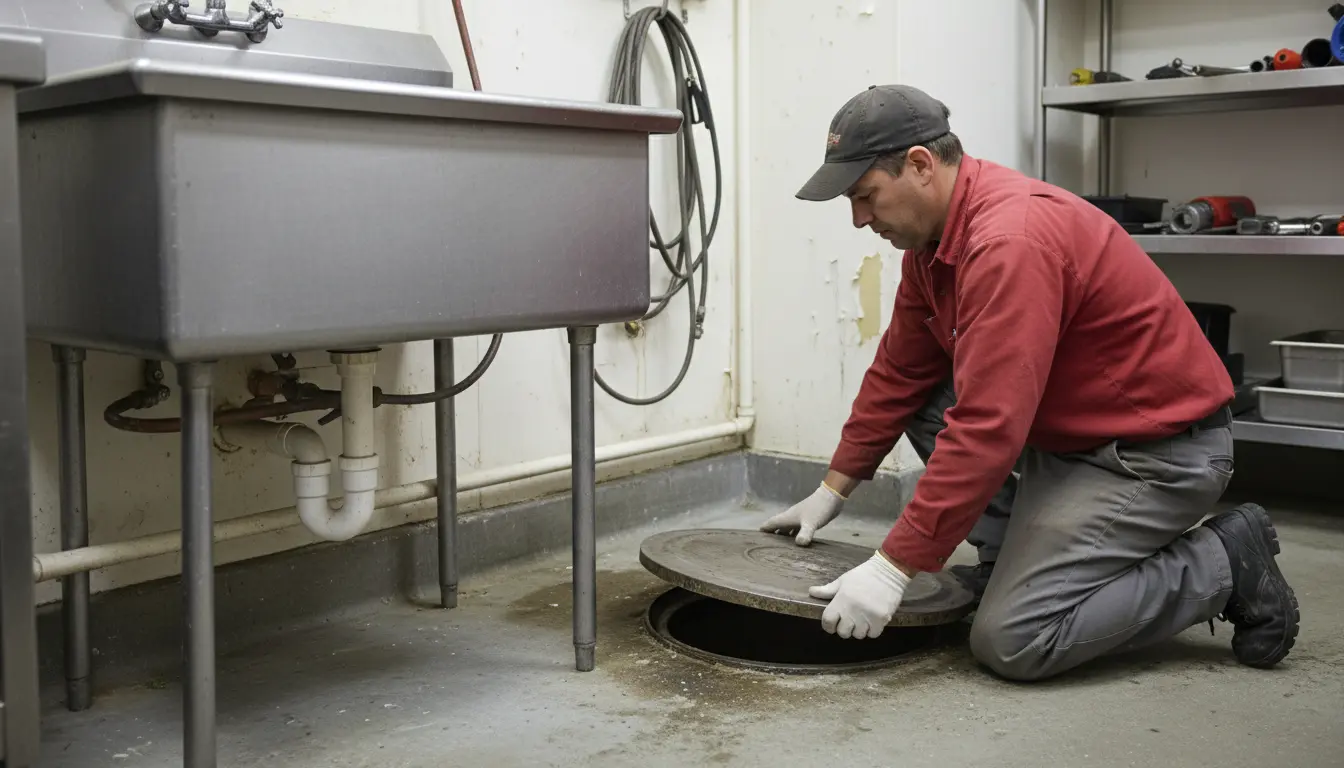
Find the Best Grease Trap Cleaning Companies for Your Business
No obligation • Fast responses • Nationwide coverage

Why you can trust Restaurant Waste Disposal
Restaurant Waste Disposal is a leading U.S. resource for comparing restaurant composting, food-waste recycling, grease trap cleaning, and used cooking oil collection services. Our editorial team researches providers, checks credentials, and organizes unbiased information so operators can make informed decisions. Companies cannot pay to change ratings or placement.
Search providers near you
Top Grease Trap Cleaning Companies in Stamford, Connecticut Ranked
For any restaurant, deli, or food service establishment in Stamford, proper grease interceptor maintenance is not just a best practice-it's a legal requirement governed by a strict local ordinance. The city's Fats, Oils, and Grease (FOG) Abatement Program, managed by the Water Pollution Control Authority (WPCA), mandates specific permitting, cleaning schedules, and record-keeping to protect the municipal sewer system from costly blockages and overflows. Failure to comply can lead to significant fines and enforcement actions, making understanding and adhering to these regulations critical for your business's smooth operation and financial health. This guide outlines the essential steps for compliance, from securing your permit to establishing a reliable maintenance routine with certified professionals.
Envirogreen Solutions
New York, NY
Envirogreen Solutions provides grease trap cleaning and used cooking oil collection services in New York, NY, including the five boroughs and Nassau County. They help commercial kitchens comply with local environmental regulations by responsibly removing and recycling cooking oil and grease trap waste. Envirogreen is fully licensed and insured, offering compliance paperwork and stickers upon service completion. Their capabilities include grease trap cleaning, cooking oil recycling, and emergency grease trap waste collection. The company is known for maintaining grease traps to keep them flowing properly and offers prompt emergency services when needed.
Affordable Cesspool Sewer & Drain | Septic & Grease Trap Service - Long Island
180 Blydenburgh Rd, Islandia, NY 11749
Affordable Cesspool Sewer & Drain | Septic & Grease Trap Service - Long Island provides grease trap cleaning and cesspool maintenance services in New York, NY. The company offers emergency service, including after-hours availability, and installs riser and cover systems to facilitate future cleanouts. Their technicians are knowledgeable and provide helpful maintenance advice to prevent future issues.
Roto-Rooter Plumbing & Water Cleanup
1011 Hope St, Stamford, CT 06907
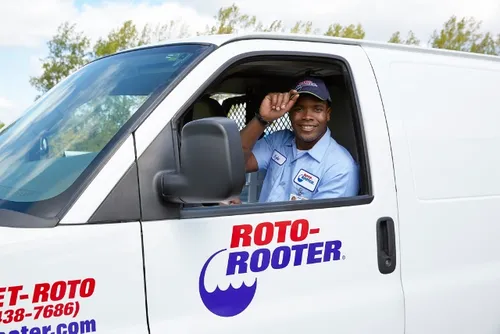
Roto-Rooter Plumbing & Water Cleanup provides comprehensive plumbing and water cleanup services in Stamford, CT, and the surrounding metro area. They serve both residential and commercial clients with a wide range of solutions including sewer and drain cleaning, grease trap maintenance, water heater repair and installation, and emergency floodwater cleanup. Their commercial services also include hydro-jetting and grease trap repairs, addressing the specific needs of high-volume spaces such as kitchens and offices. Established in 1935, Roto-Rooter brings decades of expertise to the Stamford community. They offer 24/7 emergency plumbing and water removal services to handle urgent issues any time of day or night.
Roto-Rooter Plumbing & Water Cleanup
2 Lake St, Bergenfield, NJ 07621
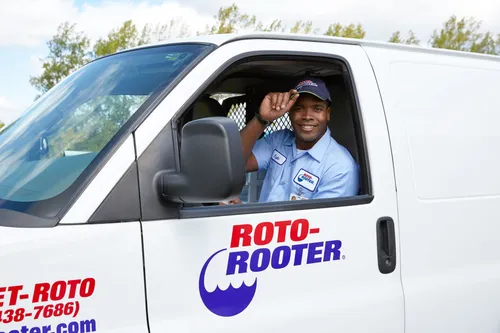
Roto-Rooter Plumbing & Water Cleanup provides comprehensive plumbing and water cleanup services in New York, NY, and the surrounding Bergen County area. They handle a wide range of residential and commercial plumbing needs, including drain cleaning, sewer line repair, grease trap cleaning, water heater services, and emergency flood cleanup. The company uses advanced technology such as high-definition inspection cameras and hydro-jetting to address complex plumbing issues efficiently. Founded in 1935, Roto-Rooter continues to build on its legacy with 24/7 emergency availability to respond promptly to urgent plumbing problems.
Roto-Rooter Plumbing & Water Cleanup
3 Alan B Shepard Jr Pl Ste A, Yonkers, NY 10705
Roto-Rooter Plumbing & Water Cleanup provides comprehensive plumbing and water cleanup services in New York, NY, specializing in residential and commercial plumbing solutions. Their offerings include floodwater cleanup, sewer and drain cleaning, water heater repairs and installation, grease trap maintenance, and mold remediation. The company uses advanced technology such as video camera sewer inspections and offers trenchless pipe replacement to address aging infrastructure issues. Roto-Rooter has a strong local presence serving Yonkers and nearby areas, with 24/7 emergency plumbing services available to handle urgent situations like burst pipes and sewer backups.
Understanding Stamford's FOG Abatement Program
Stamford's proactive FOG Abatement Program is designed to prevent sewer backups and environmental damage by ensuring food service establishments properly manage their grease waste. At its core, the program requires all applicable businesses-classified as Class III and IV Food Service Establishments (FSEs)-to obtain a FOG Permit from the Stamford WPCA. This permit is your official registration with the city and is the first step in demonstrating your commitment to compliance. The WPCA conducts routine and follow-up inspections to verify that establishments are adhering to the rules, which include maintaining specific cleaning schedules and keeping meticulous documentation on-site. This regulatory framework is not merely bureaucratic; it directly safeguards the city's wastewater infrastructure, which benefits the entire community and helps your business avoid disruptive and expensive sewer problems.
The Permit Process and Legal Requirements
Before you can even begin service, you must navigate the local permitting process. All Class III and IV FSEs in Stamford are required to register with the City Health Department and obtain the mandatory FOG Permit. The local ordinance (§ 200-46) formally establishes this permit requirement, making it a non-negotiable aspect of operating your kitchen. The permit ties your business to the FOG program's standards, and operating without one leaves you vulnerable to immediate enforcement actions. The application process involves providing details about your establishment and its grease-producing equipment. Once permitted, your business is subject to the WPCA's inspection schedule, where officials will check for the permit's validity, review your maintenance logs, and assess the physical condition of your grease trap or interceptor. Staying ahead of this process is the foundation of lawful and responsible operation.
Determining Your Cleaning Schedule and Frequency
How often should you have your grease interceptor serviced? While Stamford's regulations typically point to a quarterly schedule (every 3 months), the actual frequency is determined by your specific FOG production 1 2. The universal rule enforced by inspectors is the "25% rule": a grease trap must be cleaned before the combined grease and solid waste accumulates to 25% of the unit's liquid capacity 2. For a high-volume kitchen like a busy diner or a large banquet hall, this limit could be reached in a matter of weeks, necessitating monthly service 3 2. Conversely, a lower-volume cafe might safely adhere to the standard quarterly interval. The key is to work with your service provider to establish a schedule based on your trap's size and your kitchen's output, then stick to it rigorously. Proactive, scheduled cleanings are always less costly than emergency service calls or fines for non-compliance.
Costs of Grease Trap Maintenance in Stamford
Budgeting for grease trap maintenance is a necessary operational cost. For a standard service in Stamford, you can expect to pay roughly $150 to $500 per cleaning, with the final price depending heavily on the size of your trap, its accessibility, and the agreed-upon frequency 4 5. Smaller, interior traps under sinks are generally on the lower end, while large, underground grease interceptors require more labor and equipment, pushing costs toward the higher end or beyond. Emergency cleanings or pump-outs due to neglect can cost significantly more 5. When considering the yearly expense, a restaurant on a quarterly schedule might spend between $600 and $2,000 annually, while a high-volume establishment requiring monthly service could see costs ranging into the thousands 4. While this is an expense, it pales in comparison to the potential fines from the WPCA or the catastrophic cost of a sewer line backup on your property.
Find the perfect grease trap cleaning companies for your needs
Get personalized recommendations and expert advice
The Critical Importance of Detailed Record-Keeping
If you service your trap but fail to document it, you are not fully compliant. Stamford's regulations explicitly require businesses to maintain detailed written logs and receipts of all grease interceptor cleaning and maintenance activities on-site for inspection. Your service provider should furnish a detailed receipt after each service, which you must file in your log. This documentation should include the date of service, the company name, the volume of waste removed, and the signature of the person performing the work. During a WPCA inspection, this log is one of the first things an officer will request. Comprehensive records are your primary proof of compliance and are your best defense against fines if an inspector finds your trap at or near capacity. Think of your maintenance log as an essential insurance document for your business.
Choosing a Qualified Service Provider
Not all pumping companies are equal when it comes to meeting Stamford's specific compliance needs. It is highly recommended to hire licensed and certified professionals who are familiar with the local WPCA requirements and inspection protocols 6. A qualified provider will not only perform a thorough pump-out and cleaning but will also help you understand the 25% rule, advise on an optimal service frequency, and provide the detailed documentation you need for your records. They should be able to handle the proper disposal of the collected FOG waste in accordance with state and local environmental regulations. Establishing a relationship with a reliable, knowledgeable service provider transforms grease trap maintenance from a regulatory headache into a streamlined, predictable part of your business operations.
Consequences of Non-Compliance
Ignoring Stamford's FOG regulations carries serious risks. The WPCA utilizes monetary fines and other enforcement actions to ensure compliance. These fines can be substantial and recur until the violation is corrected. Beyond fines, persistent non-compliance can lead to more severe actions, including permit revocation or mandatory installation of expensive pretreatment equipment. The operational consequences are even more direct: a neglected grease trap will eventually cause a backup. This can lead to sewage overflowing in your kitchen, resulting in immediate closure for health and safety reasons, lost revenue, and exorbitant cleanup and repair costs. Proactive maintenance is a minor investment compared to the financial and reputational damage of non-compliance.
Best Practices for Ongoing Compliance
To ensure seamless compliance and protect your business, follow these five essential steps:
- Secure Your Permit: Immediately register and obtain your FOG Permit from the Stamford WPCA if you haven't already.
- Schedule Proactively: Don't wait for a problem. Establish a regular cleaning schedule (quarterly at a minimum) with a certified provider and calendar reminders.
- Document Everything: Maintain a dedicated binder or digital file for all service receipts and logs. Update it immediately after every service 7.
- Train Your Staff: Educate kitchen staff on best practices for minimizing FOG going down the drain, such as scraping plates and using sink strainers.
- Prepare for Inspections: Always have your permit and maintenance logs easily accessible for any WPCA inspector.
Adhering to these practices will keep your establishment in good standing, your plumbing flowing smoothly, and your focus where it should be-on running a successful food service business in Stamford.
Frequently asked questions
Sources
Footnotes
-
Fats, Oils and Grease (FOG) Abatement Program - Stamford, CT - https://www.stamfordct.gov/government/operations/water-pollution-control-authority/fats-oils-and-grease-fog-abatement-program ↩
-
Grease Trap Cleaning Guide: 25% Rule, Schedule & Compliance - https://greaseconnections.com/how-to-clean-a-grease-trap-and-how-often-you-should/ ↩ ↩2 ↩3
-
Fats, Oils & Grease Program for Businesses - The MDC - https://themdc.org/environment-health-safety/fats-oils-grease-program-for-businesses/ ↩
-
Grease Trap Service in Stamford, CT - WasteDoor - https://www.wastedoor.com/connecticut/stamford/grease-trap ↩ ↩2
-
Ultimate Grease Trap Pumping Cost Guide: Essential Money-Saving ... - https://www.texwaywastewater.com/grease-trap-pumping-cost/ ↩ ↩2
-
Complying with Grease Trap Codes: 5 Essential Tips - https://www.unitedsewerservice.com/complying-with-local-regulations-and-codes-for-grease-trap-maintenance/ ↩
-
§ 200-46. Permits., Article V. ABATEMENT OF FATS, OILS AND ... - http://stamford-ct.elaws.us/code/coor_ch200_artv_sec200-46 ↩