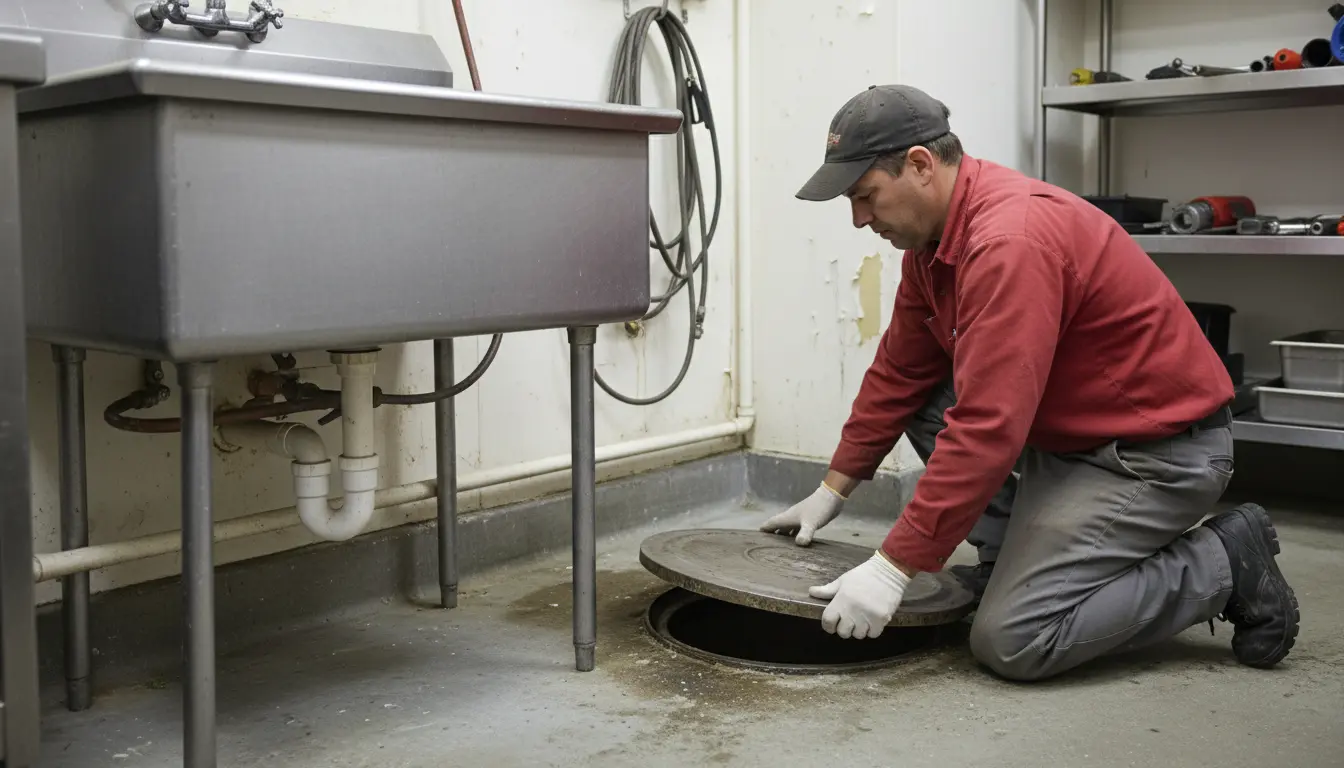
Find the Best Grease Trap Cleaning Companies for Your Business
No obligation • Fast responses • Nationwide coverage

Why you can trust Restaurant Waste Disposal
Restaurant Waste Disposal is a leading U.S. resource for comparing restaurant composting, food-waste recycling, grease trap cleaning, and used cooking oil collection services. Our editorial team researches providers, checks credentials, and organizes unbiased information so operators can make informed decisions. Companies cannot pay to change ratings or placement.
Search providers near you
Top Grease Trap Cleaning Companies in Milford, Connecticut Ranked
For restaurant owners and food service operators in Milford, maintaining a clean and compliant grease trap is not just a best practice-it's a legal requirement essential for protecting the city's sewer system. Regular grease interceptor cleaning and maintenance are mandated by the City of Milford Sewer Commission to prevent costly and unsanitary sewer backups, clogs, and environmental issues. Proactive, scheduled service is the most effective way to avoid emergency calls, significant fines, and operational disruptions. This guide outlines the local regulations, typical service expectations, and practical insights for managing this critical aspect of your business.
Affordable Cesspool Sewer & Drain | Septic & Grease Trap Service - Long Island
180 Blydenburgh Rd, Islandia, NY 11749
Affordable Cesspool Sewer & Drain | Septic & Grease Trap Service - Long Island provides grease trap cleaning and cesspool maintenance services in New York, NY. The company offers emergency service, including after-hours availability, and installs riser and cover systems to facilitate future cleanouts. Their technicians are knowledgeable and provide helpful maintenance advice to prevent future issues.
Wind River Environmental
Danbury, CT
Wind River Environmental provides septic, plumbing, and grease trap services in Danbury, CT, serving residential, commercial, and municipal clients. The company offers comprehensive septic system maintenance, pumping, and repair, with expertise in local regulations to ensure compliance and environmental protection. Established in 1946, Wind River Environmental brings decades of experience and advanced technology to the community. They also provide 24/7 emergency service to address urgent wastewater issues promptly.
Roto-Rooter Plumbing & Water Cleanup
1011 Hope St, Stamford, CT 06907
Roto-Rooter Plumbing & Water Cleanup provides comprehensive plumbing and water cleanup services in Stamford, CT, and the surrounding metro area. They serve both residential and commercial clients with a wide range of solutions including sewer and drain cleaning, grease trap maintenance, water heater repair and installation, and emergency floodwater cleanup. Their commercial services also include hydro-jetting and grease trap repairs, addressing the specific needs of high-volume spaces such as kitchens and offices. Established in 1935, Roto-Rooter brings decades of expertise to the Stamford community. They offer 24/7 emergency plumbing and water removal services to handle urgent issues any time of day or night.
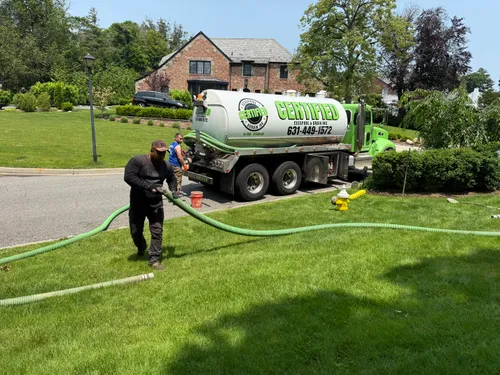
Certified Cesspool Service Suffolk County | Cesspool Pumping Suffolk NY
Greenwich, CT
Certified Cesspool Service Suffolk County | Cesspool Pumping Suffolk NY provides comprehensive septic and grease trap services in Greenwich, CT. They offer full septic system installation, grease trap cleaning, septic tank pumping, and emergency cesspool services. The company is known for 24/7 emergency availability and fast response times. Their capabilities include grease trap maintenance and sewer jetting. Certified Cesspool Service has built a reputation for thorough septic system maintenance and offers preventative care plans to avoid backups and issues.
American Rooter
755 Thomaston Rd, Watertown, CT 06795
American Rooter is a family-owned plumbing and drain service company based in Waterbury, CT, serving residential, commercial, industrial, and municipal clients. Since 1980, they have provided a wide range of services including plumbing repairs, drain cleaning, grease trap cleaning, pipe lining, excavation, and hydro-excavation. Their capabilities include advanced trenchless pipe lining technologies such as Cured-in-Place-Pipelining (CIPP) and various pipe repair methods. They operate 24 hours a day, 365 days a year to address plumbing and drain emergencies promptly.
Understanding Milford's FOG Regulations
The City of Milford enforces specific Fats, Oils, and Grease (FOG) regulations to safeguard its wastewater infrastructure. Compliance is not optional; it's a condition of doing business. The local code, guided by the Board of Sewer Commissioners, sets clear standards for installation, maintenance, and record-keeping 1.
A key requirement is the preference for exterior grease interceptors. These must be installed outside the building unless proven infeasible, and they require proper manhole covers extended to grade for easy access by service providers. This design ensures safer and more thorough cleaning. All grease trap waste must be disposed of at approved regional collection or transfer facilities, not down any drain or into dumpsters.
Mandatory Pumping Frequency and Documentation
Milford's regulations specify a minimum pumping schedule. Grease traps must be pumped at least quarterly (every three months) or when the grease and solids accumulate to 25% of the trap's operating depth, whichever comes first 2 3. Waiting until a trap is overly full reduces its effectiveness and increases the risk of a clog downstream.
Perhaps as important as the cleaning itself is the documentation. You are required to maintain detailed, written logs and receipts of all grease interceptor maintenance and pumping on-site. These records are subject to review during inspections by the Sewer Commission or other local authorities. Proper documentation is your first line of defense in proving compliance during an audit.
The Real Cost of Grease Trap Maintenance
Understanding the cost structure helps in budgeting and highlights the value of preventative care. For a standard preventative quarterly cleaning service in the Milford area, you can expect costs to typically range from $175 to $400 per service, depending on the size and accessibility of your trap 4. This translates to an estimated annual cost of approximately $700 to $1,600 or more for basic quarterly service.
These routine costs pale in comparison to emergency expenses. A reactive service call for a severe clog or backup can cost $800 to $1,200 or more per visit 5 6. Furthermore, non-compliance with local codes can result in significant fines levied by the city, adding a direct financial penalty on top of the service charge 7 8.
Find the perfect grease trap cleaning companies for your needs
Get personalized recommendations and expert advice
Best Practices Beyond Pumping
Scheduled pumping is the cornerstone of compliance, but a comprehensive FOG management program involves more. Staff training is a critical, often overlooked, component. Educating kitchen staff on proper waste disposal-like scraping plates into trash bins before washing and avoiding pouring grease down sinks-can dramatically reduce the grease load entering your trap, extending time between services and improving efficiency 9.
Regular visual inspections of your interceptor between professional cleanings can also help you identify potential issues early, such as a failing baffle or unusually rapid filling. Partnering with a reliable service provider who understands Milford's specific codes ensures they not only perform the cleaning but can also advise on your overall system health and compliance status 10.
Consequences of Non-Compliance
Ignoring grease trap maintenance has direct and severe consequences for your business. The primary goal of the local ordinance is to prevent sanitary sewer overflows (SSOs) and blockages. A clogged line can lead to sewage backing up into your own establishment or a neighboring business, resulting in massive cleanup costs, health hazards, and potential liability.
Enforcement actions by the city begin with inspections and record reviews. Failure to maintain required logs or adhere to the pumping schedule can lead to formal violations, mandatory corrective actions, and financial penalties 11. In severe or repeat cases, the city has the authority to take more stringent action to protect the public sewer system. Consistent, documented maintenance is the simplest path to avoiding these risks entirely.
Choosing a Service Provider in Milford
When selecting a company for grease interceptor pumping and cleaning, look for providers familiar with the City of Milford's Sewer Commission regulations. They should offer scheduled maintenance plans that align with the quarterly requirement and provide detailed, professional service receipts perfect for your compliance records. Ask if they handle the proper disposal at approved facilities, as this is a key part of the regulatory chain 12.
A quality provider will do more than just pump out the waste; they should inspect the trap's condition, note any concerns, and offer insights into your grease production. This proactive partnership turns a compliance task into a strategic component of your restaurant's operational efficiency and environmental stewardship.
Frequently asked questions
Sources
Footnotes
-
ordinance no. 2022:15 - Cloudfront.net - https://d2114hmso7dut1.cloudfront.net/customers/46fcbfa8-5952-11ed-b888-0614187498c1/sites/c9f69cda-8deb-11ed-9f6b-0614187498c1/files/de2f1448-9dc7-11ed-8991-0614187498c1/original/file.pdf ↩
-
Fats, Oils & Grease Program for Businesses - The MDC - https://themdc.org/environment-health-safety/fats-oils-grease-program-for-businesses/ ↩
-
External Grease Trap (PDF) - Milford, CT - https://www.milfordct.us/DocumentCenter/View/949/External-Grease-Trap-PDF ↩
-
The Cost To Clean A Grease Trap For Restaurants - https://thegreasecompany.com/blog/greasetrapcleaningcost/ ↩
-
Ultimate Grease Trap Pumping Cost Guide: Essential Money-Saving ... - https://www.texwaywastewater.com/grease-trap-pumping-cost/ ↩
-
How Much Does It Cost to Clean Your Grease Trap? - https://www.aquaprosolutions.com/resources/how-much-does-it-cost-to-clean-your-grease-trap/ ↩
-
Grease Trap Cleaning in Milford | Tri-City Heating and Cooling - https://www.tricityappliance.com/plumbing/grease-trap-cleaning/ ↩
-
CITY OF MILFORD BOARD OF SEWER COMMISSIONERS ... - https://www.milfordct.us/DocumentCenter/View/1355/Regulations-and-Policies-PDF ↩
-
Best Management Practice and Guidance Manual for Food ... - https://www.townofcantonct.org/filestorage/19342/19345/19948/19990/DEPfogbmp.pdf ↩
-
Grease Trap Regulations and Compliance: What You Need to ... - https://www.texwaywastewater.com/grease-trap-regulations-and-compliance/ ↩
-
1 Article V Regulation of Fats, Oils and Grease (FOG ... - Cromwell, CT - https://www.cromwellct.com/sewer/files/fog-article ↩
-
Septic Pumping and Grease Traps in Restaurants - https://bhcameron.com/2024/07/septic-pumping-and-grease-traps-in-restaurants/ ↩