Find the Best Composting & Food Waste Companies for Your Business
No obligation • Fast responses • Nationwide coverage

Why you can trust Restaurant Waste Disposal
Restaurant Waste Disposal is a leading U.S. resource for comparing restaurant composting, food-waste recycling, grease trap cleaning, and used cooking oil collection services. Our editorial team researches providers, checks credentials, and organizes unbiased information so operators can make informed decisions. Companies cannot pay to change ratings or placement.
Search providers near you
Top Composting & Food Waste Companies in Woodbridge, New Jersey Ranked
For restaurants and food service businesses in Woodbridge, managing organic waste is no longer just an environmental consideration-it's a practical and often regulatory necessity. Implementing a robust food waste diversion program can reduce disposal costs, enhance sustainability credentials, and comply with New Jersey's evolving waste management mandates. While Woodbridge Township promotes food waste reduction through its "Restaurant Rescue" donation initiative, commercial-scale composting and organics recycling for restaurants are primarily handled by a network of private service providers. This guide outlines the local landscape for commercial food scrap collection, key providers, and how to establish a compliant and cost-effective system for your business.
Community Compost Company
1501 Madison St, Hoboken, NJ 07030
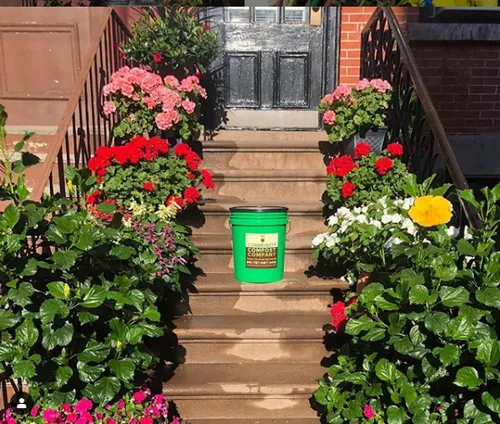
Community Compost Company provides food waste collection and composting services for restaurants and residents in New York, NY. They offer a simple system where customers collect food scraps in provided buckets for weekly pickup. The company recycles all types of food waste, including meats and dairy, transforming it into nutrient-rich compost that supports soil health and reduces landfill waste. Community Compost Company is committed to environmental education and making composting accessible to everyone.

Ag Choice
93 Stickles Pond Rd, Newton, NJ 07860
Ag Choice is a commercial food waste composter based in Woodbridge, NJ. The company specializes in composting a wide range of organic materials, including food waste from restaurants, leaves, and manufacturing organics such as coffee and nut products. Since beginning operations in July 2006, Ag Choice has processed over 270,000 cubic yards of recyclable material and diverted more than 95,000 tons of food waste from landfills and incinerators. The company also developed a single-serve capsule recycling program in the U.S.
Green Bucket Compost
Woodbridge, NJ
Green Bucket Compost is a food waste and composting service based in Woodbridge, NJ, focused on diverting food waste from landfills through sustainable methods. They work with anaerobic digestion facilities like Trenton Renewables to process all types of food waste, including packaging, turning it into renewable energy and compost. Their services cover residential pickups, commercial food waste management for restaurants, hotels, and schools, as well as municipal drop-off and curbside collection programs across several New Jersey counties and towns. Founded by Isaiah Green, the company emphasizes scalable and efficient waste diversion solutions to support community sustainability goals.
Royal Waste Services
187-40 Hollis Ave, Jamaica, NY 11423
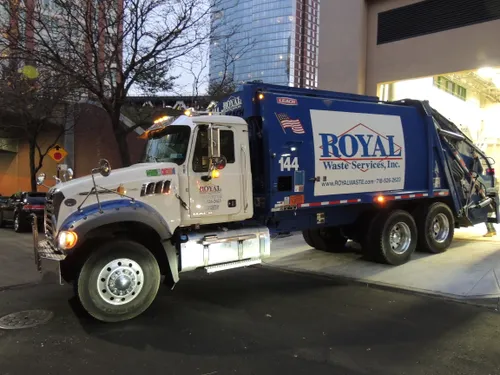
Royal Waste Services provides comprehensive waste management solutions in New York, NY, specializing in food waste composting, trash pickup, single stream recycling, dumpster rentals, and bulk waste removal. Serving Manhattan, Bronx, Brooklyn, and Queens, they operate 24/7 to support businesses with sustainable waste diversion strategies. With over 25 years of experience, Royal Waste owns and operates in-house recycling facilities to ensure environmentally responsible disposal and compliance with NYC commercial recycling laws.
Understanding Commercial Organics Recycling
Commercial organics recycling, often synonymous with food waste composting or organic diversion, involves the systematic collection of food scraps, soiled paper, and other biodegradable materials from businesses for processing into compost, soil amendments, or energy. For a restaurant, this stream typically includes prep waste, spoiled food, coffee grounds, and even certified compostable serviceware. Diverting this material from the general trash stream is a core component of a sustainable waste management plan and is increasingly supported by state policy.
New Jersey's Regulatory Landscape
A critical driver for commercial food waste programs is New Jersey's statewide food waste recycling law. This regulation requires large food waste generators-defined as those producing 52 or more tons of organic waste per year-to separate and recycle their organic material if they are located within 25 road miles of an authorized organics recycling facility. Given Woodbridge's location within the densely populated corridor of northern New Jersey, most restaurants of significant size are likely subject to this mandate. Even for smaller establishments not yet covered by the law, proactive adoption of organics recycling can future-proof operations and realize immediate savings on trash hauling fees.
Local Service Providers for Woodbridge Restaurants
Woodbridge Township does not offer direct municipal collection services for commercial food waste. Instead, restaurants must contract with private hauling companies that specialize in organic material. These providers offer tailored services designed for the volume and pace of a commercial kitchen.
Java's Compost is a New Jersey-based service offering commercial pickup. They provide containers and work with businesses to establish a pickup schedule that matches waste generation, ensuring materials are transported to local composting facilities.
Neighborhood Compost also operates commercial services in the region, focusing on building closed-loop systems where food waste is transformed into compost that can be used locally. Their commercial program includes bin provision and regular collection.
RTS (RoadRunner Recycling) is a national waste management company with a strong presence in New Jersey, offering commercial composting and organic waste disposal solutions. They provide dedicated containers and handle the logistics of getting food waste to processing partners.
These providers handle the entire back-end process, from supplying appropriate containers to ensuring the collected organics are delivered to permitted composting facilities or anaerobic digesters.
Setting Up Your Restaurant's Program
Implementing a successful food scrap collection system requires planning and staff engagement. The first step is conducting a waste audit to understand the volume and types of organic waste your kitchen produces. This information is crucial when requesting quotes from service providers.
Container Types and Placement
Service providers typically supply the collection containers. Common options include:
- 32-Gallon Wheeled Carts: Ideal for smaller kitchens or as satellite collection points in prep areas.
- 64-Gallon or Larger Wheeled Carts/Bins: Suitable for back-of-house primary collection for medium-volume restaurants.
- Small Countertop Pails: For line cooks and prep stations to collect scraps before transferring to a larger cart.
Many providers offer compostable liner bags to keep containers clean and simplify the transfer process. Strategic placement-such as next to the prep sink, dish pit, and main trash area-is key to ensuring staff use the correct bin.
Pickup Schedules and Logistics
Collection frequency is highly flexible and is tailored to your business needs. Common schedules include:
- Weekly Pickup: Standard for many full-service restaurants.
- Bi-Weekly Pickup: May suffice for cafes or lower-volume establishments.
- Daily or Multiple Times Per Week: Essential for high-volume venues, large hotels, or institutional kitchens to manage odor and space.
Your provider will work with you to set a schedule that prevents overflow and integrates smoothly with your existing trash and recycling pickup days.
Managing Contamination
Contamination-non-compostable materials mixed into the organics stream-is the single biggest challenge for a successful program. It can render an entire load unusable. Strict guidelines must be followed:
- DO INCLUDE: Fruit and vegetable scraps, meat and bones, dairy, bread, coffee grounds/filters, tea bags, eggshells, and certified compostable serviceware.
- DO NOT INCLUDE: Plastics (even if labeled "biodegradable"), metals, glass, rubber, liquids (oils, soups, beverages), and traditional plastic bags 1.
Clear, multilingual signage and consistent staff training are essential to maintain a clean stream. Some haulers may perform contamination checks and provide feedback.
Find the perfect composting & food waste companies for your needs
Get personalized recommendations and expert advice
Costs and Considerations for Your Business
The cost for commercial food waste pickup varies based on several factors: the volume of waste (bin size), the frequency of collection, your location, and the chosen provider. Generally, you can expect a monthly service fee. While this is an added line item, it's important to view it within the total cost of waste management. By diverting heavy, wet organics from your trash dumpster, you may be able to reduce the size or pickup frequency of your garbage service, often leading to net savings or a minimal net cost increase 2.
For an accurate quote tailored to your Woodbridge restaurant, you must contact providers like Java's Compost, Neighborhood Compost, or RTS directly 3 4 5. They will typically ask about your current trash volume, the number of meals served, and your goals to provide a customized proposal.
Beyond Pickup: The "Restaurant Rescue" Program
Woodbridge Township actively promotes food waste reduction at the source through its "Restaurant Rescue" program. This initiative focuses on the higher tier of the food recovery hierarchy: feeding people. It encourages restaurants to donate surplus, wholesome food to local charities and food banks 6. Participating in donation not only addresses food insecurity but can also provide tax benefits. Restaurants interested in this approach should check the township website for details and participation surveys 6. A comprehensive waste strategy can include both donation for edible food and composting for unavoidable scraps.
The Environmental and Community Impact
Diverting food waste from landfills has profound local benefits. In landfills, organic matter decomposes anaerobically (without oxygen), producing methane, a potent greenhouse gas. Composting processes this material aerobically, significantly reducing methane emissions. The end product, compost, is a valuable soil amendment that can be used in local parks, community gardens, and farms, closing the nutrient loop right here in New Jersey 7 8. By choosing a local composter, your restaurant contributes directly to building healthier soils in the region.
Frequently asked questions
Sources
Footnotes
-
Welcome to Green Bucket Compost - Giving Your Food Waste New ... - https://greenbucketcompost.com/ ↩
-
Organic waste management in New Jersey: Reducing food waste and ... - https://bloustein.rutgers.edu/organic-waste-management-in-new-jersey-reducing-food-waste-and-improving-food-equity/ ↩
-
Commercial Services - Neighborhood Compost - https://www.neighborhoodcompost.com/commercial-services ↩
-
Commercial Compost Pickup Service - https://www.javascompost.com/commercial-pickup ↩
-
Commercial Composting & Garden Waste Disposal - https://www.rts.com/waste-type/landscaping-composting/ ↩
-
Recycling and Food Waste - Woodbridge Township - https://www.twp.woodbridge.nj.us/DocumentCenter/View/28354/FEB_2025_Recycling ↩ ↩2
-
Sustainability | Recycling Resources - NJDEP - https://dep.nj.gov/sustainability/outreach-and-education/recycling-resources/ ↩
-
Municipal Compost Service - https://www.javascompost.com/municipal ↩