Find the Best Composting & Food Waste Companies for Your Business
No obligation • Fast responses • Nationwide coverage

Why you can trust Restaurant Waste Disposal
Restaurant Waste Disposal is a leading U.S. resource for comparing restaurant composting, food-waste recycling, grease trap cleaning, and used cooking oil collection services. Our editorial team researches providers, checks credentials, and organizes unbiased information so operators can make informed decisions. Companies cannot pay to change ratings or placement.
Search providers near you
Top Composting & Food Waste Companies in Vineland, New Jersey Ranked
For restaurant owners and operators in Vineland, managing food scraps and organic waste is no longer just a matter of sustainability-it's increasingly a regulatory requirement. New Jersey's statewide Organic Waste Ban mandates that large generators of food waste, including many restaurants, separate and recycle their organic material. While Vineland itself does not offer a municipal commercial food waste collection program, navigating the landscape of private haulers and state rules is essential for compliance, cost management, and environmental stewardship. Understanding your obligations and the local service options can transform a waste stream into a resource while aligning with New Jersey's green initiatives.
Understanding New Jersey's Organic Waste Ban
The cornerstone of commercial food waste management in Vineland is New Jersey's Food Waste Recycling Rules, often called the Organic Waste Ban (N.J.A.C. 7:26K). This regulation targets large generators of food waste, specifically businesses that produce 52 tons or more of food waste per year. For a typical restaurant, this equates to roughly one ton of food scraps per week. Crucially, the rule applies only to businesses located within a 25-mile radius of an authorized food waste recycling facility. Given Vineland's location in southern New Jersey, most establishments in the city are likely within this compliance zone.
The core requirement is mandatory source separation. This means food waste must be kept entirely separate from regular trash and recyclables like cardboard and plastic. The goal is to divert this organic material from landfills to composting facilities or anaerobic digesters, where it can be converted into soil amendments or renewable energy. The New Jersey Department of Environmental Protection (NJDEP) enforces these rules, and the first step for any Vineland restaurant is to assess its annual output to determine if it meets the 52-ton threshold.
Commercial Collection Services in Vineland
Since the City of Vineland's public works department focuses on residential trash and standard recycling, commercial entities must seek out private waste haulers for organic material collection. This means you will need to contract directly with a service provider.
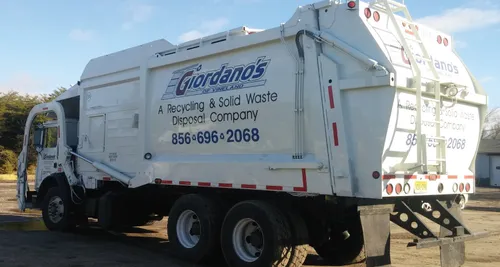
Finding a Hauler: Major national waste management companies like Republic Services and Waste Management, as well as regional or local haulers, offer commercial food waste programs in the area. It is critical to confirm that any hauler you contact is permitted to transport and deliver organic waste to a NJDEP-approved processing facility.
Containers and Logistics: Service providers typically supply specialized containers for organic waste. These are often lockable bins or dumpsters designed to contain odors and prevent contamination. The size can range from small wheeled carts to large dumpsters, depending on your volume. Pickup schedules are customized based on your needs; a high-volume kitchen may require daily collection, while others might manage with weekly pickups 1.
Best Practices for Source Separation and Contamination Control
Success in a food waste recycling program hinges on preventing contamination. Strict separation is not just a best practice-it's a requirement for your waste to be accepted at processing facilities.
What Goes In: Only food scraps should be placed in the organics container. This includes:
- Preparation waste (peels, ends, rinds)
- Spoiled or expired food
- Plate scrapings and leftovers
- Coffee grounds and filters
- Tea bags (without staples)
What Stays Out: Contaminants like plastic, glass, and metals can ruin an entire load of compost. Your container must be free of:
- Plastic bags, wrap, or packaging
- Styrofoam containers
- Liquids, fats, and oils (these often require separate grease trap or used cooking oil services)
- Non-food items, utensils, or rubber gloves 2 3
Operational Tips: To make separation easy for kitchen staff, use small, clearly labeled collection bins on the prep line and in dishwashing areas. Lining these small bins with certified compostable bags can simplify transfer to the larger outdoor container. Consistent staff training is the most effective tool for maintaining a clean, compliant organics stream 4.
Find the perfect composting & food waste companies for your needs
Get personalized recommendations and expert advice
Analyzing Costs and Benefits for Your Restaurant
The financial aspect of food waste composting is variable and requires direct inquiry. There is no standard rate sheet, as costs are influenced by several factors specific to your operation.
Cost Factors: Pricing depends on the volume of waste (container size), frequency of pickup, your contract length, and the hauler's own fee structure. You may encounter pricing per pickup, a monthly flat fee, or a cost per ton. While adding a separate organics service will represent a new line item, it can also lead to savings by reducing the volume (and therefore cost) of your traditional trash disposal. Landfill tipping fees are avoided for the diverted waste, and some haulers may offer bundled service discounts 5 6 7.
Beyond Compliance: The benefits extend past regulatory adherence. Participating in organics recycling enhances your restaurant's sustainability profile, which is increasingly important to customers. It can also lead to more mindful kitchen practices that reduce overall waste generation, directly improving your bottom line. Starting a program often provides a clearer picture of your true food waste patterns, identifying opportunities for waste reduction at the source 8.
Steps to Implement a Program in Your Vineland Restaurant
- Conduct a Waste Audit: Estimate your weekly food scrap output. Tracking waste for a week can help determine if you approach the 52-ton annual threshold and what size collection service you'll need.
- Consult NJDEP Resources: Visit the NJDEP's official Food Waste Recycling Rules webpage for the most current list of authorized facilities and haulers. This ensures your chosen path meets state compliance standards.
- Solicit Multiple Quotes: Contact several commercial waste service providers that operate in Cumberland County. Be prepared to discuss your estimated volume, desired pickup frequency, and need for containers. Comparing quotes is essential for finding a cost-effective and reliable service.
- Train Your Team and Launch: Once you select a hauler, set up the collection containers and implement a simple, clear separation system. Educate every staff member, from dishwashers to managers, on what belongs in the organics bin. Clear signage and ongoing communication are key to a successful launch.
Frequently asked questions
Sources
Footnotes
-
Recycling And Solid Waste Management - Vineland, NJ - https://www.vinelandcity.org/waste-management/ ↩
-
Recycling Pick-up | Tenafly, NJ - https://www.tenaflynj.gov/185/Recycling-Pick-up ↩
-
New Jersey Revised Statutes Section 13:1E-3 (2024) - Definitions. - https://law.justia.com/codes/new-jersey/title-13/section-13-1e-3/ ↩
-
Untitled - https://health.vinelandcity.org/wp-content/uploads/2022/04/2022-NEWSLETTER.pdf ↩
-
Food Waste Recycling rules - https://dep.nj.gov/dshw/swpl/fw/food-waste-recycling-rules/ ↩
-
Organic waste management in New Jersey: Reducing food waste and ... - https://bloustein.rutgers.edu/organic-waste-management-in-new-jersey-reducing-food-waste-and-improving-food-equity/ ↩
-
Composting 101: A Comprehensive Guide for Restaurants - https://pos.toasttab.com/blog/on-the-line/restaurant-composting ↩
-
How to Reduce Restaurant Food Waste in 2025 - https://orderable.com/blog/reduce-restaurant-food-waste/ ↩