Find the Best Composting & Food Waste Companies for Your Business
No obligation • Fast responses • Nationwide coverage

Why you can trust Restaurant Waste Disposal
Restaurant Waste Disposal is a leading U.S. resource for comparing restaurant composting, food-waste recycling, grease trap cleaning, and used cooking oil collection services. Our editorial team researches providers, checks credentials, and organizes unbiased information so operators can make informed decisions. Companies cannot pay to change ratings or placement.
Search providers near you
Best Composting & Food Waste Companies in New Jersey Ranked
Managing food scraps and organic waste is a critical operational and environmental consideration for New Jersey's food service businesses. The state has implemented forward-thinking regulations designed to divert significant volumes of organic material from landfills, turning waste into a resource. For restaurants, hotels, and other large generators, understanding these mandates is the first step toward compliance, potential cost savings, and enhanced sustainability. This guide outlines the key rules, practical strategies, and service options available for handling food waste in the Garden State.

Community Compost Company
5941 US-209, Kerhonkson, NY 12446
Community Compost Company provides food waste and composting services for restaurants and other clients in Gloucester, NJ. They offer convenient pick-up services for food scraps, transforming organic waste into nutrient-rich compost that supports soil health and reduces landfill waste. The company is dedicated to environmental education and making composting accessible to all. Their efforts have resulted in significant environmental impact, including millions of pounds of food scraps composted and substantial reductions in CO2 emissions.

Ag Choice
93 Stickles Pond Rd, Newton, NJ 07860
Ag Choice is a commercial food waste composter based in Woodbridge, NJ. The company specializes in composting a wide range of organic materials, including food waste from restaurants, leaves, and manufacturing organics such as coffee and nut products. Since beginning operations in July 2006, Ag Choice has processed over 270,000 cubic yards of recyclable material and diverted more than 95,000 tons of food waste from landfills and incinerators. The company also developed a single-serve capsule recycling program in the U.S.
Jesse Baro Inc.
157 Quarry Rd, Douglassville, PA 19518
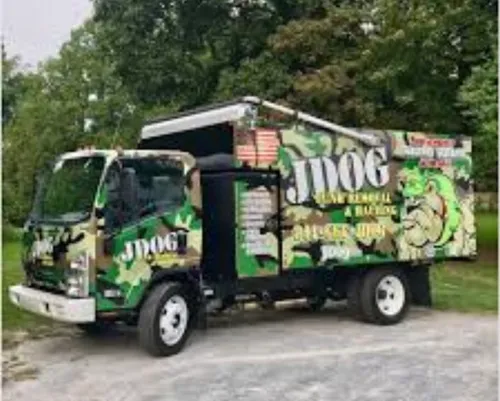
Jesse Baro Inc. is a waste management company based in Manchester, NJ, specializing in used cooking oil collection, grease trap cleaning, and food waste recycling for restaurants and other businesses. They provide custom food waste recycling programs for a variety of sectors including grocery stores, agriculture, municipalities, hospitality, schools, sports venues, healthcare, and food manufacturers. Their services include converting organic byproducts into animal feed and natural fertilizers, supporting sustainable waste management practices across multiple industries.
Green Bucket Compost
Woodbridge, NJ
Green Bucket Compost is a food waste and composting service based in Woodbridge, NJ, focused on diverting food waste from landfills through sustainable methods. They work with anaerobic digestion facilities like Trenton Renewables to process all types of food waste, including packaging, turning it into renewable energy and compost. Their services cover residential pickups, commercial food waste management for restaurants, hotels, and schools, as well as municipal drop-off and curbside collection programs across several New Jersey counties and towns. Founded by Isaiah Green, the company emphasizes scalable and efficient waste diversion solutions to support community sustainability goals.
Trenton Renewables
1600 Lamberton Rd, Trenton, NJ 08611
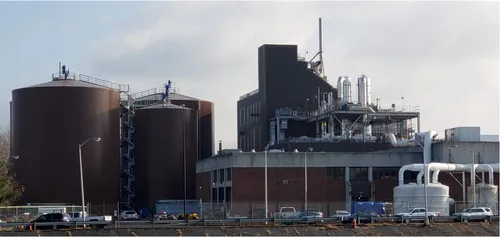
Trenton Renewables is a food waste recycling and renewable energy company based in Trenton, NJ. They serve restaurants and other organizations by managing food waste through anaerobic digestion, converting it into renewable energy, premium compost, and recaptured packaging. The company operates as a Class I Renewable Energy Facility and is qualified under New Jersey's Food Waste Law. Their process helps reduce landfill waste and CO2 emissions while supporting environmental sustainability.
Understanding New Jersey's Food Waste Recycling Mandate
New Jersey's approach to organic waste is governed by a clear regulatory framework. The law targets large generators, specifically businesses that produce 52 tons or more of food waste per year. This typically includes supermarkets, food processors, hospitals, universities, and large restaurants or hotel chains. If your establishment falls into this category and is located within 25 road miles of an authorized organics recycling facility, you are required to source-separate your food scraps and food-soiled paper for recycling.
The state's goals are ambitious: a 50% reduction in food waste by 2027 and a 75% reduction by 2032 1. The mandate supports these targets by ensuring that edible food is rescued whenever possible and that remaining scraps are processed through composting or anaerobic digestion, which creates soil amendments or renewable energy.
Key Components of the Rule:
- Covered Materials: This includes all food scraps, food-soiled paper (like napkins and pizza boxes), and yard trimmings. Used cooking oil and grease are also critical waste streams with their own recycling pathways.
- Exemptions: Businesses can apply for an exemption if the cost of recycling organics exceeds the cost of disposal by more than 10%. An exemption may also be granted if no authorized processing facility is within the 25-mile radius2 3.
- Compliance Pathways: Simply separating waste isn't enough; you must ensure it goes to a permitted composting facility, anaerobic digester, or animal feed operation. Food donation is a highly encouraged method to reduce the volume of waste requiring processing.
Practical Strategies for Restaurant Compliance
Transitioning to a food waste recycling program requires planning. The most effective system integrates seamlessly into your daily kitchen and service operations without disrupting workflow.
Start with a Waste Audit. Before selecting a service, understand your waste stream. Track what and how much you are throwing away over a typical week. This will help you identify opportunities for source reduction (ordering smarter, improving inventory control) and donation, while also providing accurate volume data for service providers.
Implement Source Separation. Place clearly labeled collection bins in key areas: prep stations, dishwashing areas, and behind the counter. Color-coding (e.g., green for organics) and consistent training for all staff are essential for keeping contaminants out of the recycling stream. A clean stream of organics is more valuable and often less expensive to process.
Prioritize Food Rescue. Before anything hits the compost bin, evaluate if it's edible. Partnering with a local food bank or rescue organization is not only a powerful way to support the community but also directly reduces your regulated waste tonnage and may offer tax benefits.
Find the perfect composting & food waste companies for your needs
Get personalized recommendations and expert advice
Service Options for Food Waste Management
New Jersey businesses have several professional service avenues to achieve compliance and manage organics effectively.
- Specialized Food Waste Haulers: These companies provide dedicated containers (often lockable to control odors and pests) and scheduled pickups tailored to your volume. They transport the material to permitted composting or anaerobic digestion facilities. This is a straightforward solution for businesses generating consistent volumes of scraps.
- Used Cooking Oil (UCO) & Grease Trap Services: These are often separate but essential services. Reputable UCO collectors will recycle oil into biodiesel. Regular grease trap cleaning is required by health codes and prevents sewer line blockages; the collected grease (yellow or brown) can also be recycled4.
- Comprehensive Zero-Waste Consultants: For businesses seeking a tailored solution or navigating complex compliance, consultants or service providers like RTS offer customized plans. They can assist with the entire process-from bin placement and staff training to hauling logistics and reporting-often managing multiple waste streams (recycling, trash, organics) under one service plan.
Costs, Penalties, and Potential Benefits
The financial aspect of food waste recycling is a primary concern for business owners. Costs are variable and depend on your location, waste volume, frequency of pickup, and the chosen service provider. You will typically encounter a monthly service fee for container rental and collection. However, this can be offset by reducing the size or frequency of your general trash dumpster, as landfill tipping fees are avoided for the diverted organics.
Non-compliance carries risks. Enforcement can include inspections and fines. Penalties may start with a warning for a first offense but can escalate to fines of $1,000 for a second offense and $2,500 or more for subsequent violations5 6 7. Proactive compliance is more cost-effective than reacting to a penalty.
Beyond avoiding fines, a robust organics program offers benefits:
- Enhanced Sustainability Profile: Consumers increasingly support businesses with strong environmental practices.
- Operational Insights: Tracking food waste often reveals opportunities to improve purchasing and prep practices, reducing food costs.
- Supporting the Circular Economy: Your food scraps become compost that enriches New Jersey's soils or biogas that generates renewable energy.
Setting Up Your Program: A Step-by-Step Approach
- Determine Your Status: Calculate your annual food waste generation. If you're near or over 52 tons, or if you're a large institution, assume you are covered by the mandate.
- Research Local Facilities: Verify if there is an authorized composting or digestion facility within 25 road miles of your location. Your county solid waste office is a good resource for this information.
- Solicit Service Quotes: Contact several licensed food waste haulers and/or zero-waste service providers. Provide them with the data from your waste audit for accurate pricing.
- Plan Your On-Site System: Work with your chosen provider to select appropriate bin sizes and locations. Develop a simple training guide for your team.
- Launch and Train: Roll out the new bins and conduct training with all staff. Use clear signage and explain the "why" behind the new process to encourage buy-in.
- Monitor and Adjust: Review the program after the first few weeks. Is contamination low? Are bins in the right places? Adjust as needed and recognize staff for their efforts.
Frequently asked questions
Sources
Footnotes
-
Food Waste Recycling | Middlesex County NJ - https://www.middlesexcountynj.gov/government/departments/department-of-public-safety-and-health/office-of-health-services/solid-waste-management-program/food-waste-recycling ↩
-
NJDEP| Division of Sustainable Waste Management | Food Waste Recycling rules - https://dep.nj.gov/dshw/swpl/fw/food-waste-recycling-rules/ ↩
-
New Jersey Food Waste Policy - https://policyfinder.refed.org/new-jersey/ ↩
-
New Jersey Legislature - https://njleg.state.nj.us/bill-search/2024/A4118/bill-text?f=A4500&n=4118_R1 ↩
-
How to recycle food waste in New Jersey - A guide - https://www.rts.com/blog/how-to-recycle-food-waste-in-new-jersey-a-guide/ ↩
-
New Jersey restaurants and lawmakers fume over potential plastic ... - https://ca.news.yahoo.com/jersey-restaurants-lawmakers-fume-over-142558046.html ↩
-
Guide to Funding Food Scrap Recycling and Food Rescue - https://www.nrdc.org/resources/guide-funding-food-scrap-recycling ↩