Find the Best Composting & Food Waste Companies for Your Business
No obligation • Fast responses • Nationwide coverage

Why you can trust Restaurant Waste Disposal
Restaurant Waste Disposal is a leading U.S. resource for comparing restaurant composting, food-waste recycling, grease trap cleaning, and used cooking oil collection services. Our editorial team researches providers, checks credentials, and organizes unbiased information so operators can make informed decisions. Companies cannot pay to change ratings or placement.
Search providers near you
Top Composting & Food Waste Companies in Passaic, New Jersey Ranked
For restaurants and food service businesses in Passaic, managing organic waste is no longer just an operational concern-it's a legal requirement. New Jersey state law mandates that large generators of food waste, which includes many restaurants, supermarkets, and banquet halls, must divert this material from landfills. While Passaic may not have a specific municipal composting program, compliance is achieved through partnerships with private waste haulers who specialize in commercial organics recycling. This shift is crucial for environmental sustainability and for avoiding potential state fines, turning food scraps into a resource rather than a liability. Implementing a proper system involves understanding container options, pickup schedules, and strict contamination guidelines to ensure the collected waste can be successfully processed.
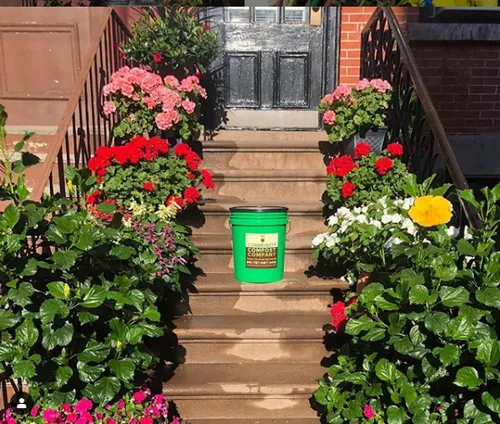
Community Compost Company
1501 Madison St, Hoboken, NJ 07030
Community Compost Company provides food waste collection and composting services for restaurants and residents in New York, NY. They offer a simple system where customers collect food scraps in provided buckets for weekly pickup. The company recycles all types of food waste, including meats and dairy, transforming it into nutrient-rich compost that supports soil health and reduces landfill waste. Community Compost Company is committed to environmental education and making composting accessible to everyone.

Ag Choice
93 Stickles Pond Rd, Newton, NJ 07860
Ag Choice is a commercial food waste composter based in Woodbridge, NJ. The company specializes in composting a wide range of organic materials, including food waste from restaurants, leaves, and manufacturing organics such as coffee and nut products. Since beginning operations in July 2006, Ag Choice has processed over 270,000 cubic yards of recyclable material and diverted more than 95,000 tons of food waste from landfills and incinerators. The company also developed a single-serve capsule recycling program in the U.S.
Green Bucket Compost
Woodbridge, NJ
Green Bucket Compost is a food waste and composting service based in Woodbridge, NJ, focused on diverting food waste from landfills through sustainable methods. They work with anaerobic digestion facilities like Trenton Renewables to process all types of food waste, including packaging, turning it into renewable energy and compost. Their services cover residential pickups, commercial food waste management for restaurants, hotels, and schools, as well as municipal drop-off and curbside collection programs across several New Jersey counties and towns. Founded by Isaiah Green, the company emphasizes scalable and efficient waste diversion solutions to support community sustainability goals.
Understanding New Jersey's Organic Waste Recycling Mandate
The foundation of food waste management in Passaic is state regulation. New Jersey's mandatory food waste recycling rules are designed to significantly reduce the volume of organic material sent to landfills, where it decomposes and produces methane, a potent greenhouse gas. The law specifically targets commercial generators, including restaurants, that produce over 52 tons of food waste per year or are located within 25 miles of an authorized organics recycling facility. For many Passaic establishments, this means participation is not optional. The mandate requires these businesses to separate food waste from their general trash stream and arrange for its proper recycling through a licensed hauler. This regulatory push aligns with broader environmental goals and represents a fundamental change in how the hospitality industry handles its backend operations.
Partnering with Private Commercial Haulers
Since a city-run program isn't detailed, Passaic businesses must engage private service providers. Several national and regional waste management companies offer compliant organic waste collection services in the area. Firms like Recycle Track Systems (RTS), Waste Management, and Republic Services provide tailored solutions that meet New Jersey Department of Environmental Protection (NJDEP) rules. When selecting a hauler, it's critical to confirm their compliance with state regulations and their ability to provide documentation for your records. These companies handle the entire chain-from supplying appropriate containers to transporting the waste to authorized composting or anaerobic digestion facilities. Choosing a reputable hauler is the most important step in establishing a compliant and effective food waste diversion program.
Essential Equipment and Container Systems
A successful organics recycling program starts with the right containers. Your chosen hauler will typically supply the necessary equipment, which is designed for the harsh environment of a commercial kitchen. The standard setup includes:
- Large Outdoor Containers: Heavy-duty, lidded bins or totes, often available in sizes like 32, 64, or 96 gallons. These are stored in a designated area for regular pickup 1.
- Kitchen Collection Pails: Smaller, countertop or under-counter pails with tight-fitting lids are placed in food prep and dishwashing areas. These are lined with compostable bags (if approved by your hauler) and are emptied into the larger outdoor containers by staff.
- Clear Signage: Labels and posters provided by the hauler or created in-house are essential for educating staff on what can and cannot go into the food waste stream.
The hauler's service agreement will outline who is responsible for maintaining and repairing this equipment.
Establishing a Pickup Schedule
Collection frequency is not one-size-fits-all; it is customized based on your establishment's specific waste volume, kitchen size, and menu. A high-volume restaurant or a banquet hall may require daily or multiple-times-per-week pickups to manage odor and pest concerns. A smaller café or bakery might find a weekly schedule sufficient. During initial consultations with service providers, they will assess your waste output to recommend an appropriate schedule. This schedule can be adjusted as you refine your internal sorting processes and as your business volume changes. Consistent, reliable pickup is key to maintaining kitchen hygiene and ensuring program adherence.
The Critical Importance of Contamination Control
Perhaps the most crucial operational aspect is preventing contamination. A load of food waste contaminated with non-compostable materials can be rejected at the processing facility, leading to extra fees, wasted effort, and potential compliance issues. Clear communication and continuous staff training are vital.
Acceptable materials typically include:
- Fruit and vegetable scraps (peels, cores, rinds)
- Meat, fish, and bones (check with your specific hauler)
- Dairy products
- Eggshells
- Coffee grounds and filters
- Tea bags (without staples)
- Food-soiled paper like napkins, paper towels, and uncoated pizza boxes
- Baked goods and grains
Strictly prohibited contaminants include:
- Plastic bags (even those labeled "compostable" unless explicitly approved by your hauler)
- Glass, metal, or foil
- Styrofoam
- Rubber gloves
- Liquids (oils, soups, beverages)
- Any form of general trash or personal protective equipment
Find the perfect composting & food waste companies for your needs
Get personalized recommendations and expert advice
The Financial and Operational Impact
Implementing a commercial food waste program represents a new line item in operational expenses. Costs are variable and depend on factors like collection frequency, container size, and the hauler's pricing structure 2. However, this should be viewed as a strategic investment. Diverting organics can reduce the volume (and therefore the cost) of your general trash disposal. More importantly, it ensures compliance with state law, helping you avoid significant fines 3 4. There are also intangible benefits, such as enhancing your brand's reputation as an environmentally responsible business, which can resonate positively with a growing segment of consumers.
Steps to Launch Your Program in Passaic
- Conduct a Waste Audit: Briefly track how much food waste your kitchen produces to gauge the scale of service you'll need.
- Research and Contact Haulers: Reach out to several commercial waste companies that offer organic recycling services in Passaic. Ask for detailed quotes and confirm their NJDEP compliance.
- Select a Provider: Choose a hauler based on cost, service reliability, customer support, and their ability to provide training materials.
- Train Your Team: Before the first pickup, conduct thorough training with all kitchen and front-of-house staff. Explain the "why" (the law, the environment) and the "how" (what goes where). Make signage clear and multilingual if needed.
- Launch and Monitor: Start the program, place containers, and have managers monitor for contamination initially. Provide feedback to staff and adjust as necessary.
- Review and Optimize: After a few months, review the service with your hauler. You may be able to adjust pickup frequency or container size to optimize costs.
Beyond Compliance: Broader Benefits
While regulatory compliance is the primary driver, effective organic waste management offers broader community and environmental benefits. Diverting food waste reduces landfill burdens and associated odors and truck traffic. The end product-compost-is a valuable soil amendment that can support local agriculture and landscaping, closing the nutrient loop. For Passaic businesses, leading in this area can foster community goodwill and position your establishment as a forward-thinking leader in the local dining scene.
Frequently asked questions
Sources
Footnotes
-
Garbage collection guidelines and schedule - Somerville, NJ - https://www.somervillenj.org/garbage-collection-guidelines-and-schedule/ ↩
-
How to recycle food waste in New Jersey - A guide - https://www.rts.com/blog/how-to-recycle-food-waste-in-new-jersey-a-guide/ ↩
-
NJDEP| Division of Sustainable Waste Management | Food Waste Recycling rules - https://dep.nj.gov/dshw/swpl/fw/food-waste-recycling-rules/ ↩
-
Organic waste management in New Jersey: Reducing food waste and ... - https://bloustein.rutgers.edu/organic-waste-management-in-new-jersey-reducing-food-waste-and-improving-food-equity/ ↩