Find the Best Composting & Food Waste Companies for Your Business
No obligation • Fast responses • Nationwide coverage

Why you can trust Restaurant Waste Disposal
Restaurant Waste Disposal is a leading U.S. resource for comparing restaurant composting, food-waste recycling, grease trap cleaning, and used cooking oil collection services. Our editorial team researches providers, checks credentials, and organizes unbiased information so operators can make informed decisions. Companies cannot pay to change ratings or placement.
Search providers near you
Top Composting & Food Waste Companies in Old Bridge, New Jersey Ranked
For restaurant owners and food service operators in Old Bridge, managing organic waste is not just an environmental consideration-it's a regulatory requirement. New Jersey state law mandates that large generators of food waste, including many busy restaurants, implement a formal system for separating and recycling their organic material. This guide provides a clear overview of the rules, practical steps for compliance, and how to establish an effective food scrap diversion program for your business.
Understanding the mandate is the first step. Under New Jersey Department of Environmental Protection (NJDEP) rules, commercial food waste recycling is required for entities that generate 52 tons or more of food waste per year and are located within 25 road miles of an authorized recycling facility. This threshold equates to roughly one ton of food scraps per week, a volume that many medium-to-large restaurants, cafeterias, and supermarkets can reach. The core requirement is source separation: food waste must be kept entirely separate from regular trash and recyclables from the point of disposal1.
Community Compost Company
1501 Madison St, Hoboken, NJ 07030
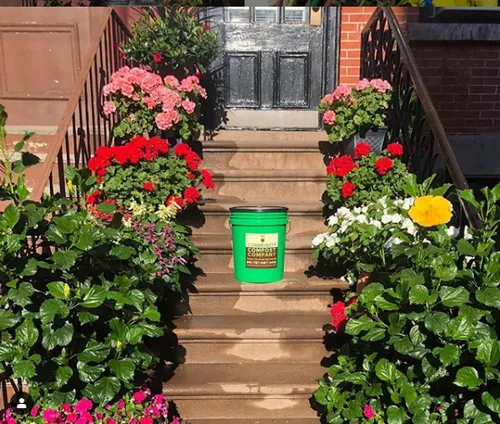
Community Compost Company provides food waste collection and composting services for restaurants and residents in New York, NY. They offer a simple system where customers collect food scraps in provided buckets for weekly pickup. The company recycles all types of food waste, including meats and dairy, transforming it into nutrient-rich compost that supports soil health and reduces landfill waste. Community Compost Company is committed to environmental education and making composting accessible to everyone.

Green Bucket Compost
Woodbridge, NJ
Green Bucket Compost is a food waste and composting service based in Woodbridge, NJ, focused on diverting food waste from landfills through sustainable methods. They work with anaerobic digestion facilities like Trenton Renewables to process all types of food waste, including packaging, turning it into renewable energy and compost. Their services cover residential pickups, commercial food waste management for restaurants, hotels, and schools, as well as municipal drop-off and curbside collection programs across several New Jersey counties and towns. Founded by Isaiah Green, the company emphasizes scalable and efficient waste diversion solutions to support community sustainability goals.
Trenton Renewables
1600 Lamberton Rd, Trenton, NJ 08611
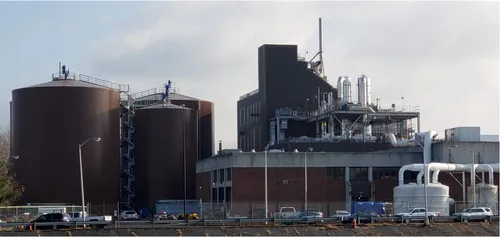
Trenton Renewables is a food waste recycling and renewable energy company based in Trenton, NJ. They serve restaurants and other organizations by managing food waste through anaerobic digestion, converting it into renewable energy, premium compost, and recaptured packaging. The company operates as a Class I Renewable Energy Facility and is qualified under New Jersey's Food Waste Law. Their process helps reduce landfill waste and CO2 emissions while supporting environmental sustainability.
Understanding New Jersey's Food Waste Recycling Mandate
The regulatory framework for organic waste management in New Jersey is designed to divert significant volumes from landfills, reducing methane emissions and creating valuable compost or energy. The key regulation, N.J.A.C. 7:26K, establishes the criteria for mandatory participation. For an Old Bridge restaurant, the two critical questions are: Do we generate enough waste? and Are we within the distance limit?
Generating 52 tons annually is the primary trigger. To estimate your output, consider that one cubic yard of compacted food waste weighs approximately 750 pounds. A restaurant producing several full bins of prep scraps, spoiled inventory, and plate waste daily can easily meet this threshold. The 25-mile radius from an approved facility is also met for Old Bridge, given the presence of processors in the region. If your establishment meets both criteria, implementing a compliant organics recycling program is not optional.
Steps to Establish a Compliant Program
Setting up a successful food scrap diversion system involves planning, partner selection, and staff training. Here is a practical roadmap for Old Bridge restaurant managers.
1. Conduct a Waste Audit Begin by assessing your current waste stream. Track the volume of food waste generated in your kitchen and dining area over a typical week. This will help you determine your service needs and provide the data required for official reporting. Knowing your volume is also crucial for getting accurate quotes from service providers.
2. Select a Licensed Hauler Old Bridge Township does not provide a municipal commercial food waste collection service. Therefore, restaurants must contract directly with a private, licensed waste hauler permitted to transport organic material. Major national providers like Waste Management and Republic Services offer these services, as do regional organic waste specialists. When contacting providers, be prepared to discuss your estimated volume, desired pickup frequency (e.g., daily, weekly), and any space constraints you have for containers.
3. Implement On-Site Collection Systems Your chosen hauler will specify the type of containers to use. Typically, this involves sturdy, lidded bins that are clearly marked for "Food Waste Only" or "Organics." These are placed in key areas like the kitchen prep station, dishwashing area, and potentially behind a buffet line. It is essential to pair these bins with clear signage for staff, distinguishing them from trash and recycling bins to prevent contamination.
Find the perfect composting & food waste companies for your needs
Get personalized recommendations and expert advice
4. Train Your Staff Thoroughly Employee buy-in is the most critical factor for success. Conduct training sessions to explain why the program is important (both legally and environmentally) and how to participate correctly. Emphasize what goes in the organics bin (fruit/vegetable scraps, meat, bones, dairy, bread, coffee grounds) and what must stay out (plastic, glass, metals, liquids, and traditional trash). Consistent, proper sorting at the source prevents contaminated loads, which can be rejected by processors, resulting in extra fees.
5. Maintain Records and Report Mandated businesses must submit quarterly reports to their municipality, detailing the amount of food waste recycled2 3. Your hauler should provide you with the necessary documentation, such as weight tickets or monthly summaries. Keeping organized records simplifies this reporting duty and helps you track the program's performance and cost over time.
Key Operational Considerations: Containers, Schedules & Contamination
Container Types and Placement The specifics of your container-size, material, and whether it uses compostable liner bags-will be determined in partnership with your hauler. Common setups include 32- or 64-gallon wheeled carts for smaller volumes or dedicated dumpsters for larger operations. Placement is key for workflow efficiency; bins should be conveniently located wherever food is prepared or cleared.
Pickup Schedules Collection frequency is a business decision based on volume, space, and odor control. A high-volume restaurant may need daily pickups, while a smaller cafe might manage with weekly service. Your hauler will work with you to establish a schedule that prevents overflow and maintains sanitation. Remember, this schedule is a private contract between your business and the hauler, not a town-set day.
The Critical Issue of Contamination Contamination occurs when non-organic materials are placed in the food waste stream. This is the single biggest reason programs fail. A bin containing food scraps mixed with a plastic wrapper, a soda can, or even a disposable glove can cause an entire load to be deemed unrecyclable4. Contaminated loads may be sent to a landfill at a higher cost, and repeat offenses can lead to service cancellation or fines. Diligent sorting at the source is non-negotiable for a cost-effective and compliant program.
Cost Factors and Provider Selection
The cost for commercial food waste collection in Old Bridge is not fixed and varies based on several factors:
- Volume and Frequency: More waste and more frequent pickups increase cost.
- Hauler and Competition: Prices can differ between national and local providers.
- Container and Service Type: The type of container provided and the distance to the processing facility affect the price.
While specific prices are not published, restaurants can expect a monthly service fee that is separate from their trash and recycling bills. It is highly advisable to obtain quotes from multiple licensed haulers. When comparing quotes, look beyond just the monthly fee. Consider the hauler's reputation, customer service, reporting tools, and their willingness to help with staff training and troubleshooting.
Benefits Beyond Compliance
While the initial driver is regulatory compliance, a well-run organic waste program offers significant benefits:
- Potential Cost Savings: By diverting heavy, wet food waste, you may be able to reduce the size or frequency of your trash dumpster service, potentially offsetting some of the organics recycling cost.
- Environmental Leadership: Demonstrating a commitment to sustainability enhances your brand reputation with increasingly eco-conscious customers.
- Waste Insight: The process of auditing and tracking your food waste can reveal opportunities to improve inventory management and reduce over-purchasing or over-preparation, tackling waste at the source.
Implementing a food waste recycling system requires an upfront investment of time and resources, but it positions your Old Bridge restaurant as a compliant, forward-thinking business. By selecting the right partner, training your team, and vigilantly avoiding contamination, you can turn a regulatory requirement into a operational success.
Frequently asked questions
Sources
Footnotes
-
Organic waste management in New Jersey: Reducing food waste and ... - https://bloustein.rutgers.edu/organic-waste-management-in-new-jersey-reducing-food-waste-and-improving-food-equity/ ↩
-
Food Waste Recycling rules - https://dep.nj.gov/dshw/swpl/fw/food-waste-recycling-rules/ ↩
-
Solid Waste - Township of Old Bridge, NJ - eCode360 - https://ecode360.com/7013659 ↩
-
New Jersey Revised Statutes Section 13:1E-3 (2024) - Definitions. - https://law.justia.com/codes/new-jersey/title-13/section-13-1e-3/ ↩