Find the Best Composting & Food Waste Companies for Your Business
No obligation • Fast responses • Nationwide coverage

Why you can trust Restaurant Waste Disposal
Restaurant Waste Disposal is a leading U.S. resource for comparing restaurant composting, food-waste recycling, grease trap cleaning, and used cooking oil collection services. Our editorial team researches providers, checks credentials, and organizes unbiased information so operators can make informed decisions. Companies cannot pay to change ratings or placement.
Search providers near you
Top Composting & Food Waste Companies in North Bergen, New Jersey Ranked
For restaurants and food service businesses in North Bergen, managing organic waste is no longer just an environmental consideration-it's a regulatory requirement for many. New Jersey's statewide Organic Waste Ban mandates that large generators, including many restaurants, divert food scraps from landfills. This creates a critical need for reliable commercial composting and food waste recycling services. Navigating this landscape involves understanding state mandates, contracting with private haulers, and implementing effective on-site separation practices to turn potential waste into a valuable resource.
The cornerstone of organics recycling in North Bergen is New Jersey's law, which requires businesses generating over 52 tons of organic waste per year to separate and recycle it if they are within 25 miles of an authorized processing facility 1. For qualifying restaurants, this isn't optional. Compliance means contracting with a licensed private hauler who will provide specialized collection services. The state's Department of Environmental Protection (NJDEP) provides guidelines and oversees these rules, emphasizing the generator's responsibility to ensure proper separation from regular trash.
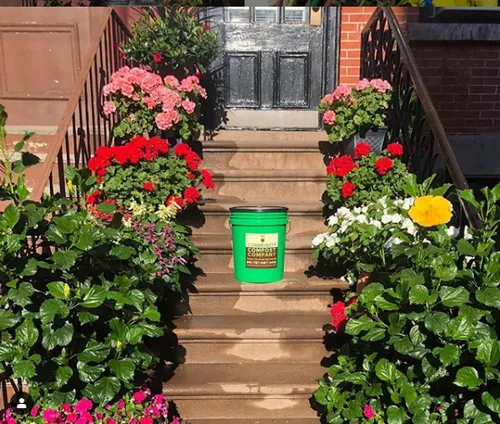
Community Compost Company
1501 Madison St, Hoboken, NJ 07030
Community Compost Company provides food waste collection and composting services for restaurants and residents in New York, NY. They offer a simple system where customers collect food scraps in provided buckets for weekly pickup. The company recycles all types of food waste, including meats and dairy, transforming it into nutrient-rich compost that supports soil health and reduces landfill waste. Community Compost Company is committed to environmental education and making composting accessible to everyone.

Green Bucket Compost
Woodbridge, NJ
Green Bucket Compost is a food waste and composting service based in Woodbridge, NJ, focused on diverting food waste from landfills through sustainable methods. They work with anaerobic digestion facilities like Trenton Renewables to process all types of food waste, including packaging, turning it into renewable energy and compost. Their services cover residential pickups, commercial food waste management for restaurants, hotels, and schools, as well as municipal drop-off and curbside collection programs across several New Jersey counties and towns. Founded by Isaiah Green, the company emphasizes scalable and efficient waste diversion solutions to support community sustainability goals.
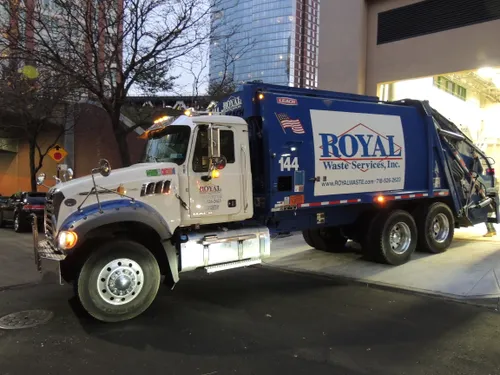
Royal Waste Services
187-40 Hollis Ave, Jamaica, NY 11423
Royal Waste Services provides comprehensive waste management solutions in New York, NY, specializing in food waste composting, trash pickup, single stream recycling, dumpster rentals, and bulk waste removal. Serving Manhattan, Bronx, Brooklyn, and Queens, they operate 24/7 to support businesses with sustainable waste diversion strategies. With over 25 years of experience, Royal Waste owns and operates in-house recycling facilities to ensure environmentally responsible disposal and compliance with NYC commercial recycling laws.
Understanding Your Obligations as a Food Business
The first step for any restaurant owner or manager is to assess your annual organic waste output. The 52-ton threshold applies to entities like large dining establishments, hotels with significant food service, and institutional cafeterias. Even if your volume falls below this mandatory threshold, participating in organics diversion is a powerful sustainability practice that can reduce trash hauling costs and enhance your brand's environmental commitment. The key is to understand that municipal trash collection in North Bergen is not designed to handle separated food waste; specialized private services are required 2.
Partnering with a Commercial Composting Service
Since North Bergen does not offer a municipal commercial food waste program, businesses must engage private providers. Companies like Java's Compost offer tailored services for restaurants, offices, and other institutions. These services typically include:
- Provision of Specialized Containers: Haulers supply dedicated bins, often colored brown or green, specifically for organic waste collection.
- Scheduled Pickups: Frequency is determined by your establishment's volume, ranging from weekly to daily pickups for high-output kitchens.
- End-to-End Processing: The service provider ensures the collected waste is transported to a permitted composting or anaerobic digestion facility.
When selecting a provider, it's essential to discuss bin sizes, pickup schedules, and the specific list of acceptable materials to ensure a smooth partnership.
What Goes In the Compost Bin? Minimizing Contamination
A successful food waste recycling program hinges on keeping the organics stream clean. Contamination with plastics, glass, or liquids can render an entire load unrecyclable. Staff training is paramount. Generally, acceptable items include:
- Fruit and vegetable scraps
- Meat, fish, and bones
- Dairy products
- Bread, grains, and pasta
- Coffee grounds and filters
- Paper napkins (if uncontaminated with synthetic materials)
Items to exclude typically include plastic bags, wrappers, utensils, rubber bands, and liquids like soups or oils. Strict adherence to these guidelines is crucial for the hauler to accept your material and for it to be processed correctly 3 4.
Find the perfect composting & food waste companies for your needs
Get personalized recommendations and expert advice
The Benefits Beyond Compliance
While state mandate drives action for larger generators, the advantages of food waste recycling extend to businesses of all sizes. Diverting organics can significantly reduce the volume and weight of your general trash, potentially lowering disposal costs. It demonstrates corporate responsibility to an increasingly eco-conscious customer base. Furthermore, by supporting the circular economy, you contribute to the creation of compost, a valuable soil amendment used in agriculture and landscaping, closing the loop on your food cycle.
Implementing an Effective On-Site System
Setting up an efficient back-of-house system is critical for program success. This involves:
- Conducting a Waste Audit: Understand what and how much you are throwing away to right-size your service.
- Strategic Bin Placement: Place clearly labeled organics bins in key prep and dishwashing areas alongside trash and recycling.
- Comprehensive Staff Training: Educate every team member, from chefs to bus staff, on what is and isn't compostable. Use clear signage with pictures.
- Regular Monitoring and Feedback: Designate a sustainability champion to monitor bins for contamination and provide ongoing feedback to the team.
Navigating Grease and Cooking Oil
While distinct from food scrap composting, managing used cooking oil (UCO) and grease trap waste is an integral part of a comprehensive food waste strategy for restaurants. Many private waste service providers offer collection services for this "yellow grease," which is recycled into biodiesel, animal feed, and other products. Proper management of grease interceptors is also essential to prevent sewer blockages and comply with local sewer authority regulations. Often, businesses can bundle grease trap cleaning and UCO collection with their food scrap hauling services for efficiency.
Resources and Next Steps
For specific details on registered haulers and the latest state regulations, the NJDEP's Food Waste Recycling Rules page is the authoritative source 5. Restaurant owners can also contact the North Bergen Department of Public Works for any local requirements related to commercial waste haulers. Taking proactive steps to manage organic waste not only ensures compliance but positions your North Bergen restaurant as a leader in sustainable business practices.
Frequently asked questions
Sources
Footnotes
-
Organic waste management in New Jersey: Reducing food waste and ... - https://bloustein.rutgers.edu/organic-waste-management-in-new-jersey-reducing-food-waste-and-improving-food-equity/ ↩
-
Sustainability | Recycling Resources - NJDEP - https://dep.nj.gov/sustainability/outreach-and-education/recycling-resources/ ↩
-
Commercial Compost Pickup Service - https://www.javascompost.com/commercial-pickup ↩
-
This is a list of what we do not recycle in our container bins: http://wallnj ... - https://www.wallnj.gov/DocumentCenter/View/8845/5-How-and-Where-to-Recycle ↩
-
Food Waste Recycling rules - NJDEP - https://dep.nj.gov/dshw/swpl/fw/food-waste-recycling-rules/ ↩