
Find the Best Composting & Food Waste Companies for Your Business
No obligation • Fast responses • Nationwide coverage

Why you can trust Restaurant Waste Disposal
Restaurant Waste Disposal is a leading U.S. resource for comparing restaurant composting, food-waste recycling, grease trap cleaning, and used cooking oil collection services. Our editorial team researches providers, checks credentials, and organizes unbiased information so operators can make informed decisions. Companies cannot pay to change ratings or placement.
Search providers near you
Top Composting & Food Waste Companies in Monroe, New Jersey Ranked
For restaurants and food service businesses in Monroe, managing organic waste is no longer just an environmental consideration-it's a regulatory and operational necessity. New Jersey's statewide mandates require large generators to divert food scraps from landfills, driving a growing market for commercial organics recycling services. By partnering with a dedicated hauler, Monroe establishments can transform their food waste into valuable compost, reduce their landfill tipping fees, and demonstrate a commitment to sustainability. This guide outlines the key steps, rules, and benefits for implementing a successful food waste diversion program tailored to Monroe's commercial landscape.
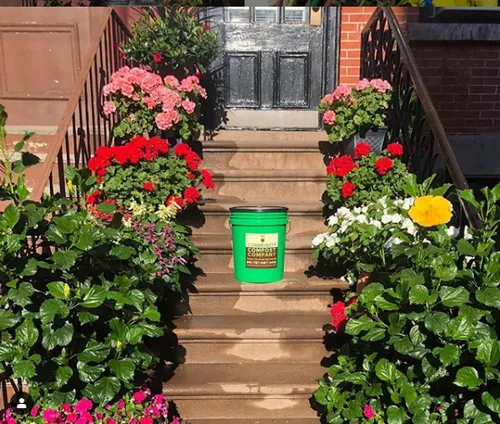
Community Compost Company
1501 Madison St, Hoboken, NJ 07030
Community Compost Company provides food waste collection and composting services for restaurants and residents in New York, NY. They offer a simple system where customers collect food scraps in provided buckets for weekly pickup. The company recycles all types of food waste, including meats and dairy, transforming it into nutrient-rich compost that supports soil health and reduces landfill waste. Community Compost Company is committed to environmental education and making composting accessible to everyone.

Ag Choice
93 Stickles Pond Rd, Newton, NJ 07860
Ag Choice is a commercial food waste composter based in Woodbridge, NJ. The company specializes in composting a wide range of organic materials, including food waste from restaurants, leaves, and manufacturing organics such as coffee and nut products. Since beginning operations in July 2006, Ag Choice has processed over 270,000 cubic yards of recyclable material and diverted more than 95,000 tons of food waste from landfills and incinerators. The company also developed a single-serve capsule recycling program in the U.S.
Green Bucket Compost
Woodbridge, NJ
Green Bucket Compost is a food waste and composting service based in Woodbridge, NJ, focused on diverting food waste from landfills through sustainable methods. They work with anaerobic digestion facilities like Trenton Renewables to process all types of food waste, including packaging, turning it into renewable energy and compost. Their services cover residential pickups, commercial food waste management for restaurants, hotels, and schools, as well as municipal drop-off and curbside collection programs across several New Jersey counties and towns. Founded by Isaiah Green, the company emphasizes scalable and efficient waste diversion solutions to support community sustainability goals.
Understanding New Jersey's Organic Waste Mandate
The foundation of commercial food scrap recycling in Monroe is state law. New Jersey's Organic Waste Ban (N.J.S.A. 7:26K) legally requires businesses that generate over 52 tons of food waste per year to separate and divert this material from landfills. This primarily affects large food service operations, including high-volume restaurants, cafeterias, and grocery stores. However, the mandate is part of a broader state push to increase recycling rates, and even smaller generators are encouraged to participate voluntarily1. Compliance isn't just about avoiding potential fines; it's about aligning with New Jersey's sustainability goals and reducing the environmental impact of methane emissions from decomposing organics in landfills.
Commercial Collection Options for Monroe Businesses
Unlike residential recycling, which is handled by Monroe Township, commercial organics collection is typically managed through private contracts. Restaurants must seek out specialized haulers that offer food waste pickup services.
- Private Haulers: Companies like Java's Compost provide dedicated commercial food waste collection for restaurants, cafes, bakeries, and other food establishments. These services are tailored to business needs, with customizable pickup schedules and container sizes.
- Township Facilities: Monroe Township operates a Recycling and Compost Center, but its primary focus is on resident drop-off. Small businesses may be able to obtain permits for limited use, but for consistent, high-volume food scrap generation, a private hauler is the most practical and reliable solution2.
Setting Up Your Kitchen for Organics Diversion
A successful program starts with proper setup and clear signage to ensure staff compliance and minimize contamination.
Container Types: Your chosen hauler will typically supply the collection bins. These are often lockable, wheeled carts designed to contain odors and facilitate easy movement. For kitchen prep areas, smaller countertop pails lined with certified compostable bags are used to collect scraps, which are then emptied into the larger outdoor cart.
What Goes In (The "YES" List):
- All food scraps: vegetable peels, meat trimmings, plate scrapings, spoiled produce, and dairy products.
- Coffee grounds and paper filters.
- Food-soiled paper products: uncoated paper napkins, towels, and pizza boxes (free of wax or plastic lining).
- Approved compostable serviceware, if your hauler accepts it (always verify first).
Critical Contamination Guidelines (The "NO" List): Strict rules are essential to protect the quality of the finished compost. Never place these items in your organics bin3 4 5:
- Plastic bags or film (even if labeled "biodegradable"-only certified compostable bags are allowed).
- Styrofoam, glass, or metal.
- Liquids, oils, or grease (these require separate management, such as grease trap services).
- General trash of any kind.
Find the perfect composting & food waste companies for your needs
Get personalized recommendations and expert advice
Logistics: Pickup Schedules and Cost Considerations
Pickup Frequency: Schedules are flexible and determined by the agreement between your business and the hauler. Most services offer weekly or bi-weekly pickup, but frequency can be adjusted based on your volume and storage capacity. A reliable hauler will work with you to find a schedule that prevents overflow and odor issues.
Understanding Costs: The cost for commercial food waste pickup varies based on several factors: the frequency of service, the volume/container size, and your specific hauler's rates6. While there is an upfront service cost, businesses often realize net savings by reducing the volume of their general trash, which carries its own (often higher) disposal fees. Furthermore, diverting organics can enhance a brand's environmental, social, and governance (ESG) profile, offering intangible marketing and community benefits.
The Broader Impact: From Waste to Resource
When Monroe restaurants participate in food waste recycling, they contribute to a circular economy. The collected organics are processed at commercial composting facilities where they are transformed into nutrient-rich soil amendment. This compost can then be used in agriculture, landscaping, and erosion control, closing the loop. Beyond the local environmental benefits, proper organics management helps New Jersey move toward its waste reduction targets and supports a more resilient and sustainable state infrastructure7.
Getting Started: Your Action Plan
- Conduct a Waste Audit: Assess the volume and type of food waste your kitchen produces to determine your needs.
- Research Local Haulers: Contact providers like Java's Compost and other regional commercial compost services to request quotes and service details.
- Review State Rules: Familiarize yourself with the latest guidelines on the NJDEP Food Waste Recycling Rules page to ensure full compliance8.
- Train Your Team: Educate every staff member, from dishwashers to managers, on what is and isn't compostable. Clear bin labels and ongoing training are key to a contamination-free stream.
- Implement and Monitor: Launch your program, start collection, and periodically check your organics bin for contamination to ensure the system runs smoothly.
Frequently asked questions
Sources
Footnotes
-
Sustainability | Recycling Resources - NJDEP - https://dep.nj.gov/sustainability/outreach-and-education/recycling-resources/ ↩
-
Monroe Township Recycling and Compost Center Rules and ... - https://monroetwpsnydercopa.com/wp-content/uploads/2024/03/2024.03.13-FINAL-MT-RC-Center-Rules-Regs-Application.pdf ↩
-
Monroe Township Department of Public Works 2024 ... - https://monroetownshipnj.org/wp-content/uploads/2023/12/TRASH-_-RECYCLE-GUIDE-2024-4.4.24.pdf ↩
-
NYC compost rules go in effect Tuesday: What gets composted, fines - https://www.youtube.com/watch?v=oMKN4AnO0mg ↩
-
Chapter 8.04 SOLID WASTE COLLECTION AND DISPOSAL - https://www.codepublishing.com/WA/MillCreek/html/MillCreek08/MillCreek0804.html ↩
-
Commercial Compost Pickup Service - https://www.javascompost.com/commercial-pickup ↩
-
Organic waste management in New Jersey: Reducing food waste and ... - https://bloustein.rutgers.edu/organic-waste-management-in-new-jersey-reducing-food-waste-and-improving-food-equity/ ↩
-
NJDEP| Division of Sustainable Waste Management | Food Waste Recycling rules - https://dep.nj.gov/dshw/swpl/fw/food-waste-recycling-rules/ ↩