Find the Best Composting & Food Waste Companies for Your Business
No obligation • Fast responses • Nationwide coverage

Why you can trust Restaurant Waste Disposal
Restaurant Waste Disposal is a leading U.S. resource for comparing restaurant composting, food-waste recycling, grease trap cleaning, and used cooking oil collection services. Our editorial team researches providers, checks credentials, and organizes unbiased information so operators can make informed decisions. Companies cannot pay to change ratings or placement.
Search providers near you
Top Composting & Food Waste Companies in Irvington, New Jersey Ranked
For restaurants in Irvington, managing food scraps and organic waste is not just an environmental consideration-it's a regulated component of operations. New Jersey's statewide Organic Waste Ban mandates that large commercial generators divert food waste from landfills, a rule that directly impacts many food service establishments in the township. While Irvington itself does not offer a municipal commercial food waste pickup program, local businesses must navigate private hauling services to comply with state law and implement effective organics recycling. This guide provides a clear roadmap for Irvington restaurants to understand their obligations, set up a compliant collection system, and contribute to a more sustainable local environment.
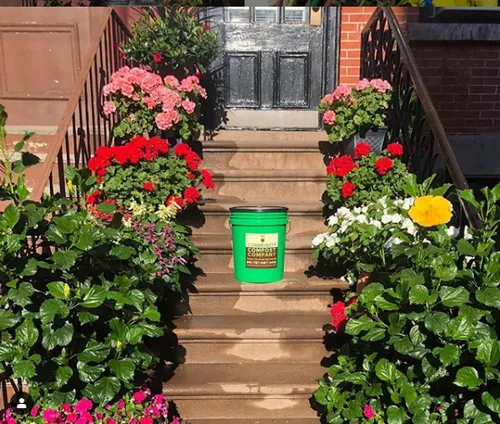
Community Compost Company
1501 Madison St, Hoboken, NJ 07030
Community Compost Company provides food waste collection and composting services for restaurants and residents in New York, NY. They offer a simple system where customers collect food scraps in provided buckets for weekly pickup. The company recycles all types of food waste, including meats and dairy, transforming it into nutrient-rich compost that supports soil health and reduces landfill waste. Community Compost Company is committed to environmental education and making composting accessible to everyone.

Green Bucket Compost
Woodbridge, NJ
Green Bucket Compost is a food waste and composting service based in Woodbridge, NJ, focused on diverting food waste from landfills through sustainable methods. They work with anaerobic digestion facilities like Trenton Renewables to process all types of food waste, including packaging, turning it into renewable energy and compost. Their services cover residential pickups, commercial food waste management for restaurants, hotels, and schools, as well as municipal drop-off and curbside collection programs across several New Jersey counties and towns. Founded by Isaiah Green, the company emphasizes scalable and efficient waste diversion solutions to support community sustainability goals.
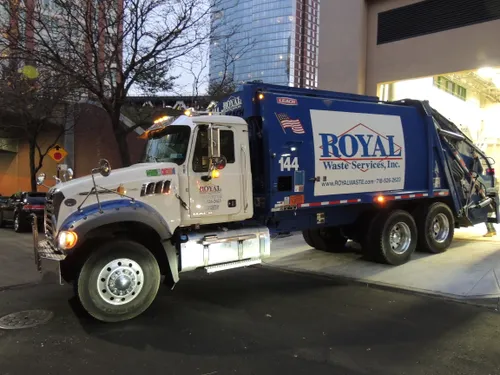
Royal Waste Services
187-40 Hollis Ave, Jamaica, NY 11423
Royal Waste Services provides comprehensive waste management solutions in New York, NY, specializing in food waste composting, trash pickup, single stream recycling, dumpster rentals, and bulk waste removal. Serving Manhattan, Bronx, Brooklyn, and Queens, they operate 24/7 to support businesses with sustainable waste diversion strategies. With over 25 years of experience, Royal Waste owns and operates in-house recycling facilities to ensure environmentally responsible disposal and compliance with NYC commercial recycling laws.
Understanding New Jersey's Organic Waste Mandate
The foundation of food waste management for New Jersey businesses is the state's Organic Waste Ban (N.J.S.A. 13:1E-99.118). This regulation is designed to keep significant volumes of organic material out of landfills, where it decomposes and produces methane, a potent greenhouse gas. For restaurants, this means a shift in how kitchen scraps, spoiled inventory, and prep waste are handled.
Who is Required to Comply? The mandate specifically targets "large food waste generators." This is defined as any business that generates more than 52 tons of food waste per year. To put that in perspective, that's roughly equivalent to 1,000 pounds of waste per week. If your Irvington restaurant operates at this scale, you are legally required to separate your food waste for recycling or composting, provided you are located within 25 miles of an authorized processing facility-a condition that Irvington meets.
What Qualifies as "Food Waste"? Under NJDEP guidelines, the term encompasses more than just plate scrapings. It includes:
- All food scraps (fruits, vegetables, meat, dairy, bones, shells)
- Fats, oils, and grease (FOG)
- Soiled paper products like uncoated napkins and paper towels
- Coffee grounds and filters Importantly, food that is diverted for donation or animal feed is not counted toward your waste total, offering an initial strategy for reduction.
Setting Up Commercial Organics Collection in Irvington
Since Irvington's municipal services are focused on residential trash and recycling, commercial food waste diversion is handled entirely through private contractors 1. This gives restaurant owners the responsibility-and the flexibility-to choose a service provider that fits their specific needs and volume.
Finding a Service Provider Your first step is to contact commercial waste haulers that offer source-separated organics collection. Major national providers like Waste Management (WM) and Republic Services operate in the area, and there may also be regional or local specialists such as CompostNow or WasteNot. It is crucial to confirm their service area includes Irvington and that they are permitted to transport food waste to a compliant composting or anaerobic digestion facility.
Choosing Containers and Schedules The type and size of your collection containers will depend on your weekly output and kitchen space.
- For lower volumes: Many services start with 5-gallon countertop or floor pails for kitchen staff to collect scraps during prep.
- For bulk collection: Outdoor collection typically uses locking totes ranging from 32 to 96 gallons to deter pests and contain odors. Your collection schedule (e.g., once, twice, or three times per week) is arranged directly with your hauler and will be based on your generation rate to ensure materials are picked up promptly.
Find the perfect composting & food waste companies for your needs
Get personalized recommendations and expert advice
Critical Guidelines for Contamination-Free Collection
The success of any organics recycling program hinges on preventing contamination. Contaminated loads can be rejected by processing facilities, resulting in disposal fees and wasted effort. Clear staff training and proper bin labeling are non-negotiable.
What CAN Go in the Food Waste Bin?
- All food scraps, including meat, bones, and dairy.
- Coffee grounds and paper filters.
- Uncoated, food-soiled paper towels, napkins, and pizza boxes (no plastic lining).
- Certified compostable bags and serviceware (look for BPI certification).
What MUST Stay Out?
- Plastic bags (unless they are certified compostable).
- Glass, metal, and plastic packaging.
- Liquids and cooking oils (these require separate grease trap or used oil recycling).
- Styrofoam, rubber gloves, and conventional plastic utensils.
- Any non-organic trash.
A single plastic bag or soda bottle can spoil an entire bin. Designate a staff member to oversee the program and conduct regular spot checks to maintain purity.
Cost Considerations and Potential Savings
Implementing a food waste diversion program is an operational investment. Costs are not fixed and can vary significantly based on your chosen hauler, the frequency of pickups, and the volume of waste you generate. As a benchmark, restaurants might expect monthly fees ranging from approximately $50 to over $200 for managing one to four bins per week 2 3.
However, this cost should be viewed holistically within your overall waste management budget. By diverting heavy, wet organic material from your standard trash dumpster, you may be able to:
- Reduce the size of your garbage container.
- Decrease the frequency of trash pickups.
- Lower your overall disposal costs. When requesting quotes from haulers, ask for a combined proposal that includes both trash and organics recycling to see the net financial impact. Some businesses also find value in the sustainability marketing appeal for their customers.
Building an Effective Restaurant Waste Management Plan
Moving beyond mere compliance to an efficient system requires a plan. Start by conducting a waste audit to accurately estimate your weekly food scrap output. This will inform the scale of service you need.
Next, engage your team. Staff buy-in is critical. Hold a training session to explain the "why" behind the new bins and provide clear, simple instructions on what goes where. Use visual aids posted above collection stations.
Finally, establish a partnership with your hauler. A good provider will help you troubleshoot issues, supply appropriate containers, and offer guidance on best practices. They are a resource for ensuring your Irvington restaurant not only meets the state's organic waste recycling rules but does so effectively and efficiently 4 5.
Frequently asked questions
Sources
Footnotes
-
Recycling Calendar Street Pick Up List - Township of Irvington - https://irvingtonnj.gov/storage/2022/07/RecyclingCalendar-front-page-UPDATE2022.pdf ↩
-
New Jersey Composting - https://compostsystems.com/new-jersey-composting/ ↩
-
Organic waste management in New Jersey: Reducing food waste and ... - https://bloustein.rutgers.edu/organic-waste-management-in-new-jersey-reducing-food-waste-and-improving-food-equity/ ↩
-
Food Waste Recycling rules - https://dep.nj.gov/dshw/swpl/fw/food-waste-recycling-rules/ ↩
-
How to Develop a Restaurant Waste Management Plan - https://www.commercialwastequotes.co.uk/blog/restaurant-waste-management-plan/ ↩