Find the Best Composting & Food Waste Companies for Your Business
No obligation • Fast responses • Nationwide coverage

Why you can trust Restaurant Waste Disposal
Restaurant Waste Disposal is a leading U.S. resource for comparing restaurant composting, food-waste recycling, grease trap cleaning, and used cooking oil collection services. Our editorial team researches providers, checks credentials, and organizes unbiased information so operators can make informed decisions. Companies cannot pay to change ratings or placement.
Search providers near you
Top Composting & Food Waste Companies in Hillsborough, New Jersey Ranked
For restaurants in Hillsborough, managing food scraps and organic waste is not just an environmental consideration-it's a regulatory requirement. New Jersey's statewide Organic Waste Ban mandates that large-scale generators, including many restaurants, divert food waste from landfills, making commercial composting services essential. This guide details the local landscape for food waste recycling, from selecting a private hauler and understanding container logistics to training staff on strict contamination rules, helping your establishment achieve compliance and sustainability goals efficiently.

Green Bucket Compost
Woodbridge, NJ
Green Bucket Compost is a food waste and composting service based in Woodbridge, NJ, focused on diverting food waste from landfills through sustainable methods. They work with anaerobic digestion facilities like Trenton Renewables to process all types of food waste, including packaging, turning it into renewable energy and compost. Their services cover residential pickups, commercial food waste management for restaurants, hotels, and schools, as well as municipal drop-off and curbside collection programs across several New Jersey counties and towns. Founded by Isaiah Green, the company emphasizes scalable and efficient waste diversion solutions to support community sustainability goals.
Trenton Renewables
1600 Lamberton Rd, Trenton, NJ 08611
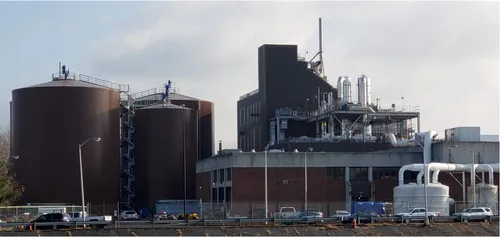
Trenton Renewables is a food waste recycling and renewable energy company based in Trenton, NJ. They serve restaurants and other organizations by managing food waste through anaerobic digestion, converting it into renewable energy, premium compost, and recaptured packaging. The company operates as a Class I Renewable Energy Facility and is qualified under New Jersey's Food Waste Law. Their process helps reduce landfill waste and CO2 emissions while supporting environmental sustainability.
Understanding New Jersey's Organic Waste Mandate
The foundation of food waste management for Hillsborough businesses is New Jersey's Organic Waste Ban. Enacted in 2021, this regulation requires entities that generate more than 52 tons of organic waste per year to separate and divert this material from the general trash stream destined for landfills 1. This threshold typically includes restaurants, large cafeterias, and food service establishments. The mandate is a key driver for adopting commercial organics recycling programs, turning what was once a voluntary green initiative into a standard operational procedure for compliance.
How the Ban Affects Hillsborough Restaurants
Unlike some municipalities that offer a centralized city-run program, Hillsborough restaurants must secure services through private composting haulers. This means business owners are responsible for contracting directly with a licensed service provider to handle their food scraps. The ban specifically targets "large food waste generators," so the first step is to assess your annual output. Even if your volume is below the mandatory threshold, participating in a food waste diversion program can reduce trash disposal costs and enhance your establishment's environmental profile.
Selecting a Commercial Composting Service Provider
Choosing the right partner is critical for a seamless and compliant food scrap recycling operation. Local providers, such as Java's Compost and Green Bucket Compost, specialize in servicing commercial clients in the area. When evaluating providers, consider their service reliability, contamination tolerance policies, and the flexibility of their pickup schedules. It's advisable to contact multiple haulers for quotes, providing them with an estimate of your weekly food waste volume to get accurate pricing.
Key Service Components
A standard commercial composting service includes several core components:
- Container Supply: The hauler typically provides the collection infrastructure. This includes large, heavy-duty outdoor bins or totes (commonly 32, 64, or 96 gallons) and smaller countertop pails (2-5 gallons) for kitchen staff to collect scraps during food prep and service.
- Scheduled Pickups: Pickup frequency is customized based on your establishment's volume and pace. A high-volume restaurant may require service five times a week, while a smaller cafe might manage with one or two pickups. Consistent, reliable collection is vital to prevent odor and pest issues.
- Contamination Management: Haulers have strict guidelines on what materials are accepted at their composting facilities. Providers will educate you on these rules, and maintaining low contamination rates is essential to avoid service disruptions or additional fees.
Operational Setup: Containers and Kitchen Workflow
Implementing an effective system starts with the right containers and a clear internal workflow. The standard setup involves a two-tiered system: small, lidded pails at each prep station and dishwashing area, which are regularly emptied into a larger sealed cart or tote stored in a designated area, often near the dumpster pad.
Container Types and Placement
- Kitchen Pails: These should be durable, easy to clean, and clearly labeled. Placing them strategically-near vegetable prep sinks, cutting boards, and the dish pit-encourages staff use and minimizes cross-contamination with trash and recycling.
- Outdoor Collection Bins: Provided by your hauler, these bins are designed for commercial use and are often lockable to prevent contamination. They must be easily accessible for your staff to empty the kitchen pails and for the hauler's truck to service.
Establishing a routine for emptying indoor pails into the outdoor bin (e.g., at the end of each shift) is crucial. This prevents organic material from sitting too long in warm kitchen environments, which can attract flies and create odors.
The Critical Importance of Contamination Control
Perhaps the most challenging aspect of commercial composting is maintaining a clean stream of food scraps. Contamination occurs when non-compostable materials are placed in the organics bin, which can ruin entire loads at the processing facility and lead to rejected service or fines.
What Can and Cannot Be Composted
Adherence to your hauler's specific list is paramount, but general guidelines for Hillsborough services include:
Accepted Materials (Typically Include):
- All food scraps: cooked and uncooked vegetables, fruits, meat, bones, dairy, and eggshells.
- Coffee grounds and filters, tea bags (staples removed).
- Soiled, uncoated paper products like napkins, paper towels, and unlined pizza boxes.
Strictly Prohibited Materials (Always Exclude):
- Plastic bags, including many that are marketed as "compostable," unless explicitly approved by your hauler.
- Liquids of any kind, including oils, sauces, and beverages.
- Packaging materials, utensils, straws, glass, metal, and foil.
Find the perfect composting & food waste companies for your needs
Get personalized recommendations and expert advice
Staff Training and Program Success
A composting program is only as good as the team that executes it daily. Comprehensive and ongoing staff training is the linchpin of success. Training should cover the "why" (environmental benefits and legal requirements) and the "how" (proper sorting procedures).
Effective Training Strategies
- Multilingual Signage: Use clear, picture-based signs above collection stations in the languages spoken by your staff.
- Hands-On Demonstrations: During onboarding, walk new employees through examples of compostable vs. non-compostable items.
- Regular Refreshers: Hold brief, periodic team meetings to address common contamination mistakes and reinforce the importance of the program.
- Designate Champions: Appoint a lead cook or manager to monitor the bins, provide feedback, and serve as the point person for questions.
Investing in training reduces contamination, ensures hauler satisfaction, and maximizes the environmental benefit of your efforts.
Analyzing Costs and Potential Savings
The cost for commercial food waste pickup in Hillsborough is not fixed; it varies based on your specific needs. Factors influencing price include the size and number of outdoor bins, the frequency of collection, and the total volume of material generated weekly 2 3. For a smaller restaurant, costs may start in the range of $100 to $150 per month for a basic weekly service. As volume and pickup frequency increase, so will the monthly fee.
Offsetting Expenses
While this is a new line item, it can lead to savings elsewhere:
- Reduced Trash Disposal: Diverting heavy, wet organic waste from your standard dumpster can significantly reduce the volume and weight of your general trash. This may allow you to downsize your trash dumpster or reduce pickup frequency, lowering your overall waste hauling bill.
- Potential Tax Benefits: In some cases, businesses may qualify for local or state green business certifications or incentives for sustainable practices.
Beyond Compliance: Environmental and Community Impact
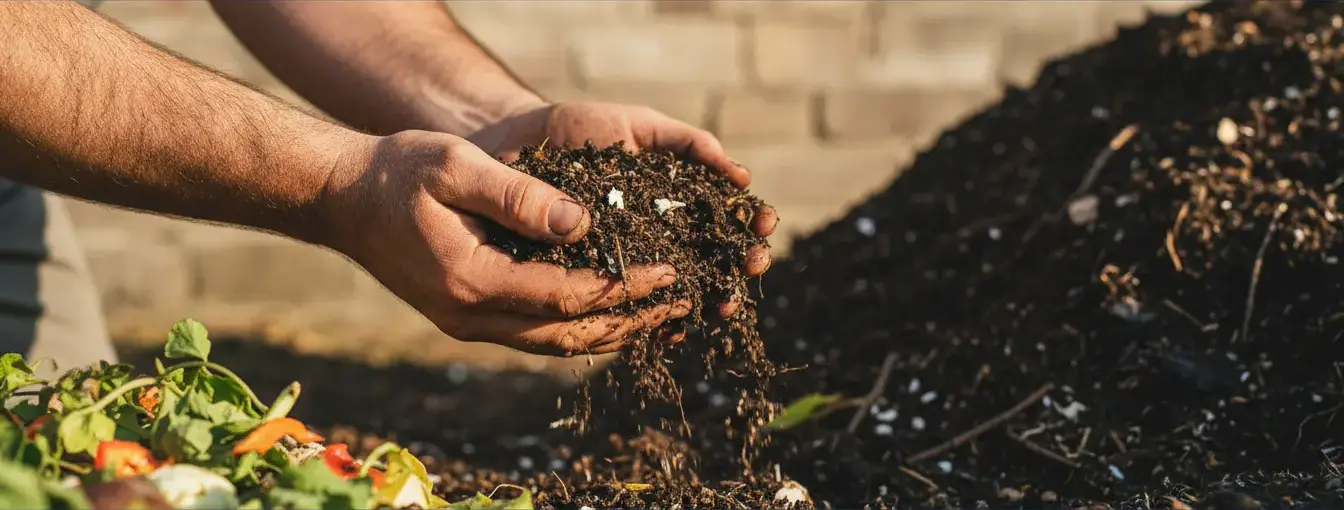
Participating in organics recycling extends benefits far beyond meeting a state mandate. Composting completed by your hauler transforms your food scraps into nutrient-rich soil amendment, which can be used in local agriculture, landscaping, and community gardens. This closes the loop in the local food system, turning waste into a resource. Furthermore, diverting organic matter from landfills reduces the production of methane, a potent greenhouse gas, making your restaurant's operations part of the climate solution. Promoting your establishment's commitment to food waste diversion can also strengthen your brand image and appeal to environmentally conscious customers.
Frequently asked questions
Sources
Footnotes
-
Organic waste management in New Jersey: Reducing food waste and ... - https://bloustein.rutgers.edu/organic-waste-management-in-new-jersey-reducing-food-waste-and-improving-food-equity/ ↩
-
Commercial Compost Pickup Service - https://www.javascompost.com/commercial-pickup ↩
-
Welcome to Green Bucket Compost - Giving Your Food Waste New ... - https://greenbucketcompost.com/ ↩