Find the Best Composting & Food Waste Companies for Your Business
No obligation • Fast responses • Nationwide coverage

Why you can trust Restaurant Waste Disposal
Restaurant Waste Disposal is a leading U.S. resource for comparing restaurant composting, food-waste recycling, grease trap cleaning, and used cooking oil collection services. Our editorial team researches providers, checks credentials, and organizes unbiased information so operators can make informed decisions. Companies cannot pay to change ratings or placement.
Search providers near you
Top Composting & Food Waste Companies in Bloomfield, New Jersey Ranked
For restaurants and food service businesses in Bloomfield, managing organic waste is not just an environmental consideration-it's a legal requirement. New Jersey state law mandates that large generators of food waste, which includes many restaurants, must separate this material from their general trash stream. This regulation is designed to divert organic material from landfills to composting or anaerobic digestion facilities, turning a waste product into a resource. Navigating these requirements involves understanding state rules, identifying local service providers, and implementing effective on-site separation practices to ensure compliance and maximize the environmental benefits of organic waste recycling.
Bloomfield itself offers specific guidance, particularly for residents, but commercial entities must take proactive steps to arrange for private collection. Successfully integrating food scrap recycling into your operations can reduce your environmental footprint, potentially lower waste disposal costs over time, and align your business with growing consumer expectations for sustainability.
Community Compost Company
1501 Madison St, Hoboken, NJ 07030
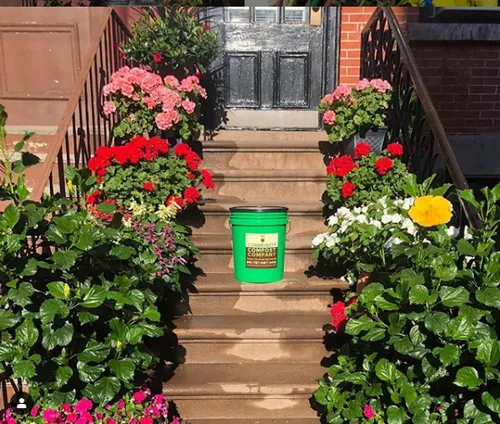
Community Compost Company provides food waste collection and composting services for restaurants and residents in New York, NY. They offer a simple system where customers collect food scraps in provided buckets for weekly pickup. The company recycles all types of food waste, including meats and dairy, transforming it into nutrient-rich compost that supports soil health and reduces landfill waste. Community Compost Company is committed to environmental education and making composting accessible to everyone.

Green Bucket Compost
Woodbridge, NJ
Green Bucket Compost is a food waste and composting service based in Woodbridge, NJ, focused on diverting food waste from landfills through sustainable methods. They work with anaerobic digestion facilities like Trenton Renewables to process all types of food waste, including packaging, turning it into renewable energy and compost. Their services cover residential pickups, commercial food waste management for restaurants, hotels, and schools, as well as municipal drop-off and curbside collection programs across several New Jersey counties and towns. Founded by Isaiah Green, the company emphasizes scalable and efficient waste diversion solutions to support community sustainability goals.
Royal Waste Services
187-40 Hollis Ave, Jamaica, NY 11423
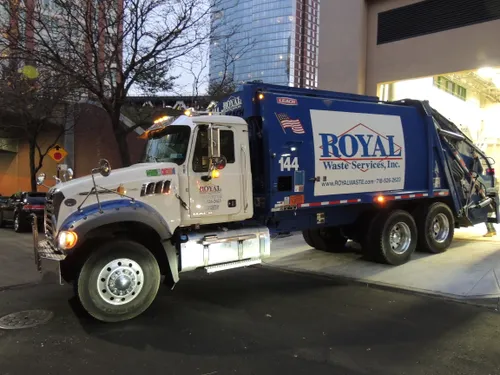
Royal Waste Services provides comprehensive waste management solutions in New York, NY, specializing in food waste composting, trash pickup, single stream recycling, dumpster rentals, and bulk waste removal. Serving Manhattan, Bronx, Brooklyn, and Queens, they operate 24/7 to support businesses with sustainable waste diversion strategies. With over 25 years of experience, Royal Waste owns and operates in-house recycling facilities to ensure environmentally responsible disposal and compliance with NYC commercial recycling laws.
Understanding New Jersey's Commercial Food Waste Law
The foundation of food waste management for New Jersey businesses is the state's recycling law (N.J.S.A. 7:26K). This legislation specifically targets large food waste generators.
Who Must Comply? The law applies to facilities, including restaurants, that generate an estimated 52 tons or more of food waste per year. While this threshold may seem high, busy restaurants, cafeterias, and catering operations can easily meet this volume. It's crucial for business owners to assess their weekly waste output to determine if they fall under this mandate.
The 25-Mile Rule A key component of the regulation is the proximity rule. The law prohibits covered entities from sending their separated food waste to a landfill or incinerator if they are located within 25 road miles of an authorized organics recycling facility1. Bloomfield is within this radius of several processing plants, meaning covered businesses in town are legally obligated to recycle their food scraps.
Permitted Destinations Diverted organic waste must be sent to an approved facility. These include:
- Composting operations that transform food scraps into nutrient-rich soil amendment.
- Anaerobic digesters that break down organics in an oxygen-free environment to produce biogas (a renewable energy source) and digestate (which can be used as fertilizer).
- Animal feed operations, where appropriate and safe.
Options for Commercial Food Waste Collection in Bloomfield
Unlike residential recycling, which may be handled by municipal services, commercial organic waste collection in Bloomfield is primarily managed through private contracts. The Township's Department of Public Works (DPW) focuses on residential drop-off programs, leaving it to businesses to secure their own haulers.
Working with Private Waste Haulers This is the most common path for restaurants. You will need to contract directly with a waste management company that offers commercial organics collection. Some providers may offer bundled services that include grease trap cleaning and used cooking oil collection, allowing for streamlined waste management. When seeking quotes, be prepared to discuss your estimated volume, desired pickup frequency, and any space constraints you have for containers.
The Role of Local Providers While municipal guidelines don't list specific haulers, local service providers like Javi's Compost, which is known for residential drop-off, may also offer commercial services or can provide referrals2. It's advisable to contact several providers servicing the Essex County area to compare services, costs, and reliability.
Key Contract Considerations When evaluating haulers, don't just look at price. Inquire about:
- Container Provision: What types and sizes of bins or carts do they supply?
- Contamination Policies: What happens if a load is rejected by the processing facility?
- Reporting: Will they provide you with tonnage reports that can help demonstrate compliance with state law?
Implementing an Effective On-Site Program
Successful food waste recycling hinges on what happens inside your establishment before the hauler arrives. Proper separation at the source prevents contamination, which can spoil entire loads and lead to rejected pickups or higher fees.
Setting Up Collection Stations Designate specific, clearly labeled containers in your kitchen and prep areas for food scraps only. These should be easily accessible to staff and distinguishable from trash and recycling bins. Using liners certified as compostable (if accepted by your hauler) can keep bins cleaner.
What Goes In (and What Stays Out) A clear list prevents confusion. Typically accepted items include:
- Fruit and vegetable scraps
- Meat, fish, and bones
- Dairy products
- Bread, grains, and pasta
- Coffee grounds and filters
- Tea bags (staples removed)
- Eggshells
- Soiled, non-recyclable paper (like napkins or pizza boxes)
Common contaminants that must be excluded are:
- Plastic bags (unless specifically certified compostable and accepted by your processor)
- Glass, metal, or plastic packaging
- Liquids and cooking oils
- Non-compostable serviceware
Staff Training and Engagement Your program will only work if your team understands and follows the procedures. Incorporate waste separation training into onboarding for new hires and hold refresher sessions. Explain the "why" behind the effort-how it helps the environment and meets legal requirements-to foster buy-in.
Find the perfect composting & food waste companies for your needs
Get personalized recommendations and expert advice
Navigating Bloomfield's Municipal Codes and Logistics
While the state sets the requirement, local ordinances govern how waste is handled on the curb. Bloomfield's municipal code includes rules that commercial operations must follow.
Collection Timing and Placement Bloomfield code typically requires that waste containers not be placed at the curb earlier than 5:00 p.m. on the day before your scheduled collection3. They must also be removed from the curb by a certain time (often by 8:00 p.m.) on the day of collection. Your private hauler will provide your specific pickup day, but you must adhere to these town rules for container placement to avoid violations.
Container Management and Aesthetics Ensure your organics container is in good condition, has a secure lid to prevent pests and odors, and is clearly marked. In shared alleyways or commercial zones, proper placement is essential to maintain cleanliness and accessibility. During negotiations with your hauler, confirm who is responsible for cleaning or replacing damaged carts.
The Business Case for Food Waste Diversion
Beyond compliance, there are compelling reasons for Bloomfield restaurants to embrace organics recycling.
Potential Cost Management While adding a separate collection service incurs a cost, it can also reduce the volume and frequency of your trash pickup. By diverting heavy, wet food waste, you may be able to downsize your garbage dumpster or reduce trash pickup days, offsetting some of the new expense. The economic landscape for organics is also evolving, with potential for long-term savings as landfill tipping fees rise.
Environmental Leadership and Brand Value Demonstrating a commitment to sustainability resonates powerfully with customers. Promoting your food waste recycling efforts can enhance your brand's image, attract environmentally conscious patrons, and contribute positively to the community's sustainability goals. It's a tangible action that shows your business is part of the solution.
Contributing to a Circular Economy By recycling food scraps, you are directly supporting the creation of compost for local farms and gardens or the generation of renewable energy4. This closes the loop, transforming waste into valuable products and reducing greenhouse gas emissions from landfills.
Getting Started: Your Action Plan
- Conduct a Waste Audit: Spend a week tracking how much food waste you generate. This data is crucial for talking to haulers and understanding your compliance status.
- Research and Contact Haulers: Identify 3-4 waste management companies that offer commercial organics collection in Essex County. Request detailed quotes based on your audit findings.
- Design Your Internal System: Before service begins, order appropriate indoor collection bins, create signage, and develop a training plan for your staff.
- Execute and Monitor: Launch the program, monitor for contamination, and provide feedback to your team. Maintain open communication with your hauler to address any issues promptly.
Frequently asked questions
Sources
Footnotes
-
NJDEP| Division of Sustainable Waste Management | Food Waste Recycling rules - https://dep.nj.gov/dshw/swpl/fw/food-waste-recycling-rules/ ↩
-
Compost Drop-Off Program in Bloomfield, NJ - https://www.facebook.com/groups/BloomfieldPulse/posts/9202972463131426/ ↩
-
Township of Bloomfield, NJ Environmental Quality Assurance - https://ecode360.com/11765801 ↩
-
Organic waste management in New Jersey: Reducing food waste and ... - https://bloustein.rutgers.edu/organic-waste-management-in-new-jersey-reducing-food-waste-and-improving-food-equity/ ↩