Find the Best Composting & Food Waste Companies for Your Business
No obligation • Fast responses • Nationwide coverage

Why you can trust Restaurant Waste Disposal
Restaurant Waste Disposal is a leading U.S. resource for comparing restaurant composting, food-waste recycling, grease trap cleaning, and used cooking oil collection services. Our editorial team researches providers, checks credentials, and organizes unbiased information so operators can make informed decisions. Companies cannot pay to change ratings or placement.
Search providers near you
Top Composting & Food Waste Companies in Bayonne, New Jersey Ranked
For Bayonne restaurants, managing food scraps and organic waste is no longer just a matter of operational efficiency-it's a regulatory requirement and a significant opportunity for cost savings and environmental stewardship. New Jersey's statewide food waste recycling law mandates that large generators, including many restaurants, divert their organic waste from landfills. In Bayonne, this means partnering with private commercial compost haulers to establish a reliable collection system for food scraps, soiled paper, and other compostables. By implementing a robust organics recycling program, your business can comply with state rules, reduce its overall waste disposal costs, and enhance its sustainability profile within the community.
Successful organic waste management hinges on understanding the specific requirements and available services. This guide covers the key steps, from navigating regulations to selecting a hauler and training your staff, to help you establish an effective food waste diversion system.
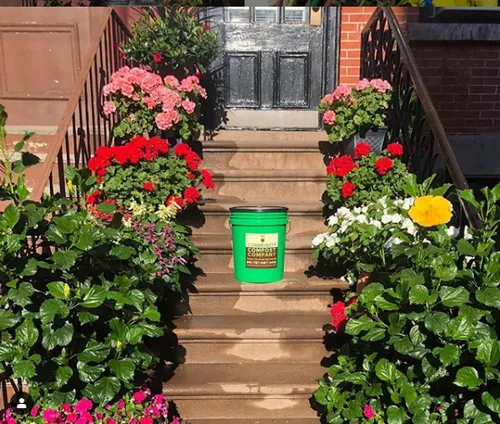
Community Compost Company
1501 Madison St, Hoboken, NJ 07030
Community Compost Company provides food waste collection and composting services for restaurants and residents in New York, NY. They offer a simple system where customers collect food scraps in provided buckets for weekly pickup. The company recycles all types of food waste, including meats and dairy, transforming it into nutrient-rich compost that supports soil health and reduces landfill waste. Community Compost Company is committed to environmental education and making composting accessible to everyone.
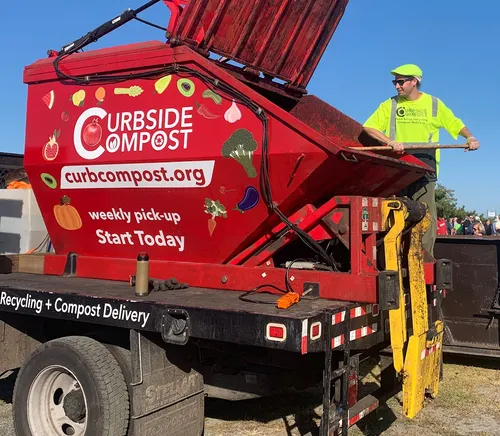
Curbside Compost
Bridgeport, CT
Curbside Compost provides food waste and composting services for restaurants and various other clients in Bridgeport, CT. With over 10 years of experience, they serve municipalities, food manufacturers, distribution centers, food donors, grocery stores, hospitals, assisted living facilities, country clubs, universities, schools, cafeterias, and restaurants. Their service includes weekly collection of food scraps and delivery of premium finished compost, helping reduce landfill waste through convenient composting solutions.

Green Bucket Compost
Woodbridge, NJ
Green Bucket Compost is a food waste and composting service based in Woodbridge, NJ, focused on diverting food waste from landfills through sustainable methods. They work with anaerobic digestion facilities like Trenton Renewables to process all types of food waste, including packaging, turning it into renewable energy and compost. Their services cover residential pickups, commercial food waste management for restaurants, hotels, and schools, as well as municipal drop-off and curbside collection programs across several New Jersey counties and towns. Founded by Isaiah Green, the company emphasizes scalable and efficient waste diversion solutions to support community sustainability goals.
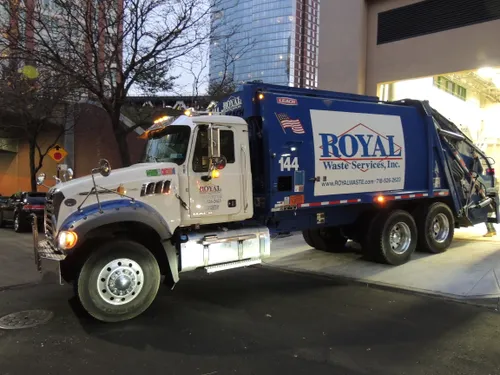
Royal Waste Services
187-40 Hollis Ave, Jamaica, NY 11423
Royal Waste Services provides comprehensive waste management solutions in New York, NY, specializing in food waste composting, trash pickup, single stream recycling, dumpster rentals, and bulk waste removal. Serving Manhattan, Bronx, Brooklyn, and Queens, they operate 24/7 to support businesses with sustainable waste diversion strategies. With over 25 years of experience, Royal Waste owns and operates in-house recycling facilities to ensure environmentally responsible disposal and compliance with NYC commercial recycling laws.
Understanding New Jersey's Food Waste Recycling Mandate
The foundation of any restaurant's organics strategy in Bayonne is compliance with New Jersey law. The state's Food Waste Recycling rules require businesses that generate more than 52 tons of food waste per year to recycle their organic materials, provided they are located within 25 road miles of an authorized recycling facility. Many full-service restaurants easily meet this volume threshold. The law is designed to significantly reduce the amount of organic material sent to landfills, where it decomposes and produces methane, a potent greenhouse gas.
Bayonne's local ordinances reinforce the importance of proper waste management by requiring timely removal of all waste to prevent odors, pests, and public health issues. This means that even if your restaurant is below the state's 52-ton threshold, establishing a clean and efficient system for food scraps is a best practice for operational hygiene and community relations. The combination of state mandate and local code makes setting up a commercial composting service a critical operational task.
Commercial Collection Services for Organic Waste
Unlike residential recycling, the City of Bayonne does not provide municipal curbside collection for commercial food waste. Therefore, restaurants must contract directly with private hauling companies that specialize in organic material collection. These providers offer the bins, logistics, and processing partnerships necessary to turn your food scraps into compost or energy.
Key Service Providers and Offerings:
- Private Haulers: Companies like Java's Compost and Recycle Track Systems (RTS) operate in the region, offering dedicated commercial food waste pickup services.
- Service Flexibility: These companies typically offer both recurring pickup schedules (e.g., weekly, multiple times per week) and on-demand services to match the specific volume and workflow of your kitchen.
- End-to-End Handling: A reputable hauler will manage the entire chain-from providing collection containers to transporting the material to a permitted composting facility or anaerobic digester.
When evaluating providers, inquire about their processing partners to ensure your food waste is being recycled in compliance with NJDEP regulations. A transparent hauler will be able to detail the final destination and use of the material they collect.
Setting Up Your On-Site Collection System
The practical setup within your restaurant is crucial for preventing contamination and ensuring staff buy-in. Your chosen hauler will be your primary partner in this process.
Container Types and Placement: Haulers typically supply durable, lidded bins in sizes like 32, 64, or 96 gallons to accommodate different volumes 1. These are often placed in key areas:
- Kitchen Prep Areas: Smaller, countertop or under-counter pails for food trimmings and scraps during food preparation.
- Dishwashing Stations: Bins for collecting post-consumer food scraps from plates.
- Back Dock/Storage Area: Larger wheeled carts provided by the hauler for consolidating waste before pickup. These should be clearly labeled and stored on a clean, hard surface.
Many services also provide compostable liner bags to keep bins clean and simplify the transfer process. It's essential to use only liners approved by your hauler, as some facilities have specific requirements for compostable plastics.
Determining Pickup Schedule: Your pickup frequency will be determined during service setup and is based on your estimated weekly volume. A busy restaurant may require service two or three times a week to manage odor and space, while a smaller cafe might manage with a single weekly pickup. An accurate volume estimate ensures you're not overpaying for unused capacity or risking overfull bins.
Find the perfect composting & food waste companies for your needs
Get personalized recommendations and expert advice
Strict Contamination Control Guidelines
Contamination-non-compostable materials mixed in with food waste-is the single biggest challenge for successful organics recycling. Contaminated loads can be rejected by processing facilities, leading to disposal fees and undermining your sustainability efforts.
What CAN Typically Be Included:
- Fruit and vegetable scraps
- Meat, fish, and bones (confirm with your hauler)
- Dairy products
- Eggshells
- Coffee grounds and filters
- Soiled, uncoated paper products (e.g., napkins, paper towels, unlined paper takeout containers)
- Compostable serviceware (if explicitly allowed by your hauler's processing facility) 2
What Must Stay OUT:
- Conventional plastics, glass, or metal
- Styrofoam
- Rubber gloves
- Liquids and cooking oils (unless you have a separate grease collection service)
- Traditional plastic bags, even if labeled "biodegradable"
- Any general trash or recycling
Staff Training is Essential: Comprehensive and ongoing training for every team member who handles waste is non-negotiable. Use clear signage with pictures above bins, conduct brief training sessions, and make proper sorting part of your standard operating procedures. This upfront investment prevents costly contamination fees and ensures the program runs smoothly 3.
Cost Considerations and Potential Savings
The cost for commercial food waste collection in Bayonne is not fixed; it varies based on your hauler, the volume of material, pickup frequency, and current tipping fees at processing facilities 4 5 6.
Typical Cost Factors Include:
- Bin Rental or Service Fee: For the use of collection containers.
- Hauling Fee: For transportation.
- Tipping/Processing Fee: Paid by the hauler to the composting facility, often passed through to you.
Financial Benefits to Offset Costs: While there is a cost for recycling, it's important to view it alongside potential savings:
- Reduced Disposal Costs: By diverting heavy, wet food waste from your regular trash, you may reduce the volume and frequency of your solid waste pickups, lowering those bills.
- Avoided Landfill Tipping Fees: Landfill fees are often higher than composting facility tipping fees.
- Enhanced Brand Value: Marketing your sustainability efforts can attract customers and improve your restaurant's public image.
When requesting quotes, ask for a detailed breakdown of all fees and discuss how adjusting volume or frequency might impact the total cost.
Getting Started: A Step-by-Step Action Plan
- Conduct a Waste Audit: Spend a week collecting and weighing your food scraps (pre- and post-consumer) to accurately estimate your weekly volume. This data is critical for getting accurate service quotes.
- Research and Contact Haulers: Reach out to commercial compost service providers like Java's Compost, RTS, or other licensed haulers operating in Hudson County. Provide them with your volume estimate and request a detailed quote.
- Evaluate and Select a Provider: Compare quotes based on cost, service flexibility, container types, and customer support. Ensure their processing facility is NJDEP-permitted.
- Implement and Train: Once you select a hauler, schedule the delivery of bins. Develop and roll out a training plan for all staff before the first pickup. Use clear signage.
- Monitor and Optimize: Regularly check bins for contamination, solicit feedback from staff, and adjust your system as needed. Periodically review your service level with your hauler to ensure it still matches your volume.
By taking these steps, your Bayonne restaurant can transform a regulatory requirement into a operational advantage, contributing to a cleaner city and a more sustainable food system 7.
Frequently asked questions
Sources
Footnotes
-
Garbage collection guidelines and schedule - Somerville, NJ - https://www.somervillenj.org/garbage-collection-guidelines-and-schedule/ ↩
-
Solid Waste Management - City of Bayonne, NJ - eCode360 - https://ecode360.com/35727418 ↩
-
Reducing Restaurant Food Waste - https://modernrestaurantmanagement.com/reducing-restaurant-food-waste/ ↩
-
Commercial Compost Pickup Service - https://www.javascompost.com/commercial-pickup ↩
-
How to recycle food waste in New Jersey - A guide - https://www.rts.com/blog/how-to-recycle-food-waste-in-new-jersey-a-guide/ ↩
-
NJDEP| Division of Sustainable Waste Management | Food Waste Recycling rules - https://dep.nj.gov/dshw/swpl/fw/food-waste-recycling-rules/ ↩
-
Organic waste management in New Jersey: Reducing food waste and ... - https://bloustein.rutgers.edu/organic-waste-management-in-new-jersey-reducing-food-waste-and-improving-food-equity/ ↩