Find the Best Used Cooking Oil Collection Companies for Your Business
No obligation • Fast responses • Nationwide coverage

Why you can trust Restaurant Waste Disposal
Restaurant Waste Disposal is a leading U.S. resource for comparing restaurant composting, food-waste recycling, grease trap cleaning, and used cooking oil collection services. Our editorial team researches providers, checks credentials, and organizes unbiased information so operators can make informed decisions. Companies cannot pay to change ratings or placement.
Search providers near you
Top Used Cooking Oil Collection Companies in Wellington, Florida Ranked
For restaurants in Wellington, managing used cooking oil (UCO) is a critical operational task that intersects with environmental compliance, kitchen safety, and potential cost recovery. Proper grease collection and disposal are not just best practices but are mandated by Florida state law, requiring partnership with licensed haulers and meticulous record-keeping. By implementing a structured program, local food service establishments can ensure they meet health inspection standards, protect their plumbing and the local sewer system, and contribute to the circular economy by transforming waste into renewable biodiesel. This guide outlines the essential steps, legal requirements, and practical considerations for effective grease trap and cooking oil management in the Wellington area.
Banyan Environmental Group Inc
1550 NW 24th Ave, Pompano Beach, FL 33069
Banyan Environmental Group Inc is a family-owned company based in Fort Lauderdale, FL, offering a range of environmental services across Florida. Their services include storm drain maintenance, grease trap cleaning and repair, septic tank services, used cooking oil recycling, and power washing. They provide 24/7 availability for both routine maintenance and emergency needs, with capabilities such as high-pressure line jetting and bulk pickup of used cooking oil.
SWA Home Chemical and Recycling Center
14185 Military Trail, Jupiter, FL 33458
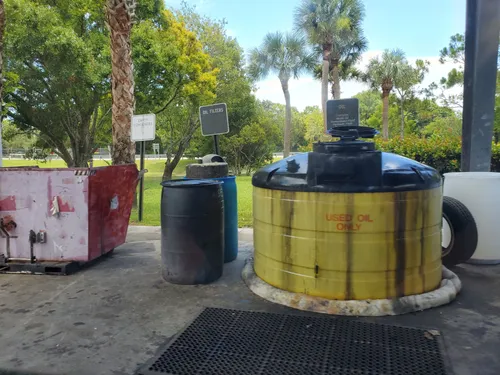
SWA Home Chemical and Recycling Center in Jupiter, FL, provides a safe drop-off location for household hazardous waste and recyclable materials. The center accepts various home chemicals, used motor oil, used cooking oil, batteries, paints, and fluorescent lamps, helping residents dispose of these items responsibly. It is part of a network of seven centers maintained by the Solid Waste Authority, offering convenient access for proper chemical and recycling disposal. The center emphasizes the importance of separating hazardous waste from regular garbage to protect public health and the environment.
Cooking Oil Distribution Inc
2520 NW 16th Ln, Pompano Beach, FL 33064
Cooking Oil Distribution Inc is a used cooking oil collection company based in Coral Springs, FL. The company specializes in collecting used cooking oil for recycling and proper disposal, serving businesses in the Coral Springs area. They focus on environmentally responsible oil collection to support sustainable practices.
ECO Services DBR, Inc
1901 NW 22nd St, Pompano Beach, FL 33069
ECO Services DBR, Inc is a used cooking oil collection company based in Fort Lauderdale, FL. They offer used oil collection and recycling services, along with vacuum truck and hydro excavation capabilities. The company provides 24/7 emergency service and consulting to support their clients' needs.
Understanding Florida's Grease Waste Regulations
Compliance begins with understanding the legal framework. Florida Statute 403.0741 governs the disposal of grease waste, which includes both used cooking oil and grease trap contents1. The law is designed to prevent fats, oils, and grease (FOG) from entering municipal sewer systems, where they can cause costly blockages and environmental damage. For Wellington restaurants, this means you cannot pour used oil or grease down any drain, including sinks, floor drains, or storm drains2.
A cornerstone of the regulation is the requirement to use a licensed grease hauler for all removal and recycling activities. These haulers are mandated to use a manifest system to track the grease from your establishment to a licensed recycling or disposal facility. You should receive a copy of this manifest for your records; maintaining these documents is crucial for demonstrating compliance during health department inspections. Furthermore, it is illegal for a hauler to perform a "pump and return," where grease waste is pumped from a trap and then returned to it. All collected material must be transported to an approved facility.
The Step-by-Step Collection Process
A proper used cooking oil collection routine minimizes mess and maximizes safety and efficiency.
- Cool and Scrape: Always allow oil to cool completely after use. Before transferring, scrape any large food solids or congealed fats into your solid waste stream3.
- Filter and Contain: Strain the cooled liquid oil to remove fine particulates. Then, pour it into the secure, dedicated container provided by your licensed collection service 4. These containers are typically lockable to prevent theft and contamination.
- Schedule Pickup: Your hauler will establish a regular pickup schedule based on your volume, or you may call for on-demand service when your container is full. A professional will collect the full container and replace it with a clean, empty one.
- Recycling Journey: The collected UCO is transported to a processing facility where it is cleaned and converted into biodiesel, a renewable fuel source. This process ensures the oil is diverted from landfills and put to beneficial use.
Proper Storage and Safety Protocols
Safe storage is a key component of both compliance and operational safety. Used cooking oil should be stored in a designated area away from high-traffic zones and heat sources. Containers must be:
- Leak-proof and Durable: To prevent spills that create slip hazards and attract pests.
- Clearly Labeled: Containers should be marked for "Used Cooking Oil Only."
- Secure: Locking lids are recommended to prevent unauthorized access, theft, and tampering5.
- Appropriately Vented: If stored indoors, ensure the area is well-ventilated.
For outdoor storage tanks, secure lids are essential to keep out rainwater and debris. Regularly inspect your storage area for signs of leaks or damage. Adhering to these protocols not only keeps your staff safe but also ensures the quality of the oil for recycling, which can affect the value or service terms.
Navigating Costs and Potential Revenue
The financial model for used cooking oil collection in Wellington can vary. Many providers offer free collection tanks and scheduled pickups to establishments that generate a consistent, substantial volume of oil6 7. In these arrangements, the value of the recycled commodity (the oil) offsets the service cost for the hauler.
For some high-volume generators, there may even be an opportunity for revenue sharing or rebates based on the market price of the recycled oil8 9. For smaller kitchens or those with lower fryer usage, the service may involve a fee. These fees can be structured per gallon (with rates often fluctuating based on market conditions) or as a flat monthly service charge9. It's important to discuss pricing structures clearly with potential service providers to understand all costs and any potential income.
Find the perfect used cooking oil collection companies for your needs
Get personalized recommendations and expert advice
The Critical Link: Grease Trap Maintenance
Used cooking oil collection is only one part of a complete grease management program. Your kitchen's grease trap or grease interceptor is a separate but equally vital system. Florida law requires these traps to be properly sized, maintained, and cleaned regularly by a licensed professional10 11. Pouring used cooking oil into a grease trap is a common mistake that leads to more frequent, costly pump-outs and potential overflows.
Maintain a separate log for grease trap cleaning, including dates and manifests from the servicing company. Health inspectors will review both your used oil manifests and your grease trap maintenance records to ensure full compliance12. A well-managed trap works in tandem with your oil collection program to keep your plumbing clear and avoid severe fines.
Environmental and Community Benefits
Choosing professional used cooking oil recycling delivers significant benefits beyond your kitchen. When UCO is converted into biodiesel, it reduces dependence on fossil fuels and lowers greenhouse gas emissions compared to conventional diesel. This supports broader sustainability goals for Palm Beach County and the state of Florida.
Locally, proper disposal prevents sewer overflows and backups, which can contaminate waterways and create public health hazards. By participating in a certified recycling program, Wellington restaurants contribute to a cleaner community and help the Solid Waste Authority of Palm Beach County and other municipal entities manage waste streams more effectively.
Choosing a Service Provider in Wellington
Selecting the right partner is essential. Look for a provider that is fully licensed and insured to operate in Florida. They should be transparent about their manifest system and able to provide documentation showing the oil is delivered to a licensed recycling facility. Consider their service reliability, container quality, and responsiveness. A good provider will also offer guidance on best practices for storage and handling to keep your kitchen compliant and efficient. Establishing a partnership with a reputable hauler turns a regulatory obligation into a seamless part of your back-of-house operations.
Frequently asked questions
Sources
Footnotes
-
The 2025 Florida Statutes - Online Sunshine - https://www.leg.state.fl.us/Statutes/index.cfm?App_mode=Display_Statute&Search_String=&URL=0400-0499/0403/Sections/0403.0741.html ↩
-
Used Cooking Oil Recycling | Solid Waste Authority of Palm ... - https://www.swa.org/173/Used-Cooking-Oil ↩
-
Restaurant Oil Disposal: Explained - Eazy Grease - https://eazygrease.com/how-do-restaurants-get-rid-of-their-oil/ ↩
-
Used Oil Disposal for Florida Restaurants: Best Practices - https://www.greaseprosrecycling.com/used-oil-disposal/ ↩
-
Used Cooking Oil Disposal: Complete Guide to Grease Pickups - https://greaseconnections.com/used-cooking-oil-disposal-guide-grease-pickups/ ↩
-
Grease Pickup Service Near Me | Florida's Guide to Used Oil ... - https://www.greaseprosrecycling.com/grease-pickup-service-near-me/ ↩
-
Cooking Oil Recycling in Florida - Eazy Grease - https://eazygrease.com/cooking-oil-recycling-florida/ ↩
-
Restaurant Grease Recycling: Save Money & Boost Sustainability - https://www.greaseprosrecycling.com/restaurant-grease-recycling/ ↩
-
Restaurant Used Cooking Oil: Disposal, Recycling & Revenue Guide - https://greaseconnections.com/restaurant-used-cooking-oil-disposal-recycling-revenue-guide/ ↩ ↩2
-
Grease Waste | Florida Department of Environmental Protection - https://floridadep.gov/waste/permitting-compliance-assistance/content/grease-waste ↩
-
Florida Restaurants Now Facing Stronger Regulations For Grease ... - https://www.tampa.gov/news/florida-restaurants-now-facing-stronger-regulations-grease-disposal-102321 ↩
-
Grease Recycling Program Florida: Stay Kitchen Compliant - https://www.greaseprosrecycling.com/grease-recycling-program-fl/ ↩