
Find the Best Used Cooking Oil Collection Companies for Your Business
No obligation • Fast responses • Nationwide coverage

Why you can trust Restaurant Waste Disposal
Restaurant Waste Disposal is a leading U.S. resource for comparing restaurant composting, food-waste recycling, grease trap cleaning, and used cooking oil collection services. Our editorial team researches providers, checks credentials, and organizes unbiased information so operators can make informed decisions. Companies cannot pay to change ratings or placement.
Search providers near you
Top Used Cooking Oil Collection Companies in Miami Gardens, Florida Ranked
For restaurants and food service establishments in Miami Gardens, managing used cooking oil (UCO) is a critical operational and environmental responsibility. Proper grease waste collection is not just about cleanliness; it's a regulated process that protects local plumbing, supports municipal wastewater systems, and contributes to the circular economy by transforming waste into renewable biodiesel. Navigating the specific rules set by the state of Florida and Miami-Dade County is essential for compliance and avoiding potential fines. This guide outlines the key steps, regulations, and benefits of establishing a reliable used fryer oil pickup and recycling service for your business.
GreasePros Recycling
2321 SW 57th Terrace, West Park, FL 33023
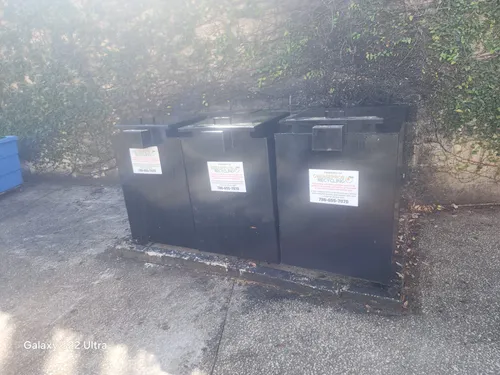
GreasePros Recycling is a used cooking oil collection company based in Miami, FL. With over 20 years of experience, they provide sustainable waste management solutions focused on used cooking oil recycling. The company serves areas including Aventura, Homestead, and Fort Lauderdale, offering both scheduled pickups and emergency oil retrieval services. GreasePros Recycling is committed to environmental stewardship and actively engages with local businesses and communities to promote responsible disposal practices.

Banyan Environmental Group Inc
1550 NW 24th Ave, Pompano Beach, FL 33069
Banyan Environmental Group Inc is a family-owned company based in Fort Lauderdale, FL, offering a range of environmental services across Florida. Their services include storm drain maintenance, grease trap cleaning and repair, septic tank services, used cooking oil recycling, and power washing. They provide 24/7 availability for both routine maintenance and emergency needs, with capabilities such as high-pressure line jetting and bulk pickup of used cooking oil.
Grease Connections
2217 NW 7th St, Miami, FL 33125
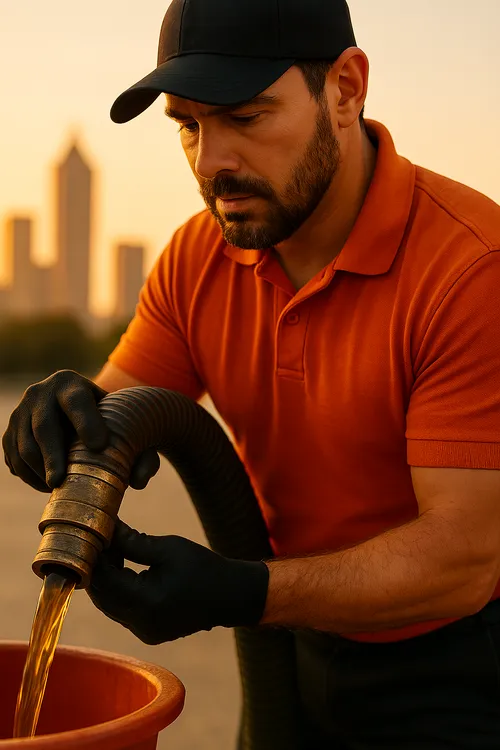
Grease Connections is a used cooking oil collection company based in Miami, FL, serving Florida, Georgia, and New Jersey. They collect used cooking oil from restaurants and industrial facilities and deliver it to U.S. processors who convert it into biodiesel and renewable aviation fuel. The company offers licensed pickups with double-walled vacuum tanks to prevent spills and provides detailed compliance reports for environmental regulations. Their service includes optional RFID-enabled containers for real-time tracking and audit-ready paperwork. Grease Connections operates a fully compliant program that supports sustainability and helps clients avoid fines related to oil disposal.

Mahoney Environmental
3370 NW 37th St, Miami, FL 33142
Mahoney Environmental provides used cooking oil collection, recycling, and grease trap cleaning services for foodservice businesses in Miami, FL. They serve a variety of clients including restaurants, bars, hotels, and universities by offering regular used cooking oil pickups and environmentally friendly recycling processes. Their services also include grease trap installation, cleaning, maintenance, and emergency 24/7 cleanup to help businesses comply with municipal regulations. Mahoney Environmental installs automated cooking oil handling systems to improve safety and efficiency in commercial kitchens. As a licensed EPA recycler, they process collected oil into renewable diesel, sustainable aviation fuel, and other products.
Grease Beast LLC
West Palm Beach, FL
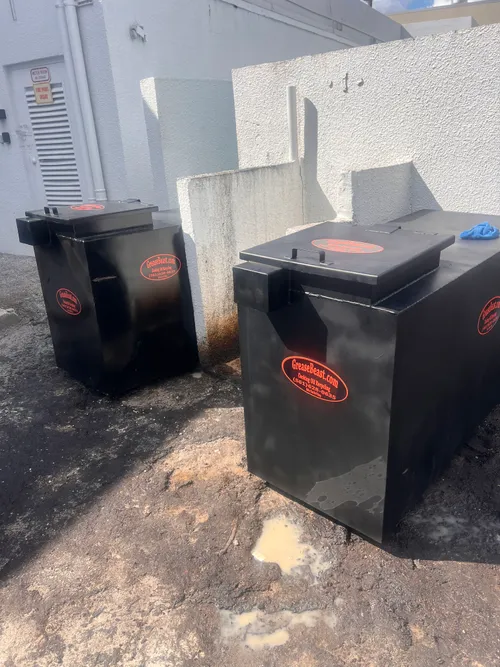
Grease Beast LLC is a used cooking oil collection company based in West Palm Beach, FL. They serve South Florida restaurants, hotels, catering services, and shopping centers by providing free used cooking oil pickup with supplied containers and personalized collection schedules. The company processes the oil by cleaning and testing it before recycling, contributing to local environmental sustainability. With nearly two decades of experience, Grease Beast is committed to supporting the community and promoting eco-friendly waste management.
Understanding Local Regulations and Compliance
Operating a food service business in Miami Gardens requires adherence to regulations from multiple governing bodies. Compliance is non-negotiable and forms the foundation of any responsible waste oil management plan.
Permit Requirements: All food service establishments must obtain and maintain a valid Grease Discharge Operating (GDO) Permit from the Miami-Dade Department of Environmental Resources Management (DERM). This permit is a prerequisite for legally operating your kitchen's grease-handling systems.
Grease Trap Maintenance: A functioning grease trap or interceptor is mandatory. Miami-Dade County regulations require that these traps be cleaned and serviced at a minimum of every 60 days, and the grease accumulation must never exceed 25% of the trap's capacity 1 2 3. Regular maintenance prevents blockages and ensures compliance.
Licensed Hauler Mandate: Florida law strictly prohibits the improper disposal of grease waste. All used cooking oil and grease trap waste must be collected and transported by a state-licensed hauler. Using an unlicensed service can result in significant penalties for your business.
Record-Keeping: Documentation is key for proving compliance. You are required to maintain all Service Manifests-the documents provided by your hauler at each pickup that detail the origin, quantity, and destination of the waste-on-site for a period of one year 4. These manifests are your proof of proper disposal.
The Step-by-Step Collection Process
Implementing a smooth, efficient used cooking oil collection routine minimizes mess and maximizes safety. Here's how a typical service works from your kitchen to the recycling facility.
- Cooling and Initial Transfer: After use, allow the cooking oil to cool completely in the fryer. Once safe to handle, it should be carefully filtered (if desired) and poured into a dedicated, leak-proof container. Many service providers supply these containers to ensure safety and consistency.
- Secure On-Site Storage: Your hauler will typically provide a larger, secure storage tank for outdoor or designated storage area use. Proper storage prevents spills, deters theft, and protects the local environment from contamination. It's crucial to ensure the area around the tank is clear and accessible for pickup.
- Scheduled Pickups: Based on your kitchen's volume of oil production, you and your provider will establish a pickup schedule-whether weekly, bi-weekly, or monthly. Reliable providers often offer automated services, where drivers collect the oil on a set day without requiring staff intervention 5 6.
- Documentation and Receipt: Upon each collection, the hauler's driver will complete a Service Manifest. You should receive a copy for your records. This document completes the chain of custody for your waste and is the essential piece for your compliance file 7.
Environmental and Economic Benefits of Recycling
Diverting used cooking oil from landfills and sewers offers significant advantages. When you partner with a licensed recycler, your waste becomes a valuable feedstock for a greener industry.
Renewable Fuel Production: The primary end product for collected UCO is biodiesel, a cleaner-burning, renewable alternative to petroleum diesel. By recycling your oil, you're directly contributing to reduced greenhouse gas emissions and fossil fuel dependence.
Protecting Infrastructure: Proper collection prevents grease from entering the sewer system. Grease is a major cause of sewer blockages (fatbergs), which can lead to costly backups, environmental spills, and increased municipal maintenance costs. Your responsible practices help protect community infrastructure.
Potential for Cost Savings or Revenue: The economics of used cooking oil collection can be favorable. Many providers offer the service for free, including the supply of tanks and regular pickups, as they profit from the recycled commodity. Some may even offer payment for your oil, depending on its quality and market prices 8 9. This can turn a waste line-item into a small revenue stream or, at minimum, eliminate disposal costs. For smaller users, this can mean savings of $18-$48 per month compared to paying for disposal services 8.
Find the perfect used cooking oil collection companies for your needs
Get personalized recommendations and expert advice
Choosing a Licensed Service Provider in Miami Gardens
Selecting the right partner is crucial for reliable service and peace of mind. Look for a provider with a proven track record in Miami-Dade County.
Verification of Licenses: Always confirm that any hauler you consider is fully licensed by the state of Florida to transport grease waste. This is your first and most important check for legal compliance.
Range of Services: Evaluate what each company offers. Do they provide free, secure storage tanks? Is pickup automated? How flexible are their scheduling options? Some providers, like Mahoney Environmental and Grease Connections, emphasize full-service solutions that include both used cooking oil collection and grease trap cleaning, which can streamline your vendor management.
Transparent Agreements: Understand the terms of service. Clarify whether the service is free, if there are any fees, or if there is potential for payment for your oil. Get details on how pickup schedules are determined and what happens if your volume changes.
Local Providers: Several established, licensed companies serve the Miami Gardens area, including Eazy Grease, Mahoney Environmental, Grease Connections, and Grease Pros Recycling 10 11 12 13. Contacting multiple providers for quotes and service details is the best way to find the right fit for your specific operation.
Maintaining Best Practices for Safety and Efficiency
Beyond hiring a service, your daily kitchen operations play a vital role in safe and effective oil management.
- Never Pour Grease Down Drains: This is the cardinal rule. Even with a grease trap, pouring hot oil or greasy water down sinks leads to buildup and eventual failure.
- Train Your Staff: Ensure all kitchen staff are trained on the proper cooling, filtering, and transfer procedures for used oil. They should know the location of the storage tank and the importance of keeping the area clean.
- Prevent Contamination: Keep water and other liquids out of your used oil storage. Contaminated oil has lower recycling value and can cause issues with storage tanks.
- Secure Your Asset: Used cooking oil has value and can be targeted for theft. Place storage tanks in well-lit, secure areas, and consider locking caps if provided by your hauler 14.
By integrating these practices, you ensure your used cooking oil collection program is safe, efficient, and fully compliant, allowing you to focus on running your restaurant.
Frequently asked questions
Sources
Footnotes
-
Grease Recycling in Miami: From Fryer to Biodiesel - https://www.greaseprosrecycling.com/grease-recycling-in-miami/ ↩
-
Grease Waste | Florida Department of Environmental Protection - https://floridadep.gov/waste/permitting-compliance-assistance/content/grease-waste ↩
-
Restaurant Grease Recycling Florida: Best Practices & Compliance - https://www.greaseprosrecycling.com/restaurant-grease-recycling-florida/ ↩
-
Is Cooking Oil Recycling Mandatory? Florida, GA & NJ Rules - https://greaseconnections.com/is-cooking-oil-recycling-mandatory-florida-ga-nj-rules/ ↩
-
Grease Pickup Service Near Me | Florida's Guide to Used Oil ... - https://www.greaseprosrecycling.com/grease-pickup-service-near-me/ ↩
-
Used Cooking Oil Recycling | Solid Waste Authority of Palm Beach ... - https://www.swa.org/173/Used-Cooking-Oil ↩
-
The 2025 Florida Statutes - Online Sunshine - https://www.leg.state.fl.us/Statutes/index.cfm?App_mode=Display_Statute&Search_String=&URL=0400-0499/0403/Sections/0403.0741.html ↩
-
Used Oil Collection Downtown & Brickell | Free Pickup + Cash - https://greaseconnections.com/locations/fl/miami-dade/downtown-brickell/ ↩ ↩2
-
Used Cooking Oil Pickup and Recycling Services in Miami, FL - https://eazygrease.com/used-cooking-oil-pickup-and-recycling-services-miami-fl/ ↩
-
Cooking Oil Recycling in Florida - Eazy Grease - https://eazygrease.com/cooking-oil-recycling-florida/ ↩
-
Restaurant Grease Pick Up & Disposal Services in Miami FL - https://www.mahoneyes.com/fryer-oil-disposal-recycling-miami-fl/ ↩
-
Used Cooking Oil Recycling & Grease Pickup in Miami-Dade - https://greaseconnections.com/locations/fl/miami-dade/ ↩
-
Grease Disposal Services Miami Gardens, FL - https://eazygrease.com/grease-disposal-services-miami-gardens/ ↩
-
Used Cooking Oil Pickup and Recycling Services in Miami, FL - https://www.mahoneyes.com/waste-oil-pickup-recycling-miami-fl/ ↩