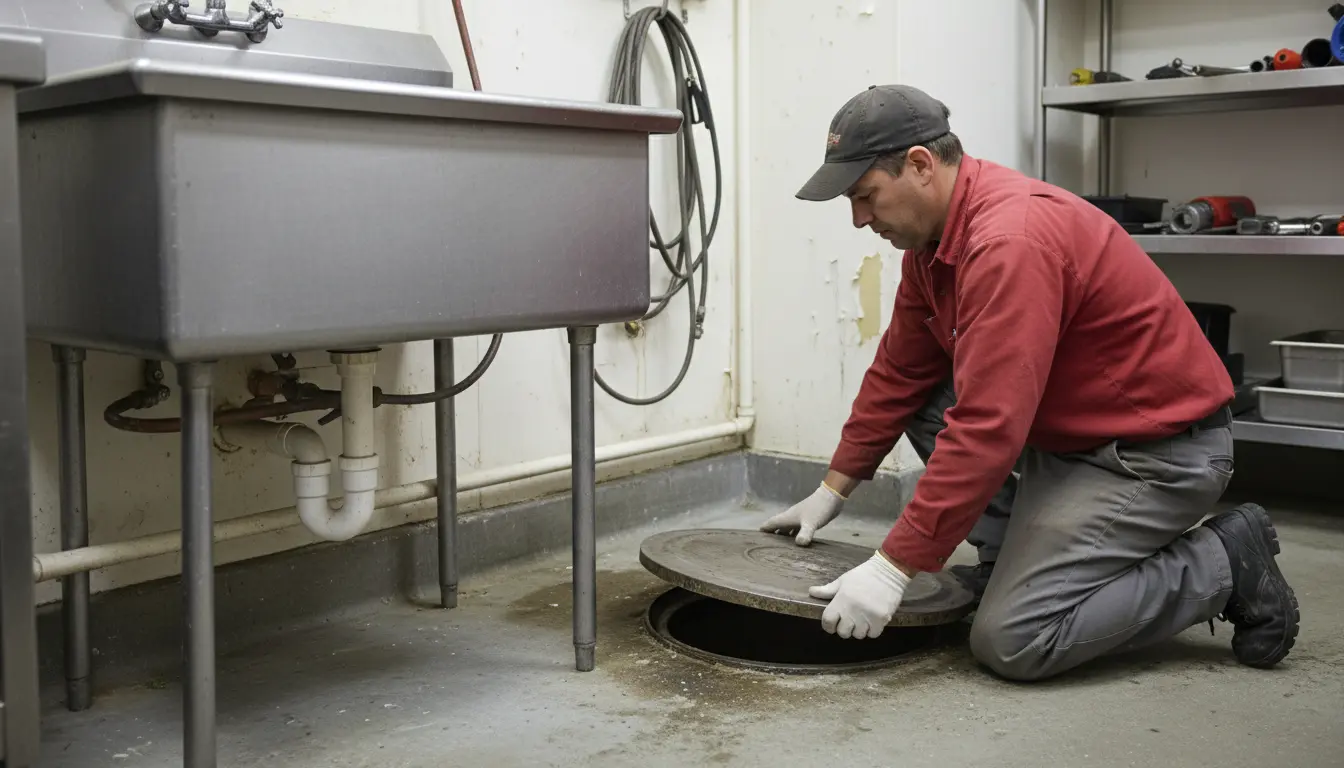
Find the Best Grease Trap Cleaning Companies for Your Business
No obligation • Fast responses • Nationwide coverage

Why you can trust Restaurant Waste Disposal
Restaurant Waste Disposal is a leading U.S. resource for comparing restaurant composting, food-waste recycling, grease trap cleaning, and used cooking oil collection services. Our editorial team researches providers, checks credentials, and organizes unbiased information so operators can make informed decisions. Companies cannot pay to change ratings or placement.
Search providers near you
Top Grease Trap Cleaning Companies in Greenwood, Indiana Ranked
For restaurant owners and food service operators in Greenwood, maintaining a clean and compliant grease trap isn't just a chore-it's a critical component of your business's operational and financial health. Proper grease interceptor maintenance protects your plumbing, prevents costly sewer backups, and ensures you meet local municipal codes enforced by entities like Citizens Energy Group and the Greenwood Public Works Department. Neglecting this essential service can lead to severe fines, surcharges, and operational disruptions. This guide provides a clear overview of local requirements, typical costs, and best practices for managing fats, oils, and grease (FOG) in your establishment.
Roto-Rooter Plumbing & Water Cleanup
18 E Main St Ste 230, Greenfield, IN 46140
Roto-Rooter Plumbing & Water Cleanup provides comprehensive plumbing services in Indianapolis, IN, including sewer repairs, water heater installation, floodwater cleanup, and grease trap maintenance. They serve both residential and commercial clients, addressing common issues such as clogged drains, sewer line repairs, and mold remediation. The company is known for its expertise in hydro-jetting and trenchless sewer line restoration, offering minimally invasive pipe repairs. Established in 1935, Roto-Rooter has a long history of plumbing innovation and experience. They also provide 24/7 emergency plumbing services to handle urgent problems like burst pipes and sewage backups at any time.
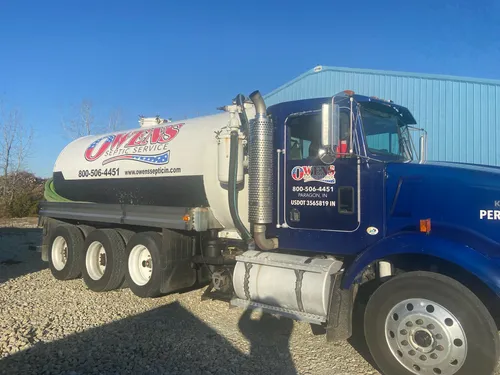
Owens Septic Service
8541 N 850 W, Fairland, IN 46126
Owens Septic Service offers septic tank and grease trap cleaning services in Indianapolis, IN. With over 30 years of experience, they provide comprehensive septic system inspections, lift station maintenance, pump upkeep, and septic riser installation to support efficient wastewater management. Their services include grease trap pumping for commercial kitchens to prevent buildup and maintain compliance with local regulations.
Roto-Rooter Plumbing & Water Cleanup
70 E Main St J, Greenwood, IN 46143
Roto-Rooter Plumbing & Water Cleanup offers a wide range of plumbing services in Indianapolis, IN, including residential and commercial plumbing, water damage mitigation, and grease trap cleaning. The company is equipped to handle local plumbing challenges such as hard water and aging infrastructure. Their commercial services include hydro-jetting and grease trap maintenance, supported by industry-grade equipment. With decades of experience dating back to the founder's invention of the spinning-blade drain snake in 1935, Roto-Rooter combines historical expertise with modern techniques. They provide 24/7 emergency plumbing services to address urgent issues like burst pipes and sewer backups without extra charges for after-hours work.
Roto-Rooter Plumbing & Water Cleanup
6319 E US Hwy 36 Suite 209, Avon, IN 46123
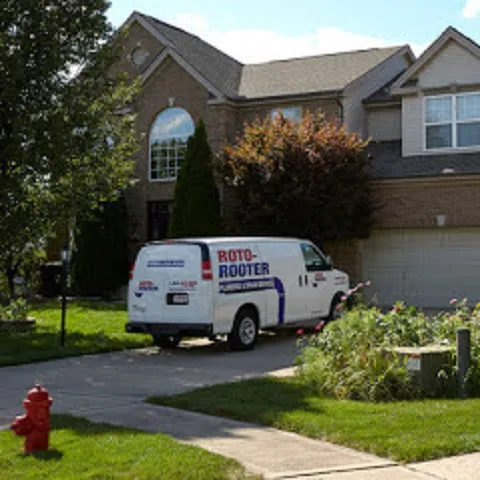
Roto-Rooter Plumbing & Water Cleanup provides comprehensive plumbing and water cleanup services in Indianapolis, IN. They serve both residential and commercial clients, offering a wide range of services including drain cleaning, sewer line repair, grease trap inspection and repairs, water heater maintenance, and floodwater cleanup. The company is equipped to handle complex commercial plumbing systems and uses advanced techniques such as hydro-jetting and trenchless sewer repair. Established in 1935, Roto-Rooter also offers 24/7 emergency plumbing services to address urgent issues like burst pipes, sewer backups, and water damage.
Roto-Rooter Plumbing & Water Cleanup
12034 Exit 5 Pkwy, Fishers, IN 46037
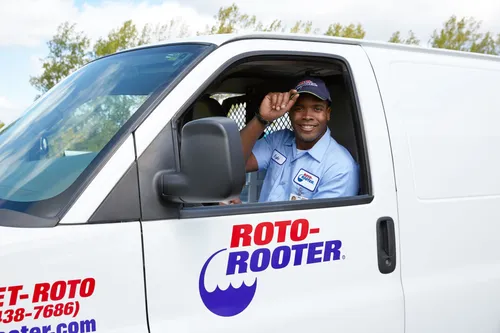
Roto-Rooter Plumbing & Water Cleanup provides comprehensive plumbing and water cleanup services in Indianapolis, IN, and the surrounding Fishers area. Their offerings cover residential and commercial plumbing needs, including sewer and drain cleaning, water heater repair and installation, grease trap maintenance, and emergency flood services. Known for their expertise in handling the region's hard water and historic plumbing systems, they also provide specialized capabilities such as hydro-jetting and trenchless sewer line repair. Founded in 1935, Roto-Rooter offers 24/7 emergency plumbing services to address urgent issues like burst pipes and sewer backups.
Understanding Local Grease Trap Regulations
Greenwood restaurants must adhere to plumbing and sewer codes that are closely aligned with the rules governing Indianapolis and Johnson County. These regulations are designed to protect the public sewer system from blockages caused by FOG. A key mandate is that all Food Service Establishments (FSEs) must have an appropriately sized grease interceptor installed 1. The primary maintenance rule is to have your trap cleaned or pumped when accumulated grease and solids reach 25% of the liquid depth. While this often translates to a cleaning schedule of every 30 to 90 days, the exact frequency depends entirely on your kitchen's volume and output.
Documentation is as important as the cleaning itself. You are required to maintain detailed service records for a minimum of three years. These records should include the service date, the company that performed the work, and the volume of waste removed. During health or sewer inspections, officials will check these logs to verify compliance. Furthermore, Indianapolis-and by extension, the regional sewer authority-enforces a FOG discharge limit of 300 mg/L, with potential surcharges for non-compliance 2. Proactive, documented maintenance is your best defense against violations.
The Inspection and Enforcement Process
Staying ahead of inspections is crucial for uninterrupted business operations. Inspections are typically conducted by representatives from Citizens Energy Group, the local health department, or Greenwood's Public Works officials. Their focus is threefold: verifying your maintenance records, physically inspecting the cleanliness and condition of your grease trap, and ensuring no improper FOG disposal is occurring.
Enforcement actions for violations can be significant. Initial findings may result in warnings, but persistent non-compliance can lead to substantial fines, recurring sewer surcharges, and in extreme cases, a suspension of sewer service 3. These penalties are designed to incentivize proper maintenance, as the cost of regular cleaning is almost always far lower than the cost of fines and emergency repairs. Establishing a consistent service relationship with a licensed provider is the most effective way to pass inspections with ease.
Cost Factors for Grease Interceptor Service
Understanding what influences the price of grease trap cleaning helps in budgeting and selecting a service. Costs in Greenwood vary based on several key factors:
- Trap Size and Type: A basic indoor grease interceptor for a small kitchen typically costs between $175 and $250 per cleaning4. Larger outdoor grease traps or interceptors, common for high-volume restaurants, can range from $300 to over $700 per pumping, depending on their capacity (e.g., 500 to 1,000+ gallons) 5.
- Service Frequency: Opting for a regular monthly or quarterly service contract often comes with a discounted rate compared to one-time cleanings 6.
- Emergency Premiums: A service call for a completely clogged or overflowing trap is considered an emergency and can cost 50% to 100% more than a scheduled cleaning 7.
- Disposal and Location: The distance a service provider must travel to dispose of the collected FOG at a licensed facility can affect the final price.
Find the perfect grease trap cleaning companies for your needs
Get personalized recommendations and expert advice
Best Practices for Efficient FOG Management
Beyond scheduling regular pump-outs, you can take proactive steps to extend the time between cleanings and improve overall efficiency.
Proactive Cleaning is Key: Don't wait for a clog or an odor problem. Adhering to the "25% full" rule prevents blockages in your own lines before they start, avoiding the need for expensive emergency plumbing services8 9.
Invest in Staff Training: One of the most cost-effective measures is educating kitchen staff. Implementing a "scrape, don't rinse" policy for plates and pans significantly reduces the amount of FOG entering the drain. Using sink strainers and collecting oil in dedicated containers for recycling also dramatically cuts down on interceptor load 10.
Consider a Service Contract: Many local pumping companies offer annual service contracts. These agreements can provide benefits like locked-in pricing, priority scheduling for your regular cleanings, and sometimes include an annual inspection report, which is excellent for your compliance records.
Taking Action in Greenwood
To ensure full compliance and optimal operation, your first step should be to contact the City of Greenwood's Public Works Department or Health Department to confirm the specific local codes applicable to your business address. Following that, obtain quotes from several licensed, insured grease trap cleaning services in the Johnson County area. Provide them with details about your trap's size and location (indoor/outdoor) and your current kitchen volume to get accurate, comparable estimates. Establishing a reliable partnership with a qualified provider is the simplest path to maintaining a compliant and hassle-free kitchen.
Frequently asked questions
Sources
Footnotes
-
Commercial Grease Trap Cleaning Services for Restaurants - https://purgeenvironmental.com/commercial/restaurant-grease-trap/ ↩
-
§ 151.055 WASTEWATER GREASE TRAP REQUIREMENTS. - https://codelibrary.amlegal.com/codes/gascityin/latest/gascity_in/0-0-0-3438 ↩
-
Grease Traps for Restaurants: The Essential Guide - https://therestaurantwarehouse.com/blogs/restaurant-equipment/grease-trap-for-restaurant-guide ↩
-
Indianapolis Grease Trap Maintenance: Essential Facility ... - https://www.myshyft.com/blog/grease-trap-cleaning-indianapolis-indiana/ ↩
-
How Much Does It Cost To Clean A Grease Trap? - https://www.greasecollection.com/blog/how-much-does-it-cost-to-clean-a-grease-trap/ ↩
-
Rates - Arrowhead Septic Services - https://www.arrowheadseptic.net/rates ↩
-
The Cost To Clean A Grease Trap For Restaurants - https://thegreasecompany.com/blog/greasetrapcleaningcost/ ↩
-
How to Clean a Grease Trap (and How Often You Should) - https://greaseconnections.com/how-to-clean-a-grease-trap-and-how-often-you-should/ ↩
-
Ultimate Grease Trap Pumping Cost Guide: Essential Money ... - https://www.texwaywastewater.com/grease-trap-pumping-cost/ ↩
-
Grease Trap Cleaning in Greenwood, IN - https://greasetrapcleaningfranklin.com/greenwood-in.html ↩