
Find the Best Grease Trap Cleaning Companies for Your Business
No obligation • Fast responses • Nationwide coverage

Why you can trust Restaurant Waste Disposal
Restaurant Waste Disposal is a leading U.S. resource for comparing restaurant composting, food-waste recycling, grease trap cleaning, and used cooking oil collection services. Our editorial team researches providers, checks credentials, and organizes unbiased information so operators can make informed decisions. Companies cannot pay to change ratings or placement.
Search providers near you
Top Grease Trap Cleaning Companies in Evansville, Indiana Ranked
For any food service establishment (FSE) in Evansville, managing fats, oils, and grease (FOG) is not just a matter of kitchen maintenance-it's a critical legal requirement enforced by the Evansville Water & Sewer Utility (EWSU). Proper grease interceptor and grease trap maintenance is essential to prevent sewer blockages, avoid costly penalties, and ensure the smooth operation of your business. Local regulations mandate specific design, installation, and cleaning protocols for all kitchens that produce FOG. Understanding these rules and partnering with a reliable service provider is key to compliance and protecting Evansville's wastewater infrastructure.
American Grease & Septic
2501 S Kentucky Ave, Evansville, IN 47714
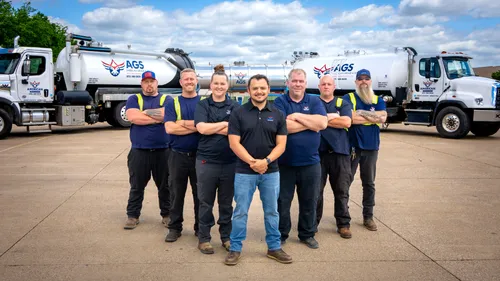
American Grease & Septic is based in Evansville, IN, providing grease trap cleaning, used cooking oil collection, and septic system services. They offer tailored solutions for projects, businesses, and events, including luxury restroom trailers and specialty waste management. The company emphasizes environmentally safe and compliant practices and provides annual programs along with emergency response. Known for their expertise in grease trap maintenance and septic system cleaning, American Grease & Septic has built a reputation for knowledgeable and professional service.
Ohio Valley Septic & Grease Services
Owensboro, KY
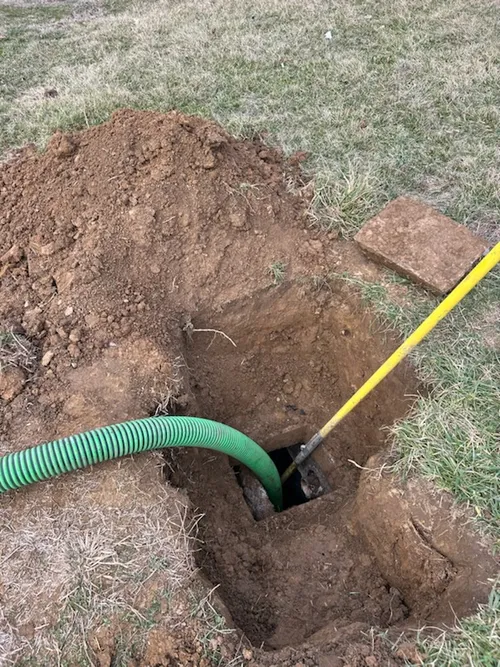
Ohio Valley Septic & Grease Services is a family-owned business located in Owensboro, KY, serving Daviess, Hancock, and McLean counties. They specialize in septic tank and grease trap cleaning services, as well as commercial and residential lift stations, package plants, and waste management solutions. Established in 2023, the company focuses on maintaining a safe and healthy environment for clients and the community.
Tri-State Grease and Septic Pumping Inc.
11335 Boberg Rd, Evansville, IN 47712
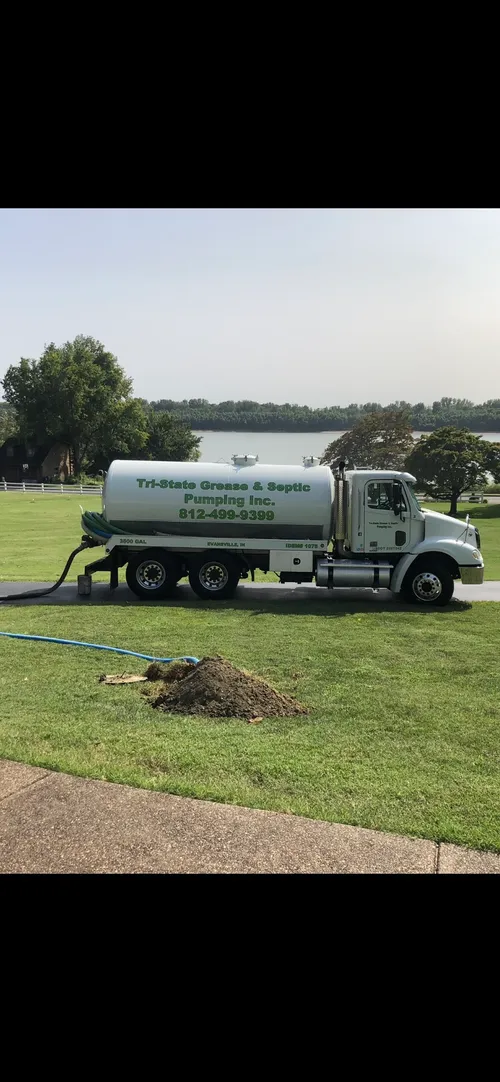
Tri-State Grease and Septic Pumping Inc. is a locally owned service company based in Evansville, IN. They provide grease trap pumping, septic tank pumping and repair, drain cleaning with hydro jetting, camera inspection, pump replacement, baffle replacement, and riser installations. The company has experience diagnosing septic system problems, including issues with septic tanks and drainfields, and emphasizes the importance of regular maintenance to extend system life. Tri-State Grease and Septic Pumping serves the Evansville area with a focus on septic system care and grease trap services.
Understanding Evansville's FOG Control Regulations
The City of Evansville operates under a detailed Fats, Oils, and Grease (FOG) Control Policy to protect its sewer system from blockages and overflows. The cornerstone of this policy is the requirement for all FSEs to install and maintain approved grease removal devices. These devices, commonly referred to as grease traps (typically smaller, indoor units) or grease interceptors (larger, outdoor units), are your first line of defense.
The local municipal code explicitly states that no person shall discharge wastewater containing more than 200 milligrams per liter of FOG into the public sewer. To achieve this, interceptors must be designed and sized according to standards like the Indiana State Board of Health Bulletin S.E. 13 and specific EWSU policies 1. Crucially, these units must be easily accessible at all times for inspection, cleaning, and maintenance by both your service provider and city inspectors.
The Enforcement Process: EWSU Questionnaires and Inspections
Compliance begins with paperwork. Existing and new food service establishments are required to complete a FOG Discharge Questionnaire for the EWSU 2. This document helps the utility understand your operation's potential FOG output. It's important to note that existing businesses are not grandfathered in and must comply with current standards.
Enforcement is active. The EWSU can conduct inspections to verify that grease control devices are properly installed, functioning, and being maintained 3. Failure to comply with the city's FOG policy can result in violations, significant penalties, and may even lead to mandatory and costly upgrades to your plumbing system 4.
When and How Often to Clean Your Grease Interceptor
One of the most common questions from restaurant owners is about cleaning frequency. The Evansville policy provides a clear, measurable trigger: a grease interceptor must be cleaned whenever 25% of the trap's volume is occupied by FOG and settled solids, or when visible grease is observed passing the outlet tee 5 6. Waiting until the unit is completely full defeats its purpose and likely means you are already in violation.
While the 25% rule is the legal standard, practical cleaning schedules vary based on your kitchen's volume. For a busy restaurant, this often translates to a professional pump-out and cleaning every 1 to 3 months. High-volume establishments like large cafeterias or fried food kitchens may require monthly service. The only way to know your specific schedule is through consistent monitoring and documentation after each cleaning.
The Critical Importance of Meticulous Record-Keeping
In the event of an inspection, your maintenance records are your proof of compliance. You should keep a detailed log for every service event, including:
- Date of service
- Name of the servicing company
- Volume of waste removed (in gallons)
- Disposal method and location (manifest from the hauler)
- Observations on the condition of the trap
Maintaining these records is not just a best practice; it's a strong recommendation within the industry to demonstrate due diligence to regulators.
Cost of Grease Trap and Interceptor Services in Evansville
The cost for professional grease trap cleaning in Evansville depends primarily on the size and location of your unit, as well as the frequency of service.
- Indoor Grease Traps (Small/Regular): For standard under-sink or in-floor traps common in many kitchens, routine cleaning typically ranges from $175 to $475 per service 7.
- Outdoor Grease Interceptors: Larger in-ground or concrete vault interceptors require more labor and equipment to service, with costs generally ranging from $325 to $1,040 or more per pump-out 8 9.
- Emergency Service: If a trap overflows or causes a backup, emergency service calls can be significantly more expensive, potentially costing $800 to $1,200 or higher due to after-hours rates and the urgent nature of the work 10.
These are market rate estimates. The final price can be influenced by the trap's condition, ease of access, and the specific contractor. Many providers offer cost-effective maintenance contracts for regular, scheduled service, which can help budget for this necessary expense and prevent emergency situations.
Find the perfect grease trap cleaning companies for your needs
Get personalized recommendations and expert advice
Prohibited Practices and Staff Training
Compliance isn't just about cleaning the trap; it's also about what goes into your drains. To extend the time between necessary cleanings and keep your system functioning properly, staff training is essential. Key prohibitions include:
- Never pouring liquid grease, oils, or shortening down any drain.
- Avoiding the use of emulsifiers or so-called "grease digesters" that claim to dissolve FOG. These products often just move the grease further down the sewer line where it can solidify and cause blockages, potentially leading to violations.
- Using sink strainers to catch food solids and scraping all plates and cookware into the trash before washing.
Implementing a simple kitchen checklist that includes proper FOG disposal practices can dramatically improve your interceptor's efficiency and reduce maintenance costs 11.
Choosing a Professional Service Provider in Evansville
Given the regulatory and technical complexities, hiring a licensed, reputable professional is non-negotiable. When selecting a grease trap cleaning company in Evansville, consider the following:
- Licensing and Insurance: Ensure the hauler is properly licensed to collect and transport grease waste in Indiana.
- Documentation: A reliable provider will supply you with a detailed service report and waste manifest for your records, which is crucial for EWSU compliance.
- Experience with Local Codes: Choose a company familiar with Evansville's specific FOG policy and inspection requirements.
- Service Offerings: Look for providers that offer comprehensive service, including full pump-out, interior cleaning/scraping of the trap, and inspection of the inlet/outlet tees and baffles.
Platforms that list local service providers can be a starting point for finding and comparing qualified professionals in the Evansville area 12. Always verify credentials and ask for references from other local restaurant owners.
Consequences of Non-Compliance
Ignoring grease trap maintenance is a risky and expensive proposition. Beyond the immediate nuisance of slow drains and potential kitchen backups, the consequences enforced by the EWSU can be severe:
- Fines and Penalties: Monetary fines for violations of the sewer use ordinance.
- Mandatory Corrective Actions: You may be forced to install a larger or additional interceptor at your own expense.
- Sewer Surcharges: The utility may impose additional fees for excessive FOG discharge.
- Severe Cases: In extreme or repeat violation scenarios, the city has the authority to suspend sewer service to the establishment until the issue is corrected 13.
Staying proactive with your grease interceptor maintenance is the most straightforward and cost-effective way to run your kitchen smoothly and avoid regulatory headaches.
Frequently asked questions
Sources
Footnotes
-
675 22-317 | IARP - Indiana Administrative Code - https://iar.iga.in.gov/iac/20221102-IR-675220317NRA.xml.html ↩
-
Policy for Design, Installation, & Maintenance of FOG Removal ... - https://www.evansvillegov.org/egov/documents/1499267090_60349.pdf ↩
-
The city of Evansville recently started inspecting the exterior of ... - https://www.facebook.com/evansvillemayor/videos/restaurant-inspections/1450456915891384/ ↩
-
Grease Trap Regulations and Compliance: What You Need to Know - https://www.texwaywastewater.com/grease-trap-regulations-and-compliance/ ↩
-
Policy for Design, Installation, & Maintenance of FOG Removal ... - https://www.evansvillegov.org/egov/documents/1613492249_29403.pdf ↩
-
APPENDIX A: GREASE INTERCEPTOR AND GREASE TRAP ... - https://codelibrary.amlegal.com/codes/newburgh/latest/newburgh_in/0-0-0-2311 ↩
-
The Ultimate Guide to Restaurant Grease Trap Cleaning - https://mokherplumbing.com/ultimate-guide-restaurant-grease-trap-cleaning/ ↩
-
Ultimate Grease Trap Pumping Cost Guide: Essential Money ... - https://www.texwaywastewater.com/grease-trap-pumping-cost/ ↩
-
How Much Does a Proper Grease Trap Cleaning Cost? - https://hulseyenvironmental.com/how-much-does-a-proper-grease-trap-cleaning-partner-cost/ ↩
-
Grease Trap Pumping Cost vs. Grease Trap Maintenance Cost - https://www.stateindustrial.com/video/cost-comparison-pumping-v-chemicals-to-maintain-a-grease-trap/ ↩
-
The Ultimate 2025 Restaurant Kitchen Cleaning Checklist - The Restaurant Warehouse - https://therestaurantwarehouse.com/blogs/restaurant-equipment/restaurant-kitchen-cleaning-checklist ↩
-
Top 10 Best Grease Trap Pumping Near Evansville, Indiana - Yelp - https://m.yelp.com/search?find_desc=Grease+Trap+Pumping&find_loc=Evansville%2C+IN ↩
-
Chapter 13.05 SEWERS - General Code - https://www.codepublishing.com/IN/Evansville/html/Evansville13/Evansville1305.html ↩