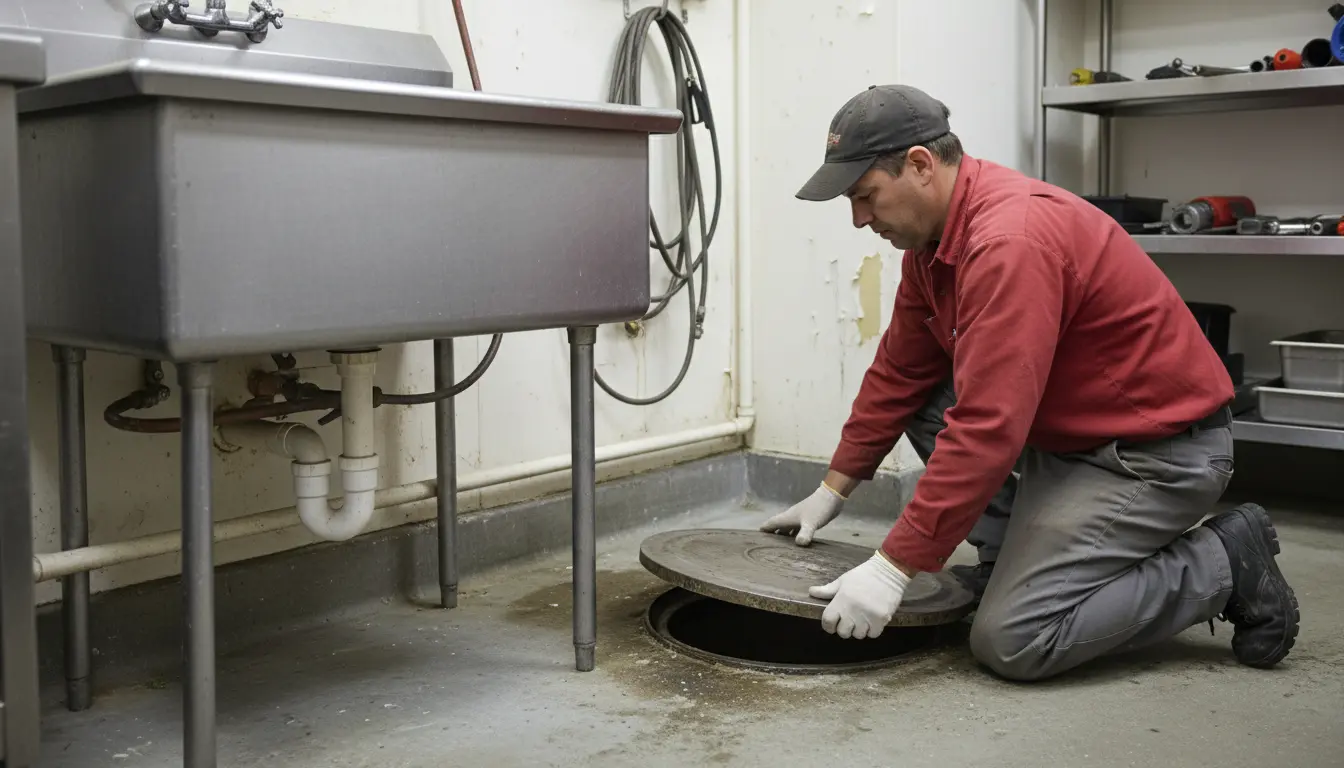
Find the Best Grease Trap Cleaning Companies for Your Business
No obligation • Fast responses • Nationwide coverage

Why you can trust Restaurant Waste Disposal
Restaurant Waste Disposal is a leading U.S. resource for comparing restaurant composting, food-waste recycling, grease trap cleaning, and used cooking oil collection services. Our editorial team researches providers, checks credentials, and organizes unbiased information so operators can make informed decisions. Companies cannot pay to change ratings or placement.
Search providers near you
Top Grease Trap Cleaning Companies in Anderson, Indiana Ranked
For restaurant owners and food service operators in Anderson, maintaining a clean and compliant grease interceptor is not just a matter of kitchen hygiene-it's a critical legal and environmental responsibility. The City of Anderson enforces specific wastewater ordinances to protect the municipal sewer system from blockages caused by fats, oils, and grease (FOG). Proper grease trap maintenance involves professional cleaning, diligent record-keeping, and adherence to local sizing and installation codes to avoid significant penalties and operational disruptions. Understanding these requirements is the first step in ensuring your business runs smoothly and remains in good standing with city inspectors.
Roto-Rooter Plumbing & Water Cleanup
18 E Main St Ste 230, Greenfield, IN 46140
Roto-Rooter Plumbing & Water Cleanup provides comprehensive plumbing services in Indianapolis, IN, including sewer repairs, water heater installation, floodwater cleanup, and grease trap maintenance. They serve both residential and commercial clients, addressing common issues such as clogged drains, sewer line repairs, and mold remediation. The company is known for its expertise in hydro-jetting and trenchless sewer line restoration, offering minimally invasive pipe repairs. Established in 1935, Roto-Rooter has a long history of plumbing innovation and experience. They also provide 24/7 emergency plumbing services to handle urgent problems like burst pipes and sewage backups at any time.
Roto-Rooter Plumbing & Water Cleanup
4105 IN-32 Ste B, Westfield, IN 46074
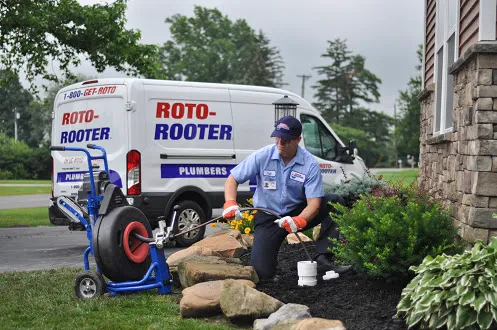
Roto-Rooter Plumbing & Water Cleanup offers a wide range of plumbing services in Carmel, IN, including floodwater cleanup, sewer and drain cleaning, water heater repair, and grease trap maintenance. They serve both residential and commercial clients, addressing common local challenges such as hard water and aging plumbing systems. The company provides advanced capabilities like hydro-jetting and trenchless sewer line repair. With a history dating back to the invention of the first motorized drain cleaning tool in 1935, Roto-Rooter combines experience with modern technology. They also offer 24/7 emergency plumbing services to handle urgent issues anytime.
Roto-Rooter Plumbing & Water Cleanup
12034 Exit 5 Pkwy, Fishers, IN 46037
Roto-Rooter Plumbing & Water Cleanup provides comprehensive plumbing and water cleanup services in Indianapolis, IN, and the surrounding Fishers area. Their offerings cover residential and commercial plumbing needs, including sewer and drain cleaning, water heater repair and installation, grease trap maintenance, and emergency flood services. Known for their expertise in handling the region's hard water and historic plumbing systems, they also provide specialized capabilities such as hydro-jetting and trenchless sewer line repair. Founded in 1935, Roto-Rooter offers 24/7 emergency plumbing services to address urgent issues like burst pipes and sewer backups.
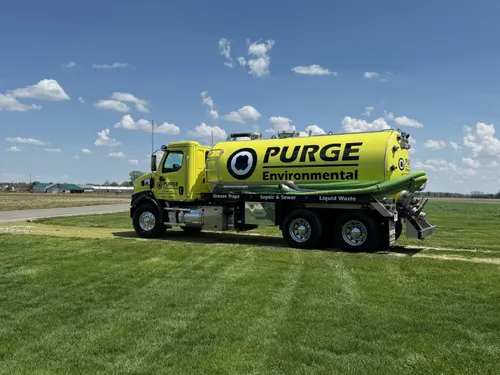
Purge Environmental
Indianapolis, IN
Purge Environmental is a locally owned and operated company based in Indianapolis, IN, providing septic, grease trap cleaning, and wastewater management services. They serve residential and commercial customers throughout Central and Eastern Indiana, focusing on environmentally responsible and eco-friendly solutions. Their services include septic tank cleaning and pumping, grease trap cleaning, lift station maintenance, and industrial wastewater hauling. Purge Environmental offers 24/7 emergency pumping services to address urgent septic and grease trap issues. The company emphasizes thorough inspections and proper waste disposal at IDEM-approved facilities to protect health and the environment.
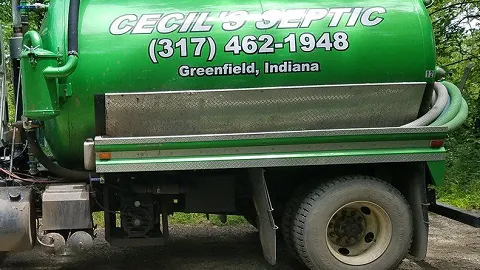
Cecil Septic LLC
1764 E 500 S, Greenfield, IN 46140
Cecil Septic LLC is a family-owned business based in Greenfield, IN, serving Indianapolis and surrounding areas. They specialize in septic pumping, grease trap pumping, dosing pumps, and drain cleaning services. With over 50 years of experience since 1969, Cecil Septic LLC uses modern equipment to maintain septic systems and prevent costly repairs. Their team works closely with clients to address specific needs and offers flexible scheduling options.
Understanding Anderson's Grease Interceptor Regulations
Local regulations mandate that all food service establishments (FSEs) install and maintain approved grease interceptors. These rules are designed to prevent FOG from entering and clogging the public sewer lines, which can lead to costly backups and environmental issues. For new or remodeled restaurants, obtaining the correct permits and installing a properly sized interceptor is a foundational step in the planning process 1 2.
Key regulatory points include:
- Proper Sizing: The size of your grease trap or interceptor is not arbitrary. It is calculated based on formulas that consider your kitchen's water usage and fixture types to ensure it can effectively capture FOG before wastewater is discharged.
- Accessibility: Installations must allow for easy access by both city inspectors and maintenance professionals for routine cleaning and inspections.
- Discharge Limits: The primary goal of maintenance is to meet the city's effluent limits for FOG, which are typically around 40 parts per million (ppm). Exceeding these limits can result in violations.
The Importance of Professional Maintenance and Cleaning
While staff can perform basic checks for surface buildup, thorough grease interceptor cleaning is a job for certified professionals. A proper service involves pumping out the contents, scraping and removing solidified grease from the walls and baffles, and inspecting the system for damage or potential issues. This comprehensive approach ensures the unit functions correctly and complies with local codes.
Neglecting this maintenance can have direct consequences for your business. If FOG from your establishment contributes to a sewer line clog, the City of Anderson can levy a fee of 150% of the standard rate for cleaning the public lateral or main 3. Beyond city penalties, a severely clogged interceptor can cause backups in your own kitchen, leading to emergency service calls, business downtime, and potential health code violations.
Determining Your Cleaning Frequency
A common question among restaurant managers is, "How often should my grease trap be cleaned?" In Anderson, monthly cleaning is a standard frequency for many busy kitchens, but the official requirement is based on your specific usage and FOG levels. High-volume establishments or those with particularly greasy waste streams may need service every two to three weeks, while lower-volume operations might be approved for less frequent cleanings.
Factors influencing cleaning frequency:
- Volume of Cooking: The amount of fried foods and animal fats used in your kitchen.
- Trap Size: A correctly sized trap for your output will have a longer service interval than an undersized one.
- Pre-Screening Practices: Using sink strainers and training staff to scrape plates can significantly reduce the solid load entering the interceptor.
- Water Temperature: Avoiding pouring hot water down drains, which melts grease and allows it to pass through the trap only to solidify later in cooler pipes.
Regular professional inspections can help determine the optimal schedule for your business, balancing compliance with cost-efficiency 4 5.
Find the perfect grease trap cleaning companies for your needs
Get personalized recommendations and expert advice
Costs Associated with Grease Trap Service in Anderson
The cost for professional grease interceptor maintenance in Anderson varies based on several key factors. Understanding these can help you budget effectively and evaluate service quotes.
Typical Price Ranges:
- Small, Under-Sink Grease Traps: Cleaning for these smaller units typically ranges from $150 to $300 per service.
- Large, In-Ground Grease Interceptors: For the larger, often outdoor units, costs can range from $350 to over $1,000 per cleaning, depending on size and accessibility.
What Influences the Price?
- Size and Type of Interceptor: Larger units hold more waste and require more labor and disposal capacity.
- Accessibility: Easy, ground-level access reduces service time. Confined or difficult-to-reach locations may increase the cost.
- Level of Buildup: A regularly maintained trap is quicker to clean than one that has been neglected and has heavy, solidified grease.
- Service Type: Emergency call-outs are substantially more expensive than scheduled maintenance.
- Service Contract: Many providers offer monthly or quarterly service contracts, which often provide a discount of 10-20% compared to one-time service rates and ensure you never miss a required cleaning 6 7.
Record-Keeping: Your Proof of Compliance
One of the most critical yet sometimes overlooked aspects of grease management is documentation. The City of Anderson requires food service establishments to maintain detailed maintenance records. These logs are your first line of defense during a city inspection.
Your records should include:
- Date of each pumping and cleaning.
- Name and contact information of the service company.
- Volume of waste removed (in gallons).
- Disposal method and location (the service provider should supply a waste manifest or receipt).
- Signature of the service technician or company representative.
Keeping these records organized and readily available demonstrates due diligence and can prevent fines if an inspector visits.
Proactive Steps for Anderson Restaurant Owners
Staying ahead of grease interceptor issues saves money and stress. Start by contacting the City of Anderson Water Department or Planning/Zoning office to confirm your specific requirements and obtain any necessary permits 8. Next, partner with a reputable local service provider who understands Anderson's codes. Finally, implement internal staff training on best practices like scraping plates, using sink screens, and avoiding pouring grease down drains. These simple steps reduce the load on your interceptor, potentially extending time between professional cleanings and lowering your annual maintenance costs 9.
Frequently asked questions
Sources
Footnotes
-
Food Service Plan Check-Grease Trap.pdf - https://cms3.revize.com/revize/andersoncanew/Food%20Service%20Plan%20Check-Grease%20Trap.pdf ↩
-
title 410 indiana state department of health - IN.gov - https://www.in.gov/health/files/410_IAC_6-10.1_Proposed_Rule.pdf ↩
-
CITY OF ANDERSON SEWER USE ORDINANCE - https://www.cityofandersonsc.com/wp-content/uploads/2019/03/SUO-19-02.pdf ↩
-
Grease Trap Restaurant: The Essential Guide - https://therestaurantwarehouse.com/blogs/restaurant-equipment/grease-trap-restaurant-guide ↩
-
Commercial Grease Trap Cleaning Services for Restaurants - https://purgeenvironmental.com/commercial/restaurant-grease-trap/ ↩
-
Indianapolis Grease Trap Maintenance: Essential Facility ... - https://www.myshyft.com/blog/grease-trap-cleaning-indianapolis-indiana/ ↩
-
How to Clean a Grease Trap (and How Often You Should) - https://greaseconnections.com/how-to-clean-a-grease-trap-and-how-often-you-should/ ↩
-
§ 151.055 WASTEWATER GREASE TRAP REQUIREMENTS. - https://codelibrary.amlegal.com/codes/gascityin/latest/gascity_in/0-0-0-3438 ↩
-
Grease Traps 101: What Every Restaurant Owner Needs to ... - https://bdconservancy.com/grease-traps-101-what-every-restaurant-owner-needs-to-know/ ↩