Find the Best Grease Trap Cleaning Companies for Your Business
No obligation • Fast responses • Nationwide coverage

Why you can trust Restaurant Waste Disposal
Restaurant Waste Disposal is a leading U.S. resource for comparing restaurant composting, food-waste recycling, grease trap cleaning, and used cooking oil collection services. Our editorial team researches providers, checks credentials, and organizes unbiased information so operators can make informed decisions. Companies cannot pay to change ratings or placement.
Search providers near you
Top Grease Trap Cleaning Companies in Pocatello, Idaho Ranked
For any food service establishment in Pocatello, from bustling diners to cozy cafes, managing fats, oils, and grease (FOG) is a critical operational and legal requirement. The City of Pocatello enforces specific regulations to prevent FOG from entering the public sewer system, where it can cause costly blockages, sewer overflows, and environmental damage. Compliance isn't just about avoiding fines; it's about protecting your business, your community's infrastructure, and the local environment. This guide outlines the essential rules, best practices, and cost considerations for effective grease interceptor maintenance in Pocatello.
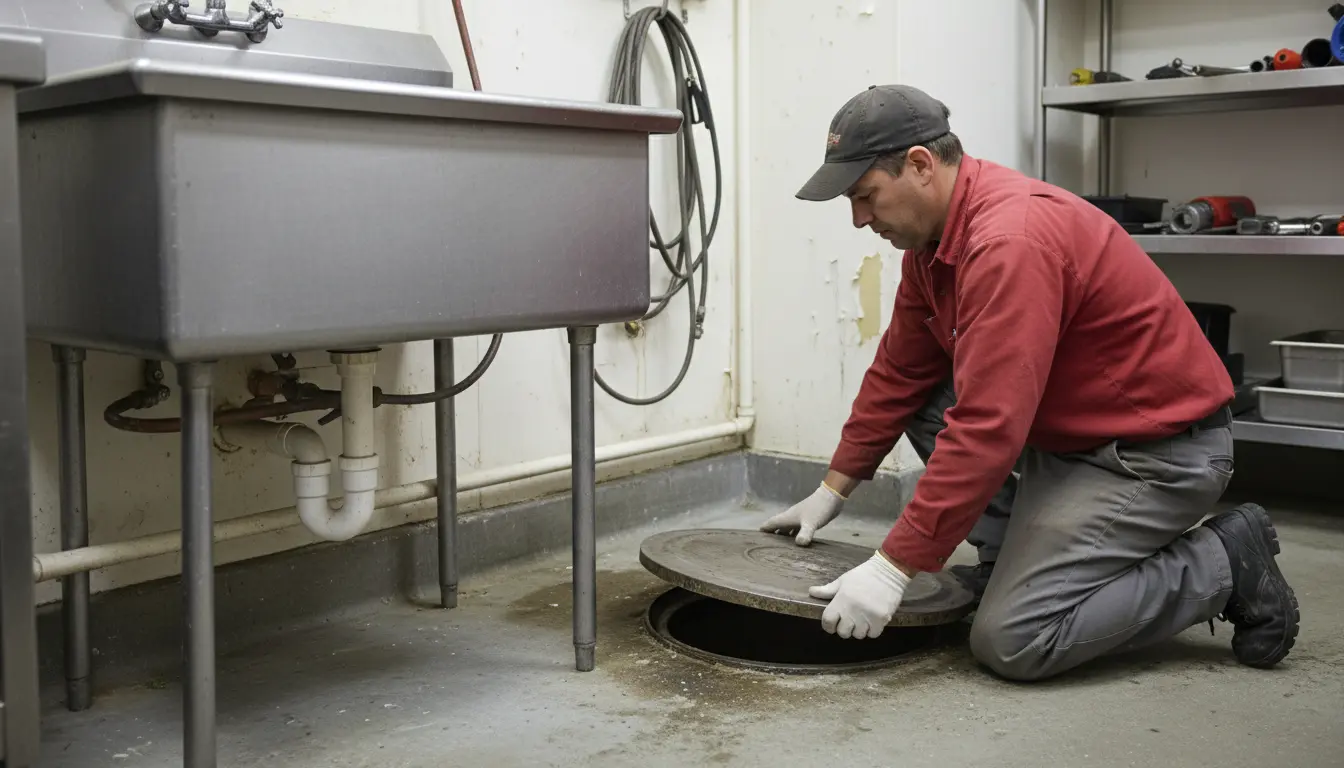
Proper grease trap and interceptor maintenance is a non-negotiable part of running a food service business in Pocatello. The city's code mandates that all grease interceptors and traps be accessible, watertight, gastight, and properly sized according to Idaho standards. Crucially, the responsibility for keeping this equipment in "continuous efficient operation" falls entirely on the business owner. This means establishing a proactive cleaning schedule, not a reactive one. Neglect can lead to severe consequences, including enforcement actions that may require expensive new equipment or even business interruption.
Understanding Pocatello's FOG Regulations
Pocatello's approach to FOG management is detailed in the city code and supporting Best Management Practices (BMP) documents. The goal is prevention, and the rules are designed to stop grease at the source before it becomes a public works problem.
Key Legal Requirements:
- Installation & Accessibility: Grease control devices are required for food service establishments and must be easily accessible for inspection, maintenance, and pumping.
- The 50% Rule: The primary trigger for cleaning is not a fixed time interval but a capacity rule. You are required to clean your grease interceptor or trap whenever the combined volume of grease and sediment reaches 50% of the unit's capacity 1. This is a critical compliance benchmark.
- Complete Cleaning Required: It is prohibited to only pump out the floating grease or the settled solids. A complete evacuation of all contents is required to restore the unit to full capacity and efficiency.
- Record Keeping: Businesses must maintain accurate, on-site logs of every grease trap cleaning and maintenance activity. These records should include the date, volume of waste removed, and the disposal method.
Determining Your Cleaning Frequency
While the city rule is based on the 50% fullness, in practice, most businesses need a scheduled service to stay compliant. Waiting until you hit the 50% mark is risky and often leads to violations.
For Small, Passive Grease Traps (e.g., under-sink units): These smaller units fill up quickly. To consistently stay under the 50% threshold, cleaning is often required weekly2. High-volume establishments may need service even more frequently. Regular weekly maintenance of these small traps is one of the most effective BMPs you can implement.
For Larger, In-Ground Grease Interceptors: The cleaning frequency for larger commercial interceptors depends entirely on your kitchen's grease output. While not always mandating a specific monthly pump-out like some cities, Pocatello's code emphasizes "routine cleaning" as a mandatory Best Management Practice 3. For many full-service restaurants, this typically translates to service every 1 to 3 months. The only way to know for sure is to have your interceptor inspected regularly and to monitor your cleaning logs.
Proactive vs. Reactive Maintenance: The city actively encourages a proactive approach-implementing BMPs like regular cleaning to prevent issues-rather than waiting for a violation notice after a sewer line has been affected. Consistent, documented maintenance is always cheaper and safer than emergency service calls or city fines.
Find the perfect grease trap cleaning companies for your needs
Get personalized recommendations and expert advice
Costs of Grease Trap Cleaning in Pocatello
Investing in regular service is a predictable operating cost that pales in comparison to the expense of non-compliance. Prices vary based on the size of your unit, its location, and your service frequency.
Typical Price Ranges:
- Small, Under-Sink Grease Traps: For a regularly scheduled weekly or bi-weekly service, costs can range from $100 to $200 per cleaning 4.
- Medium to Large Commercial Interceptors: Pumping and cleaning an in-ground interceptor typically costs between $200 and $400 or more per service, depending on its gallon capacity and how much waste is removed5 6.
- Emergency or Neglected Service: If you wait until there is a blockage, odor issue, or a city violation, the cost will be significantly higher. Emergency pump-outs, potential pipe jetting, and additional fees for urgent service can easily double or triple the standard rate.
Scheduled Service Savings: Establishing a regular service contract with a reputable provider is the most cost-effective strategy. It ensures compliance, prevents emergencies, and often comes at a locked-in, lower rate compared to one-time emergency calls.
Consequences of Non-Compliance
Failing to maintain your grease control equipment has serious repercussions. The City of Pocatello monitors for FOG issues in the sewer system and will take enforcement action against sources of non-compliance.
Potential penalties include:
- Formal Notices and Warnings: The first step is usually a notice of violation requiring immediate corrective action.
- Financial Penalties: Significant fines can be levied for ongoing non-compliance.
- Costly Corrective Actions: The city may require you to install new or additional pretreatment equipment at your expense.
- Operational Shutdown: In cases of severe or repeated violations, the city has the authority to suspend sewer service or require the business to cease operations until the problem is resolved7.
Best Practices for FOG Management
Beyond just pumping the trap, a comprehensive FOG program minimizes grease entering your drains and extends time between service calls.
- Scrape, Don't Rinse: Scrape all food scraps and grease from dishes, pots, and pans into the trash before washing.
- Use Strainers: Place baskets or strainers in all sink drains to catch solid food waste.
- Dry Wipe Frying Equipment: Wipe down fryer baskets, griddles, and other greasy equipment with a paper towel before washing.
- Educate Staff: Train all kitchen staff on proper FOG disposal practices. Their daily habits have a direct impact on your trap's fill rate.
- Maintain Detailed Logs: Keep a dedicated binder on-site with all service receipts, pump-out records, and any correspondence with the city or your service provider.
For the most current local guidance, you can contact Southeastern Idaho Public Health (SIPH) or the City of Pocatello's Public Works Department. Their experts can provide specific advice tailored to your establishment 8.
Frequently asked questions
Sources
Footnotes
-
13.16.070: GREASE INTERCEPTORS, GREASE TRAPS ... - https://codelibrary.amlegal.com/codes/pocatelloid/latest/pocatello_id/0-0-0-4773 ↩
-
Fats, Oil, and Grease (FOG) Best Management Practices (BMP ... - https://pocatello.gov/DocumentCenter/View/131/BMP-Fact-Sheet-PDF?bidId= ↩
-
13.20.080: ADDITIONAL PRETREATMENT: - https://codelibrary.amlegal.com/codes/pocatelloid/latest/pocatello_id/0-0-0-5084 ↩
-
The Cost To Clean A Grease Trap For Restaurants - https://thegreasecompany.com/blog/greasetrapcleaningcost/ ↩
-
Ultimate Grease Trap Pumping Cost Guide: Essential Money-Saving ... - https://www.texwaywastewater.com/grease-trap-pumping-cost/ ↩
-
Grease Trap Cleaning Prices | Guide on the Industry Average - https://grease-cycle.com/grease-trap-pumping-cost/ ↩
-
Grease Trap Regulations and Compliance: What You Need to ... - https://www.texwaywastewater.com/grease-trap-regulations-and-compliance/ ↩
-
Idaho Food Safety and Sanitation Manual - https://www.siphidaho.org/environmental-health/_pdf/2005IdahoFoodSafetyManual.pdf ↩