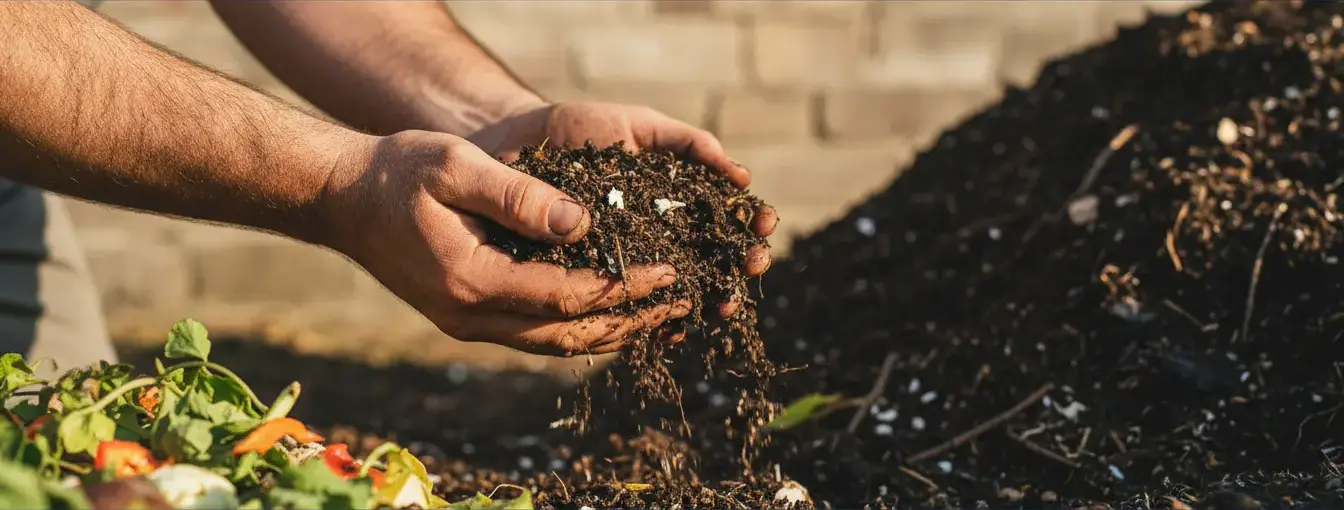
Find the Best Composting & Food Waste Companies for Your Business
No obligation • Fast responses • Nationwide coverage

Why you can trust Restaurant Waste Disposal
Restaurant Waste Disposal is a leading U.S. resource for comparing restaurant composting, food-waste recycling, grease trap cleaning, and used cooking oil collection services. Our editorial team researches providers, checks credentials, and organizes unbiased information so operators can make informed decisions. Companies cannot pay to change ratings or placement.
Search providers near you
Top Composting & Food Waste Companies in Lacey, Washington Ranked
For restaurant owners and food service managers in Lacey, managing organic waste is no longer just an environmental consideration-it's a legal requirement. Washington State's Organics Management Law (SB 1383) mandates that businesses, including restaurants, divert food scraps and yard waste from landfills. This shift is designed to reduce greenhouse gas emissions and create valuable compost, but it introduces new operational protocols for Lacey's food establishments. Successfully navigating these food waste recycling rules requires understanding your obligations, setting up the correct service, and training your team. This guide provides the essential information for Lacey restaurants to achieve compliance and turn a regulatory requirement into a potential point of pride for your business.
The cornerstone of this effort is SB 1383, which phases in requirements for businesses located within designated Business Organics Management Areas (BOMAs). By January 1, 2025, commercial entities that generate four or more cubic yards of organic material per week must arrange for its separate collection and processing. Organic material, in this context, includes all food scraps-from vegetable peels and coffee grounds to meat, dairy, and bones-as well as food-soiled paper like napkins, paper towels, and uncoated paper plates. Yard waste such as grass clippings and leaves is also included in this stream. It is crucial to prevent contamination; plastics, metals, glass, liquids, and non-compostable packaging must be kept out of the organics bin to ensure the resulting compost is clean and usable.
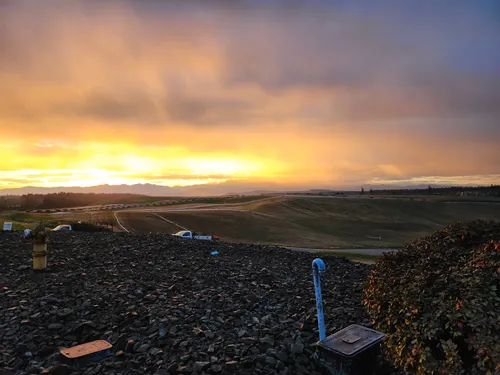
LRI LANDFILL
17925 Meridian E, Puyallup, WA 98375
LRI LANDFILL, operating under Pierce County Recycling, Composting, & Disposal LLC, provides solid waste disposal and recycling services in Puyallup, WA. The facility focuses on food waste and composting solutions for restaurants and other commercial customers within Pierce County. They offer commercial compost sales and manage multiple transfer stations across the region. LRI emphasizes environmentally sound waste management practices and collaborates with local businesses and regulatory agencies to support sustainable disposal methods.
Bokashicycle WA LLC
7506 69th Ave SW, Lakewood, WA 98498
Bokashicycle WA LLC is based in Lakewood, WA, and specializes in food waste and composting solutions for restaurants and other industries. They use a patented bokashi fermentation process that is scientifically backed to convert organic waste into valuable soil nutrients. This anaerobic fermentation method reduces odors and greenhouse gas emissions while producing products like AgrowTeaTM and AgrowPulpTM that improve soil and plant health. Bokashicycle WA LLC supports a variety of sectors including residential, agriculture, pet waste, and the marijuana industry with sustainable organic waste management.
LRI - SALES ROAD COMPOSTING/RECYCLING
10308 Sales Rd S, Tacoma, WA 98499
LRI - SALES ROAD COMPOSTING/RECYCLING operates in Lakewood, WA, providing food waste and composting services primarily for restaurants and other commercial clients. As part of Pierce County Recycling, Composting, & Disposal LLC, the business focuses on environmentally sound solid waste disposal and recycling solutions within Pierce County. They work closely with local businesses, contractors, and regulatory agencies to manage food and yard waste effectively. The company also offers commercial compost sales and guidance on proper disposal of items such as batteries and appliances. Their services are available to residents and businesses within Pierce County.
Understanding Your Obligations Under SB 1383
The first step for any Lacey restaurant is to determine if the law applies to your location and operation. The mandate is tied to both geography and waste volume. You must confirm your business is within a state-designated BOMA; these maps are updated annually and can be checked through the Washington State Department of Ecology 1. Next, conduct a waste audit to estimate your weekly generation of food scraps and food-soiled paper. If your assessment meets or exceeds the four-cubic-yard threshold, you are required by law to subscribe to a commercial organics collection service 1. This is not a voluntary sustainability program but a compliance issue, with potential for fines or mandated service for non-compliance. Even if your volume is currently below the threshold, proactively setting up a program can prepare your business for future regulatory changes and demonstrate environmental leadership.
Setting Up Commercial Organics Collection
For most restaurants in Thurston County, including Lacey, the primary point of contact for setting up service is your existing waste hauler. In this region, LeMay Pacific Disposal is a common provider for commercial accounts. You should contact them directly to discuss adding organics collection to your service agreement. They will help you determine the appropriate container size-typically large, wheeled carts in the 20 to 96-gallon range, often colored green or brown for easy identification-and establish a pickup frequency (e.g., weekly or bi-weekly) based on your estimated volume 2.
Key Logistics to Discuss with Your Hauler:
- Container Placement: Ensure there is adequate space for an additional bin in your dumpster enclosure or service alley.
- Lid Security: Confirm containers have secure, wildlife-resistant lids to prevent pests.
- Staff Training Materials: Some haulers provide signage and training guides to help educate your team on what belongs in each stream.
For smaller establishments that may not generate enough waste to justify a dedicated pickup, or for businesses looking to manage occasional overflow, Thurston County's Waste and Recovery Center (WARC) in Hawks Prairie accepts food and yard waste for a fee 3. This can serve as a supplemental or temporary solution while you scale your operations.
Managing Costs and Sourcing Compliant Supplies
A primary concern for any business is cost. Adding an organics collection service will incur a separate fee from your hauler. However, it's important to view this in a broader context. Diverting organic material can potentially lower your overall waste management costs over time by reducing the volume of trash you send to the more expensive landfill stream 4. Furthermore, investing in compliance avoids the risk of future penalties. When sourcing disposable items like plates, bowls, or utensils, you must be vigilant. Washington has strict standards for products labeled "compostable." These items must meet specific ASTM standards for biodegradability and be clearly labeled with the word "compostable" 5. Using products that are merely "biodegradable" or "plant-based" without the proper certification can lead to contamination of the organics stream and problems at the composting facility.
Find the perfect composting & food waste companies for your needs
Get personalized recommendations and expert advice
Implementing an Effective On-Site Program
A successful food waste diversion program hinges on seamless integration into your daily kitchen and front-of-house operations. The goal is to make the correct disposal method the easiest choice for every staff member.
Start with a simple, clear station setup. Place labeled collection bins for organics in key areas: next to food prep stations, in the dishwashing area, and potentially in wait stations for busing. Use color-coding or very clear graphics to distinguish the organics bin from recycling and landfill bins. Comprehensive staff training is non-negotiable. Hold brief training sessions to explain the "why" behind the law and the "how" of sorting. Create a simple guide-using photos is highly effective-showing common items that are accepted (e.g., fruit cores, eggshells, coffee filters, soiled pizza boxes) and common contaminants (e.g., plastic wrap, rubber bands, styrofoam). Designate a sustainability champion among your staff to monitor bins, answer questions, and ensure the system runs smoothly. Over time, this reduces contamination and improves the efficiency of your program.
The Broader Impact and Benefits
Beyond compliance, participating in Lacey's organics recycling ecosystem offers tangible benefits. The food scraps and soiled paper collected from your restaurant are transformed into nutrient-rich compost at local facilities. This compost can then be used to enrich soils in local parks, farms, and gardens, closing the loop in a local food system. For your restaurant, a robust organics program can enhance your brand's reputation among the growing number of consumers who prefer to support environmentally responsible businesses. It can also lead to greater operational awareness, often revealing opportunities to reduce food waste at the source through better inventory management or portion control, which directly improves your bottom line.
Frequently asked questions
Sources
Footnotes
-
Washington's organics management law ramps up business ... - https://ecology.wa.gov/blog/november-2024/nov-19-washington-s-organics-management-law-ramps-up-business-requirements-for-2025 ↩ ↩2
-
Composting - Washington State Department of Ecology - https://ecology.wa.gov/waste-toxics/reducing-recycling-waste/organics-and-food-waste/managing-organics-compost ↩
-
Food & Yard Waste | Thurston County - https://www.thurstoncountywa.gov/departments/public-works/solid-waste/garbage-recycling/food-yard-waste ↩
-
Curb to Compost: Commercial food waste collection - https://www.tetoncountywy.gov/2926/Curb-to-Compost-Commercial-food-waste-co ↩
-
Compostable product labeling requirements - Washington State ... - https://ecology.wa.gov/waste-toxics/reducing-recycling-waste/plastics/compost-labeling ↩