
Find the Best Composting & Food Waste Companies for Your Business
No obligation • Fast responses • Nationwide coverage

Why you can trust Restaurant Waste Disposal
Restaurant Waste Disposal is a leading U.S. resource for comparing restaurant composting, food-waste recycling, grease trap cleaning, and used cooking oil collection services. Our editorial team researches providers, checks credentials, and organizes unbiased information so operators can make informed decisions. Companies cannot pay to change ratings or placement.
Search providers near you
Top Composting & Food Waste Companies in Waterbury, Connecticut Ranked
For restaurants and food service businesses in Waterbury, managing organic waste is no longer just an environmental consideration-it's a legal requirement with operational implications. Connecticut's Commercial Organics Recycling Law (CORL) mandates that businesses generating significant volumes of food scraps must separate this material for donation, animal feed, or composting. While the City of Waterbury provides robust general recycling services, it does not offer municipal food scrap collection for commercial entities, placing the responsibility on businesses to engage private haulers. Navigating this landscape involves understanding state mandates, selecting the right service provider, and implementing effective internal systems to handle food scraps and other compostable materials efficiently and compliantly.

Blue Earth Compost
18 Midland St, Hartford, CT 06120
Blue Earth Compost provides food waste and composting services for restaurants in Hartford, CT. They focus on diverting food scraps from landfills to support environmental sustainability.
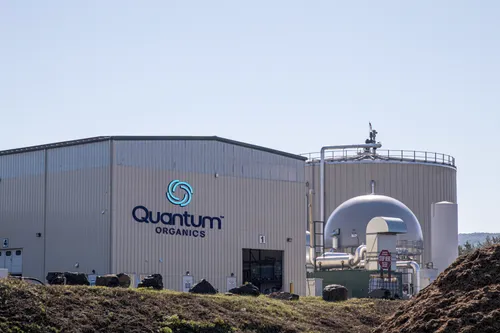
Quantum Organics
49 Depaolo Dr, Southington, CT 06489
Quantum Organics is based in Bristol, CT, specializing in food waste and composting services for restaurants and other organic waste generators. They use anaerobic digestion to convert organic waste into renewable energy and compost, supporting sustainability efforts for businesses, institutions, and municipalities. Their state-of-the-art recycling campus captures methane from waste to supply local renewable energy. With 40 years of experience, Quantum Organics offers tailored solutions to help clients reduce landfill use and improve sustainability.
Understanding Connecticut's Commercial Organics Recycling Law (CORL)
The cornerstone of commercial food waste management in Waterbury is state law. CORL requires that businesses, including restaurants, supermarkets, and institutional cafeterias, that generate an estimated 26 tons or more of food scraps per year must source-separate these organics. The law establishes a hierarchy: the first priority is to donate edible, servable food to hunger relief organizations. Only food that is not fit for human consumption should then be directed to animal feed operations or commercial composting facilities 1.
Compliance isn't optional. Businesses covered by the mandate must annually report their organics recycling activities to the Connecticut Department of Energy and Environmental Protection (DEEP) 2. This makes accurate tracking and record-keeping essential. Even if your business generates slightly less than the 26-ton threshold, proactively implementing an organics recycling program can reduce waste disposal costs, enhance sustainability credentials, and prepare you for future regulatory changes.
Service Landscape: Private Haulers in the Waterbury Area
Since Waterbury does not provide city-run commercial food scrap pickup, businesses must contract with private waste management companies. The market includes national providers like Republic Services and Waste Management, as well as regional and local specialists such as All Waste, CWPM, and ReSource New England. When evaluating providers, it's crucial to confirm they are licensed haulers permitted to transport organic waste to approved composting or anaerobic digestion facilities in Connecticut.
Services are highly customizable. A hauler will typically conduct a waste audit or assessment to estimate your volume of food scraps. Based on this, they will recommend a container size and collection frequency. It's important to get detailed quotes from multiple providers, as costs and service specifics can vary significantly.
Container Options and Collection Logistics
The most common containers for commercial food scrap collection are wheeled totes, ranging from 32 to 90 gallons in capacity. These are often paired with biodegradable liner bags to keep containers clean and simplify emptying. For larger establishments like big restaurants or food processors, front-load or rear-load dumpsters dedicated to organics may be necessary.
Collection schedules are set by the hauler based on your volume and needs, commonly ranging from daily pickup for high-volume generators to weekly or bi-weekly service for smaller operations. Reliable, consistent pickup is critical to avoid odor issues and pest attraction. Ensure your service agreement clearly outlines the pickup schedule, holiday schedules, and protocols for extra pickups if your container fills up prematurely.
What Goes In (and What Stays Out): Contamination is Key
Successful organics recycling hinges on preventing contamination. Even small amounts of the wrong materials can ruin an entire load, leading to rejection at the processing facility and potential extra fees from your hauler.
Accepted Materials Typically Include:
- Food scraps from preparation (peels, rinds, cores)
- Spoiled or expired food (including dairy and meat, which are accepted by most commercial composting facilities)
- Plate scrapings and post-consumer food waste
- Floral trimmings and floral waste
- Soiled, non-recyclable paper like napkins, paper towels, and uncoated paper plates
- Waxed cardboard (check with your hauler)
Strictly Prohibited Contaminants:
- Plastics of any kind, including so-called "compostable" or "biodegradable" plastics, unless explicitly approved by your hauler and their processing facility.
- Metals, glass, and rubber.
- Liquids, oils, and grease (these require separate management, such as grease trap servicing).
- Non-compostable packaging.
A common point of confusion is the pizza box. The rule is straightforward: if the cardboard is greasy and soiled with cheese or food, it belongs with the food waste stream. If a portion of the box is clean and dry, that part can be torn off and placed in single-stream recycling 3.
Find the perfect composting & food waste companies for your needs
Get personalized recommendations and expert advice
Cost Considerations for Food Waste Services
The cost for commercial organics collection in Waterbury is not fixed; it depends on several variables. Primary factors include the volume of waste (often calculated by weight or by the number/type of containers), the frequency of collection, and the specific hauler's pricing structure. Distance to the processing facility can also affect the rate.
For small to medium-sized generators, monthly costs can range from approximately $100 to over $500 4. Businesses generating very high volumes may negotiate a lower per-ton rate. It's important to view this cost in context: diverting heavy, wet food scraps from your trash dumpster can sometimes reduce the size or pickup frequency needed for your general waste service, offsetting some of the new cost for organics recycling. Always request an itemized quote that breaks down container rental, liner costs, pickup fees, and tipping (disposal) fees.
Steps to Implement a Compliant Program
- Assess Your Volume: Start by auditing your trash to estimate how much food waste you generate. This will determine if you meet the CORL threshold and help you size your service correctly.
- Contact Haulers: Reach out to at least three licensed commercial organics haulers serving Waterbury for detailed proposals and quotes.
- Secure Proper Containers: Work with your chosen hauler to obtain the right number and size of totes or dumpsters. Place them conveniently in both kitchen and customer areas if applicable.
- Train Your Staff Thoroughly: This is the most critical step for success and compliance. Conduct training sessions for all kitchen and service staff on what materials go into the organics bin versus the trash or recycling bin. Use clear signage with pictures.
- Establish Tracking Procedures: Set up a simple log or digital system to track the volume of food scraps diverted. This data is necessary for your annual report to DEEP 5.
- Engage with the City: While the city doesn't provide collection, Waterbury Public Works can be a resource for local information. You can contact them via email (cmay@waterburyct.org) with questions about local solid waste regulations 6.
The Broader Impact: Beyond Compliance
Implementing a food scrap recycling program does more than satisfy a state mandate. It represents a tangible commitment to environmental stewardship, reducing methane emissions from landfills and creating nutrient-rich compost for local agriculture. It can also resonate positively with a growing segment of customers who prefer to support sustainable businesses. Proper management of organic waste, alongside services for used cooking oil and grease trap maintenance, forms a complete and responsible approach to back-of-house operations, potentially improving sanitation and operational efficiency.
Frequently asked questions
Sources
Footnotes
-
CT Commercial Composting Law - Waste Free Greenwich - https://www.wastefreegreenwich.org/ct-commercial-composting-law ↩
-
Commercial Organics Recycling Law - https://portal.ct.gov/deep/waste-management-and-disposal/organics-recycling/commercial-organics-recycling-law ↩
-
How to dispose of or recycle Pizza box - enfield-ct.gov - http://www.enfield-ct.gov/402/Recycling-Information#!rc-cpage=200408 ↩
-
Commercial Institutional Food Waste Collection and Composting - https://portal.ct.gov/DEEP/Waste-Management-and-Disposal/Organics-Recycling/Commercial--Institutional-Food-Waste-Collection-and-Composting ↩
-
Recycling Carts - Waterburyct.org - https://www.waterburyct.org/services/public-works/solid-waste/recycling-carts ↩
-
Public Works - Waterburyct.org - https://www.waterburyct.org/services/public-works#!rc-cpage=261431 ↩