Find the Best Composting & Food Waste Companies for Your Business
No obligation • Fast responses • Nationwide coverage

Why you can trust Restaurant Waste Disposal
Restaurant Waste Disposal is a leading U.S. resource for comparing restaurant composting, food-waste recycling, grease trap cleaning, and used cooking oil collection services. Our editorial team researches providers, checks credentials, and organizes unbiased information so operators can make informed decisions. Companies cannot pay to change ratings or placement.
Search providers near you
Top Composting & Food Waste Companies in Hartford, Connecticut Ranked
For Hartford restaurants and food service businesses, managing organic waste is no longer just an environmental consideration-it's a regulatory and economic imperative. Connecticut state law mandates that large generators of food scraps separate this material for recycling, a policy that directly impacts many commercial kitchens in the capital city. Implementing a robust organics diversion program transforms what was once a trash expense into a stream of valuable compost, while ensuring compliance and often reducing overall waste management costs. Navigating this process involves understanding state requirements, selecting a local hauler, and training staff on proper separation protocols.
Successful food scrap recycling starts with knowing the rules. Connecticut's commercial organics recycling law requires businesses that generate more than 26 tons of food waste per year (approximately 2.1 tons per month) to separate these materials and send them to a permitted composting or anaerobic digestion facility. This threshold applies to a wide range of entities, including supermarkets, resorts, conference centers, hospitals, colleges, and notably, restaurants of sufficient scale 1. The first step for any Hartford food business is to conduct a waste audit to estimate annual organic output and determine if they meet this mandated volume.

Blue Earth Compost
18 Midland St, Hartford, CT 06120
Blue Earth Compost provides food waste and composting services for restaurants in Hartford, CT. They focus on diverting food scraps from landfills to support environmental sustainability.
Quantum Organics
49 Depaolo Dr, Southington, CT 06489
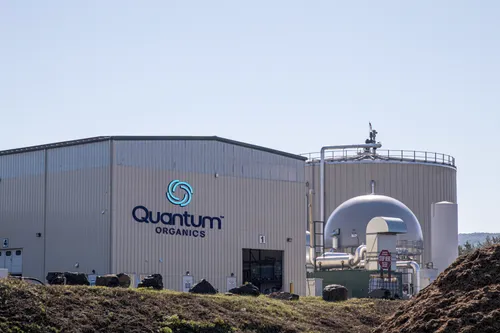
Quantum Organics is based in Bristol, CT, specializing in food waste and composting services for restaurants and other organic waste generators. They use anaerobic digestion to convert organic waste into renewable energy and compost, supporting sustainability efforts for businesses, institutions, and municipalities. Their state-of-the-art recycling campus captures methane from waste to supply local renewable energy. With 40 years of experience, Quantum Organics offers tailored solutions to help clients reduce landfill use and improve sustainability.
Understanding Connecticut's Organics Mandate
The state's framework is designed to divert significant volumes of organic material from landfills, where it would generate methane, a potent greenhouse gas. For covered businesses, the requirement is clear: food scraps must be source-separated from the regular trash stream 2. This isn't a suggestion for sustainability branding; it's a legal obligation with the goal of recycling 60% of the state's overall waste stream. Compliance involves more than just setting out a different bin-it requires a contractual relationship with an authorized hauler and a designated processing facility. The Connecticut Department of Energy and Environmental Protection (DEEP) maintains lists of permitted facilities and can provide guidance on the law's specifics 3.
Local Service Providers for Hartford Businesses
Hartford-area restaurants have several reputable private haulers to choose from for commercial food waste collection. Companies like All American Waste, Blue Earth Compost, and Divert, Inc. service the region and can tailor programs to a business's specific volume and schedule needs 4. USA Hauling & Recycling is another established provider in the Northeast. When contacting these providers, they will typically conduct an assessment to recommend appropriate container sizes and pickup frequency. It's advisable to get quotes from multiple haulers, as costs and service details can vary. These companies handle the logistics, transporting the collected organics to permitted composting or anaerobic digestion facilities that transform the waste into soil amendments or renewable energy.
Setting Up Your Kitchen for Success
The physical setup for organics collection is straightforward but crucial. Haulers typically provide the containers, which for commercial operations are often 96-gallon wheeled carts or even larger dumpsters, depending on the volume generated. Some providers may supply compostable liner bags to keep containers clean. Placement is key: bins should be conveniently located in both front-of-house and back-of-house areas, especially in food prep and dishwashing zones, to make separation easy for staff during the rush. Clear, multilingual signage illustrating what goes in the compost bin versus the trash or recycling is essential for reducing contamination, which can jeopardize the entire load.
What Can and Cannot Be Composted
Knowing what materials are accepted is the cornerstone of a clean organics stream. A "clean" stream keeps costs down and ensures the resulting compost is high-quality.
YES - These items are generally accepted by commercial haulers:
- All food scraps, including plate waste, kitchen prep trimmings, and spoiled food.
- Coffee grounds and paper filters.
- Tea bags (ensure they are not made with synthetic fibers).
- Eggshells and nutshells.
- Uncoated paper napkins, towels, and pizza boxes (if not contaminated with chemicals).
- Some certified compostable serviceware and bags-always check with your specific hauler first 5.
NO - These common contaminants can disrupt the composting process:
- Conventional plastic bags, utensils, or packaging.
- Glass, metal, or aluminum foil.
- Styrofoam or other plastics.
- Liquids, grease, or large quantities of cooking oil.
- "Biodegradable" plastics that are not certified compostable.
A best practice is to start simple. Begin by collecting only core food scraps (fruit/vegetable peels, plate waste) and coffee grounds. Once staff is proficient, you can gradually add other accepted items like napkins or certified compostable products, following your hauler's guidelines 6.
The Financial and Operational Benefits
Beyond compliance, investing in organics recycling offers tangible benefits. Financially, diverting heavy, wet food waste from your trash dumpster can significantly reduce your garbage volume and frequency. Since tipping fees for compost are often lower than for landfill disposal, many Hartford businesses find their overall waste bill decreases after implementing a program 7 8. Operationally, separating organics can lead to cleaner recycling streams and less odor from trash, as food waste is contained and collected more frequently. Ethically, it demonstrates a commitment to environmental stewardship, contributing to Connecticut's recycling goals and creating a valuable product-compost-that can nourish local soils.
Find the perfect composting & food waste companies for your needs
Get personalized recommendations and expert advice
Getting Started: A Step-by-Step Guide
- Conduct a Waste Audit: Estimate your current monthly food waste generation. If you're near or above 2.1 tons per month, you are likely subject to the mandate 9.
- Research and Contact Haulers: Reach out to local providers like All American Waste or Blue Earth Compost for consultations and quotes 10. Discuss container needs, pickup schedules, and costs.
- Seek Expert Assistance: Take advantage of free resources. The Center for EcoTechnology (CET) offers free waste diversion assistance to Connecticut businesses to help them comply with the law and set up efficient systems.
- Plan Your Internal Rollout: Order bins and signage. Develop a simple training plan for all staff members. Designate a team lead to manage the program and communicate with your hauler.
- Launch and Refine: Start the service. Monitor bin contamination closely in the first few weeks and provide follow-up training as needed. Review your waste bills to track savings.
Navigating Challenges and Ensuring Compliance
Common challenges include staff turnover and maintaining separation habits. Continuous education and clear, visual reminders are the solutions. Place posters above collection stations and consider brief, regular reminders at team meetings. Another challenge is space for additional containers. Work with your hauler to optimize container size and pickup frequency to minimize footprint. For compliance, keep records of your hauler contracts and service invoices as proof of proper diversion. If your volume falls below the 26-ton threshold, participating voluntarily can still yield cost savings and marketing advantages, preparing your business for any future regulatory changes.
The Broader Impact on Hartford
When Hartford restaurants and institutions divert food waste, the positive impact extends beyond their balance sheets. It reduces the burden on landfills and incinerators, cuts greenhouse gas emissions, and supports a circular economy where waste becomes a resource. The compost produced from local food scraps can be used in urban gardens, parks, and farms, closing the loop right in the community. By embracing organics recycling, Hartford's vibrant food sector plays a direct role in building a more sustainable and resilient city.
Frequently asked questions
Sources
Footnotes
-
Connecticut - Organics Recycling Mandate - https://ilsr.org/article/composting-for-community/connecticut-organics-recovery/ ↩
-
Commercial Organics Recycling Law - CT.gov - https://portal.ct.gov/deep/waste-management-and-disposal/organics-recycling/commercial-organics-recycling-law ↩
-
Composting and Organics Recycling - CT.gov - https://portal.ct.gov/deep/waste-management-and-disposal/organics-recycling/composting-and-organics-recycling ↩
-
Hartford's Complete Commercial Composting Compliance ... - https://www.myshyft.com/blog/commercial-composting-pickup-service-contracts-hartford-connecticut/ ↩
-
Commercial Organic Composting in Greater Boston Area - https://bptrucking.com/for-your-business/organic-compost/ ↩
-
working copy 051908.indd - Cornell eCommons - https://ecommons.cornell.edu/bitstreams/6e0dcb00-89c1-48a9-8a67-f1721cd4c0fc/download ↩
-
Commercial Institutional Food Waste Collection and Composting - https://portal.ct.gov/DEEP/Waste-Management-and-Disposal/Organics-Recycling/Commercial--Institutional-Food-Waste-Collection-and-Composting ↩
-
Food Waste Collection & Processing In Salt Lake City - https://utah.momentumrecycling.com/foodwaste/ ↩
-
Connecticut Food Waste Policy - https://policyfinder.refed.org/connecticut/ ↩
-
CT Commercial Composting Law - Waste Free Greenwich - https://www.wastefreegreenwich.org/ct-commercial-composting-law ↩