Find the Best Composting & Food Waste Companies for Your Business
No obligation • Fast responses • Nationwide coverage

Why you can trust Restaurant Waste Disposal
Restaurant Waste Disposal is a leading U.S. resource for comparing restaurant composting, food-waste recycling, grease trap cleaning, and used cooking oil collection services. Our editorial team researches providers, checks credentials, and organizes unbiased information so operators can make informed decisions. Companies cannot pay to change ratings or placement.
Search providers near you
Best Composting & Food Waste Companies in Connecticut Ranked
Managing food scraps and organic waste is a growing priority for Connecticut businesses, driven by state law and environmental goals. The state's Commercial Organics Recycling Law (CORL) establishes a framework for diverting food waste from landfills, focusing on large-scale generators. For restaurants and food service establishments, understanding these requirements and the available options for recycling, donation, and composting is key to operational efficiency, potential cost savings, and regulatory compliance. This guide outlines the rules, practical steps, and service providers that can help Connecticut businesses transform their food waste into a resource.

Blue Earth Compost
18 Midland St, Hartford, CT 06120
Blue Earth Compost provides food waste and composting services for restaurants in Hartford, CT. They focus on diverting food scraps from landfills to support environmental sustainability.
Curbside Compost
Bridgeport, CT
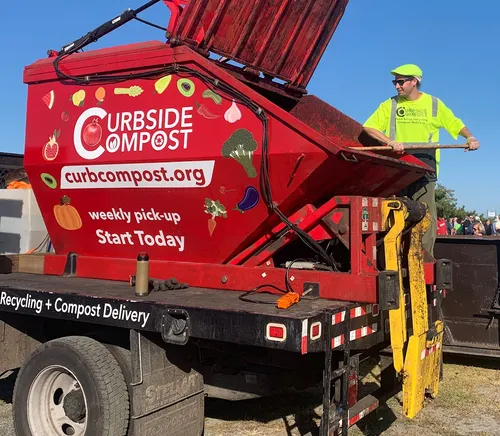
Curbside Compost provides food waste and composting services for restaurants and various other clients in Bridgeport, CT. With over 10 years of experience, they serve municipalities, food manufacturers, distribution centers, food donors, grocery stores, hospitals, assisted living facilities, country clubs, universities, schools, cafeterias, and restaurants. Their service includes weekly collection of food scraps and delivery of premium finished compost, helping reduce landfill waste through convenient composting solutions.
Quantum Organics
49 Depaolo Dr, Southington, CT 06489
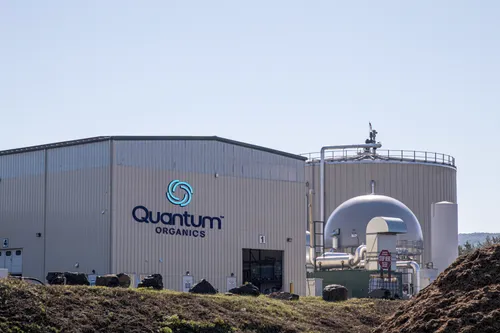
Quantum Organics is based in Bristol, CT, specializing in food waste and composting services for restaurants and other organic waste generators. They use anaerobic digestion to convert organic waste into renewable energy and compost, supporting sustainability efforts for businesses, institutions, and municipalities. Their state-of-the-art recycling campus captures methane from waste to supply local renewable energy. With 40 years of experience, Quantum Organics offers tailored solutions to help clients reduce landfill use and improve sustainability.
Understanding Connecticut's Commercial Organics Recycling Law (CORL)
Connecticut's primary regulation governing food waste is the Commercial Organics Recycling Law (CORL). This law mandates that certain large generators of organic material must separate and recycle their food scraps. The goal is to reduce the volume of waste sent to landfills and incinerators, cutting greenhouse gas emissions and creating valuable compost or renewable energy.
Key Threshold: The law applies to businesses that generate 26 tons or more of source-separated organic material per year and are located within 20 miles of an authorized recycling facility 1. This tonnage threshold was reduced from 52 tons, bringing more businesses under its scope.
Who is Covered? The statute specifically names entities like supermarkets, food manufacturers, wholesalers, resorts, and conference centers 2. While restaurants are not explicitly listed, any restaurant that meets the 26-ton annual generation threshold is subject to the law's requirements. Given that a single ton of food waste is roughly equivalent to the output of a medium-to-large restaurant, many establishments in Connecticut may need to evaluate their waste streams.
Compliance Pathways: From Donation to Composting
Businesses covered by CORL must source-separate their organic waste-like food prep scraps, spoiled inventory, and plate waste-from the rest of their trash. Compliance isn't one-size-fits-all; the law provides several approved methods for diversion.
- Food Donation: The most preferred method is donating edible, unsold food to food banks, pantries, or shelters 3. This addresses food insecurity and fulfills the recycling requirement.
- Animal Feed: Sending certain food scraps to local farms for use as animal feed is another valid diversion pathway.
- Off-Site Processing: This is the most common method for non-donatable waste. Businesses contract with a licensed hauler to transport separated food scraps to an authorized facility. These facilities typically include:
- Composting Facilities: Where organic material is broken down into nutrient-rich soil amendment.
- Anaerobic Digesters: Where waste is processed in an oxygen-free environment to produce biogas (for renewable energy) and digestate (a soil product).
- On-Site Management: Some businesses, particularly those with space like schools or corporate campuses, may opt for on-site composting systems 4.
The Business Case for Food Waste Diversion
Implementing a food waste recycling program involves an initial investment in new bins, staff training, and potentially new service contracts. However, the financial and operational benefits often outweigh these costs.
- Potential Cost Savings: Diverting heavy, wet organic waste can significantly reduce the volume and weight of your standard trash. This can lead to lower garbage hauling fees, as you may need fewer pickups or smaller trash containers. In many cases, the cost of organics hauling is comparable to or even less than traditional trash disposal over time 5 6.
- Waste Management Efficiency: Source separation often leads to a cleaner, more organized waste station, reducing pests and odors associated with mixed trash.
- Sustainability Leadership: Demonstrating a commitment to environmental responsibility strengthens your brand image with customers, employees, and the community 7.
Find the perfect composting & food waste companies for your needs
Get personalized recommendations and expert advice
Steps to Start a Food Waste Recycling Program
- Conduct a Waste Audit: Determine how much food waste your business generates. This will clarify if you meet the 26-ton threshold and help you size your program appropriately.
- Source Separate: Set up dedicated, clearly labeled collection bins in kitchens and prep areas for food scraps only. Use liners if required by your hauler.
- Train Your Staff: Educate all employees on what goes in the food waste bin versus trash, recycling, and grease. Consistent participation is critical for success.
- Choose a Service Provider: Research and contract with a licensed food waste hauler. They will provide collection containers (like carts or dumpsters) and schedule regular pickups.
- Explore Donation Partnerships: Connect with a local food rescue organization. They can often provide guidelines on safe food handling for donation.
- Track and Report: Keep records of your diversion activities. Covered businesses must submit an annual report to the Connecticut Department of Energy and Environmental Protection (DEEP) by March 1st, detailing tons donated, recycled, and hauler information.
Navigating Related Services: Grease Trap and Cooking Oil Management
While separate from food scrap recycling, managing fats, oils, and grease (FOG) is a crucial part of a comprehensive waste strategy for restaurants.
- Grease Trap Cleaning: Regular cleaning of grease interceptors is essential to prevent sewer blockages, comply with local sewer ordinances, and avoid costly fines. Professional service providers pump out the trapped FOG, which is then recycled.
- Used Cooking Oil (UCO) Collection: UCO from fryers is a valuable commodity. Collection services typically provide containers and scheduled pickups at no cost (or even pay for the oil), as it is recycled into biodiesel or other products.
Integrating these services with your food waste program creates a holistic approach to managing all organic byproducts of your kitchen operations.
Reporting Requirements and Resources
Businesses subject to CORL must comply with annual reporting. The electronic report to CT DEEP is a straightforward way to document your diversion efforts for the previous calendar year 8. Even if not legally required, tracking this data is useful for measuring progress and cost savings.
For assistance, the CT DEEP website offers detailed guidance, fact sheets, and lists of permitted haulers and processors 9 10. Municipal recycling coordinators and regional waste authorities are also valuable local resources.
Frequently asked questions
Sources
Footnotes
-
Food Waste Recovery Program - Planet New Canaan - https://planetnewcanaan.org/food-waste-recovery-program/ ↩
-
Food Waste Diversion Law - Connecticut General Assembly - https://www.cga.ct.gov/2022/rpt/pdf/2022-R-0229.pdf ↩
-
CONNECTICUT - COMMERCIAL ORGANICS RECYCLING LAW - https://portal.ct.gov/-/media/deep/waste_management_and_disposal/organics/the-connecticut-commercial-organics-recycling-law-1-pager.pdf?rev=9ee6d523fa10457c82f61a9478253ef6&hash=C07D46F34143A76DC1815C938A31EB51 ↩
-
Connecticut's Commercial Organics Recycling Law (CORL) - https://crcogct.gov/wp-content/uploads/2025/03/School-Recycling-CRCOG-Feb-24-2025.pdf ↩
-
CT Commercial Composting Law - Waste Free Greenwich - https://www.wastefreegreenwich.org/ct-commercial-composting-law ↩
-
Sustainable Management of Food Basics | US EPA - https://www.epa.gov/sustainable-management-food/sustainable-management-food-basics ↩
-
A Guide To Workplace Composting - https://www.roadrunnerwm.com/blog/a-guide-to-workplace-composting ↩
-
Connecticut Organics Recycling Law - SCRRRA - https://www.scrrra.org/connecticut-organics-recycling-law/ ↩
-
Commercial Organics Recycling Law - https://portal.ct.gov/deep/waste-management-and-disposal/organics-recycling/commercial-organics-recycling-law ↩
-
Large Scale Organics Management - CT.gov - https://portal.ct.gov/DEEP/Waste-Management-and-Disposal/Organics-Recycling/Large-Scale-Organics-Management ↩