Find the Best Composting & Food Waste Companies for Your Business
No obligation • Fast responses • Nationwide coverage

Why you can trust Restaurant Waste Disposal
Restaurant Waste Disposal is a leading U.S. resource for comparing restaurant composting, food-waste recycling, grease trap cleaning, and used cooking oil collection services. Our editorial team researches providers, checks credentials, and organizes unbiased information so operators can make informed decisions. Companies cannot pay to change ratings or placement.
Search providers near you
Top Composting & Food Waste Companies in Bridgeport, Connecticut Ranked
For Bridgeport businesses, particularly in the food service and hospitality sectors, managing organic waste is no longer just an environmental consideration-it's a regulatory and economic imperative. Connecticut's Commercial Organics Recycling Law (CORL) mandates that large-scale generators of food scraps must divert this material from the trash stream. While the City of Bridgeport itself offers limited municipal food scrap collection, a combination of state law, private haulers, and local pilot programs creates a framework for commercial organics recycling. Navigating this landscape effectively can help your business comply with regulations, potentially reduce overall waste disposal costs, and contribute to the city's sustainability goals. Understanding the specific requirements for generators, accepted materials, and available service options is the first critical step.
Creative Waste Solutions
New York, NY
Creative Waste Solutions is a waste management company based in New York, NY, offering comprehensive services for businesses. Their offerings include used cooking oil collection, grease trap cleaning, food waste composting, solid waste and recyclables removal, e-waste disposal, and debris removal. They provide a single point of contact for businesses with multiple locations and operate with a network of trusted companies to manage waste efficiently. With decades of experience in the waste industry, Creative Waste Solutions develops tailored waste plans and ensures proper recycling and timely service. They also offer 24/7 availability to support their clients' waste management needs.
Curbside Compost
Bridgeport, CT
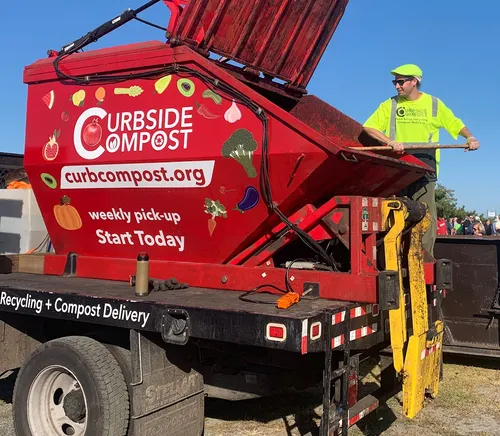
Curbside Compost provides food waste and composting services for restaurants and various other clients in Bridgeport, CT. With over 10 years of experience, they serve municipalities, food manufacturers, distribution centers, food donors, grocery stores, hospitals, assisted living facilities, country clubs, universities, schools, cafeterias, and restaurants. Their service includes weekly collection of food scraps and delivery of premium finished compost, helping reduce landfill waste through convenient composting solutions.
Understanding Connecticut's Commercial Organics Recycling Law (CORL)
The cornerstone of commercial food waste management in Bridgeport is state law. Connecticut's CORL requires businesses and institutions that generate a significant volume of food scraps to source-separate and recycle this material. This law is designed to divert organic waste from landfills, where it decomposes and produces methane, a potent greenhouse gas.
Who is Required to Comply? The law specifically targets large generators. If your business produces 26 tons or more of food scraps per year (approximately 143 pounds per day), you are subject to the mandate. This typically includes:
- Large supermarkets and grocery wholesalers
- Food processors and distributors
- Resorts and large conference hotels
- Hospitals and other major healthcare facilities
- Universities, colleges, and large school districts
- Large restaurants and banquet halls
Affected entities must arrange for the separation and collection of food scraps, sending them to a permitted composting or anaerobic digestion facility. Furthermore, covered generators must report their compliance to the Connecticut Department of Energy and Environmental Protection (DEEP) annually by March 1st.
Local Services & Initiatives in Bridgeport
Bridgeport's municipal waste services currently focus on traditional recycling and leaf composting at the city's Transfer Station 1. For commercial food scrap recycling, businesses generally need to engage private service providers. However, local initiatives are paving the way for future community-wide solutions.
Private Hauler Services Most Bridgeport restaurants and businesses required to compost will contract with a private waste hauler that offers commercial organics collection. These providers supply the necessary containers, establish a pickup schedule, and transport the material to a permitted processing facility. It is advisable to contact haulers like Republic Services, Waste Management, or regional providers directly to request quotes and service details tailored to your volume and frequency needs.
The Park City Compost Initiative (PCCI) This local pilot project represents a grassroots effort to build composting capacity within Bridgeport 2. While primarily a community composting model, it has engaged with some local businesses and serves as an important test case for decentralized organics processing. The PCCI helps demonstrate the feasibility and community benefits of diverting food waste and can be a resource for businesses looking to understand the process on a local level 3.
What Can and Cannot Be Composted
Successful commercial composting depends heavily on preventing contamination. Placing the wrong items in the organics cart can spoil an entire load, leading to rejection and potential fees. The guidelines are specific and must be followed closely.
Accepted Materials: Commercial composting programs typically accept all food scraps, including fruit and vegetable peels, meat, bones, dairy, bread, and plate waste 4. Non-food items that are accepted usually include:
- Soiled paper products like napkins, paper towels, and uncoated paper plates.
- Food-soiled cardboard, such as pizza boxes (without the plastic liner).
- Compostable food service ware that is certified (e.g., BPI certified).
Strictly Prohibited Materials: To ensure the quality of the finished compost, the following items are generally not allowed 5 6:
- Plastic bags of any kind, including those labeled as "compostable" for curbside programs. (Some haulers may require specific compostable liner bags for their carts-always check with your provider.)
- Liquids, grease, and cooking oils.
- Plastic, metal, or glass packaging.
- Styrofoam.
- Diapers, pet waste, or sanitary products.
- Trash of any kind.
Find the perfect composting & food waste companies for your needs
Get personalized recommendations and expert advice
Container Logistics and Collection Frequency
Setting up an efficient back-of-house system is key to a smooth organics recycling operation. Private haulers will work with you to determine the right container size and collection schedule based on your scrap volume.
Containers: Businesses are typically provided with wheeled carts, similar to trash carts, in sizes ranging from 32 to 96 gallons. These are often lined with specific compostable bag liners as required by the hauler to keep carts clean and simplify emptying.
Collection Schedule: Pickup frequency is customized. A high-volume restaurant may require service three to five times per week, while a smaller café or a business with highly variable output might manage with once or twice weekly collection. The goal is to avoid overflow and odor issues while optimizing cost.
Cost Considerations and Potential Savings
Investing in organics recycling involves a new line item for collection services, but it's important to view this within the context of your total waste management costs.
Collection Fees: Costs for commercial food scrap collection vary based on your hauler, the volume of your container, and how often it is serviced. Monthly fees can range significantly, from approximately $50 to over $150, depending on these factors.
Offsetting Trash Costs: The primary financial benefit comes from reducing your traditional trash volume. By diverting heavy, wet food scraps into a separate stream, you may be able to downsize your trash dumpster or reduce the frequency of trash pickups. The savings on your trash hauling bill can partially or, in some cases, fully offset the new cost for organics collection 7. For example, a business might pay $100 per month for compost collection but save $80 per month by moving to a smaller trash container, resulting in a net increase of only $20 for a much more sustainable operation.
Steps for Bridgeport Businesses to Get Started
- Assess Your Volume: Determine if your business generates 26+ tons of food scraps annually (~143 lbs/day). If so, compliance with CORL is mandatory 8 9.
- Contact Service Providers: Reach out to private waste haulers that service Bridgeport and offer commercial organics recycling. Request quotes and ask about container options, pickup schedules, and their list of accepted/contaminated materials.
- Implement Internal Sorting: Set up clearly labeled collection bins in your kitchen and prep areas. Train all staff thoroughly on what goes into the compost cart versus the trash and recycling.
- Plan for Compliance Reporting: If you are a covered generator, ensure you understand the annual reporting requirements to CT DEEP 10.
- Explore Local Resources: Stay informed about local developments by following initiatives like the Park City Compost Initiative, which may offer educational resources or signal future expansion of municipal options 11.
Frequently asked questions
Sources
Footnotes
-
Rules and Regulations - City of Bridgeport - https://www.bridgeportct.gov/government/departments/public-facilities/transfer-station/rules-and-regulations ↩
-
Park City Compost Initiative | Bridgeport, CT - Cause IQ - https://www.causeiq.com/organizations/park-city-compost-initiative,881149577/ ↩
-
Municipal Food Waste Composting - CT.gov - https://portal.ct.gov/-/media/deep/permits_and_licenses/factsheets_general/municipal-composting-factsheet-v2_aug-2025.pdf?rev=0bd18bceee384ed486df6350861cac75&hash=940176C8FCB078003FFA9BA2A8C50477 ↩
-
Compost at Work - https://www.washingtoncountyor.gov/swr/compost-work ↩
-
Sanitation and Recycling Page | City of Bridgeport - https://www.bridgeportct.gov/sanitation-and-recycling-page ↩
-
Sanitation and Recycling Guidelines | City of Bridgeport - https://www.bridgeportct.gov/news/sanitation-and-recycling-guidelines ↩
-
Commercial Institutional Food Waste Collection and Composting - https://portal.ct.gov/DEEP/Waste-Management-and-Disposal/Organics-Recycling/Commercial--Institutional-Food-Waste-Collection-and-Composting ↩
-
Commercial Organics Recycling Law - CT.gov - https://portal.ct.gov/deep/waste-management-and-disposal/organics-recycling/commercial-organics-recycling-law ↩
-
CT Commercial Composting Law - Waste Free Greenwich - https://www.wastefreegreenwich.org/ct-commercial-composting-law ↩
-
Connecticut Organics Recycling Law - SCRRRA - https://www.scrrra.org/connecticut-organics-recycling-law/ ↩
-
Bridgeport Compost and Food Waste Reduction Pilot Project - https://portal.nifa.usda.gov/web/crisprojectpages/1033534-bridgeport-compost-and-food-waste-reduction-pilot-project.html ↩