Find the Best Composting & Food Waste Companies for Your Business
No obligation • Fast responses • Nationwide coverage

Why you can trust Restaurant Waste Disposal
Restaurant Waste Disposal is a leading U.S. resource for comparing restaurant composting, food-waste recycling, grease trap cleaning, and used cooking oil collection services. Our editorial team researches providers, checks credentials, and organizes unbiased information so operators can make informed decisions. Companies cannot pay to change ratings or placement.
Search providers near you
Top Composting & Food Waste Companies in Wallingford, Connecticut Ranked
For restaurants and food service businesses in Wallingford, managing organic waste is no longer just an operational concern-it's a legal requirement with significant environmental and financial implications. Connecticut's Commercial Organics Recycling Law (CORL) mandates that large-scale generators, including many restaurants, divert their food scraps from landfills. This regulation is designed to reduce greenhouse gas emissions and create valuable compost, turning a waste stream into a resource. While the town of Wallingford offers limited municipal composting for residents, commercial entities must navigate private hauling services to achieve compliance and unlock potential cost savings. This guide outlines the key steps, from understanding the law to selecting a service provider, to help your establishment implement an effective organics recycling program.
Understanding your obligations under state law is the critical first step. Connecticut's CORL applies to commercial and institutional entities that generate an annual average of more than 26 tons of food scraps. This threshold, which was lowered from 52 tons, means more businesses are now included. Covered entities are required to source-separate their food waste, donate any edible food to hunger relief organizations, and ensure the remaining scraps are recycled through methods like composting or conversion to animal feed. Furthermore, these businesses must report their organics recycling activities to the Connecticut Department of Energy and Environmental Protection (DEEP). The first action for any Wallingford restaurant is to conduct a waste audit to estimate annual tonnage and determine if the law applies to your operation.

Blue Earth Compost
18 Midland St, Hartford, CT 06120
Blue Earth Compost provides food waste and composting services for restaurants in Hartford, CT. They focus on diverting food scraps from landfills to support environmental sustainability.
Quantum Organics
49 Depaolo Dr, Southington, CT 06489
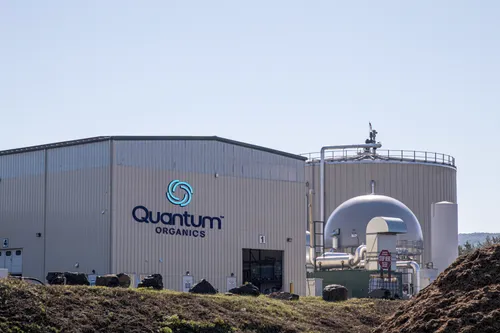
Quantum Organics is based in Bristol, CT, specializing in food waste and composting services for restaurants and other organic waste generators. They use anaerobic digestion to convert organic waste into renewable energy and compost, supporting sustainability efforts for businesses, institutions, and municipalities. Their state-of-the-art recycling campus captures methane from waste to supply local renewable energy. With 40 years of experience, Quantum Organics offers tailored solutions to help clients reduce landfill use and improve sustainability.
Container Types and Collection Logistics
Once you've determined you need a program, the practicalities of collection come into play. Service details are primarily set by your chosen private hauler, but common industry standards apply. Most providers supply containers such as 32, 64, or 90-gallon wheeled totes, which are designed for easy handling and to minimize odors. For larger establishments, commercial dumpsters dedicated to organics may be available. A key component is the use of certified compostable bin liners, which are often required to keep containers clean and prevent contamination. Collection schedules are typically weekly or bi-weekly, coordinated to match your kitchen's output volume. It's essential to work with your hauler to establish a pickup frequency that prevents overflow and maintains sanitary conditions.
What Can and Cannot Go In Your Organics Bin
Proper separation is the cornerstone of a successful food scrap recycling program. Contamination with non-compostable materials can ruin entire loads, leading to rejection and potential fees.
Accepted Materials Typically Include:
- All food scraps: This encompasses pre-consumer waste (peels, trimmings, spoiled produce), post-consumer plate waste, and expired packaged foods (removed from packaging).
- Soiled, non-recyclable paper: Used paper towels, napkins, uncoated paper plates, and pizza boxes (grease-stained portions).
- Certified compostable serviceware: Products that meet recognized standards like BPI certification.
Strict Contamination Guidelines: A critical rule is NO PLASTIC BAGS, unless they are specifically certified as compostable by your hauler. Traditional plastic bags are a major contaminant. Other prohibited items include:
- Plastic packaging, utensils, or wrappers
- Glass, metal, or rocks
- Liquids, fats, and oils (these typically require separate grease trap or used cooking oil services)
- Treated wood or any non-organic material
Clear signage and staff training are vital to maintaining a clean stream that haulers will accept.
Understanding Wallingford's Municipal Services
It's important for businesses to know that Wallingford's municipal composting infrastructure is designed for residents, not commercial food waste. The town operates a Compost Center that accepts brush, leaves, and clean wood chips from residents only 1 2. It explicitly does not accept grass clippings, plastic bags, or any food scraps 1. For commercial-scale food scrap recycling, there is no dedicated municipal pickup service. Therefore, restaurants and other food businesses must contract directly with private waste haulers who specialize in organics collection and have partnerships with permitted composting facilities or anaerobic digesters 3.
Find the perfect composting & food waste companies for your needs
Get personalized recommendations and expert advice
Navigating Costs and Selecting a Hauler
The cost for commercial organics recycling services in Wallingford is not fixed and varies based on several factors. Your final price will depend on the hauler you select, the volume of waste, the size and number of containers provided, and the frequency of pickup 4 5. While adding a new service line has a cost, a significant incentive exists: by diverting heavy, wet organics from your standard trash stream, you can often reduce the size or pickup frequency of your garbage dumpster, leading to lower overall waste management expenses 6. To make an informed decision, you should contact multiple providers servicing the Wallingford area. These can include national waste management companies as well as regional or local specialists focused on organic recycling.
Building a Compliant and Efficient Program
Implementing a successful program goes beyond signing a contract. Here are the recommended next steps for Wallingford restaurants:
- Conduct a Waste Audit: Track your food waste for a period to accurately estimate if you exceed the 26-ton annual threshold. Many haulers can assist with this assessment.
- Research and Contact Haulers: Seek quotes from licensed commercial haulers that offer organics recycling. Inquire about their specific contamination policies, container options, and the final destination for the material (e.g., a composting facility or anaerobic digester).
- Plan for Internal Operations: Designate collection containers for kitchen and prep areas. Order a supply of certified compostable liners. Develop clear, multilingual signage and train all staff on what belongs in the organics bin versus trash or recycling.
- Understand Reporting Duties: Familiarize yourself with DEEP's reporting requirements for covered entities to ensure your business remains in compliance with CORL 7 8.
By proactively managing food waste, Wallingford restaurants can comply with state law, reduce their environmental footprint, and potentially improve their bottom line through smarter waste management.
Frequently asked questions
Sources
Footnotes
-
Compost Center for Residents - Wallingford Town Hall - https://www.wallingfordct.gov/residents/recycling-composting-and-waste-disposal/compost-center-for-residents/ ↩ ↩2
-
Compost Center for Wallingford Residents - https://www.wallingfordct.gov/Compost_Center/ ↩
-
Municipal Food Waste Composting - CT.gov - https://portal.ct.gov/-/media/deep/permits_and_licenses/factsheets_general/municipal-composting-factsheet-v2_aug-2025.pdf?rev=0bd18bceee384ed486df6350861cac75&hash=940176C8FCB078003FFA9BA2A8C50477 ↩
-
Commercial Institutional Food Waste Collection and Composting - https://portal.ct.gov/DEEP/Waste-Management-and-Disposal/Organics-Recycling/Commercial--Institutional-Food-Waste-Collection-and-Composting ↩
-
Comments for CCSMM Samuel King - CT.gov - https://portal.ct.gov/-/media/deep/waste_management_and_disposal/ccsmm/public-comments/039_samuelking_20201027.pdf?rev=b10ff39be3bb4fe6a1e4faccbafdf8b5&hash=BB56F1830A872785070486B84E03D638 ↩
-
CT Commercial Composting Law - Waste Free Greenwich - https://www.wastefreegreenwich.org/ct-commercial-composting-law ↩
-
Commercial Organics Recycling Law - https://portal.ct.gov/deep/waste-management-and-disposal/organics-recycling/commercial-organics-recycling-law ↩
-
Connecticut Organics Recycling Law - SCRRRA - https://www.scrrra.org/connecticut-organics-recycling-law/ ↩