Find the Best Composting & Food Waste Companies for Your Business
No obligation • Fast responses • Nationwide coverage

Why you can trust Restaurant Waste Disposal
Restaurant Waste Disposal is a leading U.S. resource for comparing restaurant composting, food-waste recycling, grease trap cleaning, and used cooking oil collection services. Our editorial team researches providers, checks credentials, and organizes unbiased information so operators can make informed decisions. Companies cannot pay to change ratings or placement.
Search providers near you
Top Composting & Food Waste Companies in New Haven, Connecticut Ranked
For restaurants and food service businesses in New Haven, managing organic waste is no longer just an environmental consideration-it's a regulatory and operational imperative. Connecticut's Commercial Organics Recycling Law (CORL) establishes clear mandates for large generators, transforming food scraps from a disposal problem into a resource for compost and renewable energy. Navigating this landscape involves understanding state requirements, selecting a certified hauler, implementing effective on-site separation, and leveraging local initiatives designed to support businesses. Proper management of food waste not only ensures compliance but can also streamline operations, reduce trash volumes, and contribute to the city's broader sustainability goals.
Understanding Connecticut's Commercial Organics Recycling Law (CORL)
The cornerstone of food waste management for New Haven businesses is state law. Connecticut's CORL mandates that commercial entities generating 26 tons or more of food scraps per year must source-separate this material for recycling 1. This threshold applies to a wide range of businesses, including large restaurants, hotels, supermarkets, food processors, and institutional cafeterias. It's estimated that generating roughly 100 pounds of food waste per day can put a business over this annual limit.
A critical new component of this law is the reporting requirement. Starting in March 2025, covered businesses must report their annual food waste recycling and donation activities to the Connecticut Department of Energy and Environmental Protection (DEEP) 2. This means establishing a system to track and document your organic waste diversion is now a necessary step for compliance. Proactively understanding these rules helps avoid potential fines and positions your business as a leader in sustainable practices.
Options for Recycling Your Food Scraps
Once separated, food scraps have several productive pathways out of your kitchen. The primary method in the region is through professional hauling services that transport material to permitted processing facilities.
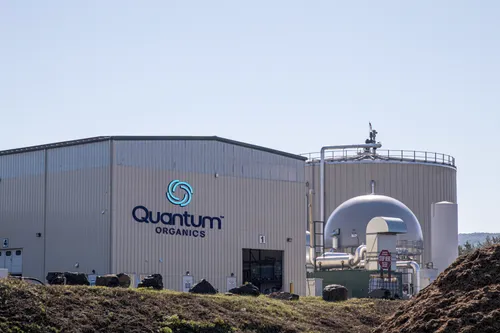
- Anaerobic Digestion: This process breaks down organic material in an oxygen-free environment to produce biogas, which can be used to generate renewable electricity or renewable natural gas. The remaining digestate can be processed into compost. Facilities like Quantum BioPower in Southington accept food waste for this purpose.
- Composting: Traditional aerobic composting transforms food scraps and other organics into a nutrient-rich soil amendment. This compost is often used in agriculture, landscaping, and gardening.
- Donation & Animal Feed: Before considering scraps as "waste," explore opportunities for food donation to local hunger relief organizations. Some food byproducts may also be suitable for animal feed operations. These diversion methods count toward your recycling requirements under CORL 3.
Working with a Food Scrap Hauler in New Haven
Selecting a reliable hauler is the most crucial step for most restaurants. Providers like Blue Earth Compost, which operates extensively in Connecticut, manage the entire process: supplying containers, establishing a pickup schedule, and ensuring the scraps reach a proper processing facility 4.
Containers and Collection: Haulers typically provide durable, wheeled totes in sizes ranging from 32 to 96 gallons for outdoor collection. For indoor kitchen collection, it's essential to use bins with tight-fitting lids and compatible liners. Many haulers require or provide certified compostable bags to line indoor pails, which can be tossed directly into the outdoor toter, keeping the process clean and simple for staff.
Costs and Scheduling: Pricing for food scrap collection is not standardized and varies significantly based on your volume, pickup frequency (weekly, bi-weekly), and the hauler you choose 5 6. The only way to get an accurate cost is to contact providers directly for a quote based on your specific needs. While this is an added line item, many businesses find it offsets costs by reducing their frequency or volume of standard trash pickup.
What Goes In (And What Stays Out)
Preventing contamination is the single most important factor for a successful food scrap recycling program. Contaminated loads can be rejected by processors, resulting in disposal fees and wasted effort.
Accepted Materials:
- All food scraps: vegetable peels, meat, bones, fish, dairy, eggs, baked goods, and coffee grounds with filters.
- Food-soiled, non-recyclable paper: napkins, paper towels, uncoated paper plates.
- Certified compostable serviceware: Look for the BPI certification logo on items like cups, containers, and utensils made from PLA, bagasse, or other approved materials 7.
- Waxed cardboard (flattened) and floral trimmings 8.
Strictly Prohibited Materials:
- Plastics: This is the most common contaminant. No conventional plastic bags, wrappers, or packaging-even if labeled "biodegradable."
- Liquids: Oils, grease, and cooking liquids should not be poured into the scrap bin. Used cooking oil should be collected separately by a licensed renderer.
- Glass, metal, and Styrofoam.
- "Compostable" plastics that are not BPI-certified or approved by your hauler.
Find the perfect composting & food waste companies for your needs
Get personalized recommendations and expert advice
Implementing an Effective On-Site Program
A successful transition requires planning and staff engagement. Start by conducting a waste audit to estimate your annual food scrap generation and confirm if you meet the CORL threshold 9. Resources and guidance for estimation are available from state and non-profit organizations.
Next, design your kitchen workflow. Place clearly labeled collection bins at every key prep and dishwashing station. Color-coding (e.g., green for compost) and using simple graphics can improve sorting accuracy. Comprehensive staff training is non-negotiable; everyone from the head chef to the dishwasher must understand what goes in each stream. Regular follow-ups and clear signage in multiple languages can help maintain a low-contamination rate.
New Haven's Local Support and Initiatives
The City of New Haven actively supports businesses and institutions in reducing waste through its Compost Initiative 10. This office can be a valuable local resource for information and connections. The city has also piloted innovative programs, such as providing smart compost drop-off bins that use smartphone technology for access 10. They may offer technical assistance or information on grants for businesses and schools looking to start or enhance their organics recycling programs, making the initial setup more accessible.
The Broader Impact of Food Waste Diversion
Beyond compliance, diverting food scraps delivers measurable benefits. It reduces the volume of trash sent to incinerators, lowering associated disposal costs and emissions. The end products-compost and renewable energy-contribute to a circular economy right here in Connecticut. For a restaurant, a well-run program demonstrates a commitment to sustainability that resonates with the community, staff, and customers who increasingly value environmentally responsible practices. By transforming waste into a resource, New Haven's food businesses play a direct role in building a more resilient and sustainable city.
Frequently asked questions
Sources
Footnotes
-
New England Food Waste Laws - Conservation Law Foundation - https://www.clf.org/new-england-food-waste-laws/ ↩
-
Connecticut Organics Recycling Law - SCRRRA - https://www.scrrra.org/connecticut-organics-recycling-law/ ↩
-
Commercial Organics Recycling Law - https://portal.ct.gov/deep/waste-management-and-disposal/organics-recycling/commercial-organics-recycling-law ↩
-
Food Scrap Collection for Composting - Blue Earth Compost ... - https://www.blueearthcompost.com/ ↩
-
Commercial Institutional Food Waste Collection and Composting - https://portal.ct.gov/DEEP/Waste-Management-and-Disposal/Organics-Recycling/Commercial--Institutional-Food-Waste-Collection-and-Composting ↩
-
Complete New Haven Commercial Waste Disposal Guide For ... - https://www.myshyft.com/blog/commercial-waste-disposal-services-new-haven-connecticut/ ↩
-
Organics Recycling - https://www.nhswra.com/organics-recycling/ ↩
-
Frequently Asked Questions | New Haven, CT - https://www.newhavenct.gov/government/departments-divisions/office-of-climate-and-sustainability/compost-initiative/frequently-asked-questions ↩
-
Connecticut Food Waste Estimation Guidance - CET - https://www.cetonline.org/connecticut-food-waste-estimation-guidance/ ↩
-
Compost Initiative | New Haven, CT - https://www.newhavenct.gov/government/departments-divisions/office-of-climate-and-sustainability/compost-initiative ↩ ↩2