Find the Best Composting & Food Waste Companies for Your Business
No obligation • Fast responses • Nationwide coverage

Why you can trust Restaurant Waste Disposal
Restaurant Waste Disposal is a leading U.S. resource for comparing restaurant composting, food-waste recycling, grease trap cleaning, and used cooking oil collection services. Our editorial team researches providers, checks credentials, and organizes unbiased information so operators can make informed decisions. Companies cannot pay to change ratings or placement.
Search providers near you
Top Composting & Food Waste Companies in New Britain, Connecticut Ranked
For restaurants and food service businesses in New Britain, managing organic waste is no longer just an operational concern-it's a regulatory requirement and a significant opportunity for cost savings and sustainability. Connecticut's Commercial Organics Recycling Law (CORL) mandates that large-scale generators of food scraps source-separate and recycle this material. This means businesses like supermarkets, resorts, and large restaurants must partner with licensed haulers to divert food waste from landfills to composting or anaerobic digestion facilities. While New Britain's municipal services focus on standard trash and recycling, the city supports these state-driven organics recycling efforts, making third-party providers the essential link for compliance. Implementing a robust food scrap diversion program not only meets legal obligations but can also reduce overall waste management costs and enhance your establishment's environmental profile.

Blue Earth Compost
18 Midland St, Hartford, CT 06120
Blue Earth Compost provides food waste and composting services for restaurants in Hartford, CT. They focus on diverting food scraps from landfills to support environmental sustainability.
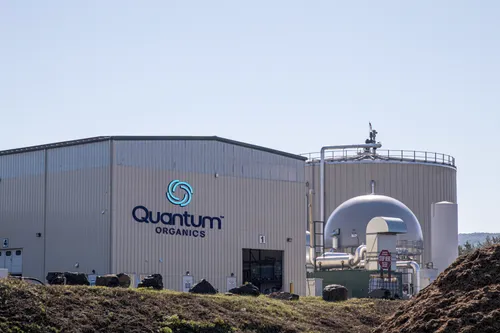
Quantum Organics
49 Depaolo Dr, Southington, CT 06489
Quantum Organics is based in Bristol, CT, specializing in food waste and composting services for restaurants and other organic waste generators. They use anaerobic digestion to convert organic waste into renewable energy and compost, supporting sustainability efforts for businesses, institutions, and municipalities. Their state-of-the-art recycling campus captures methane from waste to supply local renewable energy. With 40 years of experience, Quantum Organics offers tailored solutions to help clients reduce landfill use and improve sustainability.
Understanding Connecticut's Commercial Organics Recycling Law (CORL)
The cornerstone of food waste management for Connecticut businesses is CORL. This regulation specifically targets large generators of organic material. If your business produces 26 tons or more per year of source-separated organic material (SSOM), you are required to:
- Source-separate food scraps from the general waste stream.
- Donate maximally edible food to recovery organizations.
- Recycle the remaining, non-edible food scraps through a licensed hauler to an authorized composting or anaerobic digestion facility.
Annual reporting to the Connecticut Department of Energy and Environmental Protection (DEEP) on both donations and recycling tonnage is mandatory for covered entities 1. This law applies to a broad range of businesses, including food wholesalers, distributors, supermarkets, and large hospitality venues like resorts 2.
Who Needs a Food Waste Recycling Service in New Britain?
Determining if your New Britain establishment falls under CORL is the first step. The 26-ton annual threshold is the key. A full-service restaurant can easily generate this amount. The Connecticut Food Waste Estimation Guidance provides tools to help businesses calculate their output. Even if your volume is currently below the mandatory threshold, proactively implementing an organics recycling program can yield immediate benefits, such as reduced trash volume and associated disposal fees, while preparing your business for future regulatory changes or expansion.
Service Providers: Your Partners in Compliance
Since New Britain's municipal collection does not currently include commercial food waste, businesses must contract directly with private, licensed haulers. These providers are approved by CT DEEP and offer the end-to-end service needed for compliance. Reputable providers serving the region include:
- All American Waste
- Divert, Inc.
- Blue Earth Compost
- USA Hauling & Recycling
These companies handle the collection, transportation, and ensure the organic material is processed at a permitted facility. When selecting a provider, it's crucial to confirm their DEEP licensing and their partnership with a certified composting or digestion site.
How Food Scrap Collection Works
Implementing a service is a streamlined process designed for the busy environment of a commercial kitchen.
Containers and Setup: Your hauler will typically provide specialized, wheeled totes for food scraps, commonly in sizes ranging from 32 to 90 gallons. To maintain cleanliness and simplify handling, the use of certified compostable bin liners is often recommended or required. You will also need a system for collecting waxed cardboard, like flattened produce boxes, separately.
Collection Schedule: Frequency is determined by your contract and based on your establishment's volume and needs. For a busy restaurant, weekly or even more frequent pickups are common to prevent odor and pest issues. Your hauler will work with you to establish a schedule that keeps your operations running smoothly.
Find the perfect composting & food waste companies for your needs
Get personalized recommendations and expert advice
What Can and Cannot Go in the Food Scrap Bin
Proper sorting is critical to the success of any organics recycling program. Contamination (non-compostable items) can disrupt the composting process and may result in rejection of the load or additional fees from your hauler.
ACCEPTABLE Materials (Check with your specific hauler):
- Food prep scraps (vegetable peels, meat trimmings, dairy, seafood shells)
- Spoiled or expired food (produce, baked goods)
- Coffee grounds and filters
- Tea bags (without staples)
- Floral trimmings
- Soiled, waxed cardboard (e.g., produce boxes) 3
UNACCEPTABLE Materials (Contaminants):
- Standard plastic bags or packaging
- Glass, metal, or plastic utensils
- Rubber gloves
- Non-waxed cardboard (this should go in standard recycling)
- Traditional trash
A clear guideline for staff is: When in doubt, throw it out (in the regular trash). It's better to send a small amount of compostable material to the landfill than to contaminate an entire bin of valuable organics.
The Financials: Costs and Potential Savings
A common concern is the cost of adding another service. However, organics recycling is often structured to be cost-neutral or even save money. Here's why:
- Reduced Trash Volume: By diverting heavy, wet food scraps, you can often downsize your regular trash dumpster or reduce pickup frequency, leading to direct savings on trash hauling fees.
- Variable Pricing: The monthly fee for food scrap collection is typically based on bin size and collection frequency. Many businesses find that the savings on their trash bill offset the new organics fee.
- Pilot Program Data: Historical data from pilot programs in the state have demonstrated the potential for overall waste cost reduction when organics are separated 4.
Exact pricing requires a quote from your chosen hauler, as it depends on your specific location, volume, and service needs.
Getting Started: Your Action Plan
- Assess Your Volume: Use available estimation tools to gauge if you are near or above the 26-ton CORL threshold 5.
- Research Haulers: Contact licensed providers like All American Waste, Blue Earth Compost, Divert, Inc., or USA Hauling & Recycling for service details and quotes specific to New Britain 6 7.
- Plan Your Kitchen Workflow: Designate collection points (e.g., prep stations, dish pit) with small, lidded bins that use compostable liners. Train your staff on what is and isn't compostable.
- Execute the Contract: Choose a hauler, finalize your container sizes and pickup schedule, and begin diverting your food waste.
Taking these steps moves your New Britain business toward compliance, sustainability, and operational efficiency.
Frequently asked questions
Sources
Footnotes
-
Connecticut Food Waste Policy - https://policyfinder.refed.org/connecticut/ ↩
-
Commercial Organics Recycling Law - https://portal.ct.gov/deep/waste-management-and-disposal/organics-recycling/commercial-organics-recycling-law ↩
-
Recycling Greasy Pizza Boxes? - Takeaway Packaging - https://takeawaypackaging.co.uk/can-you-recycle-greasy-pizza-boxes/ ↩
-
Commercial Institutional Food Waste Collection and Composting - https://portal.ct.gov/DEEP/Waste-Management-and-Disposal/Organics-Recycling/Commercial--Institutional-Food-Waste-Collection-and-Composting ↩
-
Connecticut Food Waste Estimation Guidance - CET - https://www.cetonline.org/connecticut-food-waste-estimation-guidance/ ↩
-
Composting and Organics Recycling - CT.gov - https://portal.ct.gov/deep/waste-management-and-disposal/organics-recycling/composting-and-organics-recycling ↩
-
Food Scrap Collection for Composting - Blue Earth Compost ... - https://www.blueearthcompost.com/ ↩