Find the Best Composting & Food Waste Companies for Your Business
No obligation • Fast responses • Nationwide coverage

Why you can trust Restaurant Waste Disposal
Restaurant Waste Disposal is a leading U.S. resource for comparing restaurant composting, food-waste recycling, grease trap cleaning, and used cooking oil collection services. Our editorial team researches providers, checks credentials, and organizes unbiased information so operators can make informed decisions. Companies cannot pay to change ratings or placement.
Search providers near you
Top Composting & Food Waste Companies in Milford, Connecticut Ranked
For restaurants and food service businesses in Milford, managing organic waste is no longer just an environmental consideration-it's a key operational and regulatory responsibility. Connecticut's Commercial Organics Recycling Law (CORL) establishes clear mandates for larger generators, while a growing infrastructure of private haulers and processing facilities provides solutions for businesses of all sizes. Navigating food scrap recycling involves understanding state requirements, selecting a service provider, and implementing effective on-site separation practices to turn potential landfill waste into valuable compost.
Understanding these systems is crucial for compliance, cost management, and contributing to the state's broader waste diversion goals.
Creative Waste Solutions
New York, NY
Creative Waste Solutions is a waste management company based in New York, NY, offering comprehensive services for businesses. Their offerings include used cooking oil collection, grease trap cleaning, food waste composting, solid waste and recyclables removal, e-waste disposal, and debris removal. They provide a single point of contact for businesses with multiple locations and operate with a network of trusted companies to manage waste efficiently. With decades of experience in the waste industry, Creative Waste Solutions develops tailored waste plans and ensures proper recycling and timely service. They also offer 24/7 availability to support their clients' waste management needs.
Quantum Organics
49 Depaolo Dr, Southington, CT 06489
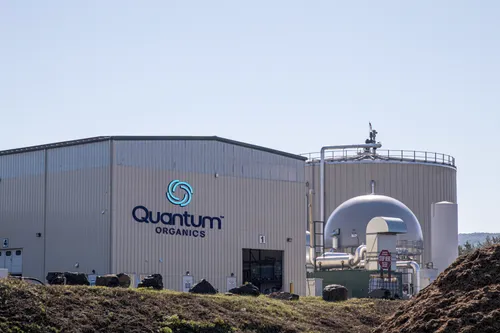
Quantum Organics is based in Bristol, CT, specializing in food waste and composting services for restaurants and other organic waste generators. They use anaerobic digestion to convert organic waste into renewable energy and compost, supporting sustainability efforts for businesses, institutions, and municipalities. Their state-of-the-art recycling campus captures methane from waste to supply local renewable energy. With 40 years of experience, Quantum Organics offers tailored solutions to help clients reduce landfill use and improve sustainability.
Understanding Connecticut's Commercial Organics Recycling Law (CORL)
The cornerstone of commercial food waste management in Milford is state law. Connecticut's CORL mandates that businesses, including restaurants, which generate 26 tons or more of organic waste per year must separate this material for recycling. This threshold is designed to capture large-scale generators like big restaurants, supermarkets, and food processors. The law aims to divert this significant waste stream from trash-to-energy plants and landfills, where it contributes to greenhouse gas emissions, and instead channel it toward composting or anaerobic digestion.
For restaurants below this 26-ton threshold, participation in organics recycling is voluntary but increasingly encouraged. Many choose to participate for sustainability branding, potential cost savings on trash disposal, or to get ahead of potential future regulatory changes. The law is provider-driven, meaning businesses are responsible for contracting with a licensed private hauler to collect their separated organics, as municipal services in Milford are currently focused on residential drop-off programs 1.
Service Options for Milford Restaurants
Unlike Milford's residential program, which offers a drop-off location at the Transfer Station, commercial entities must arrange for private collection 2. Several providers service the area, offering tailored solutions for food service businesses.
Private Hauler Services: Companies like Black Earth Compost and other local waste management firms offer commercial organics collection. Services typically include the provision of lidded collection bins (common sizes start at 13-gallon containers for kitchens) and scheduled pickups, which can be arranged weekly or every other week depending on your volume. The first step for any restaurant is to contact these haulers for a quote, which will be based on bin size, pickup frequency, and location.
Self-Haul Option: For some businesses, particularly those with appropriate vehicles and access to a processing facility, self-hauling organic waste may be an option. This requires direct coordination with an authorized composting facility that accepts commercial loads.
What Can and Cannot Go in the Compost Bin
Proper separation is critical to a successful and cost-effective organics recycling program. Contamination with non-compostable materials can lead to rejected loads, additional fees, and problems at the processing facility 3 4.
Accepted Food Scraps: Most haulers accept a wide range of organic material from kitchens. This includes:
- Fruit and vegetable scraps
- Meat, poultry, and fish (including bones)
- Eggshells and dairy products
- Bread, pasta, rice, and other grains
- Coffee grounds and filters
- Tea bags (without staples)
- Paper towels and napkins (if used with food)
Strictly Prohibited Items: To maintain the quality of the compost stream, the following items must be kept out:
- Plastics: Bags, packaging, utensils, and containers (even those labeled "biodegradable" or "compostable" unless explicitly approved by your hauler).
- Liquids: Oils, grease, and beverages.
- Non-Organic Waste: Glass, metal, rubber, and other trash.
- Compostable Serviceware: Many "compostable" plates and cups require industrial composting conditions; always check with your specific hauler before including these.
Find the perfect composting & food waste companies for your needs
Get personalized recommendations and expert advice
Implementing an Effective On-Site Program
Successfully integrating organics recycling into your restaurant's daily flow requires planning and staff engagement.
- Conduct a Waste Audit: Start by estimating your weekly food waste volume. This helps determine if you're near or above the 26-ton annual mandate and what size collection service you'll need.
- Choose Bin Placement: Place clearly labeled collection bins in key areas: prep stations, dishwashing areas, and behind the line. Use bins with tight-fitting lids to control odors and pests.
- Train Your Team: Comprehensive staff training is essential. Educate every employee-from chefs to dishwashers-on what belongs in the compost bin versus the trash or recycling. Use simple signage with pictures above collection stations.
- Work with Your Hauler: Establish clear communication with your service provider. Understand their specific rules, pickup schedules, and procedures for reporting issues or changing service levels.
Costs and Reporting Considerations
The cost for commercial organics collection in Milford is not standardized and varies by provider. Factors influencing price include the number and size of bins, pickup frequency, and the distance to the processing facility 5. While there is a cost for this service, many businesses find it can be offset by reducing the size or frequency of their trash dumpster service, as organics are often a heavy component of restaurant waste.
For restaurants that meet the large generator threshold (26+ tons/year), compliance includes an annual reporting requirement to the Connecticut Department of Energy and Environmental Protection (DEEP) 6 7. This reporting verifies that the mandated organic waste is being properly recycled. Your hauler can often provide documentation to assist with this reporting.
The Environmental and Community Impact
Participating in organics recycling extends benefits beyond your business. Food scraps diverted from incineration reduce methane emissions and extend the life of disposal facilities. The end product-compost-is a valuable soil amendment that can be used in local agriculture, landscaping, and gardens, closing the nutrient loop in the community 8. For Milford restaurants, a robust food waste program also resonates with a growing segment of environmentally conscious customers, enhancing your establishment's reputation as a responsible community partner.
Frequently asked questions
Sources
Footnotes
-
City Of Milford Embarks On Food Scrap Collection Program - Patch - https://patch.com/connecticut/milford/city-milford-embarks-food-scrap-collection-program ↩
-
Milford offers voluntary composting option for residents - CTPost - https://www.ctpost.com/news/article/milford-composting-recycling-trash-food-waste-19885835.php ↩
-
CT Commercial Composting Law - Waste Free Greenwich - https://www.wastefreegreenwich.org/ct-commercial-composting-law ↩
-
Recycling in Connecticut: What's In, What's Out, and Why It Matters - https://ct.surfrider.org/news/recycling-in-connecticut-whats-in-whats-out-and-why-it-matters ↩
-
Milford - Curbside Collection | Black Earth Compost - https://blackearthcompost.com/composting-in/milford/ ↩
-
Commercial Organics Recycling Law - CT.gov - https://portal.ct.gov/deep/waste-management-and-disposal/organics-recycling/commercial-organics-recycling-law ↩
-
Connecticut Food Waste Policy - https://policyfinder.refed.org/connecticut/ ↩
-
Connecticut Organics Recycling Law - SCRRRA - https://www.scrrra.org/connecticut-organics-recycling-law/ ↩