Find the Best Composting & Food Waste Companies for Your Business
No obligation • Fast responses • Nationwide coverage

Why you can trust Restaurant Waste Disposal
Restaurant Waste Disposal is a leading U.S. resource for comparing restaurant composting, food-waste recycling, grease trap cleaning, and used cooking oil collection services. Our editorial team researches providers, checks credentials, and organizes unbiased information so operators can make informed decisions. Companies cannot pay to change ratings or placement.
Search providers near you
Top Composting & Food Waste Companies in Meriden, Connecticut Ranked
Meriden, Connecticut, is actively working to divert organic material from landfills through innovative programs and state-mandated recycling. For residents, the city offers a unique food scrap co-collection pilot, while local restaurants and food service businesses must navigate the requirements of Connecticut's Commercial Organics Recycling Law (CORL). Understanding the options for managing food scraps-from municipal collection to commercial hauling services-is key to reducing environmental impact and complying with regulations. This guide provides a detailed look at the systems, rules, and practical steps for handling organic waste in Meriden.

Blue Earth Compost
18 Midland St, Hartford, CT 06120
Blue Earth Compost provides food waste and composting services for restaurants in Hartford, CT. They focus on diverting food scraps from landfills to support environmental sustainability.
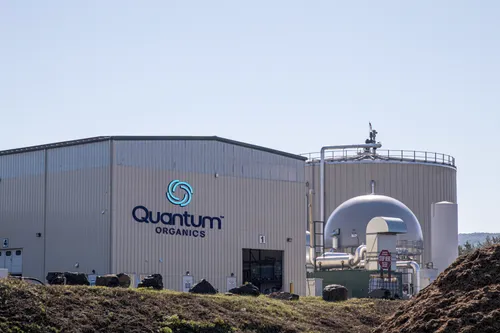
Quantum Organics
49 Depaolo Dr, Southington, CT 06489
Quantum Organics is based in Bristol, CT, specializing in food waste and composting services for restaurants and other organic waste generators. They use anaerobic digestion to convert organic waste into renewable energy and compost, supporting sustainability efforts for businesses, institutions, and municipalities. Their state-of-the-art recycling campus captures methane from waste to supply local renewable energy. With 40 years of experience, Quantum Organics offers tailored solutions to help clients reduce landfill use and improve sustainability.
Understanding Meriden's Food Waste Landscape
Connecticut has positioned itself as a leader in organic waste recycling, with policies designed to significantly cut down on the volume of food scraps sent to waste-to-energy plants. In Meriden, this translates to a two-pronged approach: a voluntary program for households and a mandatory one for qualifying commercial entities. The goal is to capture valuable organic material and convert it into renewable energy or nutrient-rich compost, supporting a more circular local economy.
For businesses, the primary driver is CORL, which mandates that generators of a certain size must separate and recycle their food waste. This law recognizes that food scraps are a resource, not trash. Meanwhile, Meriden's residential pilot program offers a convenient way for citizens to participate in this sustainability effort by using special bags that are collected alongside regular trash.
For Meriden Residents: The Food Scrap Co-Collection Pilot
The City of Meriden has launched a forward-thinking initiative to make food scrap recycling accessible to its residents without requiring a separate curbside pickup.
How the Program Works Eligible residents participating in the pilot use city-provided green bags to collect acceptable food scraps in their kitchen. These bags are then placed inside their regular trash cart for collection. At the curb, the bags are co-collected-meaning they are picked up with the standard municipal trash but kept separate for processing. This streamlined method reduces the barrier to entry for household organic recycling.
What Happens to the Scraps? The collected food scraps are transported to Quantum Biopower, an anaerobic digestion facility in nearby Southington. There, the organic material is broken down in an oxygen-free environment to produce biogas, a renewable energy source, and a solid digestate that can be further processed into compost. This process not only diverts waste from disposal but also creates useful products.
Getting Started & Guidelines Residents should contact the City of Meriden's Public Works Department to confirm their eligibility and receive the official green bags. It's crucial to follow the provided guidelines on what can and cannot go in the bags to prevent contamination. Typically, acceptable items include fruit and vegetable peels, coffee grounds, eggshells, and plain bread, while meat, bones, dairy, and oily foods are often excluded to maintain the integrity of the composting process 1.
For Meriden Businesses: Complying with the Commercial Organics Recycling Law
Connecticut's CORL is a significant regulation for the food service industry. If your restaurant, cafeteria, supermarket, or other food-related business in Meriden generates a certain volume of waste, compliance is not optional.
Who is Required to Comply? The law applies to commercial food wholesalers or distributors, industrial food manufacturers or processors, and supermarkets that generate an estimated 26 tons or more of organic waste per year. This also includes businesses located within 20 miles of an authorized composting or anaerobic digestion facility, which applies to Meriden given its proximity to Quantum Biopower and other processors. It's essential to conduct a waste audit to accurately determine your annual output 2.
Core Compliance Options Businesses have several pathways to meet the law's requirements:
- Source Reduction: The most effective method is to minimize waste generation through improved inventory management and portion control.
- Donation: Divert surplus, edible food to local food banks or shelters.
- Animal Feed: Provide suitable food scraps to local farms for animal consumption.
- Composting/Anaerobic Digestion: Recycle remaining inedible food scraps through off-site facilities or, for some, through permitted on-site systems 3 4.
Find the perfect composting & food waste companies for your needs
Get personalized recommendations and expert advice
Setting Up Commercial Collection Most Meriden businesses will partner with a licensed waste hauler that offers organic recycling services.
- Finding a Hauler: You will need to contact waste management companies that service the Meriden area and offer commercial organics collection. National providers like Republic Services or Waste Management, as well as regional haulers, can provide quotes and service details 5.
- Containers and Logistics: Your hauler will specify the type of containers to use, which are often sealed, wheeled bins (like 64-gallon carts) to control odor and pests. They may require the use of specific compostable liner bags. Pickup schedules are negotiated based on your volume, often aligning with your existing trash and recycling pickup days.
- The Importance of Contamination Control: Facilities like Quantum Biopower have strict contamination standards. Plastics, glass, metals, and even certain "compostable" plastics that don't meet their specifications can result in entire loads being rejected, leading to potential fees. Staff training on what belongs in the organics bin is critical for a successful program 6.
Cost Considerations for Businesses The cost of commercial food waste recycling varies significantly based on your location, the volume of waste, the hauler's rates, and the tipping fees at the processing facility. You can expect a separate monthly charge for organics collection on top of your existing trash service. Some businesses see a reduction in their trash hauling costs as organics are diverted. The only way to get accurate pricing is to obtain quotes from several haulers servicing Meriden 7.
Steps to Implement a Food Waste Program
Whether you're a resident joining the pilot or a business owner ensuring compliance, a structured approach is best.
- Assess and Calculate: For businesses, determine your annual food waste generation. For residents, review the pilot program guidelines.
- Research Local Options: Identify the end destination (e.g., Quantum Biopower) and understand their acceptance policies. For businesses, research haulers that deliver to these facilities.
- Acquire Supplies: Obtain the correct containers and liners. Residents get city bags; businesses work with their hauler.
- Educate and Train: Clearly label bins and educate everyone in the home or on staff about what is and isn't acceptable. Consistent communication prevents contamination.
- Monitor and Adjust: Regularly check your organics bins for contamination and adjust your practices as needed. Track your diversion rates to see your environmental impact.
The Benefits of Diverting Food Scraps
Participating in food scrap recycling, whether voluntarily or by mandate, offers tangible benefits. Environmentally, it reduces methane emissions from landfills, conserves space in waste-to-energy facilities, and produces renewable energy and compost. Economically, it can stabilize waste management costs for businesses and support green jobs. For the community, it fosters a culture of sustainability and resourcefulness, making Meriden a cleaner, greener city.
Frequently asked questions
Sources
Footnotes
-
City of Meriden Food Scrap Co Collection Pilot Reducing Waste - https://portal.ct.gov/DEEP/News-Releases/News-Releases---2022/City-of-Meriden-Food-Scrap-Co-Collection-Pilot-Reducing-Waste ↩
-
Connecticut Organics Recycling Law - SCRRRA - https://www.scrrra.org/connecticut-organics-recycling-law/ ↩
-
Commercial Organics Recycling Law - CT.gov - https://portal.ct.gov/deep/waste-management-and-disposal/organics-recycling/commercial-organics-recycling-law ↩
-
Food Residual Composting Facilities - CT.gov - https://portal.ct.gov/DEEP/Waste-Management-and-Disposal/Organics-Recycling/Food-Residual-Composting-Facilities ↩
-
Food recycling - London Recycles - https://londonrecycles.co.uk/recycling-101/food-recycling/ ↩
-
Source Separation Guidance - https://recyclingworksma.com/local-health-department-guidance-for-commercial-food-waste-separation/ ↩
-
Residential Food Waste Collection In The U.S. - https://www.biocycle.net/residential-food-waste-collection-in-the-u-s/ ↩