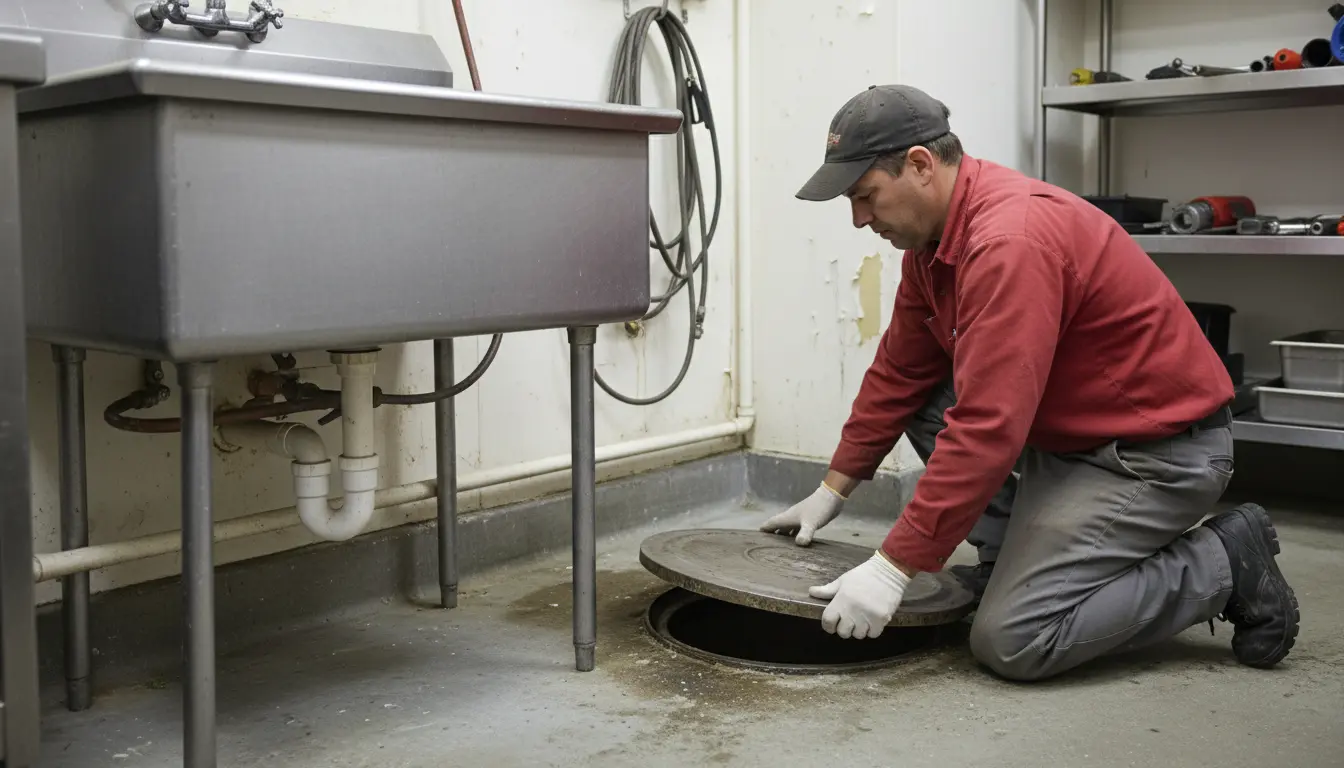
Find the Best Grease Trap Cleaning Companies for Your Business
No obligation • Fast responses • Nationwide coverage

Why you can trust Restaurant Waste Disposal
Restaurant Waste Disposal is a leading U.S. resource for comparing restaurant composting, food-waste recycling, grease trap cleaning, and used cooking oil collection services. Our editorial team researches providers, checks credentials, and organizes unbiased information so operators can make informed decisions. Companies cannot pay to change ratings or placement.
Search providers near you
Top Grease Trap Cleaning Companies in Summerville, South Carolina Ranked
For any restaurant, food truck, or commercial kitchen in Summerville, proper grease interceptor maintenance is not just a best practice-it's a legal requirement enforced by local utilities. The Charleston Water System (CWS) and Berkeley County Public Works Utilities (PUI) have strict regulations in place to prevent fats, oils, and grease (FOG) from entering the municipal sewer system, where they can cause costly blockages and environmental damage. Compliance involves regular, documented pumping by licensed professionals, adherence to specific installation standards, and maintaining detailed service logs for inspections. Neglecting this critical aspect of kitchen operations can lead to severe fines, emergency service fees, and even the risk of a business being shut down. Understanding and proactively managing your grease trap service is essential for smooth, compliant operations in the Tri-County area.
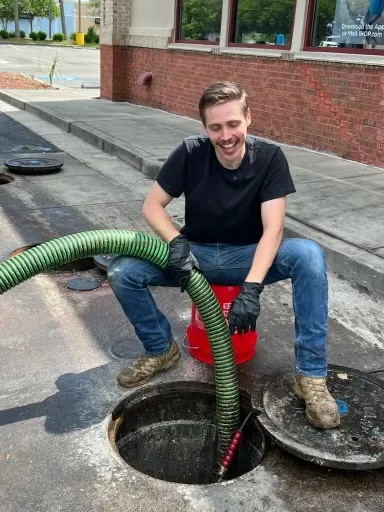
Oil and Grease Management
4310 Amsterdam St, North Charleston, SC 29418
Oil and Grease Management is a family-owned company based in Charleston, SC, specializing in used cooking oil collection, grease trap maintenance, hood cleaning, and line jetting. They serve restaurants and commercial kitchens throughout Charleston and the Carolinas, focusing on sustainable practices and compliance with local regulations. With over 20 years of experience, they offer comprehensive grease trap installation and repair, as well as emergency 24/7 grease and drain services. Their hydro jetting capability helps clear tough blockages and maintain smooth plumbing operations.
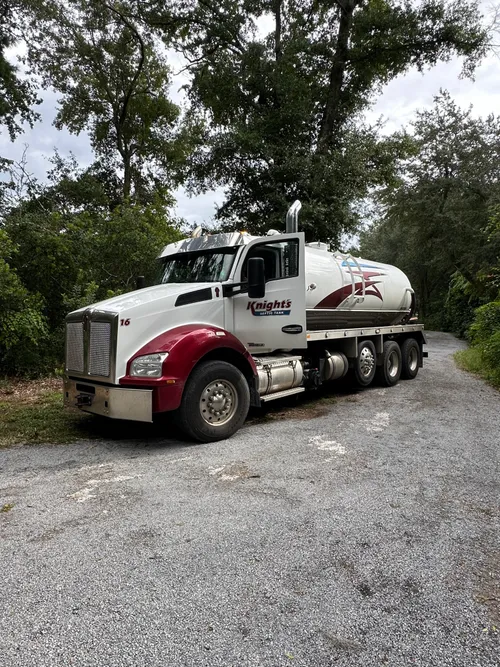
Knights Septic Tank Services
288 Hodge Rd, Summerville, SC 29483
Knights Septic Tank Services has been serving Charleston, SC, and the surrounding Lowcountry area since 1969. Founded by Bud Knight, the company started with septic tank pumping and expanded to include installation, repair, and manufacturing of precast concrete septic tanks and grease traps. Their licensed engineers and technicians offer a range of services including septic tank pumping, grease trap pumping and repair, drain-line installation, and lift station pumping. The company delivers septic tanks and grease traps to the Midlands and beyond, with pump trucks available seven days a week by appointment.
Understanding Local Grease Interceptor Regulations
In Summerville, your business falls under the jurisdiction of either the Charleston Water System (CWS) or the local Public Works Utilities (PUI), depending on your specific location. These authorities mandate that all Food Service Establishments (FSEs) install and maintain approved grease interceptors. The rules are designed to protect the community's wastewater infrastructure, and compliance is non-negotiable.
The regulations cover everything from the initial sizing and installation of your interceptor to the frequency and method of cleaning. Inspectors from these utilities conduct periodic checks to ensure compliance, and they will request to see your maintenance records during these visits 1 2. Failure to provide these logs or to address violations can result in enforcement actions, which often require the business owner to cover the cost of any necessary repairs or system upgrades 3.
Sizing and Installation Requirements for Commercial Kitchens
Getting the size and type of your grease interceptor correct from the start is crucial. Local codes typically require a minimum capacity, often starting at 1,000 gallons for larger outdoor interceptors, with sizing models based on factors like the number of plumbing fixtures, seats in the dining area, and the type of food service offered 4. For example, a common guideline is 20 gallons of interceptor capacity per seat.
Proper installation is equally important for compliance and ease of service. Authorities require that grease interceptors be easily accessible for pumping and inspection. This usually means having two manholes at finished grade level, allowing service technicians full access to remove both liquid and solid waste 5. If your interceptor is buried, difficult to reach, or improperly sized, you may be required to modify or replace it at your own expense to meet code.
Recommended Cleaning Frequency and Best Practices
How often should you schedule grease trap pumping? While the base requirement is typically at least quarterly (every three months), the actual frequency for your Summerville kitchen depends entirely on your volume of operation. A high-volume restaurant or a facility with significant fried food preparation may need monthly service to prevent overflows and maintain compliance.
The cleaning process itself must be thorough. Simply skimming the top layer of grease is insufficient and will not satisfy an inspector. Licensed haulers must perform a complete pump-out, removing all liquids, fats, oils, grease, and accumulated food solids from the interceptor. To extend time between services and improve efficiency, implement kitchen Best Management Practices (BMPs): scrape all food waste into trash bins before washing, install and maintain drain screens, and train staff never to pour grease down sinks 6.
Find the perfect grease trap cleaning companies for your needs
Get personalized recommendations and expert advice
The True Cost of Grease Trap Maintenance
Understanding the cost structure for grease interceptor service helps in budgeting and highlights the value of regular maintenance. For a standard, well-maintained trap in Summerville, a routine pump-out typically ranges from $250 to $400+ per service visit 7. Smaller, under-sink grease traps may be on the lower end, around $175 to $3008.
These routine costs are minimal compared to the expenses of non-compliance. Emergency service calls for a severely clogged or overflowing interceptor can easily exceed $8009. Furthermore, fines from the water authority for violations can amount to thousands of dollars, not including the potential revenue loss from a forced closure to rectify the issue 10. Investing in consistent, documented cleaning is the most cost-effective strategy, protecting your business from far larger unforeseen expenses.
Documentation and Preparing for Inspections
Your maintenance log is your first line of defense during an inspection. Every time your grease interceptor is serviced, you must obtain and file a detailed receipt or report from the licensed hauler. This document should include the date, the company's name and license number, the volume of waste removed, and the disposal location 11.
Keep these records readily available for at least three to five years. When an inspector from CWS or PUI visits, they will ask to see this history to verify that you are adhering to the required pumping schedule. Incomplete or missing records can be grounds for a violation notice. Proactive record-keeping demonstrates responsible management and can streamline the inspection process.
Prohibited Practices and Common Violations
To maintain compliance, it's vital to know what not to do. Local regulations explicitly prohibit the use of emulsifiers, enzymes, acids, or solvents designed to dissolve grease in drains or interceptors 12 13. While these products may seem like an easy fix, they simply break down grease temporarily, allowing it to re-solidify further down the sewer line and cause blockages in the public system. The only approved method of grease removal is physical pumping and scraping by a professional service.
Common violations that inspectors look for include:
- Inaccessible Interceptors: Manholes covered by pavement, landscaping, or equipment.
- Inadequate Cleaning: Evidence of full pump-outs not being performed.
- Missing Logs: Inability to produce service documentation.
- Illegal Discharge: Signs of grease or food solids bypassing the interceptor.
- Use of Prohibited Additives: Presence of enzyme or emulsifier containers in the kitchen.
Finding and Working with a Licensed Service Provider
Not all waste haulers are qualified to service grease traps in compliance with Summerville and Berkeley County regulations. It is your responsibility to hire a licensed provider who understands local codes, provides proper documentation, and disposes of the collected FOG at approved facilities 14.
When selecting a service company, ask for proof of their licensing and insurance. A reputable provider will be familiar with Charleston Water System's FOG Program requirements and should offer guidance on optimal service frequency for your specific operation. They should also provide a detailed service report after each cleaning for your records. Establishing a scheduled service plan with a trusted provider is the most reliable way to ensure uninterrupted compliance.
Frequently asked questions
Sources
Footnotes
-
Grease Trap Requirements | Charleston Water System, SC - https://www.charlestonwater.com/132/Grease-Trap-Requirements ↩
-
FATS, OILS, AND GREASE ORDINANCE - Spring Hill, TN - https://www.springhilltn.org/DocumentCenter/View/56 ↩
-
4-3-73 Grease Traps and Grease Interceptors. - https://codelibrary.amlegal.com/codes/westcolumbia/latest/wcolumbia_sc/0-0-0-1246 ↩
-
Septic Tanks - Commercial Builder - https://des.sc.gov/permits-regulations/septic-tanks/permits-licenses/septic-tanks-commercial-builder ↩
-
2018 South Carolina Plumbing Code - 1003.3.1 Grease interceptors ... - https://codes.iccsafe.org/s/SCPC2018P1/chapter-10-traps-interceptors-and-separators/SCPC2018P1-Ch10-Sec1003.3.1 ↩
-
How Often Should Grease Traps Be Cleaned? - FCS, Inc - https://www.fcs-inc.org/how-often-should-grease-traps-be-cleaned/ ↩
-
The Cost To Clean A Grease Trap For Restaurants - https://thegreasecompany.com/blog/greasetrapcleaningcost/ ↩
-
Grease Trap Cleaning Prices | Guide on the Industry Average - https://grease-cycle.com/grease-trap-pumping-cost/ ↩
-
Ultimate Grease Trap Pumping Cost Guide: Essential Money ... - https://www.texwaywastewater.com/grease-trap-pumping-cost/ ↩
-
Grease Trap Regulations and Compliance: What You Need to ... - https://www.texwaywastewater.com/grease-trap-regulations-and-compliance/ ↩
-
Complying with Grease Trap Codes: 5 Essential Tips - https://www.unitedsewerservice.com/complying-with-local-regulations-and-codes-for-grease-trap-maintenance/ ↩
-
Fats, Oil and Grease (FOG) Best Management Practices (BMP) Manual - https://www.yorkcountygov.com/DocumentCenter/View/6687/FOG-Program-Manual-And-Application-2022 ↩
-
sand, oil, and grease interceptor standards - SWWC - https://www.swwc.com/wp-content/uploads/files/sc/forms/Grease%20Trap%20Standards%20-%20South%20Carolina%20Water%20Utilities%20-%20PUI,%20Inc.pdf ↩
-
Grease Trap or Grease Interceptor Cleaning in South Carolina - https://providenceenvironmental.com/grease-interceptor-cleaning.php ↩