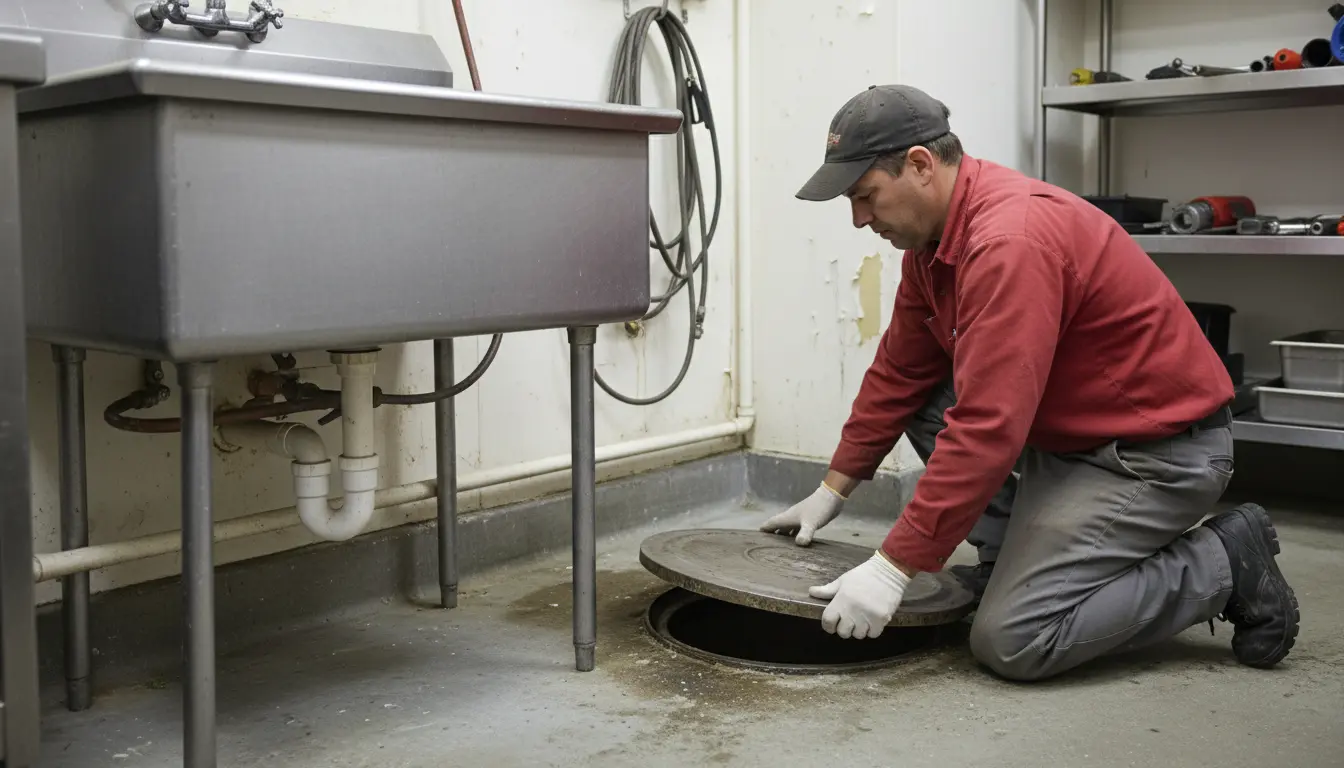
Find the Best Grease Trap Cleaning Companies for Your Business
No obligation • Fast responses • Nationwide coverage

Why you can trust Restaurant Waste Disposal
Restaurant Waste Disposal is a leading U.S. resource for comparing restaurant composting, food-waste recycling, grease trap cleaning, and used cooking oil collection services. Our editorial team researches providers, checks credentials, and organizes unbiased information so operators can make informed decisions. Companies cannot pay to change ratings or placement.
Search providers near you
Top Grease Trap Cleaning Companies in Reading, Pennsylvania Ranked
For any restaurant or food service establishment in Reading, maintaining a clean and compliant grease trap or interceptor is not just a best practice-it's a legal requirement. The City of Reading and surrounding Berks County municipalities enforce strict ordinances to prevent fats, oils, and grease (FOG) from entering the public sewer system, where they can cause costly blockages, backups, and environmental damage. Professional grease trap cleaning is the cornerstone of compliance, involving the complete removal of FOG, solids, and wastewater by a licensed service provider, with detailed documentation required to be kept on-site for inspection. Neglecting this critical maintenance can lead to severe fines, operational shutdowns, and responsibility for extensive repair costs, making a proactive service schedule essential for every kitchen manager and business owner.
Roto-Rooter Plumbing & Water Cleanup
313 W Liberty St Ste 255, Lancaster, PA 17603
Roto-Rooter Plumbing & Water Cleanup provides comprehensive plumbing services in Lancaster, PA, for both residential and commercial clients. Their offerings include sewer and drain cleaning, water heater repair and installation, grease trap maintenance, floodwater cleanup, and mold remediation. The company uses advanced tools such as video camera inspections and hydro-jetting to address plumbing issues efficiently. Serving Lancaster and surrounding counties, Roto-Rooter has established itself as a reliable local provider with 24/7 emergency plumbing availability to handle urgent situations at any time.
Jesse Baro Inc.
157 Quarry Rd, Douglassville, PA 19518
Jesse Baro Inc. is a waste management company based in Manchester, NJ, specializing in used cooking oil collection, grease trap cleaning, and food waste recycling for restaurants and other businesses. They provide custom food waste recycling programs for a variety of sectors including grocery stores, agriculture, municipalities, hospitality, schools, sports venues, healthcare, and food manufacturers. Their services include converting organic byproducts into animal feed and natural fertilizers, supporting sustainable waste management practices across multiple industries.
Understanding Local FOG Control Ordinances
Reading-area food service establishments operate under specific local codes designed to protect the municipal sewer infrastructure. The core mandate is that all facilities generating grease waste must have an approved and properly sized grease interceptor or trap installed 1. The primary goal is to limit the discharge of FOG into the sewer; typical regulations require effluent to be below 100 to 200 parts per million (ppm). Crucially, staff must be trained to never pour grease down sinks, floor drains, or toilets. Instead, grease should be scraped into proper waste containers, and sink strainers should be used to catch solids. The responsibility for ensuring these practices and maintaining the physical interceptor falls squarely on the business.
The Non-Negotiable Need for Professional Service
While some minor indoor trap maintenance can be done in-house, the complete pumping and cleaning of a grease interceptor is a job for professionals. Local codes typically require that a licensed waste hauler perform this service. A professional service doesn't just skim the top layer; it involves evacuating all contents-water, grease, and solids-from the trap, thoroughly cleaning the interior, and properly disposing of the waste at approved facilities. This comprehensive cleaning is what resets the trap's capacity and ensures it functions correctly. Attempting to handle this without proper equipment and licensing not only risks non-compliance but can also lead to improper disposal and environmental violations.
Required Cleaning Frequency and Documentation
How often does your trap need to be serviced? For most establishments in Reading, a quarterly schedule (every three months) is the standard baseline required by local authorities2. However, high-volume kitchens, such as those in busy diners or large banquet halls, may find monthly cleaning necessary to prevent overflows and stay within compliance limits. The local Code Enforcement Officer or Borough has the authority to mandate more frequent cleaning if an inspection reveals issues or if the establishment has a history of violations.
Documentation is as critical as the cleaning itself. After each service, you must obtain and retain a detailed service ticket from your provider. This record should include the company's name, date of service, volume of waste removed, and the established pumping schedule. These documents must be kept on the premises and made available immediately upon request during a municipal inspection 3. This paper trail is your proof of due diligence and compliance.
Consequences of Non-Compliance: Fines and Liabilities
Failing to adhere to grease trap maintenance rules carries significant financial and operational risks. Violations can be triggered by a sewer blockage, a backup on your property, or simply failing an inspection. Penalties often include substantial fines, which can escalate to amounts like $1,000 per day until the violation is corrected4 5. More severely, if a grease-related blockage causes damage to the public sewer system or neighboring properties, the responsible restaurant can be held liable for all repair costs and associated legal fees6 7. In some cases, persistent non-compliance can lead to a revocation of sewer service or business license, effectively shutting down operations.
Cost of Grease Trap Maintenance in Reading
Investing in regular maintenance is far more economical than dealing with an emergency or violation. Costs in the Reading area vary based on the size of your trap (measured in gallons) and the frequency of service.
- Preventative Maintenance: For a regularly serviced, accessible trap, you can expect average costs in the range of $175 to $400 per service. Smaller, under-sink traps may be on the lower end ($125-$225), while larger in-ground interceptors will be on the higher end ($250-$400).
- One-Off or Neglected Service: Cleaning a trap that has been allowed to fill beyond capacity is more labor-intensive. For a small trap, this can start around $190 to $240+, and costs rise sharply for larger units8 9.
- Emergency Service: The most expensive scenario is an emergency call for a completely clogged or overflowing trap. These urgent services can easily cost $800 to $1,200 or more per visit, not including any fines or repair bills incurred from the resulting damage10 11.
Find the perfect grease trap cleaning companies for your needs
Get personalized recommendations and expert advice
Building a Compliant Kitchen Culture
Technology and professional services are only part of the solution. A compliant kitchen requires a trained team. Staff education is paramount. Every employee should understand that no grease goes down the drain. Implement simple practices: provide grease bins for cooling and disposal, use sink strainers, and dry-wipe pots and pans before washing. Post clear signage above sinks and in dishwashing areas as a constant reminder. This cultural shift reduces the load on your grease trap, extends time between necessary pump-outs, and minimizes the risk of accidental violations.
Choosing a Service Provider in Berks County
When selecting a company for grease trap cleaning in Reading, look for providers that emphasize compliance and documentation. Local and regional companies familiar with Berks County and City of Reading ordinances, such as Bailey's Septic or John Kline Septic Services, often structure their services specifically to help you meet municipal reporting requirements12 13. Key questions to ask include: Are you licensed to handle grease waste in Pennsylvania? Do you provide detailed service tickets that satisfy local inspection needs? What is your availability for emergency service? Can you help us determine the optimal schedule based on our volume?
Proactive Steps for Restaurant Owners
- Know Your System: Locate your grease interceptor, know its size and capacity, and understand its basic operation.
- Review Local Codes: Contact the City of Reading's Code Enforcement or Public Works Department directly to obtain the specific borough ordinances and any required compliance forms14 15. Don't rely on generic information.
- Establish a Schedule: Based on your volume and municipal guidelines, set a preventative cleaning schedule with a licensed provider-quarterly at a minimum.
- Organize Records: Create a dedicated file or digital folder for all grease trap service tickets and inspection reports.
- Train Your Team: Conduct regular training sessions on proper grease handling and make it part of your onboarding process.
The Role of Municipal Inspection
The City of Reading's Code Enforcement Officers are responsible for ensuring compliance. During an inspection, they will likely ask to see your grease trap maintenance records and may visually inspect the interceptor itself. They are checking for evidence of proper maintenance, the absence of illegal connections (like a drain line bypassing the trap), and overall good condition. Building a cooperative relationship with inspectors by maintaining impeccable records demonstrates that you are a responsible business owner invested in protecting the community's infrastructure.
Frequently asked questions
Sources
Footnotes
-
INSTALLATION AND MAINTENANCE OF GREASE TRAPS - https://ecode360.com/33585841 ↩
-
Lansdowne Borough Delaware County, Pennsylvania ... - https://www.lansdowneborough.com/DocumentCenter/View/3673 ↩
-
Grease Trap Requirement for Food Preparation Facilities - eCode360 - https://ecode360.com/15687949 ↩
-
Borough of West Reading, PA Sewer System Rules and ... - https://ecode360.com/30036692 ↩
-
Grease Trap Cleaning Guide: 25% Rule, Schedule & Compliance - https://greaseconnections.com/how-to-clean-a-grease-trap-and-how-often-you-should/ ↩
-
The Ultimate Guide to Restaurant Grease Trap Cleaning - https://mokherplumbing.com/ultimate-guide-restaurant-grease-trap-cleaning/ ↩
-
berks county, pennsylvania - ordinance no. 253-2023 - https://tildentownship.com/wp-content/uploads/253-2023-Grease-trap-adopted-10-18-2023.pdf ↩
-
Grease Trap Cleaning Prices | Guide on the Industry Average - https://grease-cycle.com/grease-trap-pumping-cost/ ↩
-
Grease Trap Pumping Cost vs. Grease Trap Maintenance Cost - https://www.stateindustrial.com/article/grease-trap-pumping-cost-vs-grease-trap-maintenance-cost/ ↩
-
Ultimate Grease Trap Pumping Cost Guide: Essential Money-Saving ... - https://www.texwaywastewater.com/grease-trap-pumping-cost/ ↩
-
The Cost To Clean A Grease Trap For Restaurants - https://thegreasecompany.com/blog/greasetrapcleaningcost/ ↩
-
Why Grease Trap Maintenance is a Must for Restaurants - https://www.johnklineseptic.com/why-grease-trap-maintenance-is-a-must-for-restaurants ↩
-
Grease Trap Cleaning Berks County PA | Bailey's Septic - https://www.baileyssepticservices.com/services/grease-trap-cleaning ↩
-
Grease Trap Restaurant: The Essential Guide - https://therestaurantwarehouse.com/blogs/restaurant-equipment/grease-trap-restaurant-guide ↩
-
PROPERTY MAINTENANCE CODE SUMMARY - https://www.readingpa.gov/property-maintenance-code-summary ↩