Find the Best Grease Trap Cleaning Companies for Your Business
No obligation • Fast responses • Nationwide coverage

Why you can trust Restaurant Waste Disposal
Restaurant Waste Disposal is a leading U.S. resource for comparing restaurant composting, food-waste recycling, grease trap cleaning, and used cooking oil collection services. Our editorial team researches providers, checks credentials, and organizes unbiased information so operators can make informed decisions. Companies cannot pay to change ratings or placement.
Search providers near you
Top Grease Trap Cleaning Companies in Enid, Oklahoma Ranked
For any food service establishment in Enid, from bustling diners to cozy cafes, managing fats, oils, and grease (FOG) is a critical operational and legal requirement. Proper grease trap and interceptor maintenance is not just about avoiding unpleasant odors or clogs; it's a mandated part of the city's wastewater pretreatment program designed to protect the public sewer system from blockages and overflows. Compliance involves using approved equipment, adhering to a city-determined cleaning schedule, and working with licensed haulers for proper waste disposal and documentation. Failure to maintain these systems can lead to significant fines, service interruptions, and even business closure, making proactive management essential for every restaurant owner and manager.
Caliber Septic Service
Enid, OK
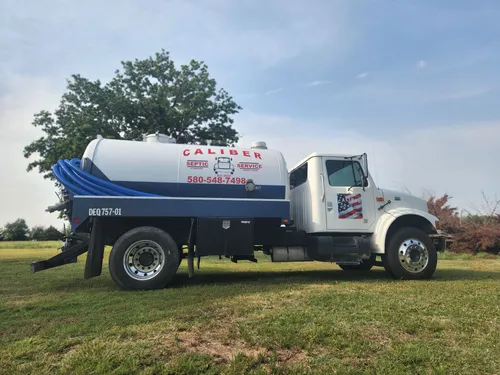
Caliber Septic Service is a family owned and operated business based near Enid, OK, specializing in septic system and grease trap cleaning along with environmentally friendly disposal of sewage and non-hazardous wastewater. They serve Garfield County and surrounding counties including Kay, Payne, Noble, and others. Their services include septic tank pumping, grease trap pumping, aerobic system maintenance, repairs, new system installation, camera line inspection, hydro jetting, riser installation, light excavation, and brush clearing. They use equipment such as a Takeuchi TB240C excavator, Kubota tractor, and a 2100 gallon pump truck with 140 feet of vacuum hose to support their work. Caliber Septic Service focuses on maintaining and protecting septic systems to ensure long, trouble-free operation.
On Site Septic & Grease Pumping
Riverside, CA
On Site Septic & Grease Pumping is a grease trap cleaning company based in Riverside, CA. They provide thorough cleaning services for septic and grease traps, ensuring proper maintenance and function. The team is known for clear communication and careful work.
Understanding Enid's Grease Control Ordinance
Enid's regulations for grease management are codified in the City Code, specifically under § 8-3A-9, which mandates grease, oil, and sand traps or interceptors for all food service establishments. The primary goal is to prevent FOG from entering the public sewer lines, where it can cool, solidify, and cause severe blockages leading to costly and environmentally damaging sanitary sewer overflows (SSOs). The city's Environmental Compliance division oversees this program, ensuring that local businesses contribute to a functional and healthy wastewater infrastructure 1.
Key components of the ordinance include:
- Approved Equipment: Any grease trap or interceptor installed must be of a type, size, and location approved by the City of Enid. This ensures the device is adequate for your kitchen's volume and is easily accessible for cleaning and inspection.
- The 25% Rule: A standard guideline, widely adopted and likely enforced in Enid, is the "25% rule." This means your grease interceptor should be pumped and cleaned when the combined volume of FOG and settled solids reaches 25% of the trap's total capacity. Cleaning at this point maintains optimal functionality and prevents grease from escaping into the sewer line 2 3.
- Licensed Hauler Requirement: Waste grease and solids must be removed and disposed of by a licensed hauler. This is crucial for proper documentation, as these professionals provide manifests or service tickets that serve as your proof of compliance during city inspections.
Compliance: Schedules, Inspections, and Penalties
Staying compliant is an ongoing process defined by scheduled maintenance and preparedness for inspections.
Determining Your Cleaning Frequency The City of Enid sets the required cleaning frequency for each facility based on its specific "loading," or the amount of FOG produced. While the city determines the minimum, common frequencies for active restaurants range from monthly to quarterly. High-volume establishments like large restaurants or institutional kitchens may require service every 30 days, while smaller operations might be on a 90-day schedule. It is your responsibility to know your city-assigned schedule and maintain it, often using the 25% rule as a practical benchmark between mandatory service calls 4.
Documentation and City Inspections Maintaining detailed records is your first line of defense. You must keep all pumping manifests and service reports from your licensed hauler on file for a period typically specified by the city (often 3 years). The City of Enid conducts routine and random inspections to verify compliance. During an inspection, officials will check for:
- Easy access to the grease interceptor.
- The physical condition and proper operation of the trap.
- Your file of recent cleaning manifests.
Consequences of Non-Compliance Violations are taken seriously. Penalties can escalate from formal warnings and fines to more severe actions. Following precedents set in other Oklahoma municipalities, consequences for repeated or severe non-compliance can include substantial monetary penalties, termination of water and sewer service, or in extreme cases, an order to cease operations until the issue is rectified. Proactive maintenance is always more cost-effective than reacting to violations.
Find the perfect grease trap cleaning companies for your needs
Get personalized recommendations and expert advice
Cost Factors for Grease Interceptor Service in Enid
Understanding the costs associated with grease trap maintenance helps in budgeting and highlights the value of regular service. Prices in the Enid area will vary based on several key factors, but general ranges provide a useful guideline.
Standard Service Pricing For a regularly maintained system, you can expect the following cost ranges per service visit:
- Indoor Grease Traps: Typically smaller units located under sinks or in kitchens. Pumping and cleaning these generally costs between $175 and $475 per service 5.
- Outdoor Grease Interceptors: Larger in-ground concrete or fiberglass tanks that service the entire facility. Servicing these units is more involved, with costs typically ranging from $325 to $1,040 per pump-out 6 7.
What Influences the Final Price? Several variables can cause your specific cost to fall on the higher or lower end of these spectrums:
- Tank Size and Capacity: Larger tanks (e.g., 1,000-gallon vs. 500-gallon) hold more waste and require more labor and disposal fees, increasing the cost.
- Condition and Maintenance History: A well-maintained trap that is pumped regularly is far less expensive to service. Traps that have been neglected, allowing FOG and solids to harden into a thick "cake," require significantly more labor, time, and potentially specialized equipment to clean, potentially doubling the service cost.
- Accessibility: Is the interceptor lid clear and easy to access? Units located in tight corners, under landscaping, or blocked by equipment will take longer to service, adding to the labor cost.
- Emergency vs. Scheduled Service: A scheduled, routine pump-out is always cheaper. An emergency call for a severely clogged or overflowing interceptor can cost $800 to $1,200 or more, not including any fines from the city or repairs to damaged plumbing 8 9.
A Proactive Maintenance Checklist for Enid Restaurants
To ensure smooth operations and avoid compliance issues, follow this actionable checklist:
- Verify Your Equipment: Confirm with the Enid Public Works or Utility Department that your current grease trap or interceptor is an approved model and of adequate size for your establishment.
- Establish a Service Schedule: Based on your city-assigned frequency and the 25% rule, contract with a licensed hauler for regular pumping. Don't wait for an overflow; proactive scheduling is key.
- Choose a Licensed Provider: Only hire waste haulers who are licensed to operate in Enid. They will provide the necessary manifests that prove proper disposal at a licensed facility, which is a core part of your compliance documentation.
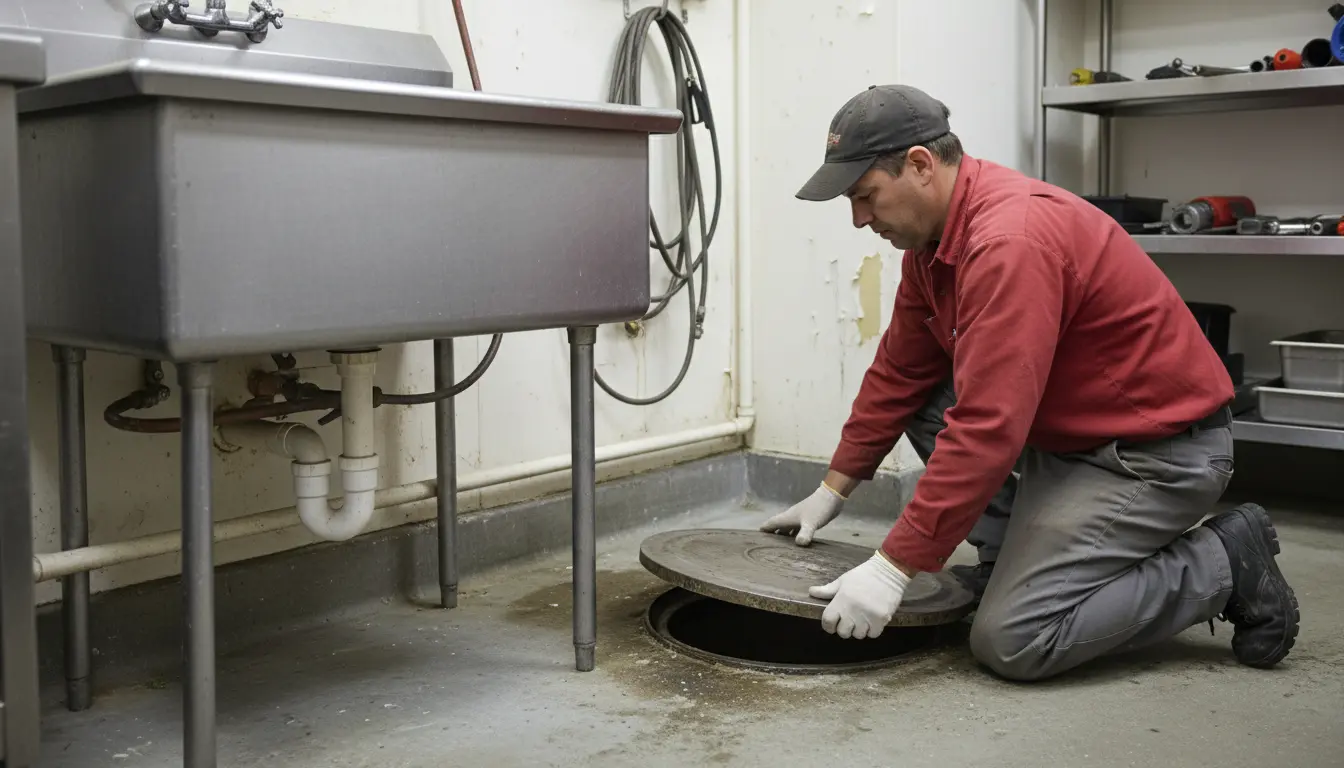
- Maintain Clear Access: Ensure the manhole cover or lid to your interceptor is always clear of debris, equipment, or landscaping. Both your service provider and city inspectors need unobstructed access.
- File Your Records Diligently: Create a dedicated file for all grease interceptor service manifests. Organize them chronologically and have them readily available for an inspector. This simple step is the easiest way to demonstrate compliance 10.
Best Practices Beyond Pumping
While regular pumping is the cornerstone of compliance, these additional practices can enhance your system's efficiency and longevity:
- Scrape, Don't Rinse: Train kitchen staff to scrape food scraps into trash or compost bins before washing dishes. This minimizes the amount of solids and grease entering the trap.
- Use Strainers: Install and maintain sink basket strainers to catch food particles.
- Avoid Chemicals: Refrain from using enzyme or emulsifier "grease digester" products. While they may temporarily reduce odors, they can liquefy grease, allowing it to pass through the trap only to re-solidify further down the sewer line, causing blockages that you can be held responsible for.
- Visual Checks: Periodically check your indoor grease trap for odor and the accumulation of FOG. For outdoor interceptors, note if you see excessive grease or solids near the outlet baffle during your hauler's service.
Frequently asked questions
Sources
Footnotes
-
Environmental Compliance - City of Enid Oklahoma - https://www.enid.org/Services/Public-Utilities/Solid-Waste/Environmental-Compliance ↩
-
Maintenance of grease traps and interceptors - https://serviceauthority.org/wp-content/uploads/2024/12/FOGMaintGuidelinesContractors02212022.pdf ↩
-
Restaurant Grease Trap Cleaning FAQs - https://www.mahoneyes.com/restaurant-grease-trap-cleaning-faqs/ ↩
-
§ 8-3A-9 GREASE, OIL AND SAND TRAPS AND ... - https://codelibrary.amlegal.com/codes/enidok/latest/enid_ok/0-0-0-7618 ↩
-
Cost of Cleaning Restaurant Grease Trap - Grease Interceptors - https://thegreasecompany.com/blog/greasetrapcleaningcost/ ↩
-
Ultimate Grease Trap Pumping Cost Guide: Essential Money-Saving ... - https://www.texwaywastewater.com/grease-trap-pumping-cost/ ↩
-
Restaurant Grease Trap & Interceptor Cleaning Cost - https://greasemanagement.org/pricing.html ↩
-
Oklahoma City Grease Trap Cleaning: Essential Facilities ... - https://www.myshyft.com/blog/grease-trap-cleaning-oklahoma-city-oklahoma/ ↩
-
Grease Trap Pumping Cost vs. Grease Trap Maintenance Cost - https://www.stateindustrial.com/video/cost-comparison-pumping-v-chemicals-to-maintain-a-grease-trap/ ↩
-
Optimize Grease Trap Cleaning - United Sewer and Septic - https://www.unitedsewerservice.com/cleaning-and-inspecting-the-grease-trap-during-pumping/ ↩