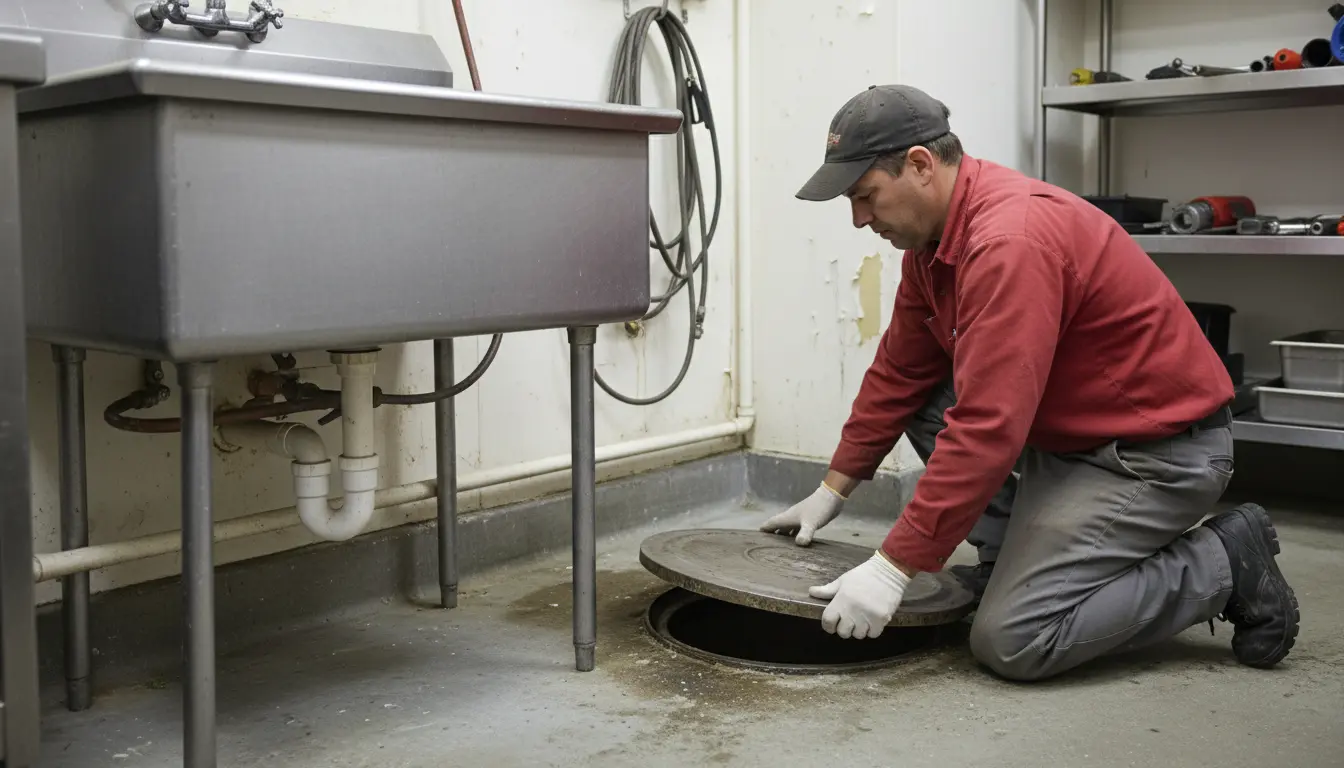
Find the Best Grease Trap Cleaning Companies for Your Business
No obligation • Fast responses • Nationwide coverage

Why you can trust Restaurant Waste Disposal
Restaurant Waste Disposal is a leading U.S. resource for comparing restaurant composting, food-waste recycling, grease trap cleaning, and used cooking oil collection services. Our editorial team researches providers, checks credentials, and organizes unbiased information so operators can make informed decisions. Companies cannot pay to change ratings or placement.
Search providers near you
Top Grease Trap Cleaning Companies in Des Moines, Iowa Ranked
For any restaurant or food service facility in Des Moines, managing fats, oils, and grease (FOG) is not just a matter of kitchen cleanliness-it's a critical regulatory requirement. The Des Moines Metropolitan Wastewater Reclamation Authority (WRA) enforces strict FOG control ordinances to protect the city's sewer infrastructure from blockages and overflows. Compliance hinges on a disciplined schedule of grease interceptor maintenance, meticulous record-keeping, and using certified waste haulers. Neglecting these duties can lead to severe fines, service interruptions, and costly emergency cleanings, making a proactive and informed approach to grease trap service essential for smooth and compliant operations.
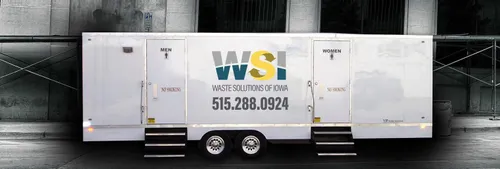
Waste Solutions of Iowa (WSI)
5554 NE 14th St, Des Moines, IA 50313
Waste Solutions of Iowa (WSI) is a woman-owned business based in Des Moines, IA, offering a range of temporary sanitation and waste management solutions. Their services include portable toilet rentals, hand wash stations, roll-off dumpsters, grease trap pumping, and solar-powered surveillance trailers. WSI serves events, construction sites, restaurants, and businesses throughout the Des Moines area. They specialize in scheduled grease trap pumping to help foodservice businesses comply with local regulations and maintain efficient drainage. Established in 1982, WSI has over 40 years of experience and provides 24/7 video surveillance options for enhanced security at events and job sites.
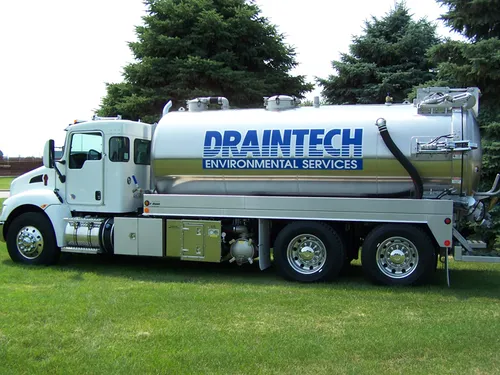
Draintech Plumbing Drain Cleaning Hydro Jetting
2825 Wakefield Cir, Ames, IA 50010
Draintech Plumbing Drain Cleaning Hydro Jetting is a licensed and insured plumbing company serving Ames, IA. Established in 1983, they offer a variety of plumbing services including grease trap cleaning, sewer televising and locating, and excavating. Their capabilities also cover servicing dishwashers, toilets, drain and water lines, faucets, water heaters, sump pumps, and plumbing for kitchen and bathroom remodeling.
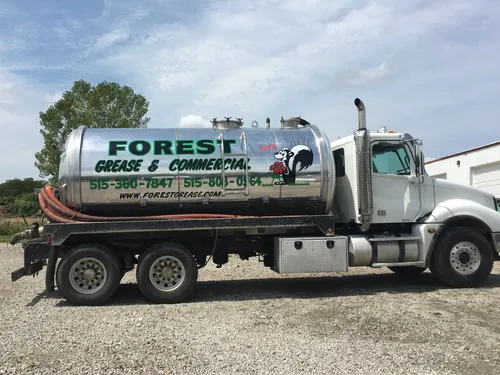
Forest Grease & Commercial
Des Moines, IA
Forest Grease & Commercial is a grease trap cleaning company serving Des Moines, IA, and Central Iowa. Established in 1918, the company focuses on commercial and industrial wastewater treatment solutions, helping food service establishments comply with the local Fats, Oils, and Grease (FOG) Ordinance. Their services include cleaning grease traps and interceptors, as well as pumping various types of commercial liquid waste and cleaning commercial pits such as car wash and maintenance bay pits. Forest Grease & Commercial has a long history of serving both commercial and residential clients, now concentrating solely on industrial and commercial customers.
Understanding Des Moines FOG Regulations
The cornerstone of compliance in Des Moines is the local FOG ordinance, designed to prevent sewer system damage. The rules are specific and non-negotiable. Facilities must have their grease interceptors serviced when the combined FOG and solids accumulate to 25% of the unit's capacity or, at a minimum, every 90 days (quarterly), whichever comes first1 2. This isn't a suggestion; it's the law. Furthermore, the wastewater discharged from your trap back into the sewer system must not exceed a concentration of 400 milligrams per liter (mg/L) of FOG1 3. Regular, professional cleaning is the primary way to ensure you stay under this limit and avoid violations.
The Role of the Wastewater Reclamation Authority (WRA)
The WRA is the governing body responsible for overseeing FOG compliance in the Des Moines metropolitan area. They conduct inspections of food service establishments to enforce the ordinance 4. During an inspection, a WRA representative will typically:
- Examine the physical condition of your grease interceptor.
- Review your maintenance logs and cleaning records.
- May take samples to test the FOG concentration in your effluent.
Failure to comply during an inspection can trigger a range of penalties, from formal warnings and fines to mandatory additional cleanings at your expense. In severe or repeat cases, the WRA can even pursue suspension of your hauler's certification or take action against your facility's sewer service.
What Constitutes a Proper Grease Trap Cleaning?
Simply pumping out the liquid is not sufficient to meet Des Moines standards. A compliant, thorough cleaning service must include specific steps to be effective. When a certified professional services your interceptor, the process should involve 5:
- Complete Evacuation: Removing all liquid contents, including water, grease, and solids, from every vault of the interceptor.
- Solids Removal: Scraping and removing all accumulated solid waste and hardened grease (often called "grease cap") from the bottom and sides.
- Interior Cleaning: Pressure-washing or steam-cleaning the interior walls, baffles, and all surfaces to remove clinging FOG.
- Baffle Inspection: Ensuring the inlet and outlet sanitary "tee" baffles are intact and functional, as these are crucial for separating FOG.
- Proper Disposal: Transporting all collected waste to an approved disposal or recycling facility by a WRA-certified hauler.
Skipping any of these steps can leave behind significant FOG, causing you to hit the 25% capacity threshold much faster and risking a discharge violation.
The Critical Importance of Record-Keeping
Your maintenance log is your first line of defense during a WRA inspection. The ordinance requires facilities to maintain detailed records for a minimum of three years. Each service ticket should be kept on file and must include, at a minimum:
- The date of service.
- The name and WRA certification number of the servicing company/hauler.
- The volume of grease and solids removed (in gallons).
- The disposal method and destination facility.
- The signature of the person who performed the service.
Having this documentation organized and readily available demonstrates due diligence and can help resolve questions quickly during an inspection. Digital logs or a dedicated physical binder are common solutions for Des Moines restaurant managers.
Find the perfect grease trap cleaning companies for your needs
Get personalized recommendations and expert advice
Choosing a Certified Grease Trap Service Provider
This is one of the most important decisions for compliance. The WRA requires that all grease trap waste be transported and disposed of by a licensed and certified hauler. Hiring an uncertified provider not only violates the ordinance but also means your service likely won't be documented in the official system, putting you at immediate risk. When evaluating grease interceptor cleaning companies in Des Moines, verify their WRA certification status first. Then, look for providers with experience in the food service industry, who offer comprehensive cleaning (not just pumping), and who provide detailed, clear service reports that you can easily add to your compliance records.
Cost Factors for Grease Interceptor Service in Des Moines
The price for a professional cleaning can vary widely based on several key factors. Understanding these can help you budget effectively and avoid surprise costs.
- Trap Size and Type: A small, indoor grease trap for a low-volume kitchen will cost significantly less ($175 - $475 per service) than a large, in-ground concrete interceptor serving a high-volume restaurant or institutional kitchen, which can range from $400 to over $2,500 per service6 7.
- Accessibility: Easily accessible traps are quicker to service. Traps located in tight basements, under equipment, or requiring special equipment to access will incur higher labor costs.
- Maintenance History: This is the most significant variable. A trap cleaned on a strict, regular schedule will have softer, easier-to-remove FOG. A neglected trap with years of hardened, caked-on grease and solids may require manual labor, specialized equipment, and multiple trips, potentially tripling or more the standard cleaning cost.
- Disposal Fees: These are often included in the service quote but can fluctuate based on market rates for waste processing and recycling.
Investing in regular maintenance is always more cost-effective than paying for the extensive remediation of a neglected system or the fines for non-compliance.
Consequences of Non-Compliance
The risks of ignoring grease trap maintenance extend far beyond a clogged drain in your kitchen. For Des Moines establishments, the consequences are tangible and severe:
- Financial Penalties: The WRA can levy substantial fines for violations, including failure to clean on schedule, exceeding discharge limits, or lacking proper records 8.
- Sewer Backups and Blockages: FOG that escapes into your building's drains can solidify, causing persistent clogs, slow drains, and even raw sewage backups into your facility-a health hazard and operational nightmare.
- Public Sewer Problems: FOG that enters the public sewer lines contributes to city-wide "fatbergs," which can cause sewer overflows (SSOs) that damage the environment and infrastructure. Your facility can be held liable for remediation costs.
- Operational Disruption: A severely neglected trap may fail entirely, requiring immediate emergency service at a premium cost and potentially forcing a kitchen shutdown until it's resolved.
Proactive, regular cleaning based on WRA guidelines, diligent record-keeping, and partnership with a certified hauler is the only reliable strategy to avoid these costly and disruptive outcomes 9 10.
Frequently asked questions
Sources
Footnotes
-
Essential Grease Trap Maintenance For Des Moines Facilities - https://www.myshyft.com/blog/grease-trap-cleaning-des-moines-iowa/ ↩ ↩2
-
§ 52.066 INSTALLATION OF GREASE INTERCEPTORS AND ... - https://codelibrary.amlegal.com/codes/urbandale/latest/urbandale_ia/0-0-0-16637 ↩
-
Des Moines Metropolitan Wastewater Reclamation Authority - https://cms2.revize.com/revize/desmoines/document_center/Development%20Services/Commercial%20Building%20Permit%20Submittal%20Requirements/Community%20Development%20-%20Grease%20Interceptor%20Information%20-%20FOG%20Program.pdf ↩
-
101.08 OPERATION, MAINTENANCE AND CLEANING OF GREASE ... - https://codelibrary.amlegal.com/codes/ankeny/latest/ankeny_ia/0-0-0-3530 ↩
-
Ordinance No. 16,159 - City Council Documents Archive - https://councildocs.dsm.city/ordinances/16,159.pdf ↩
-
Ultimate Grease Trap Pumping Cost Guide: Essential Money-Saving ... - https://www.texwaywastewater.com/grease-trap-pumping-cost/ ↩
-
How Much Does a Proper Grease Trap Cleaning Cost? - https://hulseyenvironmental.com/how-much-does-a-proper-grease-trap-cleaning-partner-cost/ ↩
-
Grease Trap Regulations and Compliance: What You Need to Know - https://www.texwaywastewater.com/grease-trap-regulations-and-compliance/ ↩
-
Grease Trap and Interceptor Pumping and Cleaning | Des ... - https://synergyfire.net/grease-interceptor-trap-services/ ↩
-
Grease Trap Restaurant: The Essential Guide - https://therestaurantwarehouse.com/blogs/restaurant-equipment/grease-trap-restaurant-guide ↩