Find the Best Composting & Food Waste Companies for Your Business
No obligation • Fast responses • Nationwide coverage

Why you can trust Restaurant Waste Disposal
Restaurant Waste Disposal is a leading U.S. resource for comparing restaurant composting, food-waste recycling, grease trap cleaning, and used cooking oil collection services. Our editorial team researches providers, checks credentials, and organizes unbiased information so operators can make informed decisions. Companies cannot pay to change ratings or placement.
Search providers near you
Top Composting & Food Waste Companies in Yonkers, New York Ranked
Managing food scraps and organic waste is a critical operational and environmental consideration for restaurants in Yonkers. While the city offers residential food scrap recycling programs, commercial establishments operate under a different set of rules, primarily guided by New York State regulations and the practicalities of the regional waste management infrastructure. For restaurant owners and managers, navigating organics recycling involves understanding state mandates, coordinating with private haulers, and implementing effective on-site separation practices to reduce landfill contributions and potentially lower disposal costs.
Yonkers' municipal programs are designed for residents, featuring community drop-off sites and a limited curbside pilot 1. However, for commercial food waste generators like restaurants, the pathway involves private services. New York State's Part 350 regulation requires large food waste generators-which include many restaurants-within 25 miles of an authorized recycler to donate edible food and recycle remaining scraps. This means Yonkers restaurants must typically hire a private carter registered with the NYC Business Integrity Commission (BIC) or self-haul their organics to a designated processor.
Community Compost Company
1501 Madison St, Hoboken, NJ 07030
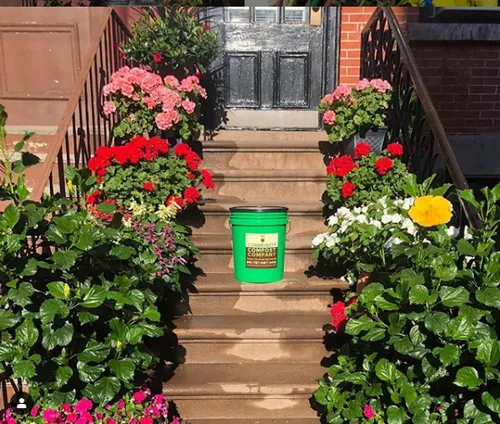
Community Compost Company provides food waste collection and composting services for restaurants and residents in New York, NY. They offer a simple system where customers collect food scraps in provided buckets for weekly pickup. The company recycles all types of food waste, including meats and dairy, transforming it into nutrient-rich compost that supports soil health and reduces landfill waste. Community Compost Company is committed to environmental education and making composting accessible to everyone.

Green Bucket Compost
Woodbridge, NJ
Green Bucket Compost is a food waste and composting service based in Woodbridge, NJ, focused on diverting food waste from landfills through sustainable methods. They work with anaerobic digestion facilities like Trenton Renewables to process all types of food waste, including packaging, turning it into renewable energy and compost. Their services cover residential pickups, commercial food waste management for restaurants, hotels, and schools, as well as municipal drop-off and curbside collection programs across several New Jersey counties and towns. Founded by Isaiah Green, the company emphasizes scalable and efficient waste diversion solutions to support community sustainability goals.
Royal Waste Services
187-40 Hollis Ave, Jamaica, NY 11423
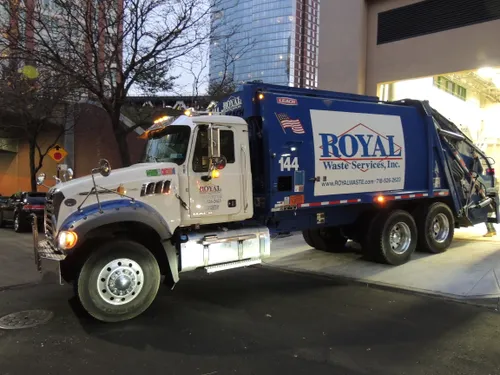
Royal Waste Services provides comprehensive waste management solutions in New York, NY, specializing in food waste composting, trash pickup, single stream recycling, dumpster rentals, and bulk waste removal. Serving Manhattan, Bronx, Brooklyn, and Queens, they operate 24/7 to support businesses with sustainable waste diversion strategies. With over 25 years of experience, Royal Waste owns and operates in-house recycling facilities to ensure environmentally responsible disposal and compliance with NYC commercial recycling laws.
Understanding New York State's Part 350 Regulation
The foundational framework for commercial food scrap recycling in the Yonkers area is New York State Department of Environmental Conservation (NYSDEC) Part 350. This regulation, effective January 2022, targets large generators of food scraps, defined as businesses that produce an annual average of two tons or more of wasted food per week. Many full-service restaurants, cafeterias, and catering operations meet or exceed this threshold.
The rule has two primary components: food donation and food scraps recycling. First, businesses must donate any excess edible food to a food bank or other charitable organization. Second, all remaining non-donatable food scraps must be recycled, not sent to a landfill or incinerator, provided the business is located within 25 miles of an authorized organics recycling facility 2. Given Yonkers' proximity to New York City's network of composters and anaerobic digesters, most local restaurants are subject to these requirements. Compliance is not optional; it's a state mandate with potential enforcement implications.
Commercial Options for Yonkers Restaurants
Yonkers does not provide a municipal curbside organics collection service for businesses. Therefore, restaurants must arrange for private collection or self-hauling. Here are the primary pathways:
- Hiring a Private Hauler: This is the most common solution. You must contract with a carter registered with the NYC Business Integrity Commission (BIC) that offers organics collection in Westchester County. These haulers will provide specific containers, set a pickup schedule, and transport your food scraps to a permitted composting or anaerobic digestion facility.
- Self-Hauling: As an alternative, a restaurant can register as a self-hauler with the BIC and transport its own separated organics to a designated transfer station or processing facility that accepts commercial food waste 3. This option requires having appropriate vehicles and ensuring the destination facility has an agreement to accept your waste.
The first step is to verify your status as a covered entity under Part 350 and then research BIC-registered haulers that service Yonkers. Costs for private service are not fixed and vary based on the volume of waste, frequency of pickup, hauling distance, and current processing fees.
On-Site Container and Separation Protocols
Successful participation in an organics recycling program hinges on proper on-site management. Contamination-mixing trash, plastics, or other non-organics into the food scrap stream-can lead to rejected loads and additional fees.
Private haulers will specify their container requirements, which often align with standards used in New York City. These typically include:
- Designated Bins: Use sturdy, leak-proof containers with secure, latching lids (often 55-gallon bins or smaller) to prevent pests and odors 4.
- Clear Labeling: Bins should be clearly labeled "FOOD SCRAPS" or "ORGANICS" to avoid confusion by staff.
- Staff Training: Front-of-house and kitchen staff must be trained on what goes into the organics bin (e.g., fruit/vegetable scraps, coffee grounds, baked goods, meat, bones, dairy) and what does not (e.g., plastic wrap, utensils, rubber bands, traditional trash) 5.
- Secure Storage: Containers must be stored in a secure area to prevent tampering or misuse before scheduled pickup.
Establishing a clear, color-coded, and well-labeled system is essential for maintaining a clean stream and avoiding contamination fines that some haulers and processors may impose.
Benefits of Professional Food Waste Management
Beyond regulatory compliance, partnering with a professional organics recycling service offers tangible benefits for Yonkers restaurants.
- Potential Cost Savings: While there is a fee for organics collection, diverting heavy, wet food waste from your regular trash can significantly reduce the volume and weight of your solid waste disposal, potentially lowering your overall trash hauling bills.
- Enhanced Sustainability Profile: Demonstrating a commitment to environmental stewardship resonates with a growing segment of customers who prefer to support eco-conscious businesses.
- Improved Sanitation and Operations: Properly managed organics storage in secure, lidded containers can reduce pest attractants and unpleasant odors in dumpster areas, creating a cleaner and more professional back-of-house environment.
- Supporting the Circular Economy: The food scraps collected from your restaurant are transformed into compost for local agriculture or renewable energy through anaerobic digestion, contributing to a more sustainable regional economy.
Find the perfect composting & food waste companies for your needs
Get personalized recommendations and expert advice
Connecting with Local Resources and Haulers
Taking the first step toward compliance involves gathering local information. While Yonkers' Department of Public Works (DPW) focuses on residential services, it can be a starting point for understanding any city-specific nuances for businesses 6 7. The most direct action is to contact private waste haulers directly.
When evaluating haulers, consider asking:
- Are you BIC-registered and do you service commercial addresses in Yonkers?
- What types of containers do you provide, and what are your specifications?
- What is your pickup schedule and fee structure based on our estimated volume?
- Where do you take the collected organics for processing?
- What are your policies regarding contamination of the organics stream?
A proactive approach to food waste management not only ensures compliance with New York State's Part 350 but can also streamline operations and enhance your restaurant's reputation as a responsible member of the Yonkers community.
The Future of Organics in Westchester
The regulatory landscape for food waste is evolving. New York City's recent expansion of mandatory curbside composting for residents signals a broader regional shift toward diverting organics from landfills 8. While Yonkers' commercial rules are currently tied to state mandates and private services, increased participation and infrastructure development could lead to more streamlined or cost-effective options for businesses in the future. Staying informed and establishing a system now positions your restaurant well for any upcoming changes, ensuring you remain ahead of compliance curves and continue to operate sustainably.
Frequently asked questions
Sources
Footnotes
-
Curbside Food Scrap Collection Pilot Program - Yonkers, NY - https://www.yonkersny.gov/1234/Curbside-Food-Scrap-Collection-Pilot-Pro ↩
-
Adopted Part 350, Food Donation And Food Scraps Recycling - NYSDEC - https://dec.ny.gov/regulatory/regulations/adopted-part-350-food-donation-and-food-scraps-recycling ↩
-
Commercial Organics Requirements - DSNY - NYC.gov - https://www.nyc.gov/site/dsny/businesses/materials-handling/commercial-organics-requirements.page ↩
-
2025 NYC composting rules: Essential things to know - https://www.fsresidential.com/new-york/news-events/articles-and-news/2025-nyc-composting-rules/ ↩
-
Curbside Composting · NYC311 - https://portal.311.nyc.gov/article/?kanumber=KA-02030 ↩
-
Food Scrap Recycling Program - Yonkers, NY - https://www.yonkersny.gov/504/Food-Scrap-Recycling-Program ↩
-
Sanitation Division | Yonkers, NY - https://www.yonkersny.gov/507/Sanitation-Division ↩
-
Composting NYC rules: Trash changes start tomorrow. What to know - NBC New York - https://www.nbcnewyork.com/new-york-city/composting-rules-nyc-fine-garbage-sanitation-department-trash-bin/6205867/ ↩