Find the Best Composting & Food Waste Companies for Your Business
No obligation • Fast responses • Nationwide coverage

Why you can trust Restaurant Waste Disposal
Restaurant Waste Disposal is a leading U.S. resource for comparing restaurant composting, food-waste recycling, grease trap cleaning, and used cooking oil collection services. Our editorial team researches providers, checks credentials, and organizes unbiased information so operators can make informed decisions. Companies cannot pay to change ratings or placement.
Search providers near you
Top Composting & Food Waste Companies in New York, New York Ranked
For restaurants and food service businesses in New York City, managing organic waste is no longer just an environmental consideration-it's a legal requirement. The city and state have implemented robust regulations to divert food scraps from landfills, focusing on large-scale generators. Navigating these rules involves understanding container standards, set-out times, and the choice between private haulers and self-transport. Compliance not only avoids significant fines but also contributes to the city's sustainability goals, turning potential waste into compost or renewable energy. Proper organic waste management is a critical component of operating a responsible and legally sound food service business in the five boroughs.
Creative Waste Solutions
New York, NY
Creative Waste Solutions is a waste management company based in New York, NY, offering comprehensive services for businesses. Their offerings include used cooking oil collection, grease trap cleaning, food waste composting, solid waste and recyclables removal, e-waste disposal, and debris removal. They provide a single point of contact for businesses with multiple locations and operate with a network of trusted companies to manage waste efficiently. With decades of experience in the waste industry, Creative Waste Solutions develops tailored waste plans and ensures proper recycling and timely service. They also offer 24/7 availability to support their clients' waste management needs.
Community Compost Company
1501 Madison St, Hoboken, NJ 07030
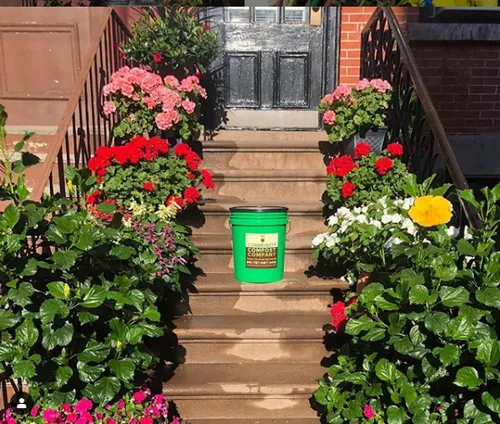
Community Compost Company provides food waste collection and composting services for restaurants and residents in New York, NY. They offer a simple system where customers collect food scraps in provided buckets for weekly pickup. The company recycles all types of food waste, including meats and dairy, transforming it into nutrient-rich compost that supports soil health and reduces landfill waste. Community Compost Company is committed to environmental education and making composting accessible to everyone.
Curbside Compost
Bridgeport, CT
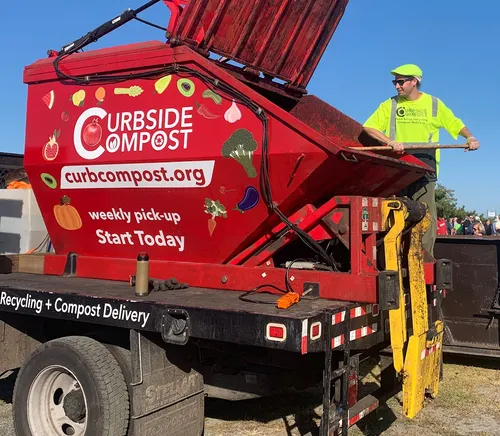
Curbside Compost provides food waste and composting services for restaurants and various other clients in Bridgeport, CT. With over 10 years of experience, they serve municipalities, food manufacturers, distribution centers, food donors, grocery stores, hospitals, assisted living facilities, country clubs, universities, schools, cafeterias, and restaurants. Their service includes weekly collection of food scraps and delivery of premium finished compost, helping reduce landfill waste through convenient composting solutions.

Green Bucket Compost
Woodbridge, NJ
Green Bucket Compost is a food waste and composting service based in Woodbridge, NJ, focused on diverting food waste from landfills through sustainable methods. They work with anaerobic digestion facilities like Trenton Renewables to process all types of food waste, including packaging, turning it into renewable energy and compost. Their services cover residential pickups, commercial food waste management for restaurants, hotels, and schools, as well as municipal drop-off and curbside collection programs across several New Jersey counties and towns. Founded by Isaiah Green, the company emphasizes scalable and efficient waste diversion solutions to support community sustainability goals.
Royal Waste Services
187-40 Hollis Ave, Jamaica, NY 11423
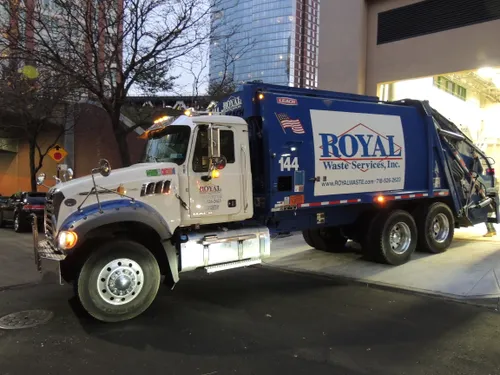
Royal Waste Services provides comprehensive waste management solutions in New York, NY, specializing in food waste composting, trash pickup, single stream recycling, dumpster rentals, and bulk waste removal. Serving Manhattan, Bronx, Brooklyn, and Queens, they operate 24/7 to support businesses with sustainable waste diversion strategies. With over 25 years of experience, Royal Waste owns and operates in-house recycling facilities to ensure environmentally responsible disposal and compliance with NYC commercial recycling laws.
Understanding NYC's Organics Recycling Mandates
New York's approach to food waste recycling is governed by a combination of state law and city Department of Sanitation (DSNY) rules. At the state level, the Food Donation and Food Scraps Recycling Law mandates that businesses generating an annual average of two tons or more of food scraps per week must separate and recycle their organic waste. This applies to supermarkets, food manufacturers, and large restaurants or hospitality groups. The law requires these entities to first donate any excess edible food and then recycle all remaining food scraps, including inedible parts, at an organics recycling facility within 25 miles.
The DSNY's Commercial Organics Rules build upon this state mandate, specifying the operational requirements for covered businesses within city limits. These regulations detail how organic material must be separated, stored, and set out for collection. It's crucial for business owners to determine if their establishment meets the threshold for mandatory compliance. Even businesses not yet mandated to participate can benefit from voluntary programs, as the city continues to expand its organics recycling initiatives.
Containerization: The First Rule of Compliance
A cornerstone of NYC's waste rules is proper containerization. All waste-trash, recyclables, and organics-must be placed in containers with secure, latching lids. This is not a suggestion but a strict requirement designed to prevent spills, deter pests like rats, and keep sidewalks clean. For smaller businesses, the maximum container size is typically 55 gallons, though licensed private carters may provide larger, specialized bins for their commercial clients 1.
When setting up for organics collection, businesses must use dedicated bins for food scraps and food-soiled paper. These bins should be clearly labeled to prevent contamination. Lining these containers with clear plastic bags, paper bags, or certified compostable bags is a common practice, though requirements can vary by the chosen hauler or processing facility. Using the wrong type of bag can lead to contamination at the processing plant, so it's essential to confirm specifications with your service provider. The key is that all organic material must be contained securely from the kitchen to the curb.
Choosing a Service: Private Carters, Self-Haul, and On-Site Processing
Businesses subject to the organics law have several pathways to compliance. The most common method is to hire a private carter licensed by the Business Integrity Commission (BIC). These licensed waste haulers will provide appropriate containers, establish a pickup schedule, and transport the organic waste to a permitted processing facility. When selecting a carter, ensure they are properly licensed and that their service includes organics recycling, as not all carters handle all waste streams.
For businesses with the capacity, self-transport is an option. This requires registering with the BIC and transporting the organic material directly to a designated transfer station or processor 2. This method may offer cost control for businesses with reliable transport and sufficient volume.
A third, less common option is on-site processing using an in-vessel composting or anaerobic digestion system. These systems require significant space, capital investment, and approval from the DSNY. They can be a long-term solution for large institutions or food manufacturing plants looking to manage waste on their own property and create usable compost or energy.
Find the perfect composting & food waste companies for your needs
Get personalized recommendations and expert advice
Set-Out Rules and Avoiding Fines
Proper timing for placing waste at the curb is critical. DSNY rules state that containers cannot be placed at the curb earlier than one hour before the business closes for the day, and no later than one hour after closing 3. For businesses with evening hours, a specific rule states that set-out cannot occur before 8:00 PM 3. Containers must be removed from the curb by the opening of business the next day. These "set-out" and "take-back" windows are strictly enforced to maintain clean and accessible sidewalks.
Non-compliance with any of these rules-improper container lids, incorrect set-out times, or failure to separate organics-can result in fines 4 5. Violations for putting out waste on the wrong day or in an unsecured container can start at $50 and escalate for repeated offenses or serious violations like complete failure to separate mandated organics 4. The city has ramped up enforcement, making it essential for restaurant managers to train all staff on these procedures to avoid costly penalties.
What Goes in the Organics Bin?
Knowing what materials are accepted is vital for a successful program and to prevent contamination. The following items are generally accepted in NYC's commercial organics recycling stream 6 7:
- Food scraps: Fruits, vegetables, meat, bones, fish, dairy, eggs, shells (nut, egg), coffee grounds, and tea bags.
- Food-soiled paper: Paper towels, napkins, uncoated paper plates, pizza boxes (without plastic liners), and compostable food service ware that is certified (e.g., BPI certified).
- Yard waste: Leaves, grass, and small branches (though this is less common for restaurants).
It is equally important to know what does not belong in the organics bin. This includes plastics (even if labeled "biodegradable"), glass, metal, rubber, textiles, and any form of liquid waste. Grease and used cooking oil are separate waste streams that require specialized collection services, not the standard organics bin. Contamination can result in an entire load being rejected and sent to landfill, negating the recycling effort and potentially leading to service issues or fees from your hauler.
Costs and Logistics of Commercial Composting
The cost for commercial organics recycling services in New York City is not fixed and varies widely. It depends on several factors: the licensed carter you choose, the volume of organic waste your business generates, the frequency of collection required, and your location within the city 8. Costs typically include a fee for the rental or provision of specialized bins and a recurring collection fee based on volume or pickup frequency.
To get accurate pricing, business owners should solicit quotes from multiple BIC-licensed carters that offer organics recycling. Some providers offer integrated services that handle trash, recycling, and organics, which can sometimes streamline logistics and billing. Resources like the DSNY website and the BIC licensee list are invaluable for finding approved providers 9 10. Investing in a reliable service is a fundamental operational cost for compliance and sustainability.
Implementing a Successful Program in Your Restaurant
Starting an organics recycling program requires a systematic approach:
- Determine Applicability: First, audit your waste to see if you generate close to two tons of food scraps per week. If so, you are likely subject to the state and city mandates 11 12.
- Acquire Proper Bins: Obtain secure, latching bins for organics, recycling, and trash. Place them strategically in kitchen and prep areas to make separation easy for staff.
- Select a Service Provider: Research and hire a BIC-licensed private carter that meets your service and budget needs.
- Train Your Team: Comprehensive staff training is the most critical step for success. Educate every employee on what goes in each bin, the importance of keeping lids closed, and the set-out schedule. Clear signage in multiple languages can help.
- Monitor and Adjust: Regularly check bins for contamination, review collection service performance, and adjust your program as needed. A well-run program minimizes waste hauling costs and keeps your business in full compliance.
Frequently asked questions
Sources
Footnotes
-
Sanitation Regulations Rules and - NYC.gov - https://www.nyc.gov/assets/dsny/downloads/pdf/about/laws/DSNY_RulesRegs_2014.pdf ↩
-
Waste Disposal for Businesses · NYC311 - https://portal.311.nyc.gov/article/?kanumber=KA-01787 ↩
-
Setout & Containers - DSNY - NYC.gov - https://www.nyc.gov/site/dsny/businesses/setup-operations/setout.page ↩ ↩2
-
2025 NYC composting rules: Essential things to know - https://www.fsresidential.com/new-york/news-events/articles-and-news/2025-nyc-composting-rules/ ↩ ↩2
-
NYC to begin fines for violating new trash laws - https://www.youtube.com/shorts/LBIBoNL1iys ↩
-
Curbside Composting - DSNY - NYC.gov - https://www.nyc.gov/site/dsny/collection/residents/curbside-composting.page ↩
-
Food Scrap Drop-off - DSNY - NYC.gov - https://www.nyc.gov/site/dsny/collection/residents/food-scrap-drop-off.page ↩
-
Composting 101: A Comprehensive Guide for Restaurants - https://pos.toasttab.com/blog/on-the-line/restaurant-composting ↩
-
Commercial Organics Requirements - DSNY - NYC.gov - https://www.nyc.gov/site/dsny/businesses/materials-handling/commercial-organics-requirements.page ↩
-
NYC Commercial Composting: Environmental Compliance ... - https://www.myshyft.com/blog/commercial-composting-pickup-service-contracts-new-york-new-york/ ↩
-
Guidance for New York State Businesses - NY.Gov - https://extapps.dec.ny.gov/docs/materials_minerals_pdf/excessfoodbusinesshandbook.pdf ↩
-
Food Donation And Food Scraps Recycling Law - NYSDEC - https://dec.ny.gov/environmental-protection/recycling-composting/organic-materials-management/food-donation-scraps-recycling-law ↩