Find the Best Composting & Food Waste Companies for Your Business
No obligation • Fast responses • Nationwide coverage

Why you can trust Restaurant Waste Disposal
Restaurant Waste Disposal is a leading U.S. resource for comparing restaurant composting, food-waste recycling, grease trap cleaning, and used cooking oil collection services. Our editorial team researches providers, checks credentials, and organizes unbiased information so operators can make informed decisions. Companies cannot pay to change ratings or placement.
Search providers near you
Top Composting & Food Waste Companies in Taunton, Massachusetts Ranked
For restaurants in Taunton, managing organic waste is not just an environmental choice-it's a state-mandated requirement. Massachusetts' commercial food waste ban requires businesses, including most restaurants, that generate one-half ton or more of food scraps per week to divert this material from landfills and incinerators. This means establishing a reliable program for food waste recycling and composting is essential for compliance. Fortunately, by partnering with private haulers and utilizing local resources, Taunton restaurant owners can turn this regulatory obligation into an opportunity for potential cost savings and enhanced sustainability.
Navigating this process successfully involves understanding your obligations, selecting the right service provider, and implementing effective on-site practices.

Bootstrap Compost
17 Dalrymple St, Jamaica Plain, MA 02130
Bootstrap Compost provides food waste and composting services for restaurants in Newton, MA. The company focuses on collecting organic waste to support sustainable composting practices in the local community.
E.O.M.S. Recycling
318 Manley St, West Bridgewater, MA 02379
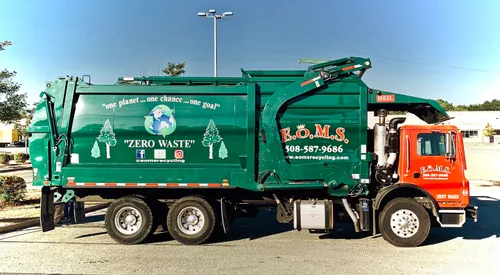
E.O.M.S. Recycling provides tailored recycling and solid waste solutions for restaurants and other businesses in Brockton, MA. They specialize in food waste and composting services, offering customized waste management plans based on detailed waste stream audits. The company supports effective recycling and waste reduction for a variety of clients including schools and municipalities, helping to manage waste streams efficiently.
Understanding the Massachusetts Food Waste Disposal Ban
The cornerstone of organic waste management for Massachusetts businesses is the Commercial Food Material Disposal Ban. Enforced by the Massachusetts Department of Environmental Protection (MassDEP), this regulation prohibits the disposal of commercial organic waste in the trash if a business generates one-half ton (1,000 pounds) or more of these materials per week.
Who is affected in Taunton? The mandate applies broadly to commercial food establishments. This includes:
- Full-service restaurants and cafes
- Quick-service restaurants
- Hotel and institutional kitchens
- Supermarkets and grocery stores with prepared food sections
Given the volume of food prep, spoilage, and customer plate waste, most sit-down and high-volume restaurants in Taunton will meet or exceed this half-ton threshold and are therefore required to participate in a commercial organics diversion program. It's crucial for business owners to conduct a waste audit to accurately determine their weekly output.
Service Options: Private Haulers for Commercial Collection
Unlike residential curbside recycling, the City of Taunton does not provide municipal collection services for commercial food waste. Taunton restaurants must contract directly with private waste and recycling companies that offer organic material collection.
Selecting a Hauler: Several regional providers service the Taunton area. When researching, it's important to confirm they offer commercial food waste collection, not just residential backyard composting services. Well-known providers include companies like Casella Waste Systems, which has dedicated food waste recycling programs. Other regional organics haulers may also operate in the area. Resources like RecyclingWorks Massachusetts offer guidance and can help businesses identify and compare local service providers.
Collection Models: Haulers typically offer two primary service models:
- Source-Separated Organics: This is the most common method for restaurants. Food scraps and acceptable paper are collected in dedicated, hauler-provided containers kept separate from trash and recycling. This clean stream is then taken to a composting facility or anaerobic digester.
- Mixed Waste Processing: Some haulers may offer a service where all waste is collected together and later sorted at a advanced processing facility. However, for guaranteed compliance with the state ban and the highest quality compost output, source-separation is the recommended and most widely available path.
Setting Up Your On-Site System
A successful food scrap diversion program hinges on an efficient and user-friendly setup within your restaurant's workflow.
Container Types & Placement: Your hauler will supply specific containers for collection. These often range from small, lidded pails (e.g., 4-gallon or 13-gallon) for kitchen prep stations and dish pits to larger, wheeled carts (64-gallon or 96-gallon) for consolidation and curbside pickup. Strategic placement is key:
- Small bins should be easily accessible in food prep areas and near dishwashing stations.
- A larger consolidation cart should be placed in a designated area, like a dumpster enclosure, for the hauler to access on pickup day.
Pickup Schedules: Frequency of collection is flexible and tailored to your needs. Most haulers offer weekly or bi-weekly pickup schedules 1. The right schedule depends on your volume, available storage space, and concerns about odor. A weekly pickup is standard for many restaurants to manage space and sanitation effectively.
Find the perfect composting & food waste companies for your needs
Get personalized recommendations and expert advice
Avoiding Contamination: What Goes In the Bin
Contamination-placing non-compostable items in the organics bin-is a major challenge. It can lead to entire loads being rejected, resulting in disposal fees and undermining environmental goals. Clear guidelines and staff training are imperative.
Acceptable Materials (Always confirm with your hauler):
- All food scraps (fruits, vegetables, meat, bones, dairy, bread, etc.)
- Coffee grounds and filters
- Tea bags (without staples)
- Soiled, non-recyclable paper products (napkins, paper towels, parchment paper)
- Certified compostable bags and foodservice ware (look for BPI or ASTM D6400 certification)
Strictly Prohibited Materials:
- Plastic bags (unless they are certified compostable)
- Styrofoam (polystyrene)
- Glass, metal, or plastic packaging
- Liquids, oils, and grease (these require separate management, typically through a grease trap service)
- Rubber, latex, or other non-organic materials
Using plastic bags as liners is a common source of contamination. If liners are needed for cleanliness, insist on only using those certified by your hauler or bearing recognized compostability logos 2.
Cost Considerations and Potential Savings
The cost for commercial food waste collection in Taunton is not fixed; it varies based on several factors:
- Volume of Waste: The size and number of containers you need.
- Frequency of Pickup: Weekly service will cost more than bi-weekly.
- Hauler and Service Area: Different companies have different pricing structures.
- Distance to Processing Facility: Transportation costs can be a factor.
While there is a cost for adding this new service, it's important to view it as part of your overall waste management budget. Diverting heavy, wet food waste from your trash stream can actually lead to significant savings:
- Reduced Trash Costs: You may be able to downsize your trash dumpster or reduce the frequency of trash pickups, which often offsets the cost of the new organics service3 4.
- Purchasing Savings: Analyzing food waste can help kitchens identify over-purchasing or prep inefficiencies, leading to reduced food costs.
- Avoiding Fines: Compliance with the state ban helps avoid potential regulatory penalties.
To get an accurate picture, use tools like the Food Waste Estimation Guide from RecyclingWorks Massachusetts to gauge your volume, then obtain quotes from multiple haulers for comparison5.
Taking the Next Steps
Implementing a compliant and effective organics diversion program involves a few clear actions:
- Estimate Your Waste: Use available online guides and tools to calculate your weekly food scrap generation. If you're near or above 1,000 lbs/week, action is required6 7.
- Contact Service Providers: Reach out to commercial waste haulers that offer food waste collection in Taunton. Discuss your estimated volume, request container options, and get detailed quotes. Ask about their contamination policies and accepted materials list.
- Plan and Train: Once you select a hauler, develop an internal rollout plan. Place bins strategically, create clear signage (often available from your hauler or RecyclingWorks), and conduct thorough training for all kitchen and service staff. Emphasize what can and cannot go in the green bins.
- Monitor and Adjust: In the first few weeks, monitor the bins for contamination and check that pickup schedules are adequate. Be prepared to make adjustments to bin placement or staff training as needed.
By following these steps, Taunton restaurants can not only meet state regulations but also contribute to a circular economy where food waste is transformed into nutrient-rich compost, closing the loop from farm to table and back to soil.
Frequently asked questions
Sources
Footnotes
-
taunton - Curbside Collection | Black Earth Compost - https://blackearthcompost.com/composting-in/taunton/ ↩
-
Food Waste Composting/Organic Recycling - https://eomsrecycling.com/food-waste-composting-organic-recycling/ ↩
-
Commercial Food Material Disposal Ban | Mass.gov - https://www.mass.gov/guides/commercial-food-material-disposal-ban ↩
-
Food Waste Recycling - https://www.casella.com/services/recycling/food-waste-recycling/ ↩
-
Restaurants - RecyclingWorks Massachusetts - https://recyclingworksma.com/how-to/business-sector-guidance/restaurants/ ↩
-
MassDEP tightens regulations on disposal of food waste from ... - https://business.burlingtonchamberofcommerce.org/news/details/massdep-tightens-regulations-on-disposal-of-food-waste-from-businesses ↩
-
City of Taunton, Massachusetts - https://taunton-ma.gov/DocumentCenter/View/500/Solid-Waste-Recycling-and-Composting-Regulations-PDF ↩